Reverse Mortgage to Start Home-Based Wellness Business in Retirement
Fund your retirement wellness business: yoga studio, meditation, coaching. Use reverse mortgage to launch from home with zero startup debt.
You've spent your career climbing corporate ladders. Now you want meaningful work on your terms: teaching yoga, offering meditation coaching, running a wellness business — all from your home. But startups require capital: equipment, certifications, marketing, tech setup. A reverse mortgage eliminates the need for business debt, letting you build your wellness venture on equity instead of borrowed money that requires repayment.
The wellness industry is booming. Post-pandemic, Canadians are investing heavily in mental health, fitness, and self-care. Retirees with expertise — yoga teachers, therapists, coaches — can build profitable part-time practices from home. The barrier isn't demand; it's startup capital.
Why Wellness Businesses Work for Retirees
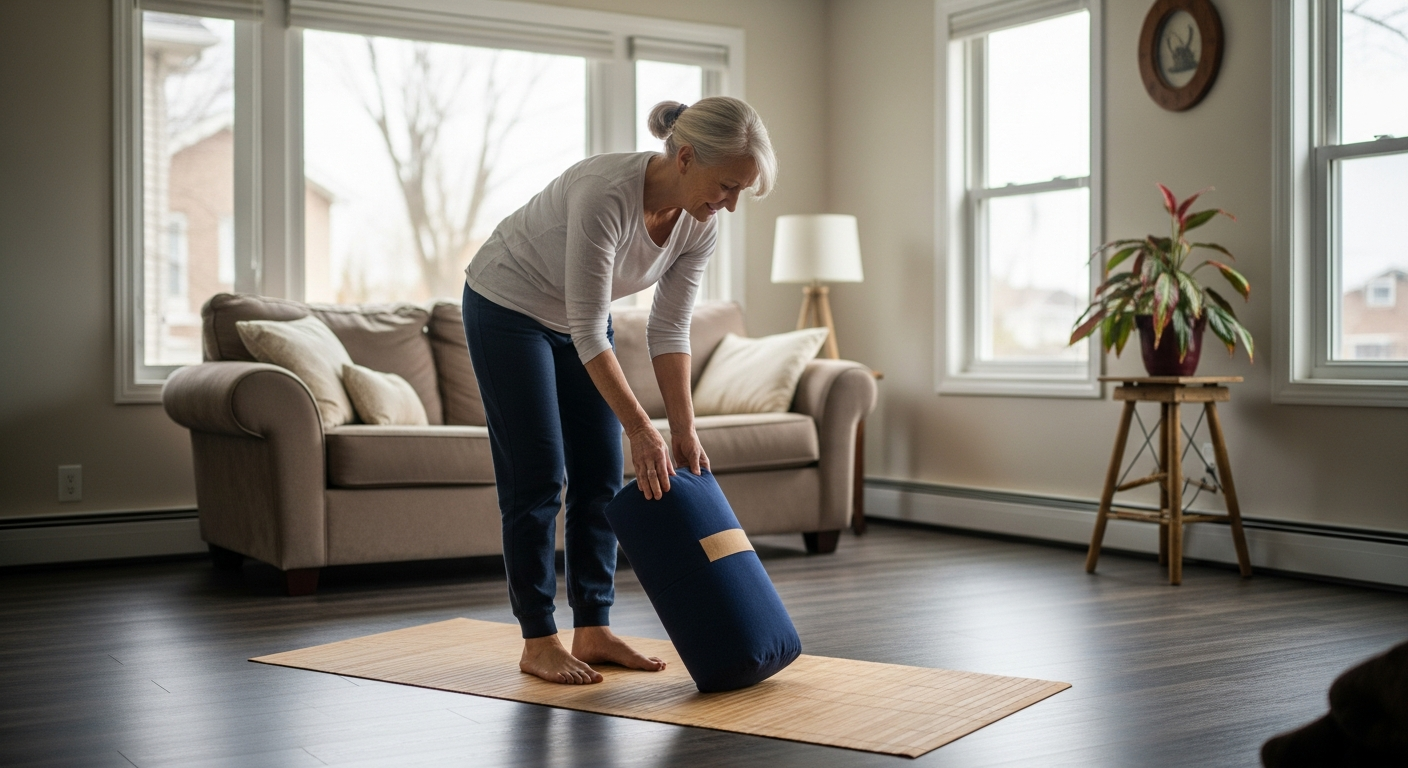
Low overhead: A home-based yoga studio, meditation practice, or coaching business costs far less than a commercial venture. No rent, utilities (beyond your home's baseline), or employees. Your home becomes your studio.
Flexible schedule: You teach a morning yoga class (6–10 students at $15–$25/class = $90–$250/hour). You're not committed to 40 hours weekly; you choose your schedule.
Income supplementation: Many retirees earn $15,000–$40,000 annually from wellness practices — meaningful supplement to CPP/OAS without triggering serious tax implications or OAS clawback risk.
Purpose and community: Beyond income, you're building community, helping people, staying intellectually engaged. This is the "living legacy" angle: you're sharing expertise while alive, seeing impact in real time.
Low business debt: Unlike a restaurant or retail shop, you don't need a business loan. A reverse mortgage on your home covers startup; no personal guarantee or monthly debt service.
Startup Costs for Common Wellness Businesses
| Business Type | Equipment | Certifications | Setup | Marketing | Total |
|---|---|---|---|---|---|
| Yoga studio (home) | Mats, blocks, props: $2,000 | RYT 200/500: $3,000–$10,000 | Flooring, mirrors: $3,000–$8,000 | Website, flyers: $1,000–$2,000 | $9,000–$22,000 |
| Meditation/mindfulness coaching | Cushions, props: $500 | Certification: $2,000–$5,000 | Quiet space setup: $500–$2,000 | Website, social: $1,000–$2,000 | $4,000–$9,000 |
| Health coaching (nutrition, fitness) | Computer, apps: $2,000 | ISSN/NASM cert: $1,500–$3,000 | Home office: $2,000–$5,000 | Website, leads: $1,500–$3,000 | $7,000–$13,000 |
| Reiki or energy work | Supplies: $500 | Certification: $1,500–$5,000 | Dedicated room: $1,000–$3,000 | Website: $1,000–$2,000 | $4,000–$10,500 |
| Stress management workshops | Materials, handouts: $1,000 | Facilitator training: $2,000–$4,000 | Virtual platform: $500–$2,000 | Marketing: $2,000–$5,000 | $5,500–$12,000 |
A $25,000 reverse mortgage covers most startup costs across all these models.
Real Scenario: Yoga Teacher Re-Entry
Jennifer, 68, taught corporate yoga for 20 years, then retired. She missed the work — not the corporate politics, but the teaching. She wanted to launch her own small practice: in-home private classes and small group sessions for seniors (underserved market).
Her home was worth $480,000 with $240,000 equity. She took a $30,000 reverse mortgage:
Allocation:
- Yoga mats, props, blocks: $2,500
- Flooring (bamboo, for comfort + protection): $4,000
- Mirrors and wall mounting: $2,500
- Certification refresh (senior-focused yoga): $3,000
- Website and online booking system: $2,000
- Marketing (local ads, flyers, community partnerships): $3,500
- Insurance (liability, business coverage): $1,500
- Tech setup (video conferencing for online classes): $2,000
- Buffer/working capital: $6,000
Year 1 outcomes:
- Started with 6 private clients ($50/session, 2x weekly) = $12,000/year
- One group class (8 students, $25/class, weekly) = $10,400/year
- Online classes (5 students, $20/class, 2x weekly) = $10,400/year
- Total Year 1 revenue: ~$33,000
- After expenses: ~$20,000 net (profit)
By Year 3:
- Expanded to 12 private clients
- Two in-person group classes
- 15 online participants
- Annual revenue: ~$55,000
- Annual profit: ~$35,000 (after expenses)
Jennifer's reverse mortgage ($30,000 principal) cost her ~$2,500/year in interest (@ 8.3% rate). But her business income covers that easily. She recovered the startup investment in 1.5 years and now runs a profitable practice for the rest of her life.

Certifications and Credibility
Starting a wellness business requires legitimate credentials. You can't hang a shingle as a therapist without proper licensing, but many wellness niches have recognized (though not legally required) certifications:
High-Value Certifications:
- Registered Yoga Teacher (RYT 200/500): $3,000–$10,000 (200-hour foundational, 500-hour advanced). Recognized by Yoga Alliance. Opens doors to teaching classes, workshops, and corporate clients.
- Health Coach Certification (ISSN, NASM): $1,500–$3,000. Legitimate credential in nutrition and fitness coaching.
- Reiki Master Certification: $1,500–$5,000. Energy/alternative health; not regulated but respected in wellness circles.
- Mindfulness-Based Stress Reduction (MBSR) Facilitator: $2,000–$4,000. 8-week program teaches meditation; strong evidence base; respected credential.
Budget consideration: Many retirees use a reverse mortgage NOT just for equipment, but for certification programs they postponed during working years. This dual benefit (credentials + equipment) justifies the $25,000–$30,000 investment.
Tax, Insurance, and Business Structure
Sole proprietorship vs. Corporation: Most home-based wellness businesses operate as sole proprietorships (simplest). You report income on your personal tax return; no separate business tax filing. For a ~$30,000 annual income side business, sole proprietorship is adequate.
If you grow substantially (>$50,000 annual income), consider incorporating. A lawyer can set up a small corporation ($1,000–$2,000); you'd then have separate business tax filings but potentially lower overall tax if you reinvest profits.
Tax implications:
- Reverse mortgage proceeds: NOT taxable (loan, not income)
- Business income: Fully taxable at your marginal rate
- Business expenses: Deductible (equipment, supplies, mileage if serving clients, marketing, insurance)
- CPP/OAS clawback risk: Possible if business income + CPP/OAS + other income exceeds clawback thresholds. For most modest side businesses, this isn't an issue. Consult accountant.
Liability insurance: Critical. A client slips in your yoga space or has an adverse reaction to coaching. You need:
- General liability: $2M coverage ($500–$1,000/year)
- Professional liability: If offering health advice ($800–$1,500/year)
Cost is deductible as business expense.
Growing Beyond Your Home
If your business takes off, you face a decision: stay home-based (low overhead, limited capacity) or expand to a commercial studio (higher overhead, more capacity).
A reverse mortgage isn't ideal for commercial space expansion (landlords, lease obligations, higher risk). But it's perfect for launching from home. If you grow beyond your home's capacity and want to expand, you'd then seek commercial financing or a separate business loan — at that point, you have revenue history, making approval easier.
Home-based ceiling: Most wellness businesses max out at $50,000–$100,000 annual revenue before space constraints force a move. That's still excellent income supplement and doesn't require commercial expansion.
Online Pivot: The Future
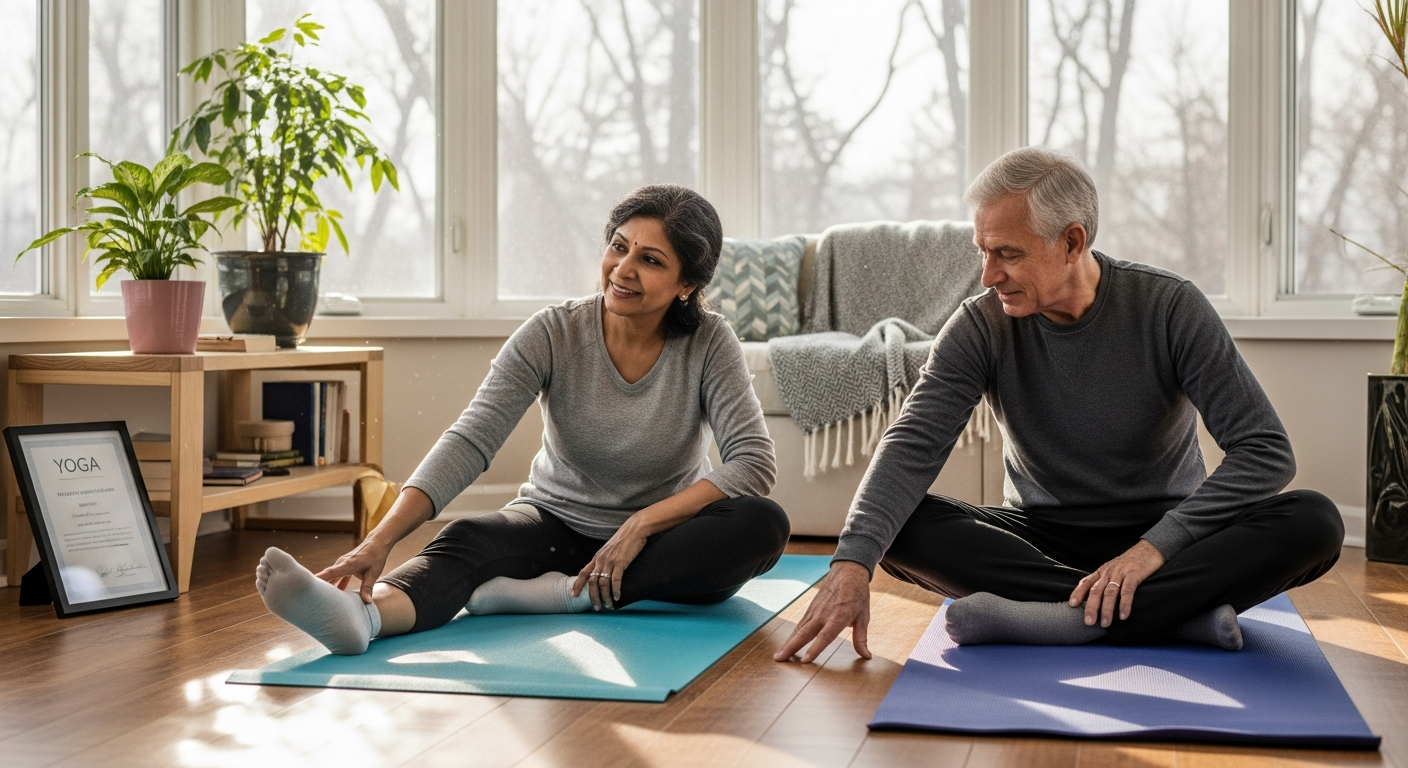
Post-pandemic reality: Many wellness classes are now hybrid or fully online. You teach yoga to 10 in-person students + 15 online students simultaneously. Online lowers your space constraint and dramatically expands your market.
A reverse mortgage investment includes:
- Video conferencing setup (Zoom, YouTube streaming: ~$1,000–$2,000)
- Lighting and audio quality ($1,500–$3,000)
- Website + online booking system ($1,000–$2,000)
Online delivery means you could eventually teach globally — no longer constrained by "who can physically access your home studio."
Frequently Asked Questions
Can I deduct home office costs on my taxes?
Yes. If you dedicate a room (or portion of room) exclusively to business, you can deduct:
- Proportion of mortgage interest (or rent)
- Utilities (prorated by square footage)
- Insurance (prorated)
- Maintenance and repairs (if in the dedicated space)
CRA has specific rules; consult an accountant to ensure proper calculation.
Will business income affect my OAS?
Possibly, if business income is substantial. OAS clawback threshold is currently ~$86,000 (2026). If your combined income (CPP + OAS + business) exceeds this, clawback applies. For a modest side business ($20,000–$35,000/year), you're unlikely to hit threshold unless other income is high.
What if the business doesn't succeed?
The $25,000–$30,000 reverse mortgage becomes a cost against your equity, but you retain ownership of your home and the equipment/setup. Unlike a business loan (which requires repayment regardless), a reverse mortgage only requires repayment when you sell the home or move to care. If the business flops, you've simply used home equity for a failed venture — not ideal, but not catastrophic.
How do I find clients?
Wellness practitioners rely on: referrals (most valuable), online presence (website, social media, Google reviews), community partnerships (gyms, clinics, senior centers), and local advertising (flyers, community boards). Initial marketing budget ($2,000–$3,000 from your reverse mortgage allocation) helps build momentum.
Key Takeaways
A home-based wellness business is a perfect fit for retirees with expertise and passion. A reverse mortgage eliminates startup debt, letting you build on equity instead of credit. The business often becomes profitable within 1–2 years, easily covering the reverse mortgage interest costs.
Beyond income, you're sharing knowledge, building community, and creating meaningful legacy while alive.
Contact Rick Sekhon Reverse Mortgages to discuss funding your retirement wellness business with a reverse mortgage that grows your legacy.
Get your free Ontario Reverse Mortgage Guide → /
Ready to Learn More?
Get the free Ontario Reverse Mortgage Guide and find out exactly how much you could unlock from your home.
Get My Free Guide →Related Articles
Fund Your Growth: Using a Reverse Mortgage for Lifelong Learning in Retirement
Pursue new skills, hobbies, and education in retirement with a reverse mortgage. Learn how to fund personal development and stay mentally sharp while aging.
Read →Reverse Mortgage for Home Office Setup: Creating a Productive Retirement Workspace
Fund your home office with a reverse mortgage. Create a productive retirement workspace for consulting, hobbies, or part-time work in Ontario.
Read →Reverse Mortgage for Your Retirement Hobby Business: Turning Passion Into Income
Transform your retirement hobby into a small income-generating business. Use a reverse mortgage to fund startup costs for creative entrepreneurship.
Read →