
Reverse Mortgage for Home Office Setup: Creating a Productive Retirement Workspace
Fund your home office with a reverse mortgage. Create a productive retirement workspace for consulting, hobbies, or part-time work in Ontario.
Are you planning to work part-time, consult, or pursue a home-based hobby in retirement? A reverse mortgage can help you create the ideal home office environment without disrupting your retirement savings. Whether you need a dedicated workspace, proper lighting, technology infrastructure, or ergonomic furniture, a reverse mortgage offers a flexible way to fund these improvements at age 55+.
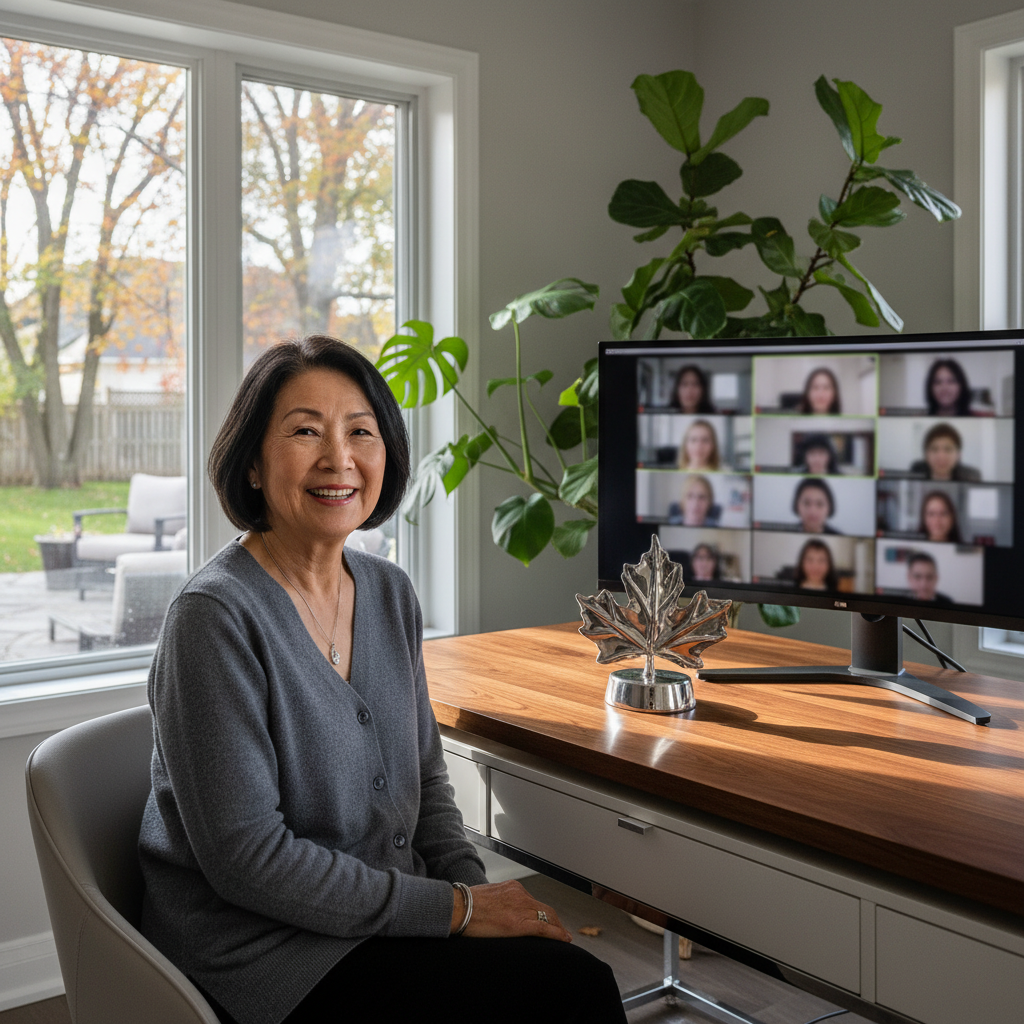
Why Retirement Home Offices Are Growing in Ontario
The shift toward remote and part-time work has transformed retirement planning. Many Ontario seniors no longer want to retire completely—they'd rather transition to meaningful work they can do from home. According to Statistics Canada, more than 40% of Canadians aged 55-64 continue working in some capacity, and that number is expected to grow as life expectancy increases.
A dedicated home office isn't a luxury—it's essential for:
- Consulting work in your professional field
- Freelance or contract positions that use your expertise
- Creative pursuits like writing, art, or design
- Family business involvement without commuting
- Hobby enterprises that generate supplemental income
But setting up a proper workspace requires investment. A quality desk, ergonomic chair, lighting system, technology upgrades, and acoustic treatment can easily cost $10,000 to $30,000—money that many retirees don't want to take from their investment portfolios.
This is where a reverse mortgage becomes a strategic tool for Ontario homeowners who want to maintain active, productive lives in retirement.
The Financial Reality of Home Office Setup Costs
Let's break down what a realistic home office setup actually costs in Ontario:
| Item | Budget Range | Notes |
|---|---|---|
| Ergonomic desk | $800–$2,500 | Motorized standing desk recommended |
| Office chair | $500–$2,000 | Proper lumbar support is essential |
| Lighting system | $300–$1,500 | LED, adjustable, glare-reducing |
| Technology (computer, monitor, peripherals) | $2,000–$5,000 | Depends on your profession |
| Internet/connectivity upgrades | $800–$2,000 | Mesh WiFi, backup systems |
| Acoustic panels and soundproofing | $500–$2,500 | Reduces background noise |
| Shelving, storage, and organization | $400–$1,500 | Custom cabinetry for professionals |
| Total for Professional Setup | $5,300–$16,000 | Quality workspace investment |
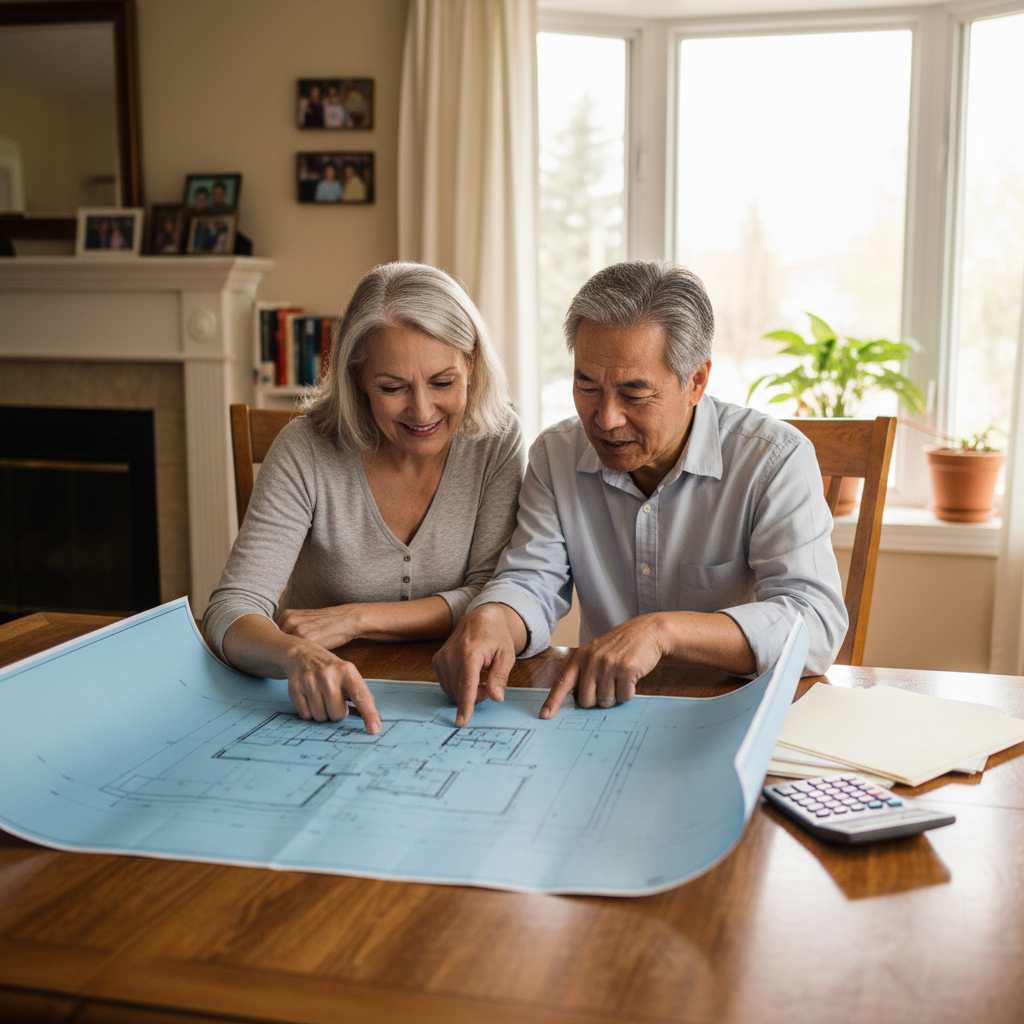
For many retirees, paying this out-of-pocket means either dipping into RRSPs (with tax consequences) or postponing the home office indefinitely. A reverse mortgage offers a third option: access home equity at competitive rates without the tax hit.
How a Reverse Mortgage Funds Your Home Office
A reverse mortgage is a loan secured against your home's equity. Unlike traditional mortgages, reverse mortgages have flexible repayment terms—typically not due until you sell the home, move into long-term care, or pass away. This flexibility makes them ideal for one-time home improvements like a home office setup.
How much can you access?
In Ontario, the amount you can borrow typically ranges from 55% to 65% of your home's value, depending on your age and the lender. For example:
| Home Value | Age 55-60 | Age 60-65 | Age 65-70 | Age 70+ |
|---|---|---|---|---|
| $500,000 | $235,000–$325,000 | $270,000–$325,000 | $290,000–$325,000 | $325,000+ |
| $750,000 | $350,000–$487,500 | $405,000–$487,500 | $435,000–$487,500 | $487,500+ |
| $1,000,000 | $550,000–$650,000 | $600,000–$650,000 | $650,000–$650,000 | $650,000+ |
You only borrow what you need. For a home office setup, you might borrow $15,000–$30,000 and use the remainder as an emergency line of credit.

Comparing Reverse Mortgages to Other Funding Options
How does a reverse mortgage compare to other ways retirees fund home improvements? Here's the honest breakdown:
| Funding Source | Cost | Pros | Cons |
|---|---|---|---|
| Reverse Mortgage | 6.5%–7.5% interest | No monthly payments; flexible access | Interest compounds over time |
| HELOC | 6.5%–8% interest | Flexible, lower initial costs | Requires steady income; variable rates |
| RRSP Withdrawal | 20–50% tax | Funds available immediately | Triggers income tax; reduces retirement savings |
| Home Equity Loan | 6%–8% interest | Fixed rate; clear payment schedule | Requires mortgage qualification; monthly payments |
| Personal Line of Credit | 8%–12% interest | Quick access | Higher cost; usually unsecured |
According to the Financial Consumer Agency of Canada (FCAC), reverse mortgages are increasingly used for home improvements that enhance aging in place—like home offices that allow continued work and mental engagement in retirement.
Lenders in Ontario Who Support Home Improvement Reverse Mortgages
Several major lenders operate in Ontario and support home office funding:
- CHIP Reverse Mortgage: Offers flexible lump sum or monthly draw options
- Equitable Bank: Fast approval and competitive rates for homeowners 55+
- Bloom Financial: Specializes in personalized solutions for home improvements
- Home Trust: Provides line of credit access for ongoing expenses
Each lender has slightly different rates and terms. The best approach is to get no-obligation quotes from multiple lenders to compare your options.
Strategic Benefits of a Reverse Mortgage for Your Home Office
1. No Monthly Payments
Unlike a traditional mortgage or HELOC, a reverse mortgage has no required monthly payments. Interest compounds against the loan balance, but you're not forced to service debt while building your consulting practice or hobby business.
2. Access Home Equity Without Selling
Many retirees resist selling their homes despite having significant equity. A reverse mortgage lets you unlock that equity while staying put—ideal if you want to age in place in a home you love.
3. Maintain Privacy in Your Financial Life
Unlike a HELOC, which requires ongoing bank scrutiny of your income and credit, a reverse mortgage is based primarily on your home's value and your age. No credit check required.
4. Flexible Access to Funds
Most reverse mortgages offer line-of-credit features. You can access $5,000 for initial setup, then tap additional funds as your work evolves.
5. Potential Tax Benefits in Specific Situations
If you use your home office for a legitimate business or consulting venture, you may be able to deduct home office expenses from your income. Speak with a tax professional about how this applies to your situation.
Tax Implications of Reverse Mortgage Proceeds
An important clarification: reverse mortgage proceeds are not taxable income. They're loan advances, not income. You never pay tax on the money you borrow.
However, if you use your home office for a business and generate income, you'll report that business income and can deduct eligible home office expenses. The reverse mortgage funds are separate from the business income.
According to the Canada Revenue Agency (CRA), reverse mortgage borrowers do not report the loan proceeds as income, and interest paid on the loan is not deductible (because the proceeds were used for personal home improvement, not investment purposes). However, if you earn business income from your home office, you can claim related business deductions.
Real-Life Example: Margaret's Home Office in Toronto
Margaret, 62, worked as a marketing consultant for 35 years. She retired at 60 but missed the work and wanted to take on freelance consulting clients from home. Her challenge: her home office was cramped, lacked proper lighting, and had poor internet connectivity.
Margaret's home in Toronto was valued at $750,000. Using a reverse mortgage, she accessed $20,000 to create a professional workspace:
- New desk and ergonomic chair: $3,000
- Technology upgrades (new computer, monitors, sound system): $5,000
- Professional lighting and acoustic panels: $4,000
- Internet and network infrastructure: $3,000
- Shelving and built-in storage: $5,000
Her monthly cost (interest only, no principal payment): approximately $125/month. But her consulting income far exceeded that—she earned $15,000–$25,000 per year from her clients. In less than a year, her side work paid for the entire setup.
Within two years, Margaret's reverse mortgage investment paid for itself entirely through client fees. More importantly, she remained mentally engaged, socially connected (through client interactions), and financially independent in retirement.
Aging in Place Benefits Beyond Income
A well-designed home office also supports aging in place by:
- Reducing commuting stress on an aging body
- Providing mental stimulation and purpose (linked to better cognitive health)
- Maintaining social and professional connections even as mobility may decline
- Supporting independence by generating supplemental income
- Creating a structured environment that combats isolation
Many Ontario seniors find that active retirement work—even part-time—significantly improves quality of life and longevity.
Getting Started: Questions to Ask Before Applying
Before you pursue a reverse mortgage for a home office, consider these questions:
- Do I have a concrete plan for income generation? (Consulting, freelance work, hobby business, etc.)
- What's my realistic equipment budget? (List every item you'll need)
- Will I use the line-of-credit feature for other expenses? (Good to know upfront)
- How long do I plan to stay in this home? (Reverse mortgages work best if you're staying 7+ years)
- Am I comfortable with compounding interest? (No monthly payment, but balance grows)
- Have I discussed this with my family? (They'll inherit any remaining debt after you pass)
- Can I consult an independent advisor? (Highly recommended for significant decisions)
Speak with Rick Sekhon, a licensed reverse mortgage specialist in Ontario, for a no-obligation consultation. He can help you understand your borrowing power and connect you with the best lender for your situation.
Frequently Asked Questions
Can I get a reverse mortgage at age 55 for a home office setup?
Yes. The minimum age for a reverse mortgage in Canada is 55. However, younger borrowers (55-60) typically have lower maximum borrowing amounts than those 65+. If you're 55-60, ask your lender about available funds and consider whether a HELOC might be a better short-term option.
What if my home office income doesn't materialize?
This is a fair concern. The reverse mortgage doesn't depend on your income—it's based on your home's equity. But if you're uncertain about generating income, consider starting with a smaller draw and testing the market before committing to the full setup cost.
Does a reverse mortgage affect CPP, OAS, or GIS benefits?
Reverse mortgage proceeds are not considered income, so they don't trigger OAS clawbacks or affect CPP calculations. However, if your home office generates business income, that income may affect means-tested benefits like GIS. Speak with a tax professional to understand your specific situation.
Can I use a reverse mortgage to set up a rental office space instead?
Reverse mortgages are secured against your principal residence—the home you live in. You cannot use reverse mortgage funds to purchase or lease a separate commercial office space. However, you can set up a home office.
What happens to the reverse mortgage if I move or pass away?
The reverse mortgage becomes due if you sell the home, move to long-term care, or pass away. At that point, the lender is repaid from the proceeds (sale or estate). Any remaining equity goes to your heirs. This is why it's important to discuss your reverse mortgage with your family.
Is there a "cooling-off period" if I change my mind?
Yes. Ontario has a 10-day cooling-off period after you sign a reverse mortgage agreement. During this time, you can cancel without penalty.
Conclusion: Your Productive Retirement Starts at Home
A home office is more than just a workspace—it's a gateway to an active, engaged, and financially stable retirement. Whether you want to consult, freelance, pursue a hobby business, or simply maintain professional connections, a well-equipped home office makes it possible.
A reverse mortgage provides the capital to build that workspace without disrupting your retirement savings or taking on monthly debt payments. In Ontario, homeowners 55+ have more options than ever to fund meaningful projects that enhance their quality of life.
Ready to explore your reverse mortgage options for a home office setup? Get your free Ontario Reverse Mortgage Guide →
Ready to Learn More?
Get the free Ontario Reverse Mortgage Guide and find out exactly how much you could unlock from your home.
Get My Free Guide →Related Articles
Reverse Mortgage for Consulting Transition: Funding Your Independent Business
Learn how Ontario seniors can use reverse mortgages to fund a consulting business transition, covering startup costs and cash flow during the early phases.
Read →Reverse Mortgage for Active Retirement (Age 55–65): Funding Travel and Lifestyle
Early retirees (55–65) face a unique challenge: long lifespan, high lifestyle costs, portfolio longevity. Learn how a reverse mortgage can fund active retirement adventures without portfolio depletion.
Read →Reverse Mortgage for Home Renovations: Aging in Place Guide for Ontario Seniors
Learn how to use a reverse mortgage to fund home renovations and modifications that let you age in place safely and comfortably in your Ontario home. Includes cost examples and step-by-step process.
Read →