
Reverse Mortgage for Home Renovations: Aging in Place Guide for Ontario Seniors
Learn how to use a reverse mortgage to fund home renovations and modifications that let you age in place safely and comfortably in your Ontario home. Includes cost examples and step-by-step process.
Aging in place means staying in your own home as you grow older, rather than moving to a care facility. For many Ontario seniors, this is the preferred option — but it often requires modifications to make your home safer and more accessible.

A reverse mortgage can provide the funds to make these renovations without having to sell your home or take on monthly mortgage payments. This guide shows how it works.
Common Home Renovations for Aging in Place
Safety and Accessibility Upgrades
The most common renovations seniors make to age in place include:
- Bathroom modifications: Grab bars, walk-in showers, accessible toilets, heated floors (cost: $5,000–$20,000)
- Accessibility ramps and handrails: Front entrance, deck, and internal staircases (cost: $2,000–$8,000)
- Bedroom modifications: Ground-floor bedroom addition or relocation, accessible closets (cost: $15,000–$50,000)
- Kitchen accessibility: Lower counters, accessible appliances, pull-out shelving (cost: $8,000–$25,000)
- Flooring updates: Slip-resistant surfaces, removal of trip hazards (cost: $3,000–$12,000)
- Stairlift installation: If staying on upper floors (cost: $4,000–$15,000)
- Lighting and smart home upgrades: Motion sensors, voice-controlled lights, emergency alert systems (cost: $2,000–$10,000)

Total renovation budget for a comprehensive aging-in-place retrofit: $40,000–$140,000 depending on the scope of work and Ontario region.
How a Reverse Mortgage Funds Renovations
Unlike a traditional home renovation loan or HELOC, a reverse mortgage:
- Requires no monthly payments — the loan doesn't become due until you sell, move, or pass away
- Is tax-free — funds are received tax-free (classified as a loan by CRA, not income)
- Preserves your cash flow — no impact on monthly budget, pensions, or OAS/GIS benefits
- Allows flexible access — you can take the full amount at once, or draw it over time as renovations complete (depending on your lender)
Step-by-Step Process
- Get a quote from a licensed reverse mortgage broker (such as Rick Sekhon) — no obligation to proceed
- Lender appraises your home to determine the maximum available funds based on your equity
- Independent legal advice is required by law — typically arranged by your broker
- Conditional approval within 1–5 business days
- Finalize and close — funds are issued, either as a lump sum or in stages as renovation milestones are reached
- Fund your renovations — you hire contractors, and they are paid from your reverse mortgage funds
The entire process typically takes 2–4 weeks from application to funding.
Example: A $75,000 Renovation Project
Let's walk through a realistic scenario:
The homeowner:
- Age: 68, lives in Toronto
- Home value: $850,000
- Current mortgage balance: $0 (paid off)
- Planned renovations: New accessible bathroom ($18,000), main-floor bedroom addition ($35,000), new kitchen ($15,000), accessibility ramp ($4,000), stairlift ($3,000)
- Total project cost: $75,000
The reverse mortgage:
- Available funds (at 55% LTV): $467,500
- Amount borrowed: $75,000
- Interest rate (CHIP fixed 2026): 7.24%
- Setup fee: $1,795
After 10 years:
- Loan balance: ~$150,000 (due when the homeowner sells or passes away)
- Home still in your name: Yes, with no monthly payments
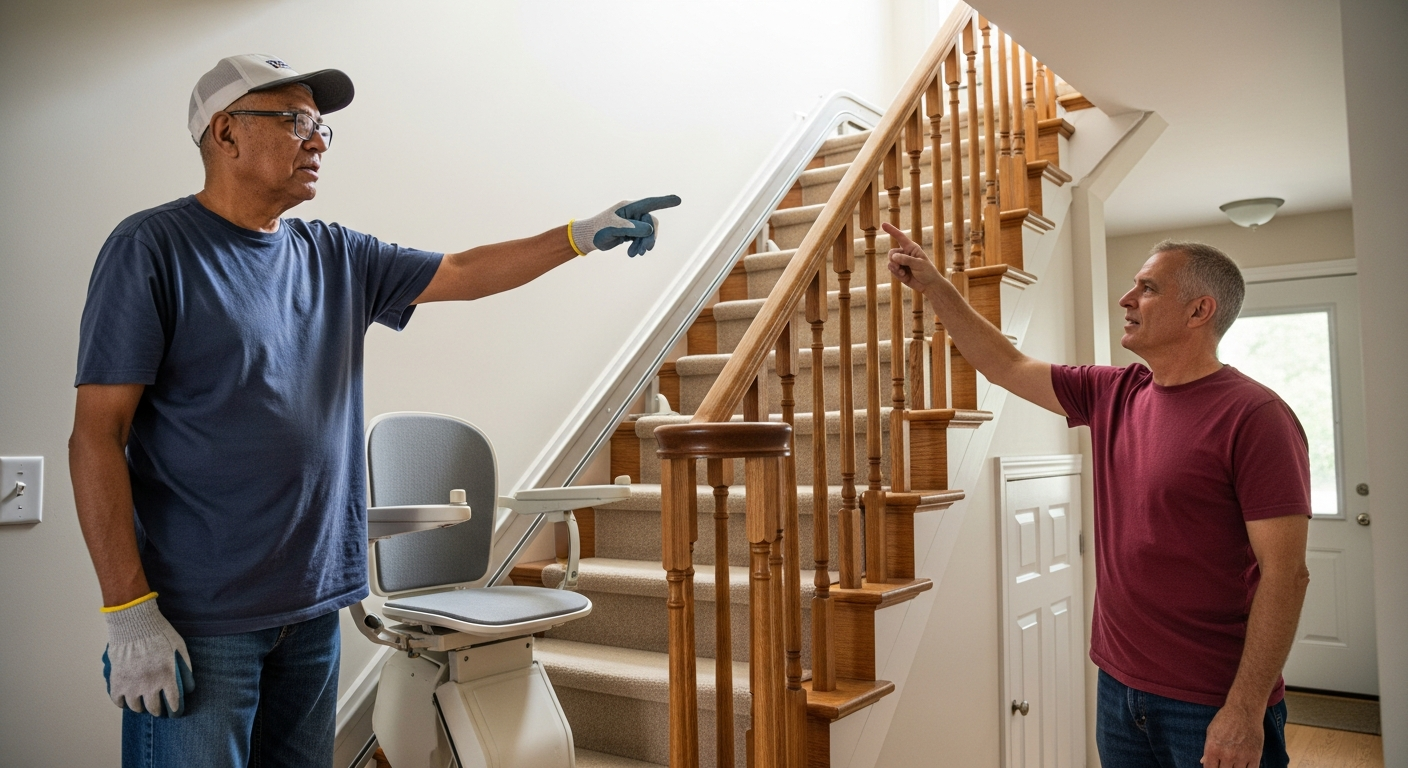
Why this matters: The homeowner gets a safer, more accessible home without disrupting retirement cash flow. No monthly payments means pension income and home care funding aren't affected.
Important Considerations
Lender Requirements for Renovation Funds
Most reverse mortgage lenders require that funds used for renovations be documented with:
- Written quotes from licensed contractors
- Insurance and WSIB confirmation from contractors
- Before/after inspection or documentation
- Some lenders require contractor payouts to be arranged through them (to ensure funds are used for the stated renovations)
Not all renovations qualify. Purely cosmetic work (new paint, flooring for aesthetics, pool installation) may not be approved. Renovations must genuinely support aging in place and accessibility.
Will Renovations Increase My Home's Resale Value?
Yes, but not dollar-for-dollar:
- Accessibility ramps and grab bars: Minimal resale premium (essential for buyers with mobility needs, but not general appeal)
- Bathroom renovations: 50–70% return on investment
- Kitchen renovations: 60–80% return on investment
- Main-floor bedroom: 40–60% return on investment
The primary benefit is your ability to stay in your home longer, not recouping the full renovation cost when you sell.
Alternative Funding Options
Before choosing a reverse mortgage, consider:
- Home Equity Line of Credit (HELOC): Lower interest rates but requires monthly payments (not ideal in retirement)
- Downsizing to a smaller home: Move to a purpose-built accessible home (but lose the home you know and your community)
- Accessibility grants: Some Ontario municipalities and disability-specific organizations offer renovation grants (limited eligibility and funding)
- Children's assistance: Some families help parents fund renovations
A reverse mortgage is often the best choice because it avoids monthly payments while keeping you in your home.
Ontario Government Programs That Work With Reverse Mortgages
Ontario offers some programs that support aging-in-place renovations:
- March of Dimes Canada: Accessibility renovations fund (up to $2,500–$5,000 in some regions)
- RBC Foundation Community Grants: Some communities have accessible home modification grants
- Property Tax Deferral Program: Ontario allows seniors to defer property tax increases if home equity is limited
- Ontario Disability Support Program (ODSP): If eligible, may contribute to accessibility modifications
These programs rarely cover the full cost of aging-in-place renovations, so a reverse mortgage is often used alongside these grants.
Frequently Asked Questions
Q: Do I need to complete the renovations before getting a reverse mortgage?
A: No. Most lenders will approve your renovations upfront and disburse funds as milestones are completed, or provide a lump sum for you to manage. Confirm with your lender what their process is.
Q: What if the renovation costs exceed my reverse mortgage approval?
A: You would need additional funds from savings, or the renovations would need to be scaled back. Get quotes and pre-approval before hiring contractors.
Q: Can my adult children help pay for renovations if I have a reverse mortgage?
A: Yes. You can use reverse mortgage funds for part of the cost and have family contribute the remainder.
Q: Will these renovations help me avoid moving to long-term care?
A: They can significantly delay the need for care, especially if combined with in-home care services. Proper accessibility modifications, grab bars, and lighting can prevent falls — the most common reason seniors move to care facilities. However, reverse mortgages don't fund ongoing care costs (only the renovations). For continuing care support, you'd need to budget separately or combine this with other support programs.
This article is for educational purposes only and does not constitute financial advice.
Speak to a licensed mortgage professional. Independent legal advice is required before closing a reverse mortgage in Ontario.
Ready to explore aging in place with a reverse mortgage? Get your free Ontario Reverse Mortgage Guide →
Also read:
- Long-term care planning and reverse mortgages in Ontario
- How much can you borrow with a reverse mortgage?
- Reverse mortgage payment methods explained
This content is for illustrative purposes only. Rates may vary. Call Rick Sekhon for the best rates and more information.
Ready to Learn More?
Get the free Ontario Reverse Mortgage Guide and find out exactly how much you could unlock from your home.
Get My Free Guide →Related Articles
How Much Can You Borrow With a Reverse Mortgage in Ontario?
Calculate your reverse mortgage borrowing capacity. Includes LTV limits by lender, age factors, and examples for different Ontario home values.
Read →Long-Term Care Planning with a Reverse Mortgage in Ontario
What happens to your reverse mortgage if you move to a nursing home or long-term care facility? Understand the timeline, repayment triggers, and family planning strategies.
Read →CHIP vs Equitable Bank Reverse Mortgage in Ontario: 2026 Comparison
A detailed comparison of Canada's two main reverse mortgage lenders — HomeEquity Bank (CHIP) and Equitable Bank — for Ontario homeowners in 2026. Rates, fees, features, and which is right for you.
Read →