
Reverse Mortgage vs HELOC in Ontario: Which Is Right for You in 2026?
A detailed comparison of reverse mortgages and HELOCs for Ontario homeowners 55+. Learn the key differences in eligibility, payments, rates, and which option best fits your retirement.
If you're an Ontario homeowner 55 or older looking to access your home equity, you've likely come across two options: a reverse mortgage and a home equity line of credit (HELOC). Both tap into the value of your home, but they work very differently — and choosing the wrong one can cost you significantly.
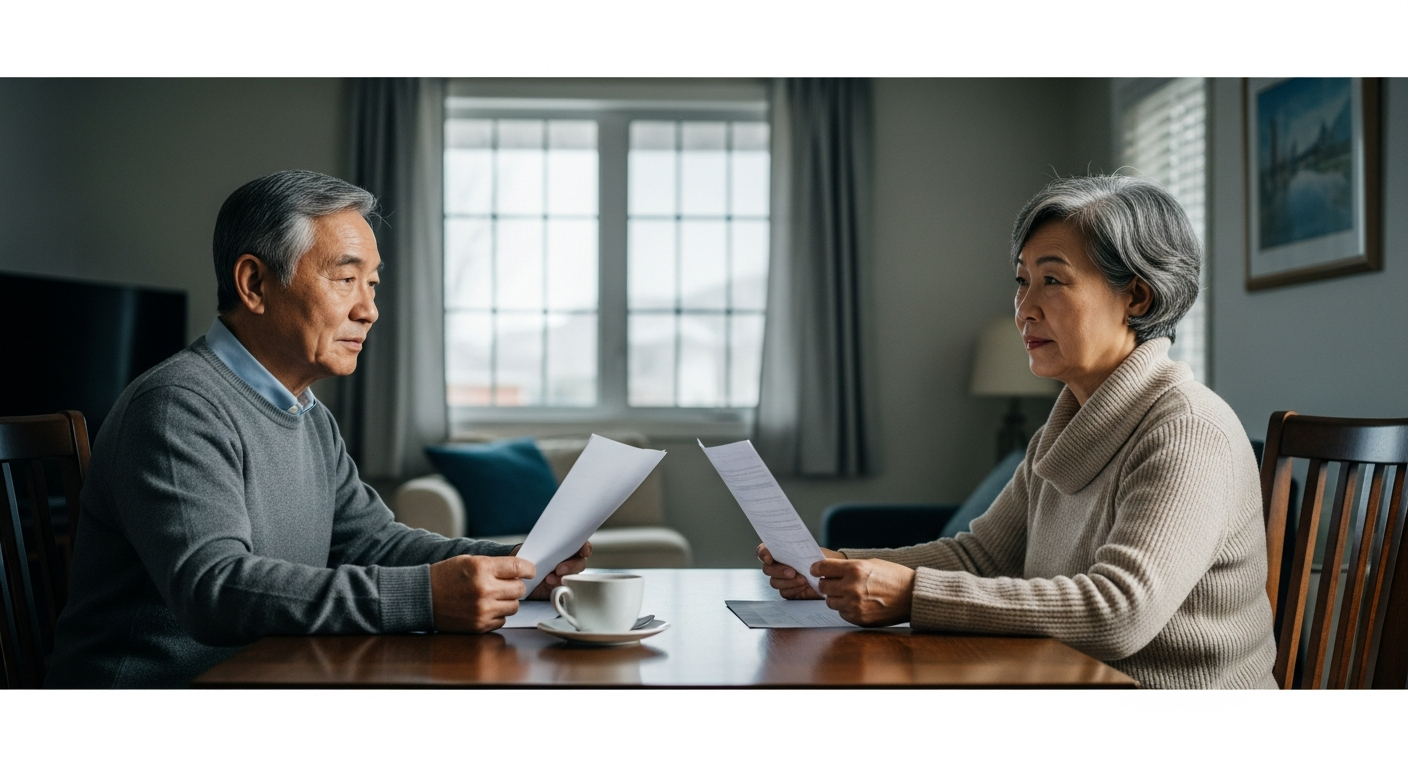
This guide breaks down everything you need to know to make the right decision for your retirement.
What Is a Reverse Mortgage in Ontario?
A reverse mortgage is a loan available exclusively to homeowners aged 55+ that lets you access a substantial portion of your home's appraised value as tax-free cash — the exact amount depends on your age, property type, and lender. Unlike a traditional mortgage:
- No monthly payments are required — ever
- The loan balance grows over time as interest accrues
- Repayment only occurs when you sell, permanently move out, or your estate settles
- You retain full ownership of your home throughout
The two main lenders in Ontario are HomeEquity Bank (CHIP) and Equitable Bank, with newer entrants like Bloom Financial and Home Trust offering additional options as of late 2025.
What Is a HELOC?

A home equity line of credit (HELOC) is a revolving credit facility secured against your home. In Canada, you can borrow up to 65% of your home's value with a HELOC (or up to 80% combined with your mortgage balance).
Key characteristics:
- Any homeowner qualifies — there is no age requirement
- Monthly interest payments are required during the draw period
- You must qualify based on income and credit score
- Interest rates are typically tied to the prime rate (variable)
Key Differences: Reverse Mortgage vs HELOC Ontario

| Feature | Reverse Mortgage | HELOC |
|---|---|---|
| Age requirement | 55+ | Any age |
| Income qualification | No | Yes — must prove income |
| Credit score required | No | Yes |
| Monthly payments | No | Yes (minimum interest) |
| Maximum borrowing | Varies by age & lender (contact Rick for your exact amount) | Up to 65% of home value |
| Interest rates (2026) | 6.54%–7.24% fixed | Prime + 0.5%–1% (variable) |
| Tax-free proceeds | Yes | Yes |
| Effect on OAS/CPP | None | None |
| Risk of foreclosure if payments missed | No (no payments required) | Yes |
Which Has Lower Interest Rates?
In 2026, HELOC rates are currently around prime + 0.5% (approximately 5.0%–5.5%), which is lower than most reverse mortgage rates (6.54%–7.24%). On the surface, this makes HELOCs look cheaper.
However, the comparison is more nuanced:
- A HELOC requires monthly interest payments — at $300,000 borrowed, that's approximately $1,500/month in interest alone
- A reverse mortgage has no monthly payment obligation — the interest accrues but you aren't required to pay it
- For a retiree on a fixed income, the ability to not make payments may be worth the higher interest rate
Learn more about current reverse mortgage interest rates in Ontario →
Who Can Actually Qualify?
This is where the gap really matters for Ontario retirees.
HELOC qualification requires:
- Documented income (pension, CPP, OAS, rental income, etc.)
- A minimum qualifying income to support the payments
- A credit score typically above 680
- A Total Debt Service (TDS) ratio within acceptable limits
Many Ontario retirees live primarily on CPP + OAS totalling $2,000–$3,000/month per person. At this income level, most lenders will not approve a HELOC large enough to be meaningful.
Reverse mortgage qualification only requires:
- Being 55 years of age or older
- Owning your home in Ontario
- Having sufficient equity
No income verification. No credit check. Period.
For most Ontario seniors, this makes the reverse mortgage the only realistic option for accessing significant home equity.
The No-Payment Advantage
Consider this scenario: A 70-year-old Ontario homeowner with a $900,000 home and $200,000 in savings needs $250,000 to pay off debt and fund retirement.
- HELOC at 5.5%: Monthly interest payment of ~$1,146. On a fixed income, this is a significant ongoing burden — and if payments are missed, the lender can ultimately force sale.
- Reverse mortgage at 7%: No monthly payment. The balance grows from $250,000 to ~$492,000 over 10 years, but the homeowner never faces a payment crisis.
The math clearly shows that for many Ontario seniors, the certainty of no payments is more valuable than a lower interest rate that requires ongoing cash outflow.
When Is a HELOC Better?
A HELOC makes more sense if you:
- Have reliable, documented income sufficient to qualify and service the debt
- Plan to borrow smaller amounts periodically (HELOCs are revolving — you only pay interest on what you draw)
- Plan to repay relatively quickly (within 5–10 years)
- Are younger than 55 and don't qualify for a reverse mortgage
- Want maximum flexibility with ongoing access to credit
When Is a Reverse Mortgage Better?
A reverse mortgage makes more sense if you:
- Cannot qualify for a HELOC due to income or credit limitations
- Want to eliminate all monthly payments in retirement
- Need a large lump sum (to pay off an existing mortgage or significant debt)
- Plan to stay in your home long-term
- Want tax-free cash that doesn't affect government benefits
For most Ontario homeowners 55+, the reverse mortgage wins because qualification is guaranteed based on equity alone — not income.
The Bottom Line
Neither product is universally "better" — it depends entirely on your situation. But for Ontario seniors on fixed incomes who want to access significant equity without monthly payment obligations, the reverse mortgage offers a certainty that a HELOC simply cannot.
Before deciding, speak with a licensed mortgage professional who can model both options based on your specific home value, income, and retirement goals.
Ready to explore your options? Get your free Ontario Reverse Mortgage Guide. Also explore how a reverse mortgage can improve your retirement cash flow or help with debt relief.
This content is for illustrative purposes only. Rates may vary. Call Rick Sekhon for the best rates and more information.
Ready to Learn More?
Get the free Ontario Reverse Mortgage Guide and find out exactly how much you could unlock from your home.
Get My Free Guide →Related Articles
Reverse Mortgage Interest Rates Ontario 2026: Current Rates & What They Mean
Current reverse mortgage interest rates in Ontario for 2026. Compare rates from CHIP, Equitable Bank, Bloom, and Home Trust. Learn what rates mean for your home equity over time.
Read →Reverse Mortgage Eligibility in Ontario: Complete 2026 Guide
Everything Ontario homeowners need to know about qualifying for a reverse mortgage in 2026. Covers age requirements, home equity, property types, and the application process.
Read →10 Reverse Mortgage Myths Debunked: What Ontario Seniors Need to Know
Separating fact from fiction on reverse mortgages in Ontario. We debunk the 10 most common myths so you can make an informed decision about your retirement finances.
Read →