
Can You Get a Reverse Mortgage on a Second Home in Ontario?
Learn whether you can get a reverse mortgage on a second home in Ontario, including eligibility rules, lender requirements, and alternative strategies.
"We own a rental property in Hamilton and live in Toronto — can we take a reverse mortgage against the Hamilton house?" This is a question that comes up regularly among Ontario homeowners who have built equity in more than one property. The short answer is no — but the longer answer involves important nuances, strategies, and planning opportunities that every multi-property owner should understand.
This article is for educational purposes only and does not constitute financial advice.

Why Reverse Mortgages Are Limited to Your Principal Residence
Every reverse mortgage lender operating in Canada requires that the property securing the loan be the borrower's principal residence — the home where you live for the majority of the year. This rule applies uniformly across all four lenders: HomeEquity Bank (the CHIP Reverse Mortgage), Equitable Bank, Bloom Financial, and Home Trust (EquityAccess).
The principal residence requirement is not a preference — it is a structural and regulatory foundation of the reverse mortgage product in Canada. The Office of the Superintendent of Financial Institutions (OSFI), which regulates federally chartered lenders, classifies reverse mortgages as a product category specifically designed for owner-occupied primary homes. The Financial Services Regulatory Authority of Ontario (FSRAO) applies equivalent expectations to provincially regulated lenders.
The reasoning is straightforward. Reverse mortgages carry no monthly payment obligation. The lender's security is the property itself, and a home that the borrower occupies full-time is far more likely to be well maintained, properly insured, and monitored than a second property that may sit vacant for extended periods or be managed by tenants.
According to the Financial Consumer Agency of Canada (FCAC), a reverse mortgage can only be secured against your principal residence — the home where you ordinarily live. Borrowers must continue occupying the home as their primary dwelling for the duration of the loan.
What Counts as a Second Home?
The term "second home" covers several property types, and none of them qualify for a standard reverse mortgage:
| Second Home Type | Reverse Mortgage Eligible? | Common in Ontario |
|---|---|---|
| Rental investment property | No | Very common (Hamilton, London, Kitchener) |
| Cottage or vacation property | No | Muskoka, Kawarthas, Prince Edward County |
| Snowbird home (Florida, Arizona) | No | Popular among Ontario retirees |
| Inherited property you do not live in | No | Increasingly common as Boomers inherit parents' homes |
| Pied-à-terre in another city | No | Less common but exists in Toronto/Ottawa corridor |
| Property held for future family use | No | Often held for adult children |
Regardless of the property's value, location, or condition, if it is not your principal residence, no Canadian reverse mortgage lender will register a reverse mortgage against it.
For a complete overview of who qualifies, see our guide on reverse mortgage eligibility in Ontario.
How Lenders Verify Your Principal Residence
Lenders do not simply take your word for which property is your principal residence. Verification is a standard part of the underwriting process. Here is what lenders typically review:

| Verification Method | What Lender Checks |
|---|---|
| CRA tax filing address | Must match the property address |
| OHIP health card address | Should reflect the property |
| Driver's licence address | Used as supporting identification |
| Voter registration | Confirms municipality of residence |
| Insurance policy classification | Must be "primary dwelling" — not secondary or rental |
| Utility accounts | Active accounts in the borrower's name at the address |
| Property tax bill | Confirms ownership and occupancy status |
If any of these indicators suggest the property is not your true primary home, the application may be declined or the lender may request additional documentation. Misrepresenting a secondary property as your principal residence is a serious matter that could constitute mortgage fraud.
Strategy 1: Reverse Mortgage on Your Primary Home
The most common and straightforward strategy for multi-property owners is to take a reverse mortgage against the home you actually live in and use the funds however you wish — including paying down debt on the second property, covering its maintenance costs, or funding general retirement expenses.
There are no restrictions on how reverse mortgage proceeds are used. Funds are yours to allocate freely once disbursed.
Example: Maria and Paulo, ages 71 and 68, Mississauga
| Detail | Amount |
|---|---|
| Primary home value (Mississauga) | $950,000 |
| Combined borrower age factor | 71 (oldest borrower) |
| Approximate maximum LTV | 38% |
| Potential reverse mortgage amount | $361,000 |
| Second property mortgage balance (Hamilton rental) | $140,000 |
| Remaining after paying off rental mortgage | $221,000 |
In this scenario, Maria and Paulo use their reverse mortgage proceeds to pay off the remaining mortgage on their Hamilton rental property, freeing up the rental income entirely for their retirement cash flow. The rental property becomes mortgage-free, generating pure income, while the couple continues living in their Mississauga home with no monthly payments on the reverse mortgage.
Reverse mortgage funds are tax-free because they are borrowed money, not income. This means they will not affect Maria and Paulo's Old Age Security (OAS) or Guaranteed Income Supplement (GIS) eligibility. For more on tax treatment, see reverse mortgage tax implications in Canada.
Rick Sekhon can run a detailed analysis for multi-property owners showing how a reverse mortgage on the primary home can optimize the overall portfolio — including rental income, tax efficiency, and estate planning.
Strategy 2: Sell the Second Property and Keep Your Home
For some Ontario seniors, a second property has become a financial burden. Rising property taxes, insurance premiums, maintenance responsibilities, and the stress of landlord obligations can outweigh the benefits. In this case, selling the second property and combining the proceeds with a reverse mortgage on the primary home can generate substantial retirement capital.
| Component | Amount |
|---|---|
| Second property sale price | $580,000 |
| Real estate commission and legal fees | $32,000 |
| Capital gains tax (50% inclusion rate on gain) | $35,000–$55,000 |
| Net sale proceeds | $493,000–$513,000 |
| Reverse mortgage on primary home (age 72, $850K home) | $297,500–$340,000 |
| Total accessible funds | $790,500–$853,000 |
This combined approach provides liquidity while keeping you in the home you love. For homeowners focused on retirement cash flow, this can be a transformative strategy.
According to Statistics Canada, roughly 12% of Canadian homeowners aged 65+ own more than one residential property, with Ontario accounting for the largest share of multi-property senior homeowners.
Strategy 3: HELOC or Conventional Mortgage on the Second Property
If you want to borrow against the second property specifically — without selling it — your options include a Home Equity Line of Credit (HELOC) or a conventional mortgage. These products do not have the principal residence restriction that reverse mortgages have, but they come with fundamentally different terms.
| Feature | Reverse Mortgage (Primary Home) | HELOC (Second Property) | Conventional Mortgage (Second Property) |
|---|---|---|---|
| Property type | Principal residence only | Primary or secondary | Primary or secondary |
| Monthly payments required | No | Yes (interest minimum) | Yes (principal + interest) |
| Income qualification | Not required | Required | Required |
| Age requirement | 55+ | None | None |
| Maximum LTV | Up to 55% | Up to 65% (combined) | Up to 80% |
| Interest rate range (2026) | 6.59–8.50% | Prime + 0.50–1.50% | 4.50–6.50% |
| Risk of losing property | Very low | Yes (if payments missed) | Yes (if payments missed) |
The key difference is the monthly payment obligation. Many Ontario seniors find that they cannot qualify for a HELOC or conventional mortgage because their retirement income is insufficient, or they simply do not want the stress of monthly payments. A reverse mortgage on the primary home eliminates this concern entirely.
For more on how reverse mortgages compare to HELOCs, see reverse mortgage vs HELOC in Ontario.
What If You Convert Your Second Home to Your Principal Residence?
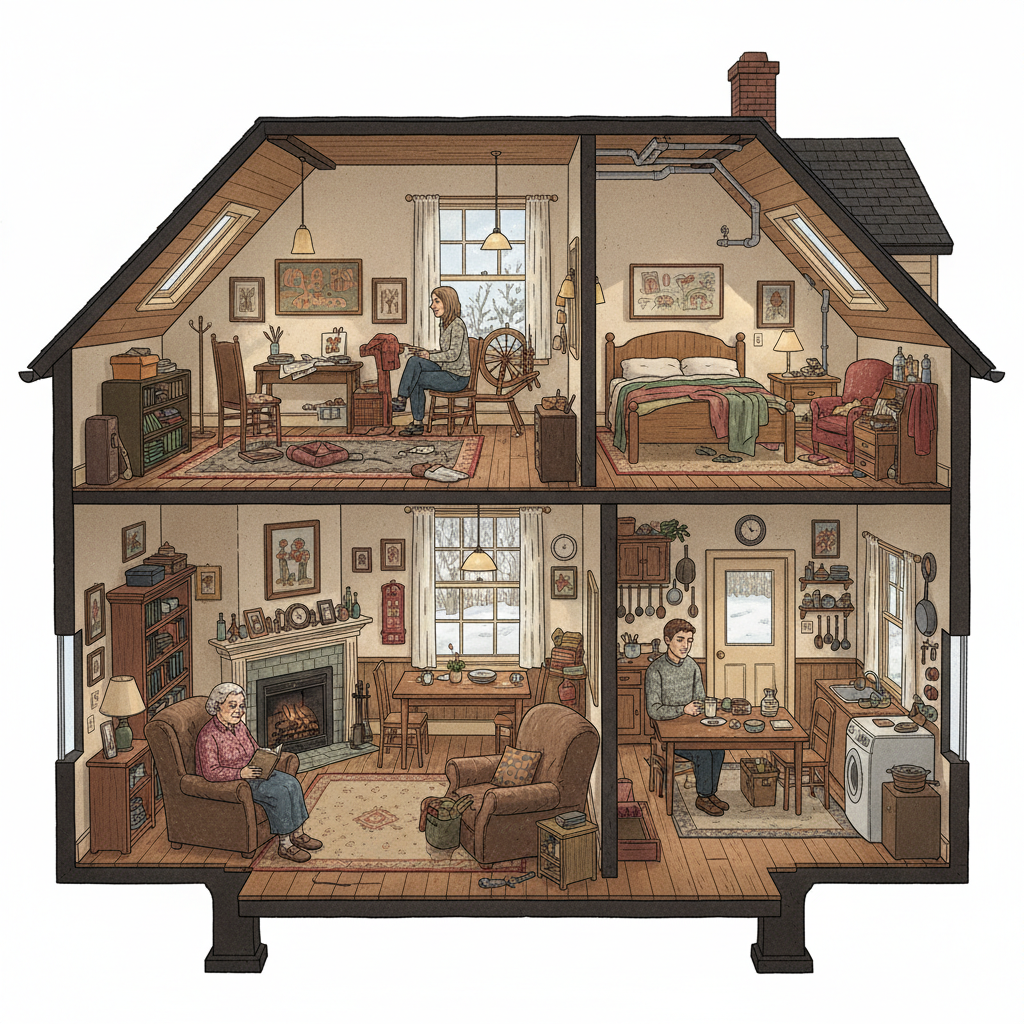
In some cases, Ontario seniors choose to relocate to their second property — making it their new principal residence. At that point, the property may qualify for a reverse mortgage, provided it meets all other eligibility criteria.
However, this decision carries significant implications:
-
CRA principal residence designation. The Canada Revenue Agency (CRA) allows only one principal residence designation per year. Switching your principal residence affects capital gains tax exposure on the former primary home. Speak to a tax professional before making this change.
-
Property standards. The second property must meet reverse mortgage lending standards: year-round access, permanent construction, adequate municipal services, and standard insurance coverage. Some rural or seasonal properties may not qualify even after you move in full-time.
-
Geographic restrictions. Not all areas of Ontario fall within every lender's service area. Properties in very remote locations may not be eligible regardless of occupancy status.
-
Timing. Lenders typically want to see evidence that you have been living in the new principal residence for a reasonable period (often 6–12 months) before considering it for a reverse mortgage. Moving in and immediately applying may raise questions.
Rick Sekhon can help you assess whether this strategy makes sense for your specific situation — including coordination with tax and estate planning professionals.
Estate and Tax Considerations for Multi-Property Owners
Owning multiple properties adds layers of complexity to your estate plan, particularly around capital gains tax. A reverse mortgage on your primary home can play a strategic role in managing these costs.
Key considerations:
- Deemed disposition at death. When you pass away, the CRA treats all properties as though they were sold at fair market value. Your principal residence is exempt from capital gains, but your second property is not.
- Capital gains on the second property can be substantial — particularly for properties held for decades in appreciating Ontario markets.
- A reverse mortgage can fund a life insurance policy to cover the anticipated capital gains tax, preserving the estate for your heirs. See reverse mortgage and life insurance inheritance protection.
- The no-negative-equity guarantee ensures that you will never owe more than the fair market value of your home, protecting your estate from downside risk. Learn more about reverse mortgage inheritance in Ontario.
For families focused on leaving a financial legacy, the living legacy planning approach provides a structured framework for using home equity strategically while preserving wealth for the next generation.
Common Mistakes Multi-Property Owners Make
- Assuming any property qualifies. The principal residence requirement is absolute — no exceptions, no workarounds.
- Misrepresenting which home is the primary residence. This is fraud and can result in the loan being called due immediately.
- Ignoring capital gains implications when selling a second property. A large capital gain can trigger the OAS clawback and affect GIS eligibility. Plan the timing of any sale carefully.
- Not exploring how a reverse mortgage on the primary home can optimize the overall portfolio. Many seniors do not realize that freeing up the primary home's equity can improve the financial performance of all their properties.
- Failing to coordinate with estate planning. Multiple properties require coordinated planning across tax, insurance, and estate documents.
FAQ
Can I get a reverse mortgage on a rental property in Ontario? No. All Canadian reverse mortgage lenders — CHIP (HomeEquity Bank), Equitable Bank, Bloom Financial, and Home Trust — require the property to be your principal residence. Rental and investment properties do not qualify under any circumstances.
What if I split my time equally between two homes? You must designate one as your principal residence. Lenders verify this through your tax filings, health card address, driver's licence, and insurance classification. You cannot have two principal residences simultaneously for reverse mortgage purposes.
Can I use reverse mortgage funds to buy a second property? Yes. There are no restrictions on how reverse mortgage proceeds are used. You could use the funds as a down payment on a second property, although you would need to qualify for a conventional mortgage or pay cash for the remainder.
Will owning a second property affect my reverse mortgage application on my primary home? Generally, no. The reverse mortgage is secured solely by your principal residence. Owning additional properties does not affect eligibility, although lenders may note other properties during the application process.
Can Rick Sekhon help with multi-property planning? Yes. Rick Sekhon works with Ontario seniors who own multiple properties to develop comprehensive strategies that may include a reverse mortgage on the primary home, advice on second property timing, and coordination with tax and estate professionals. Contact Rick for a free consultation.
Does the no-negative-equity guarantee apply if I own multiple properties? The guarantee applies specifically to the property securing the reverse mortgage — your principal residence. It means you will never owe more than that home's fair market value at the time the loan is repaid, regardless of what happens to your other properties.
Speak to a licensed mortgage professional. Independent legal advice is required before closing a reverse mortgage in Ontario.
Get your free Ontario Reverse Mortgage Guide →
This content is for illustrative purposes only. Rates may vary. Call Rick Sekhon for the best rates and more information.
Ready to Learn More?
Get the free Ontario Reverse Mortgage Guide and find out exactly how much you could unlock from your home.
Get My Free Guide →Related Articles
Reverse Mortgage on a Condo in Ontario: Complete 2026 Guide
Learn about reverse mortgages on condos in Ontario, including eligibility requirements, special considerations, and fees involved.
Read →Reverse Mortgage Eligibility in Ontario: Complete 2026 Guide
Everything Ontario homeowners need to know about qualifying for a reverse mortgage in 2026. Covers age requirements, home equity, property types, and the application process.
Read →Reverse Mortgage on a Cottage or Vacation Property in Ontario (2026)
Can you get a reverse mortgage on a cottage in Ontario? Learn why vacation properties don't qualify, plus strategies to unlock equity using your primary home.
Read →