
Reverse Mortgage and Nursing Homes: What Happens Next?
What happens to your reverse mortgage after a nursing home or long-term care move in Canada? Repayment timelines, spousal protections, and key penalties.
If you or your spouse may need to move to a nursing home or long-term care facility, the question of what happens to the reverse mortgage is often the first thing on your mind. For Ontario homeowners who took out a reverse mortgage to age in place, the prospect of a care facility move raises real financial concerns. Understanding how a reverse mortgage nursing home long-term care Canada transition works will help you plan ahead and avoid surprises.
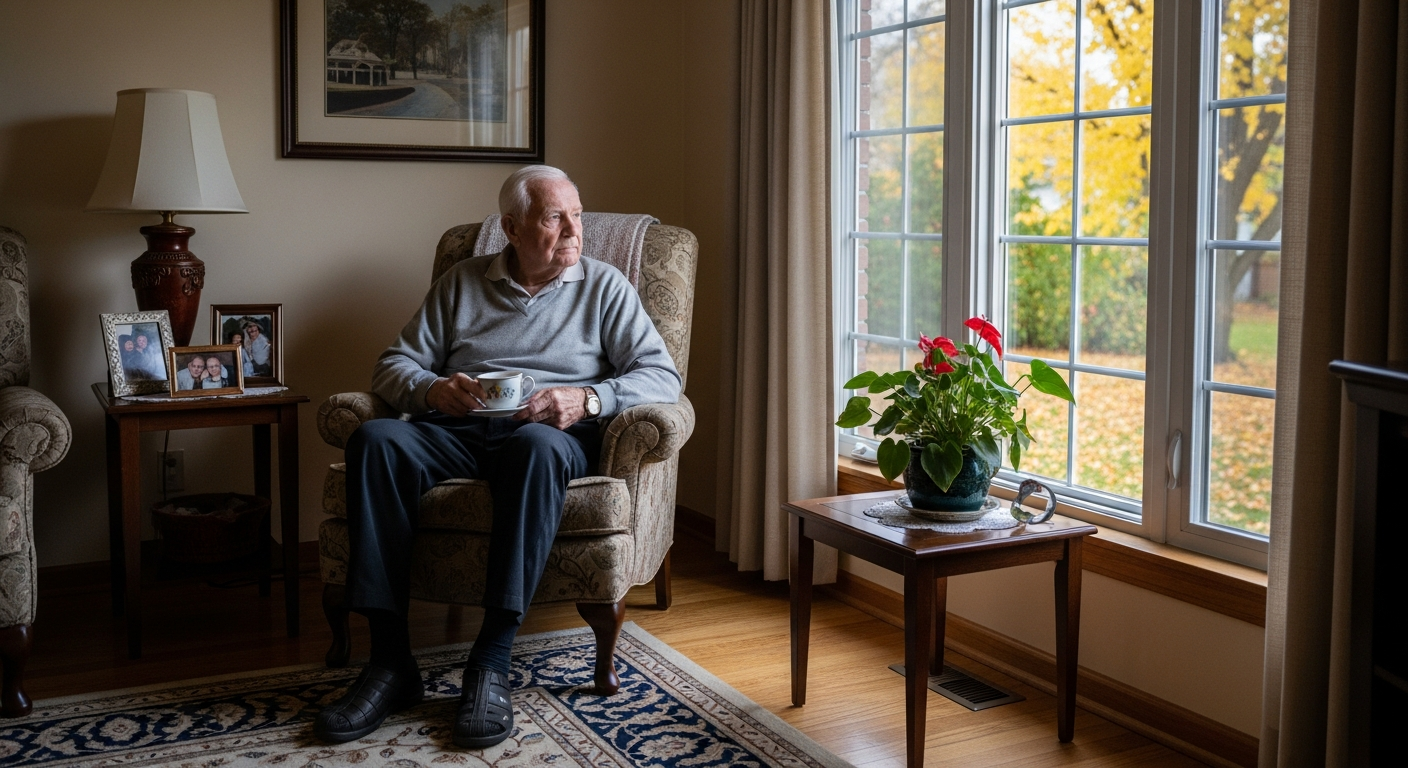
The good news: Canadian reverse mortgage contracts include clear rules, reasonable timelines, and significant consumer protections that many borrowers do not realize exist.
This article is for educational purposes only and does not constitute financial advice.
What happens to my reverse mortgage if I move to a nursing home?
A permanent move to a nursing home or long-term care facility triggers repayment of the reverse mortgage. This is one of the standard repayment events written into every Canadian reverse mortgage contract. When you move out of your home permanently, the lender considers the loan due and payable.
This is different from the repayment process triggered by a borrower's death, which is covered separately. Read what happens to a reverse mortgage when you die in Ontario →. With a nursing home move, you (or your family acting on your behalf) manage the repayment process while you are still living.
The key repayment triggers for any Canadian reverse mortgage are:
| Repayment Trigger | Timeline to Repay |
|---|---|
| Permanent move to nursing home / long-term care | Up to 12 months |
| Death of last surviving borrower | 6-12 months (estate settlement) |
| Voluntary sale of the home | Upon closing |
| Home ceases to be primary residence | Varies by contract |
| Default on property taxes, insurance, or maintenance | After notice and cure period |
Note the important distinction: a permanent move to a nursing home gives you up to 12 months to arrange repayment. This is not an emergency demand for immediate payment. You have time to sell the home, refinance, or make other arrangements.
How long do I have to repay after moving to long-term care?

Most Canadian reverse mortgage lenders provide up to 12 months from the date of a permanent move to a care facility. This timeline is designed to give borrowers and their families adequate time to arrange the sale of the home or otherwise repay the balance.
Both HomeEquity Bank (CHIP) and Equitable Bank allow up to 12 months for repayment after a permanent care move, provided the borrower or their representative notifies the lender.
According to HomeEquity Bank, borrowers or their representatives must notify the lender when a permanent move to a care facility occurs. The 12-month repayment window begins from the date the lender is notified and the move is confirmed as permanent.
It is important to understand what "permanent" means in this context. A temporary hospital stay, a short-term rehabilitation admission, or a respite care visit does not trigger repayment. The trigger applies only when the borrower has permanently left the home with no intention of returning.
What counts as a permanent move?
| Situation | Triggers Repayment? |
|---|---|
| Permanent admission to a long-term care home | Yes |
| Move to an assisted living or retirement residence (permanent) | Yes |
| Extended hospital stay with intent to return home | No |
| Short-term rehabilitation (weeks or months) | No |
| Respite care (temporary) | No |
| Seasonal absence (e.g., wintering in another province) | No |
If there is any ambiguity about whether a move is permanent, communicate with your lender early. The Financial Services Regulatory Authority of Ontario (FSRAO), which oversees mortgage lending practices in the province, expects lenders to act reasonably and in accordance with the terms of the contract.
Does CHIP reduce the prepayment penalty for nursing home moves?

Yes. HomeEquity Bank reduces the prepayment penalty by 50% when the borrower moves to a nursing home or long-term care facility. This is one of the most significant consumer protections in the Canadian reverse mortgage market, and it is not widely known.
Under standard terms, if you repay a CHIP Reverse Mortgage before the end of your term, you would normally owe a prepayment penalty. HomeEquity Bank recognizes that a move to care is often not a voluntary choice and reduces the penalty accordingly.
Here is what this looks like in practice:
| Scenario | Standard Prepayment Penalty | Nursing Home Penalty (50% Reduction) |
|---|---|---|
| $200,000 balance, 3 years remaining on 5-year term | ~$10,000 (estimated) | ~$5,000 (estimated) |
| $150,000 balance, 2 years remaining | ~$6,000 (estimated) | ~$3,000 (estimated) |
| $300,000 balance, 4 years remaining | ~$18,000 (estimated) | ~$9,000 (estimated) |
Actual penalties vary based on the Interest Rate Differential (IRD) calculation at the time of repayment. Contact your lender for exact figures.
Equitable Bank also has provisions for early repayment, though their penalty structure and any nursing home-specific reductions should be confirmed directly with the lender at the time of the move.
This 50% penalty reduction is a meaningful financial protection. If you are comparing reverse mortgage lenders and long-term care is a foreseeable possibility, this feature is worth weighing carefully. Learn more about your rights as a reverse mortgage borrower.
What if my spouse stays in the home?
If both spouses are registered as borrowers on the reverse mortgage, and one spouse moves to a nursing home while the other remains in the home, no repayment is triggered. The mortgage continues as normal, and the spouse still living in the home can stay indefinitely.
This is one of the most important protections for couples. As long as both partners are listed as co-borrowers (both must be 55+ and on the property title), the reverse mortgage remains in good standing while either borrower occupies the home. Repayment only arises when the last surviving borrower permanently leaves the home or passes away.
Planning ahead for couples
If only one spouse is currently on the reverse mortgage and the other is not, this is a critical gap to address. Speak with your lender or mortgage broker about adding the second spouse as a co-borrower. For eligibility details, see our complete eligibility guide.
According to the Financial Consumer Agency of Canada (FCAC), all reverse mortgage borrowers should ensure that both spouses are listed on the mortgage agreement to protect the remaining spouse's right to stay in the home if one partner moves to care or passes away.
This spousal protection is especially relevant in Ontario, where the average wait time for a long-term care bed is approximately 146 days. During this period, one spouse may be at home while the other is waiting for or transitioning into care, and the reverse mortgage should not be an additional source of stress.
Can I rent out my home instead of selling it?
Generally, no. A reverse mortgage requires that the property remain your primary residence. If you permanently move to a nursing home and rent out the home, this would violate the terms of your mortgage contract and could trigger a demand for immediate repayment.
However, there are nuances worth understanding:
Temporary absences: If you are temporarily in a care facility (rehabilitation, respite care) with a clear plan to return, the home still qualifies as your primary residence. Short-term absences do not trigger repayment.
Partial rental: Some lenders may permit renting a portion of the home (such as a basement apartment) while you continue to live in the primary unit. Discuss this with your lender before proceeding.
Family occupation: Having a family member stay in the home while you are temporarily away is generally acceptable, but if you have permanently moved to care, a family member living there does not satisfy the primary residence requirement.
For homeowners who want to explore how to maximize their home's value while aging in place, a strong strategy is to plan early, well before a care transition becomes necessary.
How much will I owe when the mortgage comes due?
The amount you owe is the original principal borrowed plus all accrued compound interest. Because reverse mortgages require no monthly payments, interest compounds over time, and the total balance grows each year.
Here is a worked example showing how the balance grows:
| Year | Starting Balance | Interest (7.00%) | Year-End Balance |
|---|---|---|---|
| 1 | $150,000 | $10,500 | $160,500 |
| 2 | $160,500 | $11,235 | $171,735 |
| 3 | $171,735 | $12,021 | $183,756 |
| 4 | $183,756 | $12,863 | $196,619 |
| 5 | $196,619 | $13,763 | $210,382 |
In this example, a $150,000 reverse mortgage at 7% grows to approximately $210,000 after 5 years. On a home originally worth $300,000 that appreciates at even a modest 3% annually, the home would be worth approximately $348,000 after 5 years, leaving roughly $138,000 in equity after repaying the reverse mortgage.
The No-Negative-Equity Guarantee provided by both HomeEquity Bank and Equitable Bank means you will not owe more than the fair market value of your home at the time of sale. No Canadian reverse mortgage borrower has ever owed more than their home was worth. For a detailed explanation of how this guarantee protects your estate, see our inheritance guide.
Consult an estate planning lawyer for advice specific to your family situation.
Reverse mortgage proceeds are also completely tax-free, which means the full amount you receive is yours to use. For more on the tax treatment, see our tax implications guide.
Consult a qualified tax advisor for guidance specific to your situation.
Understanding Ontario long-term care costs
Planning for a potential nursing home move is not just about the reverse mortgage. Understanding the costs of long-term care in Ontario helps you see the full financial picture.
Ontario long-term care homes charge accommodation fees set by the provincial government. As of 2025-2026:
| Accommodation Type | Monthly Cost | Annual Cost |
|---|---|---|
| Basic (ward — 3-4 beds per room) | $1,891 | $22,692 |
| Semi-private (2 beds per room) | $2,280 | $27,360 |
| Private (single room) | $2,701 | $32,412 |
These fees cover accommodation and meals only. For seniors who need to bridge the gap between their income and long-term care costs, improving retirement cash flow through a reverse mortgage before the move can provide a financial cushion.
With an average Ontario long-term care waitlist of approximately 146 days, many families face a period where they are paying for interim private care while waiting for a government-funded bed. Planning ahead with accessible home equity can ease this transition.
Protecting yourself: steps to take now
Whether a nursing home move is imminent or simply a future possibility, there are practical steps you can take to protect yourself and your family:
- Ensure both spouses are on the reverse mortgage — this is the most critical protection for couples
- Understand your lender's notification requirements — know who to contact and what documentation is needed if a permanent move occurs
- Keep your home maintained — a well-maintained property sells faster and for a better price, shortening the repayment timeline
- Consider a power of attorney — designate someone who can manage the reverse mortgage and home sale on your behalf if you are unable to do so
- Know your consumer rights — both FSRAO (provincially) and FCAC (federally) oversee reverse mortgage lenders and can assist with disputes. Learn more about your protections in our consumer rights guide
- Obtain independent legal advice — independent legal advice is required before closing a reverse mortgage in Ontario and helps protect your interests
For homeowners who want to stay in their homes as long as possible, investing in accessibility upgrades can delay or prevent the need for a care facility altogether. See how to fund aging-in-place renovations with a reverse mortgage →
Frequently asked questions
Does a reverse mortgage prevent me from moving to a nursing home?
No. A reverse mortgage has no effect on your ability to enter a nursing home or long-term care facility. It is purely a financial arrangement secured against your home. You are free to move to care at any time; doing so simply triggers the repayment process described above.
Can I use reverse mortgage proceeds to pay for long-term care costs?
Yes. Many Ontario seniors use reverse mortgage funds to cover private care costs, hire in-home caregivers, or pay for retirement residence fees. The proceeds are tax-free and can be used for any purpose, including care-related expenses. This can be an effective aging in place strategy.
What happens if I move to care temporarily and then return home?
A temporary move to a care facility does not trigger reverse mortgage repayment. If you enter a rehabilitation program, have a short hospital stay, or use respite care with the intention of returning home, your reverse mortgage continues as normal. The repayment trigger applies only to permanent moves.
Will my reverse mortgage affect my eligibility for government-subsidized long-term care?
Reverse mortgage proceeds are not considered income. They should not affect your eligibility for Ontario's subsidized long-term care accommodation rates, which are based on income testing. However, if the funds sit in a bank account, they may count as assets for certain means-tested programs. Consult with a financial advisor for your specific situation.
Can my family contest or delay the repayment if I move to care?
The repayment timeline is set by the mortgage contract, typically up to 12 months. If your family needs additional time, they should communicate directly with the lender as early as possible. Lenders have some discretion in exceptional circumstances, but the contractual timeline remains the governing framework.
What if I want to move to a retirement residence, not a nursing home?
The same repayment rules apply. Whether you move to a nursing home, long-term care facility, assisted living, or retirement residence, any permanent move away from the home that is secured by the reverse mortgage triggers the repayment obligation. The type of care facility does not change the contractual terms.
A move to long-term care is a significant transition for any Ontario family. Understanding how your reverse mortgage fits into that transition removes one source of uncertainty and helps you focus on what matters most: the quality of care for you or your loved one.
Speak to a licensed mortgage professional. Independent legal advice is required before closing a reverse mortgage in Ontario.
Get your free Ontario Reverse Mortgage Guide →
This content is for illustrative purposes only. Rates may vary. Call Rick Sekhon for the best rates and more information.
Ready to Learn More?
Get the free Ontario Reverse Mortgage Guide and find out exactly how much you could unlock from your home.
Get My Free Guide →Related Articles
Reverse Mortgage Eligibility in Ontario: Complete 2026 Guide
Everything Ontario homeowners need to know about qualifying for a reverse mortgage in 2026. Covers age requirements, home equity, property types, and the application process.
Read →What Happens to a Reverse Mortgage When You Die in Ontario? A Guide for Families
What happens to your home and reverse mortgage when you pass away in Ontario? A clear guide for homeowners and their families on estate settlement, repayment, and protecting your heirs.
Read →Reverse Mortgage for Workplace Injury Recovery: Supporting Adult Child's Career Transition
Help your adult child rebuild their career after workplace injury. Learn how reverse mortgages fund recovery, retraining, and financial stability during career transition.
Read →