
Reverse Mortgage for Mobility Equipment: Funding Walkers, Lifts, and Essential Accessibility Aids
Fund essential mobility equipment and accessibility aids to stay independent at home. Wheelchair lifts, walkers, grab bars, and medical equipment for Ontario seniors.
Are you delaying purchasing critical mobility equipment because of cost? Walkers, wheelchair lifts, grab bars, and accessibility aids can cost thousands—but they're essential to staying independent, safe, and aging in place at home.
This article is for educational purposes only and does not constitute financial advice.
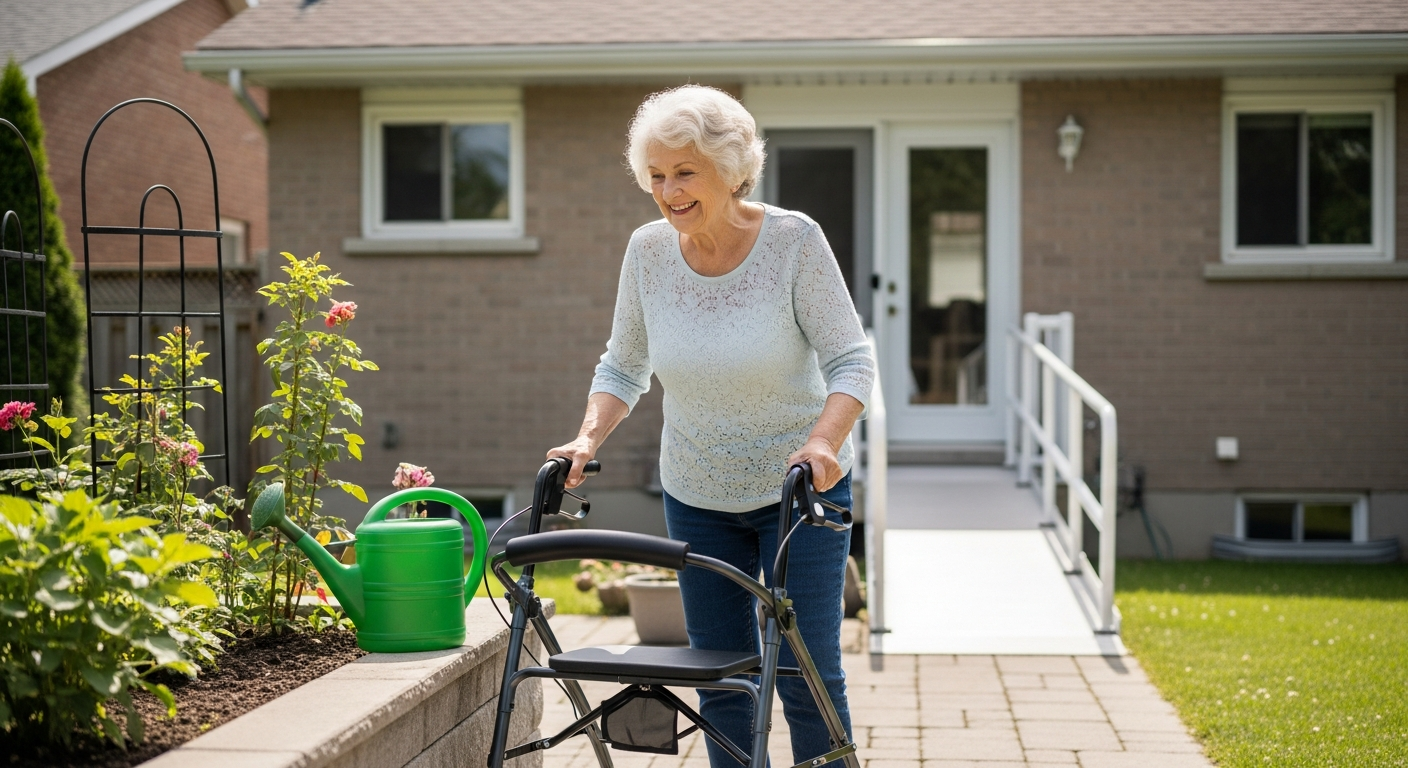
Many Ontario seniors face a difficult choice: continue using inadequate mobility aids to stay within budget, or invest in proper equipment and risk financial stress. A reverse mortgage offers a third way—unlocking home equity to fund equipment that improves safety, independence, and quality of life.
The Real Cost of Mobility Equipment in Ontario
Aging in place safely requires proper equipment. Many seniors are shocked by the actual costs:
| Equipment Type | Price Range in Ontario | Purpose |
|---|---|---|
| Mobility Walker (standard to rollator) | $200–$1,000 | Balance and walking assistance |
| Cane or walking stick (standard to adjustable) | $50–$500 | Single-point support for lighter mobility issues |
| Wheelchair (manual standard to motorized) | $1,500–$8,000+ | Full mobility for non-ambulatory seniors |
| Vertical stair lift (curved or straight) | $3,000–$15,000 | Access to different home levels safely |
| Chair lift (sitting lift) | $4,000–$12,000 | Powered assistance rising from chairs |
| Toilet seat with grab bars | $300–$2,000 | Safe toileting and standing |
| Shower chair or bench | $200–$1,000 | Seated showering support |
| Grab bars (multiple installation) | $500–$3,000 | Fall prevention throughout home |
| Bathroom safety rails and handles | $800–$2,500 | Comprehensive bathroom modification |
| Hospital bed or adjustable bed | $1,500–$5,000 | Proper support and positioning |
| Ceiling hoist or lift system | $3,000–$8,000 | Safe transfer for caregivers and users |
| **Comprehensive accessibility equipment package | $15,000–$50,000+ | Multiple aids for aging in place |
According to Statistics Canada, nearly 1 in 4 Canadians over 65 report activity limitations due to mobility issues. Equipment to address these limitations is often considered "luxury" by retirees on fixed incomes, but it's critical to independence and safety.
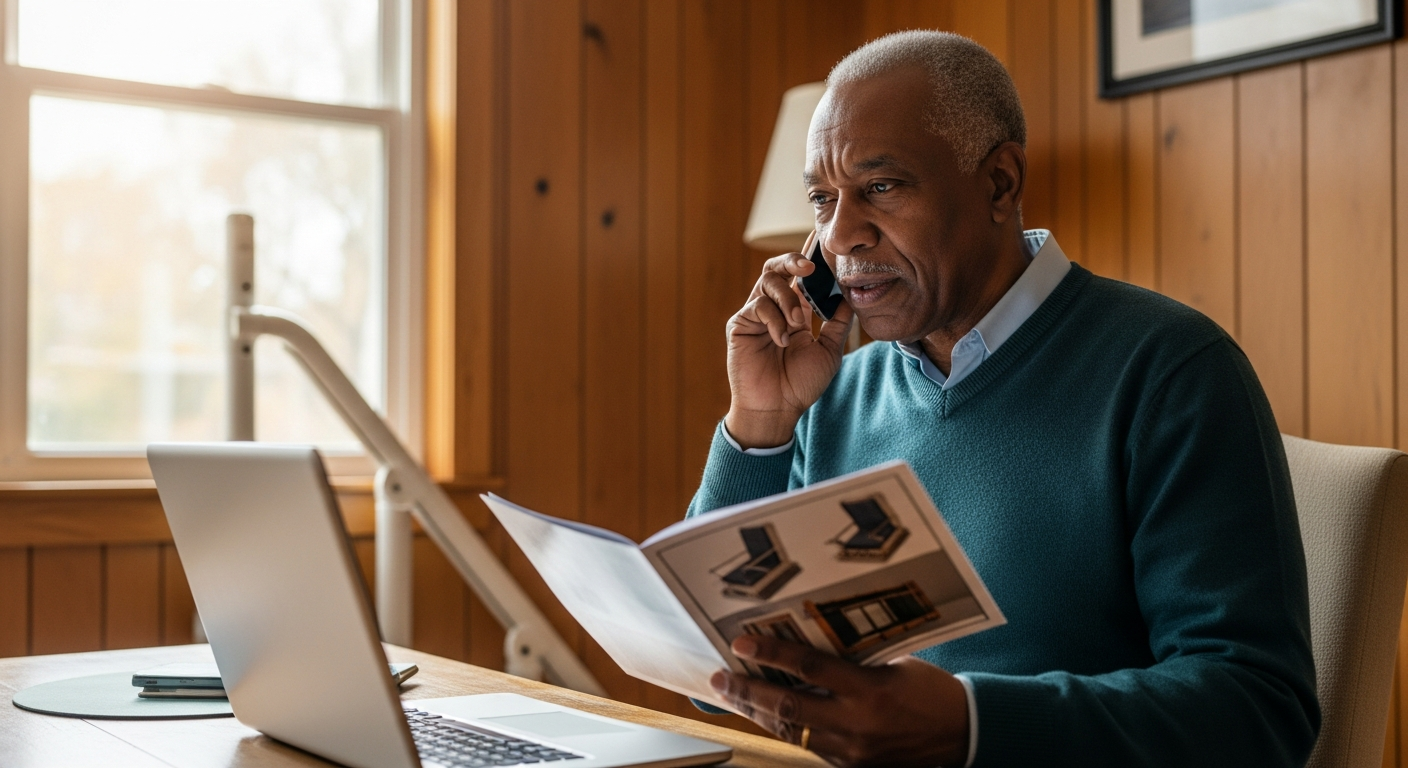
How a Reverse Mortgage Funds Essential Mobility Equipment
A reverse mortgage allows homeowners 55+ to access home equity without monthly payments. For mobility equipment, this creates immediate access to funds that improve safety and independence.
James's Story: From Unsafe to Independent
James, 72, had a fall last year. His arthritis worsened, and stairs became dangerous. His physician recommended a stair lift and several grab bars throughout his home. Total cost: $12,000.
James's pension and CPP were stable but modest. He had minimal savings and couldn't afford $12,000 in equipment costs. He considered moving to a bungalow or retirement community—both emotionally painful and financially complicated.
Instead, James met with Rick Sekhon about a reverse mortgage. His home in London was worth $420,000 with no mortgage. A reverse mortgage on Equitable Bank allowed him to access $150,000 in equity with no monthly payments.
Within 4 weeks, James had:
- Curved stair lift installed ($8,000)
- Grab bars in bathroom, hallway, and bedroom ($2,500)
- Motorized lift chair for standing assistance ($2,000)
- Emergency alert system ($500)
Result: James remains independent in his own home. He climbs stairs safely. He reduced fall risk dramatically. His children sleep easier knowing their father is safe.
Types of Essential Mobility Equipment
Lower-Body Mobility Support
Walkers and canes provide balance and walking assistance:
- Standard walkers ($200–$500) — good for indoor use
- Rollator walkers ($400–$1,000) — wheeled, with brakes and seat
- Canes ($50–$300) — single-point support
Stair management equipment solves the stair problem:
- Straight stair lifts ($3,000–$8,000) — ideal for simple stairways
- Curved stair lifts ($8,000–$15,000) — required for curved stairs or multiple levels
- Ramps (exterior) ($800–$3,000) — alternative to stairs for wheelchair users
Bathroom and Toileting Safety
Safety in the bathroom is critical—falls here are especially dangerous:
- Grab bars ($50–$300 per installation; $500–$3,000 comprehensive)
- Toilet safety frames ($300–$800)
- Shower chairs and benches ($200–$1,000)
- Walk-in tubs or roll-in showers ($2,000–$10,000)
Bedroom and Lying Support
Proper support prevents pressure sores and aids positioning:
- Hospital beds ($1,500–$5,000)
- Electric adjustable beds ($2,000–$4,000)
- Bed rails ($300–$800)
- Mattress overlays for pressure relief ($500–$2,000)
Transfer and Lifting Equipment
For seniors with limited mobility or caregivers:
- Ceiling hoists and tracks ($3,000–$8,000)
- Portable mechanical lifts ($1,500–$3,000)
- Sling systems for lifting ($200–$500 per sling)
- Transfer boards ($50–$200)
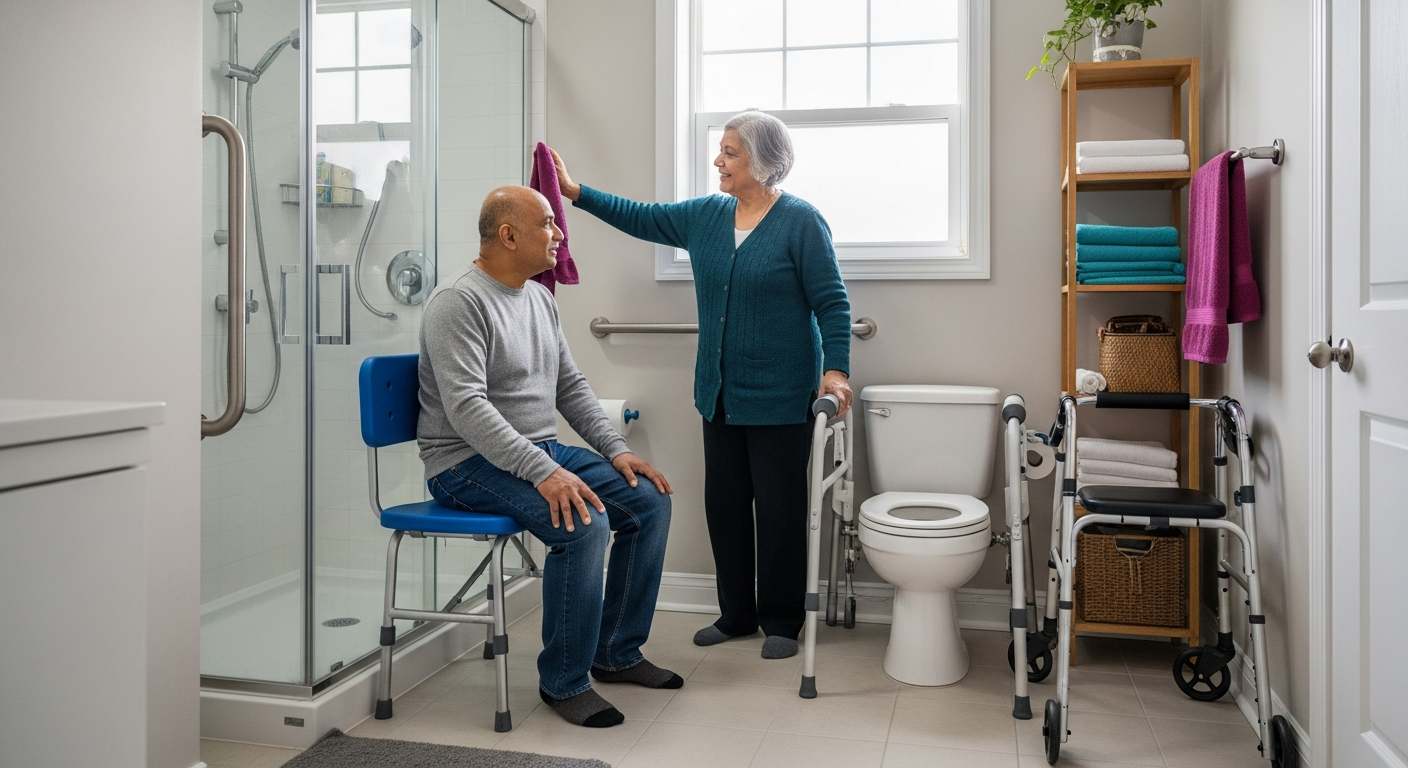
Combining Equipment with Home Modifications
Mobility equipment works best with complementary home modifications:
✓ Wider doorways — Equipment like wheelchairs and walkers need passage space
✓ Ramps instead of stairs — Wheelchair access requires gentle slope ramps (not steep driveways)
✓ Accessible kitchen — Lower counters and open space under sinks for wheelchair or walker access
✓ Bedroom on main floor — Avoids repeated stair use with mobility devices
✓ Accessible entryway — Zero-step entry and secure grab bars for entering home safely
A reverse mortgage can fund both equipment purchases and the structural modifications that make equipment effective.
Funding Equipment: Lump Sum vs. Line of Credit
Option 1: Lump Sum Withdrawal
Access all needed funds at once. Best if you have immediate, comprehensive equipment needs and want to complete setup quickly.
Pros: Simple process, all funds available immediately, no ongoing interest accrual decisions
Cons: Pay interest on full amount even if you use equipment over time
Option 2: Line of Credit
Set up a reverse mortgage line of credit (available from HomeEquity Bank and Equitable Bank). Access funds as equipment purchases occur, minimizing interest on unused funds.
Pros: Pay interest only on funds used, flexibility for new equipment needs over time, no rush to complete purchases
Cons: Ongoing administration, potentially higher interest if rates change
Frequently Asked Questions
Does provincial health coverage help pay for mobility equipment?
Partially. Ontario's Ministry of Health covers some equipment (canes, walkers, basic grab bars) through the Assistive Devices Program (ADP). However, coverage limits exist, and more expensive equipment (lifts, motorized wheelchairs, stair lifts) requires private payment or insurance. A reverse mortgage bridges this gap.
Can I deduct mobility equipment costs on my taxes?
Possibly. Medical device expenses may qualify for the Disability Tax Credit (DTC) if you're eligible. Consult a tax advisor. Some equipment can also be claimed as a medical expense on your tax return if income is low enough.
What if I purchase equipment and my mobility improves?
Mobility equipment retains resale value. You can sell unused equipment (especially expensive items like stair lifts or motorized lifts) to recoup some costs. Alternatively, donate equipment to charities serving seniors.
Will mobility equipment affect my home's resale value?
Generally, accessibility equipment doesn't negatively impact resale value—if anything, it increases value for aging buyers. However, permanent fixtures like stair lifts and grab bars remain with the home. Removable equipment (lift chairs, shower chairs) go with you.
Can a reverse mortgage fund equipment for both me and my aging parent?
Yes, if you're the homeowner. You can use reverse mortgage funds for your own equipment and to help pay for your parent's equipment as a way of supporting their care.
Taking Action: Getting the Equipment You Need
Step 1: Assess your mobility needs Meet with your physician or occupational therapist to identify which equipment would improve your safety and independence most.
Step 2: Get quotes from equipment suppliers Contact local medical supply companies (Lifeline, Independent Living, Medical Equipment Depot, etc.) for pricing on specific items.
Step 3: Evaluate your home equity Contact Rick Sekhon Reverse Mortgages for a no-obligation assessment of your borrowing capacity.
Step 4: Obtain independent legal advice Required before closing. Your lawyer ensures you understand the terms and long-term implications.
Step 5: Fund and install Once approved, use reverse mortgage funds to purchase and install equipment.
Step 6: Maintain and adjust As needs change over time, you can access additional funds through a line of credit for new equipment.
Speak to a licensed mortgage professional. Independent legal advice is required before closing a reverse mortgage in Ontario.
Key Takeaways
| Question | Answer |
|---|---|
| Can I use a reverse mortgage specifically to buy mobility equipment? | Yes. Equipment costs are a legitimate use of reverse mortgage funds. |
| What's the most expensive mobility equipment? | Ceiling hoists ($3,000–$8,000) and stair lifts ($3,000–$15,000) are among the priciest, but they're critical for accessibility. |
| Will equipment reduce my home's value if I eventually sell? | Most equipment doesn't reduce value. Permanent fixtures like stair lifts may actually increase value for aging buyers. |
| Can I get help paying for equipment from government programs? | Ontario's Assistive Devices Program (ADP) covers some basic equipment. A reverse mortgage covers the gap for expensive items. |
This content is for illustrative purposes only. Rates may vary. Call Rick Sekhon for the best rates and more information.
Ready to Learn More?
Get the free Ontario Reverse Mortgage Guide and find out exactly how much you could unlock from your home.
Get My Free Guide →Related Articles
Reverse Mortgage for Home Renovations: Aging in Place Guide for Ontario Seniors
Learn how to use a reverse mortgage to fund home renovations and modifications that let you age in place safely and comfortably in your Ontario home. Includes cost examples and step-by-step process.
Read →Aging in Place with a Reverse Mortgage: Home Modification Guide
How Ontario seniors can fund aging-in-place home modifications with a reverse mortgage — costs, top modifications, grants, and a complete planning guide.
Read →Reverse Mortgage for Medical Devices and Mobility Equipment
Learn how Ontario seniors can use reverse mortgages to fund essential medical devices, mobility aids, and specialized equipment to maintain independence and safety at home.
Read →