
Reverse Mortgage in London Ontario: 2026 Guide
Learn how London, Ontario homeowners 55+ can access home equity with a reverse mortgage. Local property values, eligibility, and lender options.
London, Ontario — the Forest City — is home to more than 90,000 residents aged 55 and older, many of whom bought their homes decades ago when $150,000 could buy a three-bedroom house in Byron or Wortley Village. Today those same homes are worth $650,000 to $900,000, yet the pension cheque and RRIF income have not grown to match. If you are sitting on substantial home equity while struggling to cover rising property taxes, overdue renovations, or the cost of helping your adult children enter the housing market, a reverse mortgage may be the most tax-efficient way to unlock that wealth — without selling your home or making monthly payments.
This article is for educational purposes only and does not constitute financial advice.
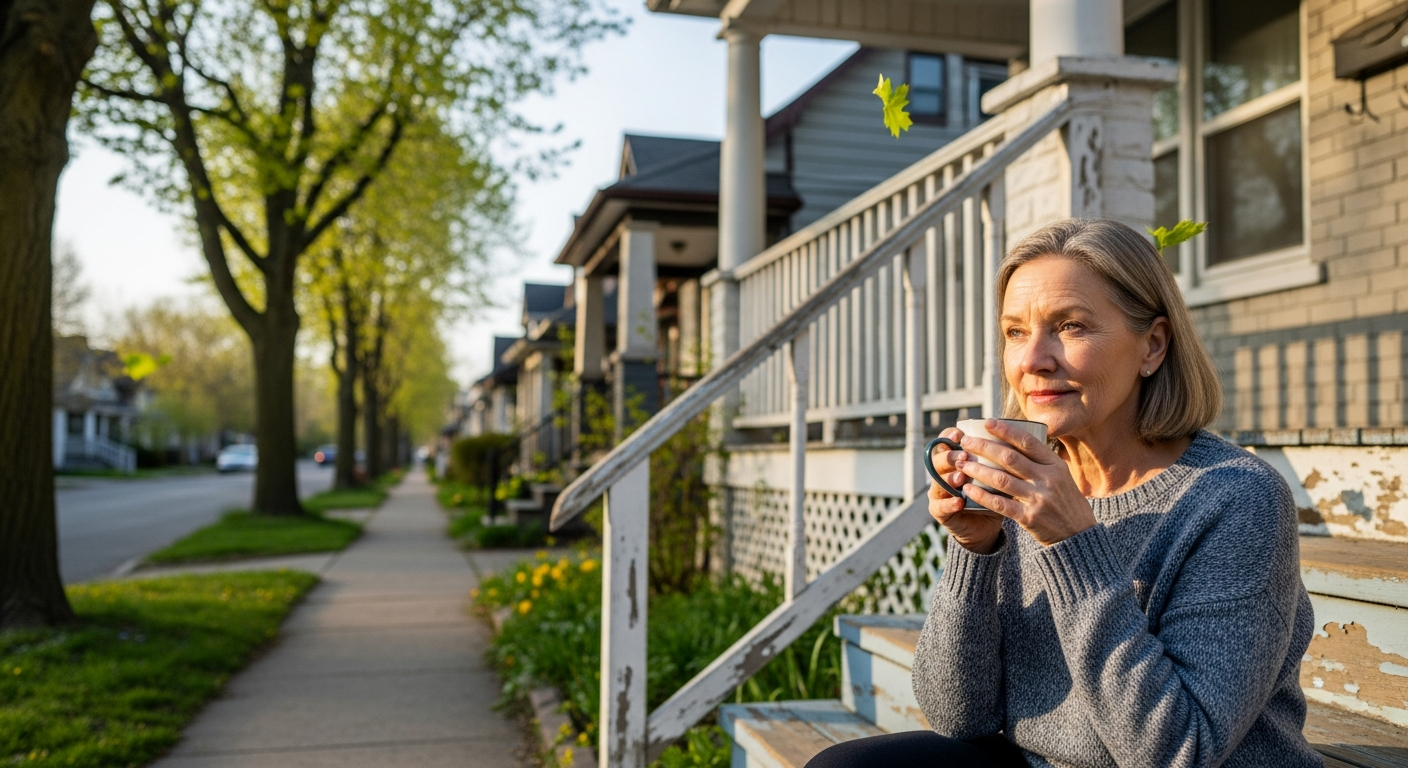
London Ontario Housing Market: 2026 Snapshot
London's real estate market has transformed over the past fifteen years. Migration from the Greater Toronto Area, a growing technology sector, and anchor institutions like Western University and London Health Sciences Centre have pushed property values well beyond what long-time residents expected. London is no longer the "affordable alternative" it once was — it is a mid-tier Ontario market where detached homes routinely sell above $600,000.
According to the London and St. Thomas Association of Realtors (LSTAR), average residential sale prices across the London Census Metropolitan Area in early 2026 are as follows:
| Property Type | Average Price (London CMA, Q1 2026) |
|---|---|
| Detached home | $628,000 |
| Semi-detached | $495,000 |
| Townhouse / row home | $445,000 |
| Condominium apartment | $375,000 |
These averages mask significant variation across London's distinct neighbourhoods. For reverse mortgage purposes, the appraised value of your specific property — not the city average — determines how much you can access:
| London Neighbourhood | Avg. Detached Home Price | Neighbourhood Character |
|---|---|---|
| Old North / Masonville | $750,000–$1,000,000 | Walkable to Western University, mature trees, premium lots |
| Byron / West London | $650,000–$850,000 | Family-oriented, established, excellent schools |
| Wortley Village / Old South | $600,000–$820,000 | Heritage homes, walkable village centre, sought-after |
| Westmount | $600,000–$750,000 | Central location, diverse housing stock, strong appreciation |
| Lambeth / South London | $580,000–$700,000 | Mix of newer and established suburban homes |
| North London / Stoneybrook | $550,000–$680,000 | Solid mid-range residential, good transit access |
| White Oaks / Westminster | $500,000–$650,000 | Suburban, well-maintained, mature community |
| East London / Argyle | $450,000–$580,000 | Most affordable, strong recent appreciation |
| St. Thomas (nearby) | $480,000–$600,000 | Small-city charm, growing demand from London spillover |
For a long-time homeowner in Byron who purchased for $175,000 in the early 2000s, the home is now worth approximately $700,000 or more. That $525,000 gain sits locked inside the property — a reverse mortgage is one of the only financial tools that converts it into usable, tax-free cash while you continue living in the home.
How a Reverse Mortgage Works for Forest City Seniors
A reverse mortgage allows homeowners aged 55 and older to borrow against their home equity without making monthly mortgage payments. The loan — plus accumulated interest — is repaid only when the home is sold, the borrower moves out permanently, or passes away. You retain full ownership and title to your home throughout the life of the loan.

Four lenders currently offer reverse mortgages to London, Ontario homeowners:
- HomeEquity Bank — offers the CHIP Reverse Mortgage, Canada's largest and most established reverse mortgage product, including the CHIP Income Advantage for scheduled monthly advances
- Equitable Bank — provides competitive rates and flexible terms, often the lowest fixed rate option
- Bloom Financial — a newer entrant with unique product features including a lifetime rate-lock option
- Home Trust — offers the EquityAccess reverse mortgage for qualifying properties
All lenders are federally regulated by OSFI (Office of the Superintendent of Financial Institutions). In Ontario, the Financial Services Regulatory Authority of Ontario (FSRAO) provides additional consumer protection oversight for mortgage brokers and the lending process.
Eligibility Requirements for London Homeowners
Eligibility criteria are consistent across Ontario — for the complete breakdown, see reverse mortgage eligibility in Ontario:
- You must be 55 years of age or older (both spouses if applying jointly)
- The property must be your primary residence
- You must own the property and have sufficient equity (typically at least 50%)
- The property must be in acceptable condition
- No minimum income or credit score requirement
London properties qualify without difficulty. The city's stable housing market, well-maintained housing stock, and strong municipal services make it an attractive market for all four lenders. Whether you own a century home in Wortley Village, a split-level in Byron, a bungalow in Westmount, or a condominium near Masonville Place, your property type is eligible.
How Much Can London Homeowners Access?
The amount available depends on your age, the appraised value of your home, and the lender. Older borrowers qualify for a higher loan-to-value (LTV) percentage. Here is what London homeowners at different ages and home values can potentially receive:
| Your Age | Home Value $450,000 | Home Value $600,000 | Home Value $750,000 | Home Value $900,000 |
|---|---|---|---|---|
| 55 | Up to $90,000 | Up to $120,000 | Up to $150,000 | Up to $180,000 |
| 60 | Up to $112,500 | Up to $150,000 | Up to $187,500 | Up to $225,000 |
| 65 | Up to $135,000 | Up to $180,000 | Up to $225,000 | Up to $270,000 |
| 70 | Up to $157,500 | Up to $210,000 | Up to $262,500 | Up to $315,000 |
| 75 | Up to $180,000 | Up to $240,000 | Up to $300,000 | Up to $360,000 |
| 80+ | Up to $225,000 | Up to $300,000 | Up to $375,000 | Up to $450,000 |
Approximate figures. Actual amounts depend on the specific lender, property details, existing mortgage balance, and current interest rates. See how much can I get with a reverse mortgage in Ontario for more detail.
Rick Sekhon works with London homeowners regularly and sees consistent patterns: "London is a sweet spot for reverse mortgages. Home values are high enough to generate meaningful funds — $150,000 to $350,000 is common — but the cost of living is significantly lower than Toronto or Ottawa, so the money goes further. A London homeowner can often solve their entire retirement cash flow challenge with a single reverse mortgage."
Current Interest Rates for London Homeowners (Spring 2026)
| Lender | Fixed Rate (5-Year Term) | Variable Rate |
|---|---|---|
| HomeEquity Bank (CHIP) | 7.19%–7.99% | Available on request |
| Equitable Bank | 6.99%–7.79% | Available on request |
| Bloom Financial | Varies by product | Varies by product |
| Home Trust | Varies by product | Varies by product |
Rates are subject to change. For the most current information, see reverse mortgage interest rates in Ontario 2026 or contact Rick Sekhon for a personalized quote.
According to the Bank of Canada, the policy interest rate in early 2026 has settled at approximately 2.75% following the rate cuts of late 2024 and 2025, which has helped stabilize reverse mortgage fixed rates. For a detailed analysis of rate trends, see Bank of Canada rate cuts and reverse mortgages in 2026.
How London Homeowners Are Using Reverse Mortgages
Based on Rick Sekhon's experience working with Forest City clients, the most common uses of reverse mortgage funds in London include several distinct categories.
Eliminating Monthly Debt Payments
Many London homeowners carry conventional mortgages, HELOCs, or lines of credit into their 60s and 70s. The cost of maintaining these payments on a fixed retirement income creates serious financial pressure. A reverse mortgage pays off all existing secured debts and eliminates monthly payments entirely. For homeowners dealing with debt stress, our debt relief in Ontario page explains how this strategy works in detail.
Funding Home Renovations and Aging in Place
London has a large stock of homes built between the 1950s and 1980s — solid houses that need updating for accessibility and modern comfort. Common renovation projects funded by reverse mortgages include:
| Renovation Project | Typical Cost in London | Purpose |
|---|---|---|
| Bathroom accessibility upgrade | $8,000–$25,000 | Walk-in shower, grab bars, anti-slip flooring |
| Stairlift installation | $3,000–$15,000 | Safe access to upper/lower floors |
| Main-floor bedroom conversion | $5,000–$15,000 | Eliminate stair dependency entirely |
| Kitchen modifications | $5,000–$20,000 | Accessible counters, pull-out shelving, lever handles |
| HVAC and insulation upgrade | $5,000–$15,000 | Year-round comfort and energy savings |
| Exterior ramp and railings | $2,000–$8,000 | Safe entry and exit in all London seasons |
For a comprehensive guide to making your home work for you as you age, visit our aging in place in Ontario page.

Supplementing Retirement Income
According to Statistics Canada, the median after-tax income for seniors aged 65 and older in the London Census Metropolitan Area is approximately $31,000 per year. For many London retirees — particularly those without employer pensions — this is not enough to cover property taxes, utilities, insurance, food, healthcare, and occasional enjoyment of life. A reverse mortgage provides tax-free funds that do not appear on your tax return and do not trigger OAS clawbacks or affect GIS eligibility. For details on the tax treatment, see reverse mortgage tax implications in Canada.
Supporting Family Through a Living Legacy
London's strong sense of community means many seniors want to help children and grandchildren with down payments, education costs, or financial emergencies. With London housing prices now requiring $60,000 or more as a down payment, a reverse mortgage allows parents and grandparents to provide meaningful financial support through a living legacy — while they are alive to see the impact, rather than leaving everything in a will.
Enhancing Retirement Cash Flow
For homeowners who want to explore the full range of retirement income strategies, including how reverse mortgages interact with RRIF drawdowns, CPP timing, and OAS optimization, our retirement cash flow planning page provides a detailed framework.
London-Specific Considerations
The Western University Neighbourhood Premium
Western University and its affiliated colleges (Brescia, Huron, King's) create a unique dynamic in London's housing market. Neighbourhoods near campus — Old North, Masonville, Broughdale — command premium prices and have strong, consistent demand from both families and investors. For homeowners in these areas, reverse mortgage appraisals often come in higher than expected because of the proximity premium. A homeowner in Old North with a property valued at $850,000 could access $250,000 or more depending on age — significantly more than the London average.
Property Types Across London
| Property Type | Prevalence in London | Eligible for Reverse Mortgage? |
|---|---|---|
| Single-family detached | Very common | ✓ Yes |
| Semi-detached | Common | ✓ Yes |
| Freehold townhouse | Increasing (new developments) | ✓ Yes |
| Condominium apartment | Growing (downtown, Masonville) | ✓ Yes (condo must be in good standing) |
| Rural property (Middlesex County) | Common outside city | Case-by-case assessment |
| Owner-occupied duplex/triplex | Common in older areas | ✓ Some lenders if owner-occupied |
| Mobile/manufactured home | Limited | ✗ Generally not eligible |
For condominium-specific guidance, see reverse mortgage for condos in Ontario.
The Healthcare Hub Advantage
London is southwestern Ontario's healthcare capital, home to London Health Sciences Centre, St. Joseph's Health Care, and numerous specialized clinics. Many of Rick Sekhon's London reverse mortgage clients are retired healthcare workers — nurses, technicians, administrators — who have good pensions but need additional funds for renovations, travel, or family support. The city's healthcare infrastructure also makes it an ideal place to age in place, reinforcing the value of staying in your London home rather than relocating.
The Appraisal Process for London Properties
Every reverse mortgage requires a professional appraisal. For London homes, the appraiser evaluates:
- Recent comparable sales in your specific neighbourhood
- The condition, age, and size of the home
- Lot size and property features
- Unique characteristics (heritage designation, proximity to Western, Thames River frontage)
- Local market trends and neighbourhood trajectory
The appraisal typically costs $300–$500 and can be deducted from the reverse mortgage advance so there is no out-of-pocket expense. For a detailed explanation of what to expect, see reverse mortgage appraisal process in Ontario.
Rick Sekhon coordinates the appraisal process for all London clients: "I work with appraisers who know the London market — they understand why Old North commands a premium over East London, why Byron bungalows are in such high demand, and why Wortley Village heritage homes appraise at the top of their range. An appraiser with local knowledge produces a more accurate and typically more favourable valuation."
The No-Negative-Equity Guarantee
Both HomeEquity Bank and Equitable Bank guarantee that you will never owe more than the fair market value of your home at the time of repayment. This means that even if London property values were to decline and the loan balance grew beyond the home's value, neither you nor your estate would owe the difference. For more information about what happens to the home and inheritance, see reverse mortgage inheritance in Ontario.
According to the FCAC (Financial Consumer Agency of Canada), this no-negative-equity guarantee is a fundamental consumer protection built into the reverse mortgage agreement that applies automatically to every borrower.
Getting Started: Working With Rick Sekhon
If you are a London homeowner considering a reverse mortgage, the first step is a free consultation with Rick Sekhon Reverse Mortgages. Rick will:
- Review your property and provide an estimated advance amount
- Explain your options from CHIP (HomeEquity Bank), Equitable Bank, Bloom Financial, and Home Trust
- Walk you through the costs, timeline, and process step by step
- Answer all your questions with no pressure and no obligation
Whether you own a Victorian-era home in Wortley Village, a bungalow in Byron, a two-storey in Masonville, or a condo near Western, Rick Sekhon can help you understand your options and make an informed decision.
Frequently Asked Questions
Are all London, Ontario properties eligible for a reverse mortgage?
Most standard residential properties within the City of London are eligible, including detached homes, semi-detached, townhouses, and condominiums. Properties in surrounding Middlesex County may require individual assessment but are generally eligible if they are standard residential homes on maintained roads. The property must be your primary residence. Contact Rick Sekhon for a free eligibility review.
How long does the reverse mortgage process take in London?
The typical timeline is 3 to 6 weeks from initial consultation to funding. The appraisal scheduling and independent legal advice appointment are the two steps that most affect the timeline. Rick Sekhon coordinates the entire process to keep things moving efficiently for London clients.
Will a reverse mortgage affect my OAS, GIS, or CPP?
No. Reverse mortgage proceeds are loan advances, not income. They do not appear on your tax return and do not affect your OAS, GIS, or CPP benefits. According to the CRA (Canada Revenue Agency), loan proceeds are not taxable income. This is one of the most significant advantages over RRIF withdrawals or other income sources.
Can I use a reverse mortgage to pay off my existing mortgage in London?
Yes. This is one of the most common uses of a reverse mortgage in London. The reverse mortgage pays off your existing mortgage (and any HELOC or other secured debts on the property), and you receive the remaining funds as a lump sum or scheduled advances. Your monthly mortgage payment is eliminated entirely, which can free up $1,000 to $2,000 or more per month in cash flow.
How does London compare to Toronto or Ottawa for reverse mortgage amounts?
London home values are lower than Toronto or Ottawa on average, which means the absolute dollar amount available may be smaller. However, London's significantly lower cost of living means reverse mortgage funds stretch much further. A $200,000 reverse mortgage advance in London provides more purchasing power than the same amount in Toronto, where property taxes alone can consume a large portion of a senior's budget.
What happens when I pass away — does my family lose the home?
No. Your heirs inherit the home and have the option to repay the reverse mortgage balance and keep the property, or sell the home and receive the remaining equity after the loan is repaid. The no-negative-equity guarantee ensures they will never owe more than the home is worth. See reverse mortgage inheritance in Ontario for a detailed explanation of the estate process.
Ready to Learn More?
Get the free Ontario Reverse Mortgage Guide and find out exactly how much you could unlock from your home.
Get My Free Guide →Related Articles
Reverse Mortgage for Ottawa Homeowners: Complete Guide (2026)
Complete reverse mortgage guide for Ottawa homeowners in 2026 — eligibility, rates, home values, lender options, and how much you can access.
Read →Reverse Mortgage in Hamilton and Niagara Region: 2026 Guide
Complete guide to reverse mortgages in Hamilton and Niagara region — eligibility, home values, lender options, and how much you can access in 2026.
Read →Reverse Mortgage Eligibility in Ontario: Complete 2026 Guide
Everything Ontario homeowners need to know about qualifying for a reverse mortgage in 2026. Covers age requirements, home equity, property types, and the application process.
Read →