
Keep the Family Home: Reverse Mortgage Legacy Plan
Use a reverse mortgage to keep your family home instead of selling. Learn legacy frameworks, heir buyback strategies, and life insurance offsets with worked examples.
"This house is where my kids grew up, where we had every Christmas, every birthday, every Sunday dinner for 40 years. Selling it would break my heart — but I can't afford to keep it." This is the conversation Rick Sekhon has had with hundreds of Ontario homeowners, and it never gets easier to hear. The family home is rarely just a building. It is the physical anchor of a family's shared history — and losing it to financial pressure feels like losing the family itself.
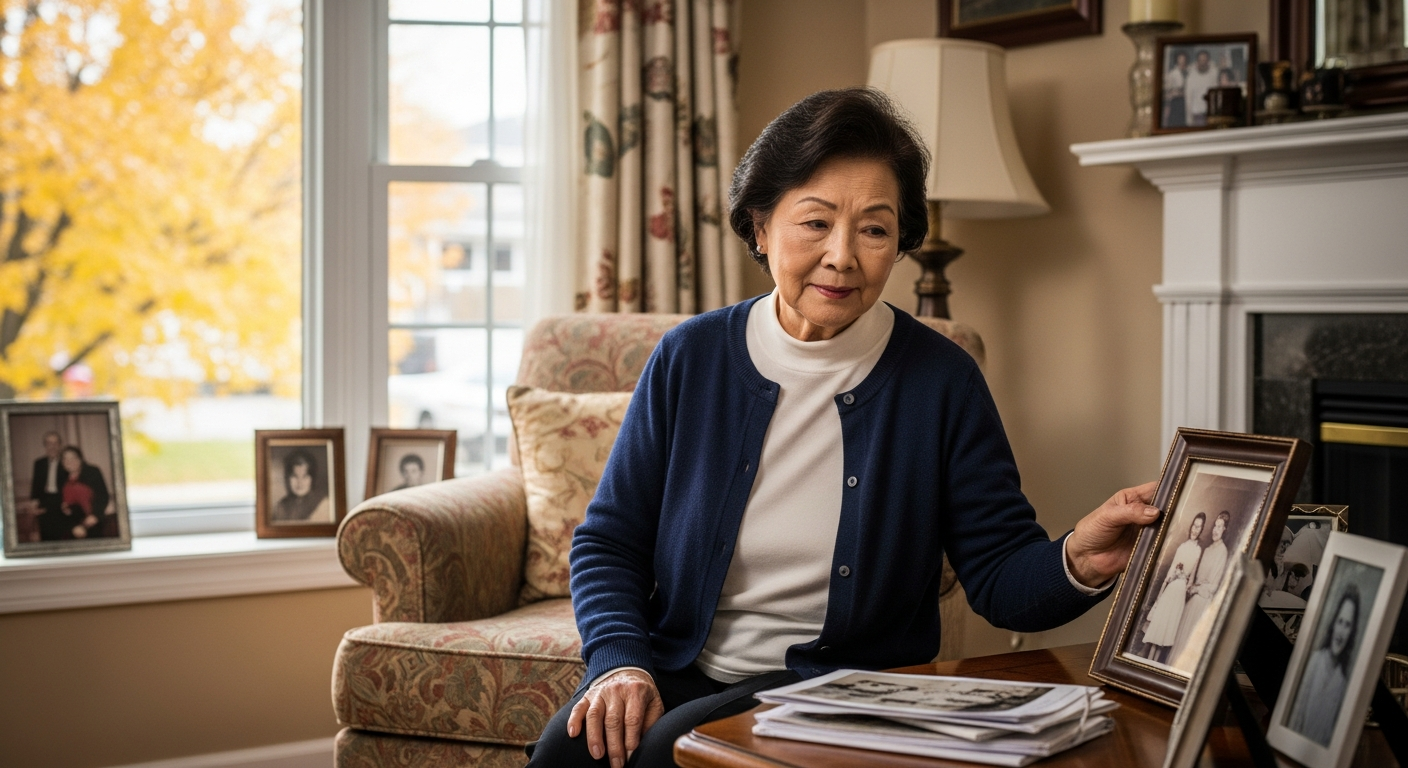
A reverse mortgage can change this equation entirely. Instead of selling the home to fund retirement, you use the home's equity to pay for the maintenance, taxes, insurance, and living expenses that keep you in it — all without monthly payments, income requirements, or giving up ownership. This guide covers the emotional and financial case for keeping a generational home, how to structure a reverse mortgage as a legacy preservation tool, family agreement frameworks, strategies for heirs to buy back the home, life insurance offsets, and a worked example featuring a $650,000 family home that has been in the family for over 40 years.
The Emotional Value of a Generational Home
Financial advisors often frame home equity as just another asset to be optimized. But for families who have lived in the same home for decades, the calculation is different. The home holds:
- Decades of memories — holidays, milestones, everyday moments
- A sense of place and belonging for adult children and grandchildren
- Community connections — neighbours, local shops, places of worship
- Physical markers of the family's story — the height marks on the doorframe, the garden, the room where children were raised
According to a Royal LePage survey, 68% of Canadian homeowners aged 65+ say they would prefer to age in their current home rather than downsize, even when downsizing would improve their financial position. The attachment to home is not irrational — it is deeply human.
The question is not whether the emotional value is real. It is whether there is a practical way to honour that value without running out of money.
Why Families Lose Generational Homes
Most families do not sell the family home because they want to. They sell because they feel they have no choice. The most common financial pressures:
| Pressure | Description |
|---|---|
| Rising property taxes | Ontario property taxes average $4,000–$8,000/year for a detached home |
| Deferred maintenance | Roof, furnace, windows, plumbing — $5,000–$30,000+ in deferred work |
| Insurance increases | Home insurance premiums have risen 15–25% since 2022 |
| Fixed income gap | CPP + OAS often fall short of total living expenses |
| Utility costs | Older homes with less insulation cost more to heat and cool |
| Health-related renovations | Accessibility modifications average $15,000–$50,000 |
A retiree earning $3,800/month in CPP, OAS, and a small pension might face $1,200/month in property taxes, insurance, and utilities alone — before food, transportation, medication, and maintenance. When the furnace fails or the roof leaks, the math tips from tight to impossible.
Selling appears to be the only option. But a reverse mortgage provides another path.
How a Reverse Mortgage Preserves the Family Home
A reverse mortgage converts a portion of the home's equity into tax-free cash — without any monthly payments, income qualification, or change to the home's ownership. You remain on title. You stay in your home. The loan is repaid only when you sell, move out, or pass away.
For legacy preservation, a reverse mortgage can fund:
- ✓ Property taxes — so the home is never at risk of tax arrears
- ✓ Home insurance — maintaining coverage protects the family's asset
- ✓ Essential maintenance and repairs — roof, furnace, plumbing, electrical
- ✓ Accessibility modifications — stair lifts, grab bars, walk-in showers
- ✓ Day-to-day living expenses — bridging the gap between income and costs
- ✓ Aging-in-place support — home care, meal services, transportation
By funding these expenses with home equity instead of selling, you keep the home in the family while maintaining your quality of life.
Family Agreement Frameworks
When the goal is to keep the home in the family beyond your lifetime, communication with your adult children is essential. A family agreement — even an informal one — sets expectations and prevents conflict.
What a Family Agreement Should Cover
-
Intent. The homeowner intends to stay in the home using a reverse mortgage to fund expenses. The family supports this decision.
-
Reverse mortgage awareness. All family members understand that a reverse mortgage balance will grow over time and will be repaid from the home's equity when the homeowner passes or moves.
-
Buyback option. One or more heirs express interest in keeping the home and agree to explore repayment options (refinancing, savings, life insurance proceeds) when the time comes.
-
Contribution expectations. If adult children want to help reduce the reverse mortgage balance — through voluntary contributions or covering certain expenses directly — this is documented.
-
Communication schedule. The family agrees to review the reverse mortgage balance and home equity annually, so there are no surprises.
Rick Sekhon facilitates family meetings when requested, walking adult children through the reverse mortgage terms, projections, and estate implications. Transparency eliminates the anxiety that often surrounds reverse mortgages in families. For a full guide on having this conversation, see our family conversation guide.
According to FSRAO, reverse mortgage borrowers must receive independent legal advice before closing. This legal advice session is an opportunity to ensure all parties understand the terms — and Rick Sekhon recommends that adult children attend (with the borrower's consent) to hear directly from the lawyer.
Structuring the Reverse Mortgage for Heir Buyback
If the family's goal is for an heir to eventually buy the home, the reverse mortgage should be structured to leave maximum equity available at the time of transfer.
Strategy 1: Minimize the Draw Amount
Take only what you need. If your annual shortfall is $15,000 for taxes, insurance, and maintenance, draw $1,250/month — not $3,000/month. Every dollar you do not borrow saves compound interest for years to come.
Strategy 2: Use Monthly Draws Instead of Lump Sum
Drawing $1,250/month instead of taking $150,000 upfront saves tens of thousands in interest over a decade. See our guide on lump sum vs monthly payments for the full math.
Strategy 3: Adult Children Make Voluntary Contributions
If adult children can afford to contribute $200–$500/month toward the reverse mortgage interest, the balance grows much more slowly. These contributions are not legally required — they are voluntary gestures that preserve the family's equity. Most lenders allow annual prepayments of 10–20% of the original balance without penalty.
Strategy 4: Lock in the Lowest Rate
Shop across HomeEquity Bank (CHIP), Equitable Bank, Bloom Financial, and Home Trust. A 1% rate difference on a $200,000 reverse mortgage saves $70,000+ over 10 years. Rick Sekhon accesses all four lenders to find the best rate for each client.
Heir Buyback at Time of Estate Settlement
When the homeowner passes, heirs typically have 6–12 months to settle the reverse mortgage. Options include:
| Option | How It Works | Best For |
|---|---|---|
| Heir refinances | Heir takes a conventional mortgage to repay the RM balance | Heir has income to qualify |
| Heirs pool resources | Multiple siblings contribute to repay the RM | Shared family commitment |
| Life insurance pays off RM | Insurance payout covers the RM balance in full | Planned legacy strategy |
| Sell and split equity | Home is sold, RM repaid, remaining equity distributed | No heir wants to keep the home |
The most seamless transition happens when a life insurance policy is in place to cover the projected reverse mortgage balance. The insurance payout clears the mortgage, and the home transfers to the heir free and clear.
Life Insurance to Cover the Reverse Mortgage Balance
A dedicated life insurance policy is the most reliable way to guarantee that the home passes to heirs debt-free. Here is how it works:
- Project the reverse mortgage balance at the expected time of estate settlement (e.g., 10, 15, or 20 years from now)
- Purchase a life insurance policy for that amount (or higher, to account for uncertainty)
- Name the estate or the heir as beneficiary
- When the homeowner passes, the insurance proceeds repay the reverse mortgage
- The home is transferred to heirs with no outstanding mortgage
Cost Comparison
| Factor | Without Insurance | With Insurance |
|---|---|---|
| RM balance at year 15 (est.) | $310,000 | $310,000 |
| Life insurance premium | $0 | $280–$420/month |
| Home passed to heirs | With $310K RM lien | Free and clear |
| Heir's out-of-pocket to keep home | $310,000 | $0 |
| Total insurance cost over 15 years | $0 | $50,400–$75,600 |
| Net benefit to heirs | Home equity minus $310K | Full home equity |
For a 72-year-old in average health, a $350,000 term-20 life insurance policy might cost $350–$450/month. This is substantially less than the monthly mortgage payments on a conventional refinance — and it provides a guaranteed legacy for the family.
Rick Sekhon works with insurance advisors to coordinate the reverse mortgage and life insurance strategies. For a deeper dive, see our guide on life insurance and reverse mortgage inheritance protection.
Worked Example: Keeping the $650K Family Home
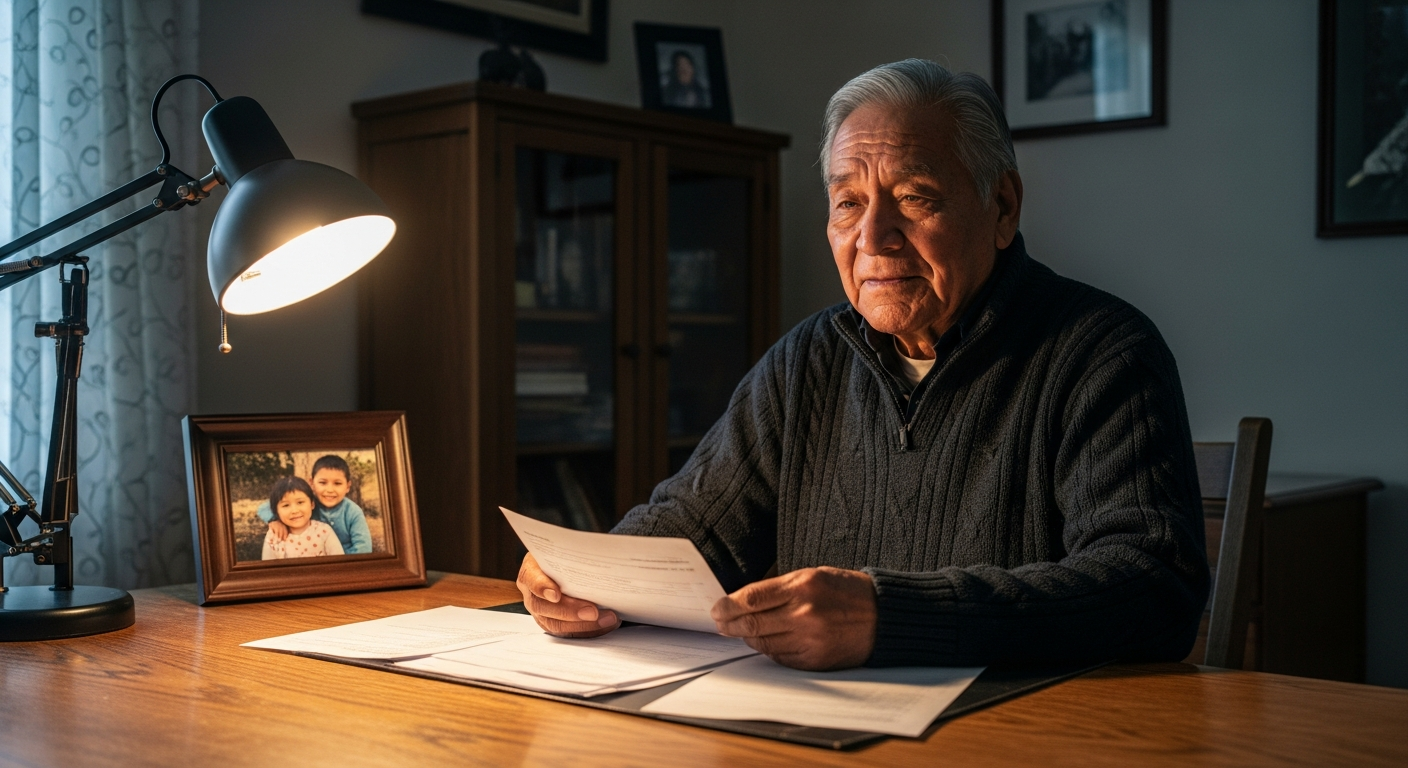
Rose, aged 73, has lived in her Scarborough home for 42 years. She raised three children there. The home is worth $650,000 and is fully paid off. Her late husband built the deck, planted the maple tree in the front yard, and finished the basement where the grandchildren play every weekend.
Rose's income is $3,600/month (CPP + OAS + small survivor pension). Her expenses — property taxes, insurance, utilities, food, medication, and basic maintenance — total $4,100/month. She has a $500/month shortfall and $12,000 in credit card debt from last year's emergency furnace replacement.
Her children have asked her to consider selling and moving into a condo. Rose does not want to leave.
The Reverse Mortgage Plan
Rick Sekhon structures a reverse mortgage through Equitable Bank:
- Home value: $650,000
- LTV (age 73): 40%
- Maximum available: $260,000
- Structure: $20,000 lump sum (pay off credit card debt + small buffer) + $800/month scheduled draws
- Interest rate: 6.29% (fixed 5-year term)
The $800/month draw exceeds Rose's $500 shortfall, giving her a buffer for unexpected expenses, inflation, and the occasional treat — dinner with friends, a birthday gift for a grandchild, the small pleasures that make life worth living.
15-Year Projection
| Year | Total Drawn | RM Balance | Home Value (3%) | Remaining Equity |
|---|---|---|---|---|
| 0 | $20,000 | $20,000 | $650,000 | $630,000 |
| 1 | $29,600 | $31,300 | $669,500 | $638,200 |
| 3 | $48,800 | $57,100 | $710,300 | $653,200 |
| 5 | $68,000 | $86,600 | $753,300 | $666,700 |
| 7 | $87,200 | $120,300 | $798,800 | $678,500 |
| 10 | $116,000 | $178,200 | $873,600 | $695,400 |
| 15 | $164,000 | $291,800 | $1,012,100 | $720,300 |
After 15 years, Rose has drawn $164,000 from her home equity. Her reverse mortgage balance is $291,800. Her home — appreciating at a conservative 3% — is worth over $1 million. Her remaining equity is $720,300 — more than the home was worth when she started.
According to the Canada Mortgage and Housing Corporation (CMHC), Ontario housing starts and long-term demand fundamentals support continued home price appreciation in established neighbourhoods like Scarborough, where proximity to transit and amenities drives sustained demand.
What Rose's Children Decided
Rose's oldest daughter, Maria, wants to keep the home. The family agrees on a plan:
- Rose takes the reverse mortgage and stays in her home
- Maria contributes $200/month toward voluntary interest payments (reducing the compounding)
- Rose purchases a $300,000 term life insurance policy ($310/month premium — funded partly from the reverse mortgage draws)
- When Rose eventually passes, the life insurance proceeds repay the reverse mortgage
- Maria inherits the home free and clear
The total cost of the life insurance over 15 years is approximately $55,800. The alternative — selling the home now — would cost the family the home itself, plus Rose's quality of life, community, and independence. The family chose to keep the home.
Tax Considerations
Reverse mortgage proceeds are not taxable income. They do not affect Rose's OAS, GIS, or Ontario Trillium Benefit. The home remains her principal residence, meaning it is exempt from capital gains tax when eventually sold or transferred. This is a significant advantage over selling the home and investing the proceeds, which would generate taxable investment income and potentially trigger OAS clawbacks.
For the full tax picture, see our guide on CRA tax treatment of reverse mortgages.
When Keeping the Home Does Not Make Sense
A reverse mortgage is not always the right answer. Consider selling if:
- ✗ The home requires $100,000+ in structural repairs that exceed the reverse mortgage amount
- ✗ The neighbourhood has declined and appreciation is unlikely
- ✗ The homeowner is isolated and would benefit from a community living environment
- ✗ No family member wants the home, and the emotional attachment has faded
- ✗ Health needs require a move to assisted living or long-term care within 1–2 years
Rick Sekhon always presents both options honestly. Sometimes downsizing truly is the better path. The goal is to help clients make the choice that serves their life — not to sell a product.
Creating a Living Legacy
A living legacy means using your home equity to improve your life now while preserving value for the next generation. It is the opposite of the "die rich, live poor" approach that forces seniors to hoard equity at the cost of their health, safety, and happiness.
A reverse mortgage lets you:
- ✓ Stay in the home your family loves
- ✓ Maintain the property so it remains valuable
- ✓ Fund aging-in-place modifications that extend your independence
- ✓ Enjoy your retirement instead of worrying about money
- ✓ Leave a home — not just an inheritance — to your children
For more on this philosophy, see our guide on living legacy: gifting home equity to family and our retirement cash flow planning resources.
Frequently Asked Questions
Can my children take over the reverse mortgage when I pass?
No. The reverse mortgage must be repaid when the last borrower passes or permanently leaves the home. However, your heirs can repay the balance by refinancing into a conventional mortgage, using savings or other assets, or using life insurance proceeds. They are given 6–12 months to arrange repayment.
Will the reverse mortgage consume all the equity in the home?
In most cases, no. With conservative draws and even modest home appreciation (2–3% annually), substantial equity remains after 10–15 years. The no-negative-equity guarantee from CHIP, Equitable Bank, Bloom Financial, and Home Trust ensures the balance never exceeds the home's sale price.
Can multiple siblings share the cost of keeping the home?
Yes. There is nothing preventing siblings from pooling resources to repay the reverse mortgage and keep the home. Some families create a shared ownership agreement, while others designate one sibling as the buyer and compensate the others from other estate assets.
What if I want to gift the home to my children now instead of later?
You can transfer ownership while alive, but this triggers capital gains tax implications (since the home would no longer be your principal residence in CRA's view if you remain living there under a different arrangement). In most cases, keeping the home in your name with a reverse mortgage and transferring at death is more tax-efficient. Consult an estate lawyer for your specific situation.
Does the home need to be in good condition for a reverse mortgage?
Yes. The lender will require an appraisal, and the home must be in reasonable condition — structurally sound with no major health or safety concerns. If there are deferred repairs, some lenders allow a portion of the reverse mortgage to be used for immediate remediation. Rick Sekhon can advise on what each lender requires.
How do I start the conversation with my family?
Start with honesty: "I want to stay in this home, and I have found a way to make it work financially. I would like to walk you through it." Invite your children to meet with Rick Sekhon, who can present the projections, explain the protections, and answer every question. Most family resistance comes from misunderstanding how reverse mortgages work — education resolves it.
Your Home, Your Legacy
The family home is more than an asset on a balance sheet. It is where your story lives. A reverse mortgage gives you the financial tools to keep that story going — to host another Christmas, another birthday, another Sunday dinner — without the anxiety of wondering how you will pay for it.
If keeping your home matters to you, it is worth exploring every option before giving it up. Talk to Rick Sekhon about how a reverse mortgage can fund your aging in place, protect your living legacy, and keep the door open for your family — literally.
Ready to Learn More?
Get the free Ontario Reverse Mortgage Guide and find out exactly how much you could unlock from your home.
Get My Free Guide →Related Articles
Keeping the Family Cottage: Reverse Mortgage Transfer Strategies
Reverse mortgage family cottage transfer strategies for Ontario families. Fund capital gains tax, avoid forced sale, and keep the cottage in the family.
Read →Reverse Mortgage on a Cottage or Vacation Property in Ontario (2026)
Can you get a reverse mortgage on a cottage in Ontario? Learn why vacation properties don't qualify, plus strategies to unlock equity using your primary home.
Read →Gift Home Equity to Family with a Reverse Mortgage in Canada
How Canadian seniors use a reverse mortgage to gift home equity to children and grandchildren as a living legacy — the financial, tax, and family planning details.
Read →