
Reverse Mortgage Renovation Checklist: Aging in Place in Ontario (2026)
A complete checklist of aging-in-place renovations Ontario seniors fund with a reverse mortgage — with costs, contractor guidance, and grant stacking tips.
"My occupational therapist has given me a list of changes I should make to my home — but I don't know where to start or what it will cost." Home modifications for aging in place range from small, inexpensive fixes to major structural changes. This guide organises every common modification by priority, estimated cost, available grants, and how a reverse mortgage can fund what government programmes don't cover.
This article is for educational purposes only and does not constitute financial advice.
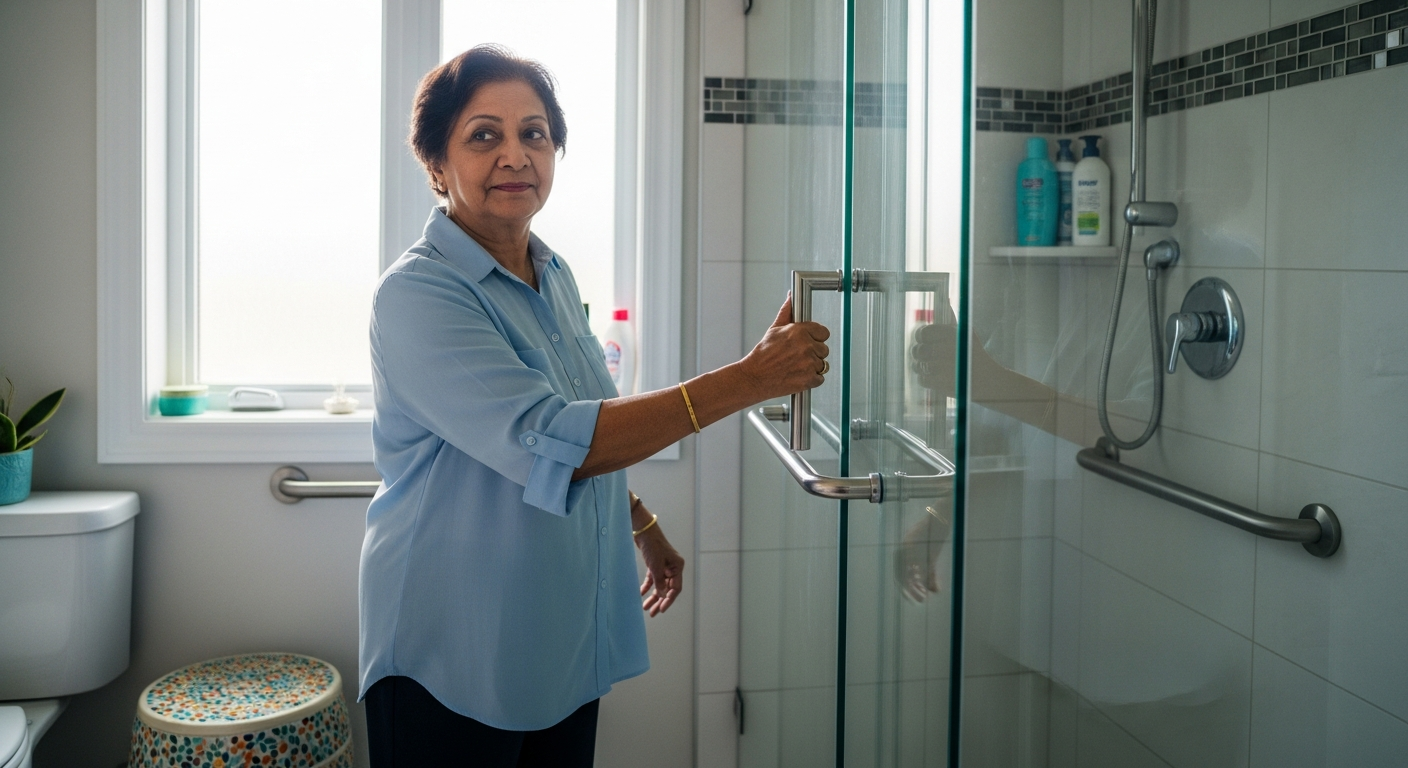
Why Renovations Matter for Aging in Place
The Ontario government's Seniors' Health Home Program and occupational therapy assessments consistently identify home modifications as one of the most cost-effective ways to prevent falls, extend independent living, and avoid or delay long-term care admissions.
According to the Government of Ontario, falls among seniors are the leading cause of injury-related hospitalisations, with the majority occurring in the home. Targeted home modifications can reduce fall risk by up to 40% for high-risk seniors.
According to CMHC, the average cost of a one-year stay in a long-term care facility in Ontario exceeds $60,000. A $30,000 investment in home modifications that delays LTC admission by even one year has a clear financial return — aside from the quality-of-life benefit of remaining at home.
Priority 1: Bathroom Modifications (Highest Fall Risk)
The bathroom is the highest-risk room in any home for seniors. These modifications should be prioritised.
| Modification | Estimated Cost | Grant Eligible? | Notes |
|---|---|---|---|
| Grab bars (shower, toilet, bath) | $200–$1,200 | Yes — HATC, Ontario credit | Install with proper blocking or into studs |
| Walk-in shower (replace tub) | $4,000–$15,000 | Partially | Non-slip floor tile essential |
| Walk-in bathtub | $5,000–$12,000 | Partially | Good for those who want bathing option |
| Comfort-height toilet | $400–$900 | Yes — HATC | Also called ADA height |
| Non-slip bath mat/floor coating | $50–$500 | Partially | First line of defence |
| Handheld showerhead | $100–$300 | Yes | Easy retrofit |
| Barrier-free shower (curbless) | $6,000–$20,000 | Partially | Gold standard for accessibility |
| Bathroom door widening (36"+) | $800–$2,500 | Yes — HATC | Required for wheelchair/walker access |
Typical bathroom renovation for aging in place: $8,000–$25,000
Priority 2: Entrance and Doorways
Safe entry and exit is critical, particularly for those using mobility aids.
| Modification | Estimated Cost | Grant Eligible? | Notes |
|---|---|---|---|
| Ramp (exterior, permanent) | $3,000–$12,000 | Yes — HATC, Ontario credit | Gradient 1:12 slope required |
| Portable ramp | $200–$1,500 | Yes | Good short-term solution |
| Stair handrails (exterior) | $500–$2,000 | Yes | Both sides recommended |
| Door widening (interior, 32"–36") | $600–$2,000 per door | Yes — HATC | For wheelchair/rollator access |
| Lever-style door handles (replace knobs) | $50–$200 per door | Yes | Easier for arthritis |
| Keypad/smart lock | $200–$600 | Yes | Eliminates key management |
| Covered entryway/porch extension | $5,000–$20,000 | Partially | Weather protection critical in Ontario |
Priority 3: Main Floor Bedroom and Bathroom
Creating a main-floor bedroom suite eliminates dangerous stair use and allows fully independent single-floor living.
| Modification | Estimated Cost | Grant Eligible? | Notes |
|---|---|---|---|
| Convert dining room to bedroom | $5,000–$20,000 | Partially | Structural wall changes may be needed |
| Main floor bathroom addition | $20,000–$45,000 | Partially | Full bath with accessible features |
| Half bath addition to main floor | $10,000–$20,000 | Partially | Lower cost alternative |
Priority 4: Kitchen Modifications
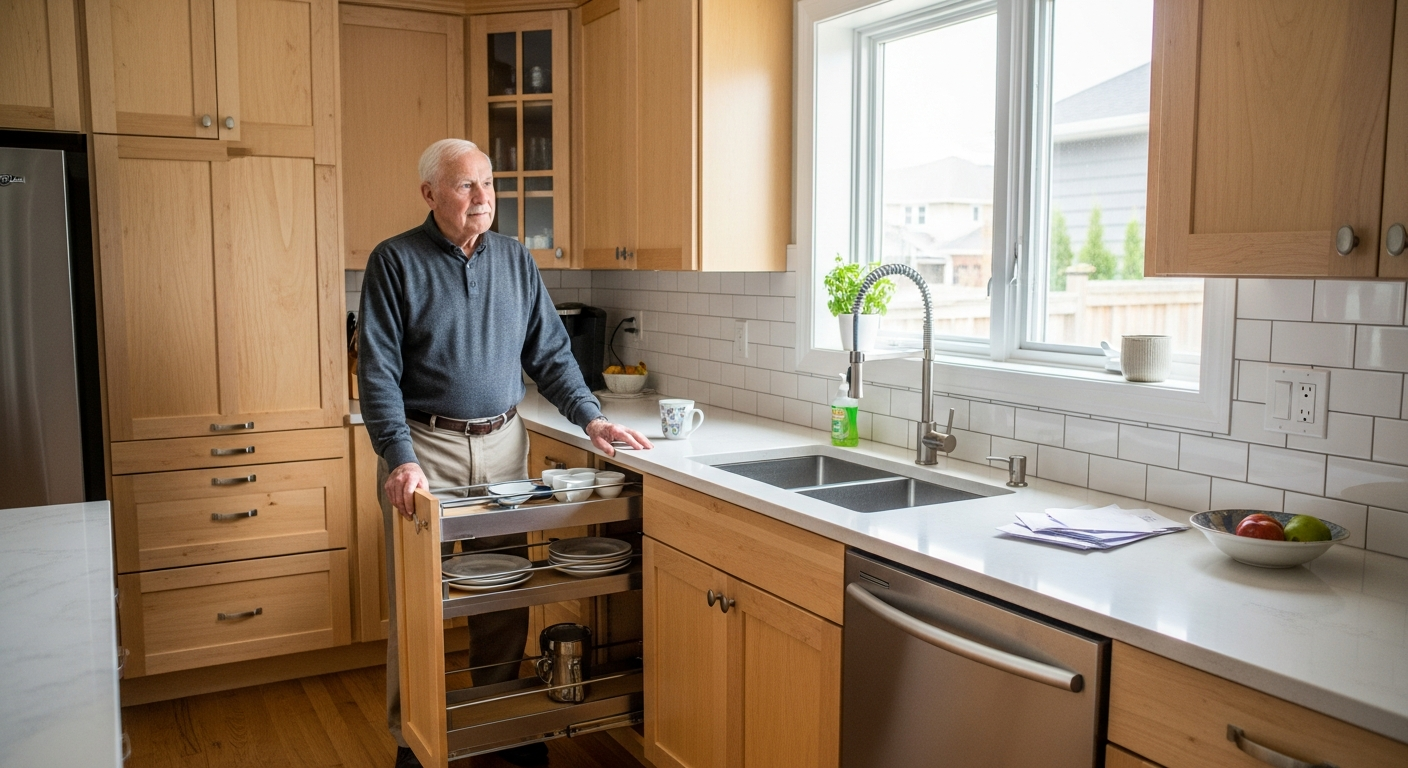
Kitchens are the primary living/activity space — modifications support independent meal preparation and reduce injury risk.
| Modification | Estimated Cost | Grant Eligible? | Notes |
|---|---|---|---|
| Pull-out shelves/drawer inserts | $500–$3,000 | Yes | Eliminates deep reaching |
| Lower countertop sections | $2,000–$8,000 | Yes — HATC | For seated work; wheelchair height |
| Lever-style faucet | $100–$400 | Yes | Easier with limited grip |
| Hands-free faucet | $200–$600 | Yes | Sensor-activated |
| Better lighting (LED under-cabinet) | $200–$1,000 | Yes | Critical for low vision |
| Anti-fatigue matting | $100–$500 | Yes | Reduces fall and fatigue risk |
| Touchpad stove controls | $500–$2,000 | Yes | Safer for cognitive impairment |
Priority 5: Stairways (If Multi-Level Home)
If eliminating stair use is not possible (no main-floor bedroom), making stairs safer is critical.
| Modification | Estimated Cost | Grant Eligible? | Notes |
|---|---|---|---|
| Stair handrails on both sides | $500–$2,000 | Yes | Both sides mandatory for safety |
| Stairlift | $3,000–$10,000 | Assistive Devices Program | ADP may subsidise up to 75% for eligible users |
| Home elevator installation | $15,000–$50,000 | Limited | Major investment; long-term solution |
| Non-slip stair treads | $200–$800 | Yes | Immediate low-cost improvement |
| Better stair lighting | $300–$1,500 | Yes | Night safety critical |
Priority 6: General Home Safety
| Modification | Estimated Cost | Grant Eligible? | Notes |
|---|---|---|---|
| Motion-sensor lighting (hallways, bathrooms) | $100–$600 | Yes | Night-time safety |
| Emergency response system | $300–$800 + monthly | No | Medical alert monitoring |
| Smart doorbell/security camera | $200–$500 | Yes | Safety monitoring |
| Carbon monoxide/smoke detector (updated) | $100–$300 | Yes | Safety code compliance |
| Flooring improvement (remove trip hazards) | $1,000–$10,000 | Yes — HATC | Remove area rugs; smooth transitions |
| Wider interior doorways | $600–$2,000 per door | Yes | Standard accessibility upgrade |
The Grant Stacking Strategy
The most financially efficient approach is to claim available government support before drawing from a reverse mortgage.
| Grant/Credit | Maximum Benefit | Eligible Modifications |
|---|---|---|
| Federal Home Accessibility Tax Credit (HATC) | $3,000/year (15% of $20K) | Most accessibility modifications |
| Ontario Seniors' Home Safety Tax Credit | $2,500/year (25% of $10K) | Overlapping with HATC |
| Ontario Assistive Devices Program | 75% of approved devices | Stairlift, wheelchair, hearing aids |
| Canada Greener Homes Loan | Up to $40,000 interest-free | Energy efficiency (insulation, windows, heat pump) |
| Maximum annual combined benefit | ~$45,500 | When all programmes combined |
By claiming all available grants and credits, you reduce the amount you need from your reverse mortgage — and therefore reduce the compounding interest that accrues over time.
Worked Example: $65,000 Renovation Budget
| Funding Source | Amount | Notes |
|---|---|---|
| Federal HATC (15% of $20K) | $3,000 | Tax credit on return |
| Ontario Safety Credit (25% of $10K) | $2,500 | Provincial tax credit |
| Greener Homes Loan ($15K windows, insulation) | $15,000 | Interest-free, repaid over 10 years |
| Assistive Devices Program (stairlift 75%) | $5,250 | Approved subsidy |
| Government/grant sourced | $25,750 | |
| Reverse mortgage draw needed | $39,250 | Reduced from $65,000 |
Choosing Contractors: CAPS Certification
Not all contractors have experience with accessibility modifications. When planning home modifications, look for contractors who hold the CAPS (Certified Aging in Place Specialist) designation from the National Association of Home Builders. CAPS-certified contractors have specific training in:
- Universal design principles
- Building code requirements for accessibility
- Products and materials appropriate for aging-in-place modifications
Your occupational therapist can also recommend contractors or provide a detailed specification for modifications that contractors can quote against. Having an OT specification prevents scope creep and ensures modifications actually address your safety needs.
Sequencing Your Renovations
Not all renovations need to happen at once. A phased approach — addressing highest-risk areas first — reduces the total reverse mortgage draw needed upfront and allows grant claims to be spread across multiple tax years.
| Phase | Priority Modifications | Estimated Cost | Timeline |
|---|---|---|---|
| Phase 1 (Immediate) | Grab bars, non-slip surfaces, handrails, lever handles | $2,000–$5,000 | Month 1 |
| Phase 2 (Short-term) | Bathroom renovation, ramp/stair improvements | $8,000–$25,000 | Months 2–6 |
| Phase 3 (Medium-term) | Kitchen modifications, main floor bedroom | $10,000–$40,000 | Months 6–18 |
| Phase 4 (Future) | Elevator, major structural changes | $20,000–$60,000 | As needed |
For aging in place planning, this phased approach ensures you only draw what you need from your reverse mortgage at each stage — minimising the compounding effect of borrowing large amounts upfront.
FAQ
Do I need an occupational therapist assessment before starting renovations? An OT assessment is not mandatory, but it is strongly recommended. An OT evaluates your specific needs, identifies priority modifications, and can provide detailed specifications for contractors. Some Ontario Home Care assessments include an OT home evaluation at no cost to the homeowner.
Can I claim tax credits for renovations I did before applying for a reverse mortgage? Yes — tax credits (HATC, Ontario Seniors' Safety Credit) can be claimed for renovations completed in the current or prior tax year regardless of when you apply for a reverse mortgage. The reverse mortgage and the tax credit claims are independent.
What is the best way to get quotes from multiple contractors? Use your OT's specification document (if available) as the basis for quotes — it ensures all contractors are quoting the same scope. Get at least three quotes for any renovation over $5,000. Ask specifically whether the contractor has completed similar aging-in-place modifications before.
Does a reverse mortgage renovation affect my home's appraised value? Well-executed accessibility modifications that maintain the property's condition and safety typically do not reduce the home's value. Major renovations that significantly improve the home (upgraded kitchen, bathroom, main floor addition) may increase the appraised value — which could support a larger reverse mortgage refinance in the future.
Can I use a reverse mortgage to fund renovations before applying for the Greener Homes Loan? The Greener Homes Loan application process requires a pre-retrofit EnerGuide evaluation, the actual renovation work, and a post-retrofit evaluation before funds are disbursed. If you need the renovation work done before the loan is available, you can use reverse mortgage funds as a bridge — then apply the Greener Homes Loan proceeds as a partial repayment when received.
Speak to a licensed mortgage professional. Independent legal advice is required before closing a reverse mortgage in Ontario.
Get your free Ontario Reverse Mortgage Guide →
This content is for illustrative purposes only. Rates may vary. Call Rick Sekhon for the best rates and more information.
Ready to Learn More?
Get the free Ontario Reverse Mortgage Guide and find out exactly how much you could unlock from your home.
Get My Free Guide →Related Articles
Reverse Mortgage for Healthcare Costs: Aging in Place in Ontario
How Ontario seniors use a reverse mortgage to fund home care, medical equipment, prescriptions, and healthcare expenses — and stay in their home longer.
Read →Ontario Seniors Programs + Reverse Mortgages: Grants & Tax Deferrals
Combine Ontario seniors grants, tax deferrals, and home accessibility programs with a reverse mortgage to maximise your retirement home equity strategy.
Read →Reverse Mortgage for Workplace Injury Recovery: Supporting Adult Child's Career Transition
Help your adult child rebuild their career after workplace injury. Learn how reverse mortgages fund recovery, retraining, and financial stability during career transition.
Read →