
Reverse Mortgage for Healthcare Costs: Aging in Place in Ontario
How Ontario seniors use a reverse mortgage to fund home care, medical equipment, prescriptions, and healthcare expenses — and stay in their home longer.
"My healthcare costs are eating into my retirement — and I don't want to move to a care facility. Can my home equity help?" For many Ontario seniors, the answer is yes. A reverse mortgage can fund an extraordinary range of healthcare-related expenses — from in-home personal support workers to prescription drug costs, medical equipment, and specialised care — all while keeping you in your own home. This guide explains the healthcare funding landscape and how reverse mortgage proceeds fit in.
This article is for educational purposes only and does not constitute financial advice.
The True Cost of Aging in Place in Ontario
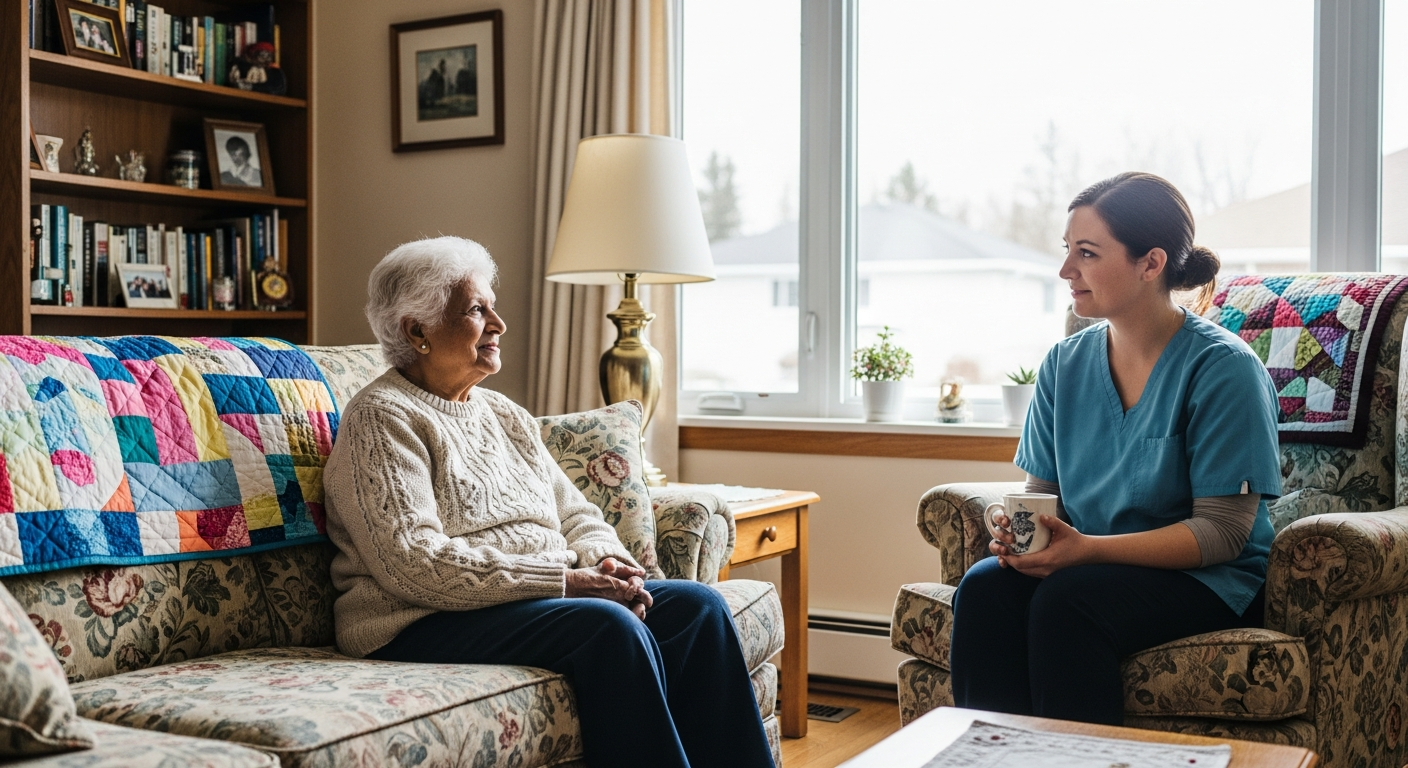
Aging in place — staying in your own home rather than transitioning to a retirement home or long-term care facility — is what most Ontario seniors prefer. But it comes with costs that are often underestimated.
| Healthcare Cost Category | Typical Annual Cost | Government Coverage |
|---|---|---|
| Personal support worker (20 hrs/week) | $24,000–$36,000 | Partially — Ontario Home Care covers assessed portion |
| Registered nurse visits (weekly) | $6,000–$12,000 | Partially — Ontario Home Care |
| Physiotherapy (bi-weekly) | $4,000–$8,000 | Limited — some OHIP coverage, rest private |
| Prescription drugs (ongoing) | $2,000–$8,000 | Ontario Drug Benefit (income-tested) partial |
| Mobility equipment (wheelchair, walker) | $1,000–$15,000 (one-time) | Assistive Devices Program (75% subsidy) |
| Home safety monitoring system | $1,200–$2,400/year | No public coverage |
| Medical meals delivery | $3,000–$6,000/year | Subsidised Meals on Wheels |
| Vision care | $500–$2,000/year | Limited OHIP; eye exams every 18 months for 65+ |
| Hearing aids | $3,000–$8,000/pair | ADP partial grant |
According to the Ontario Ministry of Health, publicly funded home care through Ontario Health covers assessed personal support, nursing, and therapy needs — but wait times and assessed hours often fall short of actual needs. Many families supplement with private pay services.
The gap between what government covers and what aging in place actually costs can run $10,000–$40,000 per year for seniors with significant healthcare needs. Over a 10-year aging-in-place period, this represents $100,000–$400,000 in personal healthcare funding.
How a Reverse Mortgage Addresses the Healthcare Gap
A reverse mortgage can fund:
| Use | Reverse Mortgage Can Help? |
|---|---|
| Private home care (PSW, nurse) beyond government hours | Yes |
| Private physiotherapy, occupational therapy | Yes |
| Medical equipment not covered by ADP | Yes |
| Prescription drug copays and uncovered medications | Yes |
| Specialised dementia care at home | Yes |
| Retirement home costs (while transition planned) | Yes — short-term bridge |
| Long-term care facility costs | No — reverse mortgage becomes due if last borrower moves to LTC |
| Emergency dental care | Yes |
| Private vision and hearing | Yes |
The key distinction: aging-in-place healthcare can be funded by a reverse mortgage as long as you continue to live in your home. Healthcare costs that arise after you permanently leave your home (long-term care facility admission) do not benefit from the reverse mortgage because the loan becomes due when you vacate.
Planning Your Healthcare Funding: A Layered Approach
As with Ontario government programmes, the smartest approach is to layer funding sources in order of cost:
| Funding Layer | What It Covers | Cost |
|---|---|---|
| 1. OHIP (Ontario Health Insurance) | Doctor visits, hospital, limited home care | Free |
| 2. Ontario Home Care | Assessed PSW, nursing, therapy hours | Free (if eligible) |
| 3. Ontario Assistive Devices Program | 75% of approved equipment | 25% personal cost |
| 4. Ontario Drug Benefit | Prescription drugs (if income-eligible) | Small copay |
| 5. Private health insurance (employer retiree plans) | Extended coverage | Premium paid |
| 6. TFSA withdrawals | Any healthcare gap | Non-taxable |
| 7. Reverse mortgage | Any remaining gap | 6.54%–7.99% compound |
Use free government programmes first, paid programmes second, and the reverse mortgage to fund the gap that other sources cannot cover.
Estimating Your Healthcare Reserve Need
A healthcare reserve is a defined amount — drawn from a reverse mortgage — set aside specifically for future healthcare costs. Planning this at the time of the reverse mortgage application ensures you access the right amount without over-borrowing.
| Healthcare Scenario | Estimated Reserve Need | Reverse Mortgage Approach |
|---|---|---|
| Independent living with minor support needs | $30,000–$60,000 | Lump sum reserve; draw as needed |
| Moderate care needs (10 hrs/week PSW) | $80,000–$150,000 | Staged monthly draws over 5–7 years |
| High care needs (live-in care or 30+ hrs/week) | $200,000–$400,000 | Maximum available; regular monthly draw |
| Cognitive impairment support (progressive) | $150,000–$350,000+ | Annual draws; monitor progression |
The Dementia and Cognitive Decline Planning Consideration
Dementia and cognitive decline create a specific planning challenge for reverse mortgages. A reverse mortgage cannot be applied for by a person who does not have mental capacity to consent to the transaction. If cognitive decline progresses to a point where legal capacity is questionable, the window to establish a reverse mortgage may close.
This makes early planning particularly important for families with a history of dementia or for seniors who are beginning to notice early symptoms.
Practical steps:
- Establish a reverse mortgage before cognitive decline progresses, while full capacity exists
- Simultaneously establish a Power of Attorney for Property naming a trusted adult child or professional
- Ensure the Power of Attorney is aware of the reverse mortgage terms and ongoing obligations
- Set up automatic payment of property taxes and insurance renewal
A reverse mortgage established while you have full capacity remains valid and operative even as your cognitive situation changes — as long as the ongoing obligations (property tax, insurance, maintenance) are being met, typically managed by the POA holder.
According to the FSRAO, lenders are required to assess borrower capacity as part of the application process. Concerns about a borrower's capacity to consent should be raised with the lender's compliance team or with independent legal counsel.
One Drawback: Long-Term Care Transitions Trigger Repayment
If your healthcare needs reach the point where you permanently move to a long-term care facility — and you are the last borrower living in the home — the reverse mortgage becomes due within 6–12 months. This is the most significant limitation of using a reverse mortgage for healthcare planning.
For couples, the loan only becomes due when the last borrower permanently leaves. If one partner moves to LTC while the other remains at home, the loan continues as normal. For single borrowers, the LTC transition is a hard trigger.
This limitation is worth planning around: if there is a meaningful probability of LTC admission within 5 years, the long-term value of a reverse mortgage decreases. For more detail, see our reverse mortgage and nursing homes guide →.
Using Reverse Mortgage Funds for Home Healthcare Technology
Modern aging-in-place technology can significantly extend the period a senior can safely live independently — and it can be funded through a reverse mortgage:
| Technology | Purpose | Typical Cost |
|---|---|---|
| Medical alert system (Life Alert, etc.) | Emergency response | $40–$60/month |
| Medication management device | Accurate medication dosing | $500–$2,000 one-time |
| Remote health monitoring | Blood pressure, glucose, oxygen levels | $200–$1,000 one-time |
| Smart home integration | Voice-controlled lighting, locks, heating | $1,000–$5,000 |
| Video doorbell and security | Safety and awareness | $200–$500 |
| Stairlift or home elevator | Mobility access | $3,000–$15,000+ |
| Walk-in tub or accessible shower | Fall prevention | $5,000–$20,000 |
These technologies often complement the government-funded home care and accessibility renovation programmes discussed in our Ontario seniors programmes guide →.
Connecting Healthcare Planning to the Aging in Place Journey
The Aging in Place philosophy is about maintaining independence, dignity, and community connection as you grow older. Healthcare funding is not separate from this philosophy — it enables it.
A reverse mortgage, properly structured for healthcare costs, is one of the most direct tools for making aging in place financially sustainable. It converts the largest asset most Ontario seniors own — their home — into the cash flow that keeps them in it.
FAQ
Can a reverse mortgage be used to pay for private nursing home costs temporarily? Yes — for a short-term bridge while permanent arrangements are being made. However, if the move to a private nursing home or retirement home becomes permanent and the home is no longer your principal residence, the reverse mortgage becomes due. Keep the lender informed of any occupancy changes.
What happens to my reverse mortgage if I need a hospital stay of several months? A temporary hospital stay does not trigger the reverse mortgage. The product is specifically designed to accommodate health-related absences. It only becomes due if you permanently vacate the property as your principal residence. A hospital stay, rehabilitation stay, or extended family visit does not constitute "permanent" vacating.
Can my Power of Attorney access reverse mortgage funds on my behalf? Yes — if you have a valid Power of Attorney for Property, your POA holder can manage the reverse mortgage on your behalf, including making decisions about staged draws and ensuring ongoing obligations (property taxes, insurance) are met.
If I use a reverse mortgage for home care costs, does that affect my eligibility for public home care? No. Ontario's publicly funded home care (through Ontario Health) is assessed based on your care needs and a case-managed assessment — not your financial resources. Having a reverse mortgage or other financial assets does not reduce your access to publicly funded home care.
Can a reverse mortgage fund a move to a retirement home (not long-term care)? Yes — as long as you maintain your ownership home as your principal residence. However, if you are paying retirement home fees from your reverse mortgage while living there, this suggests your principal residence has shifted, which would potentially trigger the reverse mortgage's repayment clause. Confirm with your lender how they treat extended retirement home stays.
Speak to a licensed mortgage professional. Independent legal advice is required before closing a reverse mortgage in Ontario.
Get your free Ontario Reverse Mortgage Guide →
This content is for illustrative purposes only. Rates may vary. Call Rick Sekhon for the best rates and more information.
Ready to Learn More?
Get the free Ontario Reverse Mortgage Guide and find out exactly how much you could unlock from your home.
Get My Free Guide →Related Articles
Reverse Mortgage Eligibility in Ontario: Complete 2026 Guide
Everything Ontario homeowners need to know about qualifying for a reverse mortgage in 2026. Covers age requirements, home equity, property types, and the application process.
Read →Ontario Seniors Programs + Reverse Mortgages: Grants & Tax Deferrals
Combine Ontario seniors grants, tax deferrals, and home accessibility programs with a reverse mortgage to maximise your retirement home equity strategy.
Read →Reverse Mortgage for Workplace Injury Recovery: Supporting Adult Child's Career Transition
Help your adult child rebuild their career after workplace injury. Learn how reverse mortgages fund recovery, retraining, and financial stability during career transition.
Read →