
Reverse Mortgage for Home Accessibility: Age in Place Renovations
Fund accessibility renovations and aging-in-place modifications using reverse mortgage proceeds in Ontario.
"My home needs grab bars, a ramp, and a bathroom renovation to stay safe as I age. Can a reverse mortgage help?" Absolutely. Accessibility modifications cost $15,000-$50,000+, and many Ontario seniors cannot access traditional loans. A reverse mortgage converts your home equity into cash for aging-in-place improvements — without monthly payments.
This article is for educational purposes only and does not constitute financial advice.
Why Aging in Place Matters
Aging in place means staying in your own home as you age, rather than moving to a care facility. It offers:
- ✓ Independence and control over your environment
- ✓ Emotional comfort (you stay in your familiar home)
- ✓ Lower costs than assisted living or nursing homes
- ✓ Quality of life improvements (stay in your community)
But aging in place requires modifications. A home designed for a 40-year-old is not safe for a 75-year-old with mobility challenges, vision changes, or balance issues.
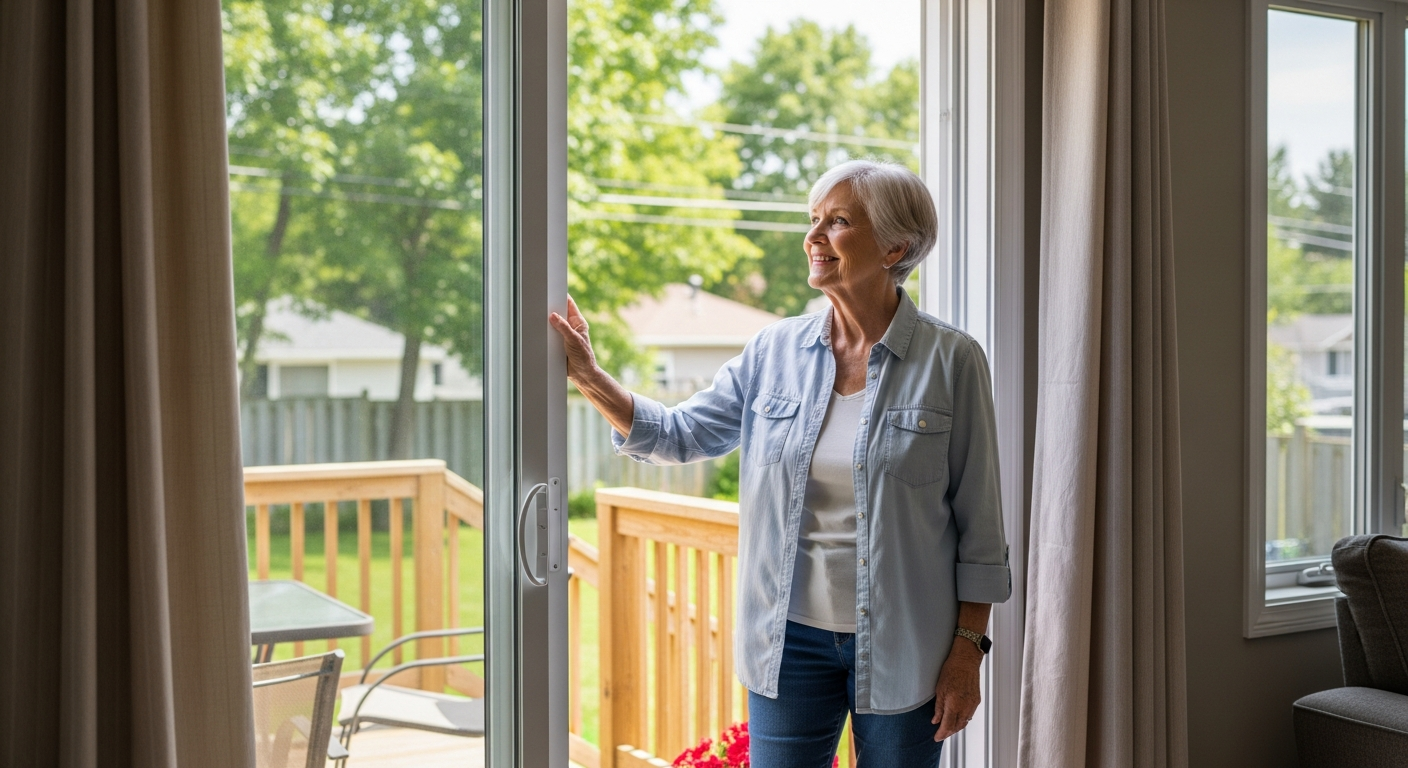
Common Aging-in-Place Renovations and Costs
| Modification | Typical Cost | Aging-in-Place Benefit |
|---|---|---|
| Grab bars and railings | $500-$2,000 | Prevents falls in bathrooms and hallways |
| Walk-in shower/tub | $4,000-$12,000 | Eliminates fall risk of stepping over tub |
| Main-floor bedroom/ensuite | $15,000-$30,000 | Avoids stairs; full bathroom access |
| Accessibility ramp | $2,000-$5,000 | Safe entry/exit without steps |
| Stair lift | $3,000-$6,000 | Maintains access to upper floors safely |
| Wider doorways | $2,000-$5,000 | Wheelchair accessibility if needed |
| Improved lighting | $1,000-$3,000 | Prevents falls; addresses vision decline |
| Non-slip flooring | $3,000-$8,000 | Reduces fall risk throughout home |
| Accessible kitchen | $8,000-$20,000 | Lowers counters, enables seated prep |
| Full accessibility overhaul | $30,000-$80,000 | Multiple modifications combined |
Total aging-in-place budget for an Ontario home: $20,000-$60,000 on average.
A reverse mortgage makes funding these improvements possible without:
- Selling your home
- Taking on monthly payments
- Straining your retirement cash flow
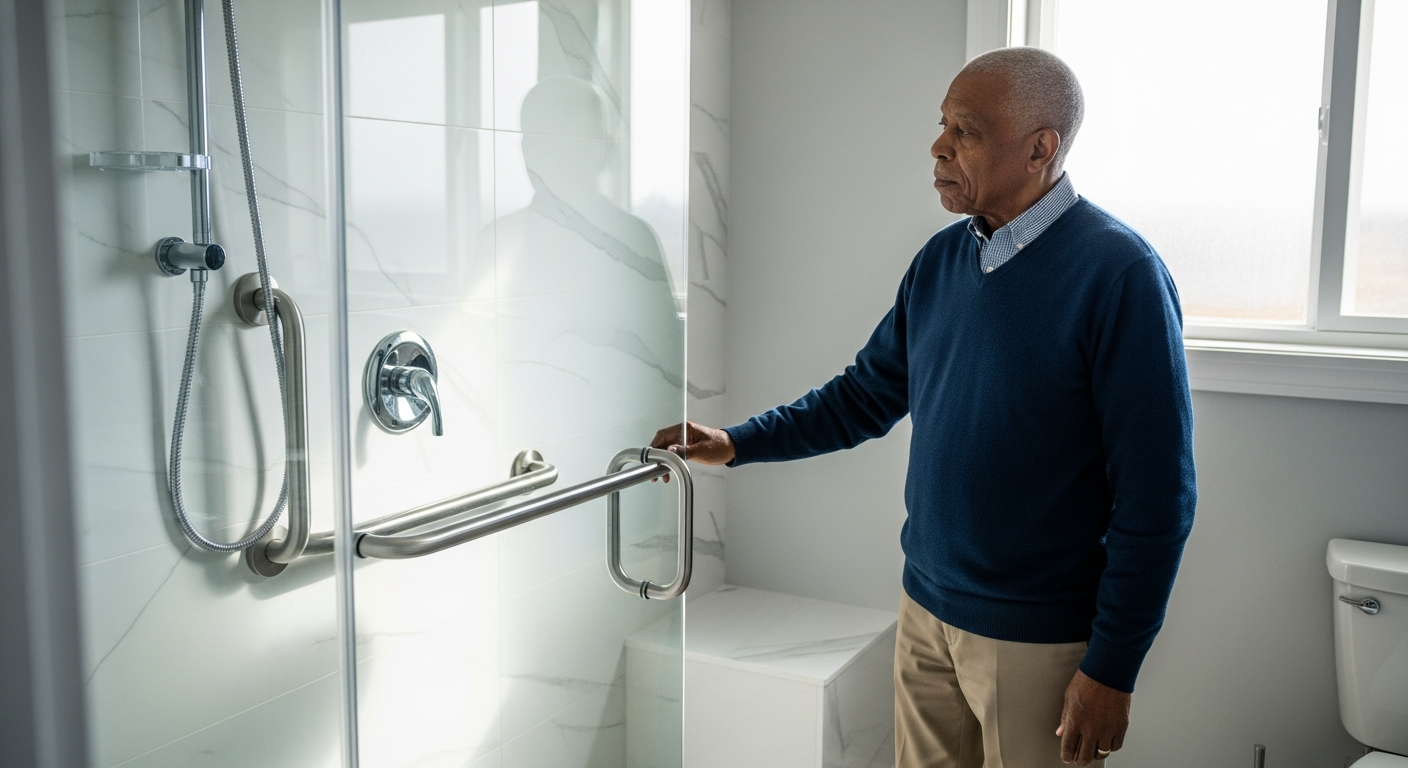
How a Reverse Mortgage Funds Renovations
Step 1: Assess your home equity
Example: Margaret, age 72, has a home worth $550,000 and no mortgage.
Maximum reverse mortgage borrow (CHIP, 55% LTV): $550,000 × 55% = $302,500 available
Step 2: Determine renovation costs
Margaret wants:
- Main-floor ensuite: $22,000
- Grab bars and railings: $1,500
- Wider main hallway: $3,000
- Non-slip flooring: $6,000
- Total: $32,500
Step 3: Draw from reverse mortgage
Margaret borrows $35,000 (covering renovations + small buffer) and uses proceeds to hire contractors. She pays no monthly payments on the $35,000.
Step 4: Live safely in your home
With renovations complete, Margaret can safely age in place for 15+ more years if desired.
Step 5: Repay when you sell or move
When Margaret eventually sells her home (now worth $600,000 due to renovations), the reverse mortgage is repaid from sale proceeds. She nets $565,000+ after repayment, then moves to a smaller home or facility of her choice.
Comparison: Reverse Mortgage vs Alternative Funding
| Funding Option | Cost to Access | Monthly Payment | Credit Required | Accessibility |
|---|---|---|---|---|
| Reverse Mortgage | $5K-$10K in closing | None required | No | Excellent for 55+ |
| HELOC | ~$1K-$2K in fees | ~$150-$300/month | Yes (650+ score) | Difficult for retirees |
| Home Equity Loan | ~$1K-$2K in fees | ~$300-$500/month | Yes | Difficult for retirees |
| Personal Loan | None (unsecured) | $200-$400/month | Yes (good credit) | Limited amount |
| Family loan | None | Depends on terms | N/A | Depends on family |
| Savings | None | N/A | N/A | Only if you have it |
| Government grants | Vary | Usually none | Yes (means-tested) | Limited and complex |
For most Ontario seniors, the reverse mortgage is the most accessible option because it requires no income verification, no credit score, and no monthly payments.
Government Grants and Tax Credits
Before fully borrowing via reverse mortgage, explore whether renovations qualify for grants or tax credits:
| Program | Eligibility | Maximum |
|---|---|---|
| Accessible Home Tax Credit | Home modifications for accessibility | Up to $20,000 |
| March of Dimes Accessibility Grants (Ontario) | Low-income seniors | Up to $3,000-$5,000 |
| Ontario Disability Tax Credit | If you or family member has disability | Up to $20,000 |
| CMHC Repairs and Renovations | Some income-qualified seniors | Varies |
Strategy: Apply for grants first (they're free money). Use a reverse mortgage for the remainder.
Example: Margaret applies for the Accessible Home Tax Credit ($15,000) and uses a smaller reverse mortgage advance ($20,000) for remaining costs. Total out-of-pocket: $0.
Combining Renovations with Debt Relief
Many seniors need BOTH accessibility upgrades AND debt relief. A reverse mortgage can fund both simultaneously:
Example: Robert's situation
- Home value: $450,000
- Credit card debt: $18,000 at 19% interest
- Needed renovations: $22,000 (main-floor bathroom, grab bars, ramp)
- Monthly debt payments: $450
- Reverse mortgage available: $247,500 (55% of home value)
Option A (Before reverse mortgage):
- Pays $450/month toward debt (4+ years to clear)
- Defers home renovations due to cash flow
- Falls during bathroom shower while delaying ramp installation
- Quality of life declines while waiting
Option B (With reverse mortgage - $40,000 draw):
- Borrows $40,000 from reverse mortgage
- Pays off credit card debt ($18,000)
- Funds accessibility renovations ($22,000)
- Eliminates $450/month debt payment
- Improves home safety immediately
- No monthly payments on the $40,000 reverse mortgage advance
Result: Robert frees up $450/month in cash flow, improves home safety, and remains in his home. When he eventually moves or sells, the $40,000 reverse mortgage is repaid from proceeds.
Impact on Inheritance
Using a reverse mortgage for aging-in-place renovations does reduce inheritance somewhat, but consider:
| Scenario | Home Sale (Eventually) | Inheritance |
|---|---|---|
| Without renovations | $450,000 (as-is) | $450,000 for heirs |
| With renovations (reverse mortgage) | $475,000 (renovated) | $475,000 - $40,000 loan = $435,000 for heirs |
| Net inheritance impact | Home is modernized | Heirs inherit a safer, more sellable home |
The renovation typically increases home value more than the borrowing amount, so net inheritance may be similar or better. A renovated, accessible home is easier to sell and attracts buyers with aging parents.
Quick Reference
| Aspect | Details |
|---|---|
| Typical total aging-in-place cost | $20,000-$60,000 |
| Reverse mortgage available | 55% of home value (varies by age) |
| Monthly payments required | None |
| Time to complete renovations | 4-12 weeks typical |
| Impact on moving timeline | None — you can stay 10+ more years |
| Government grants to explore first | Accessible Home Tax Credit, March of Dimes |
| Ideal use case | Seniors 65+ wanting to age in place safely |
Frequently Asked Questions
Can I use a reverse mortgage to hire a caregiver or live-in aide?
Not directly — a reverse mortgage funds property improvements. However, if you use proceeds to pay off debt, you free up monthly cash flow that can then fund caregiver costs. Alternatively, some seniors use reverse mortgage proceeds to fund an in-law suite addition, which allows a caregiver (family member or professional) to live nearby while sharing costs.
What if my renovations go over budget?
As long as you haven't drawn your maximum, you can request additional funds. Many reverse mortgages allow multiple draws over time. Consult your lender about draw flexibility.
Does a reverse mortgage cover ongoing care costs (nursing, therapists, etc.)?
A reverse mortgage funds your home modifications but not ongoing personal care services. However, freeing up cash flow (by paying off debt) can help fund care costs from your regular retirement income.
If I renovate with a reverse mortgage, will the home be easier to sell later?
Yes. An accessible home with modern renovations appeals to a wider buyer pool — both people aging in place and younger buyers planning multigenerational living. Your heirs will find it easier to sell.
Can I get a reverse mortgage after I've already spent money on renovations?
Yes. You can get a reverse mortgage at any time, even after completing renovations. The proceeds can reimburse you or fund other needs. However, you cannot recover previously spent personal funds — the reverse mortgage only provides cash going forward.
Consult a qualified tax advisor for guidance specific to your situation.
Aging in place is one of the most valuable uses of a reverse mortgage. It converts home equity into safety, independence, and quality of life in your later years. By funding accessibility renovations now, you avoid a disruptive move to a care facility later.
Explore which renovations matter most to you, get cost quotes, apply for government grants, and then consult a reverse mortgage specialist about bridging the funding gap.
Speak to a licensed mortgage professional. Independent legal advice is required before closing a reverse mortgage in Ontario.
Get your free Ontario Reverse Mortgage Guide →
This content is for illustrative purposes only. Rates may vary. Call Rick Sekhon for the best rates and more information.
Ready to Learn More?
Get the free Ontario Reverse Mortgage Guide and find out exactly how much you could unlock from your home.
Get My Free Guide →Related Articles
Reverse Mortgage Eligibility in Ontario: Complete 2026 Guide
Everything Ontario homeowners need to know about qualifying for a reverse mortgage in 2026. Covers age requirements, home equity, property types, and the application process.
Read →Can You Lose Your Home with a Reverse Mortgage in Canada?
The truth: a reverse mortgage won't force you to sell during your lifetime. Learn what triggers repayment and when the lender can act.
Read →Reverse Mortgage for Smart Home Health Monitoring: IoT Systems for Aging in Place
Use a reverse mortgage to install smart home health monitoring systems that keep you safe while aging in place in Ontario.
Read →