
Reverse Mortgage on Hobby Farms in Ontario
Can you get a reverse mortgage on a hobby farm in Ontario? Acreage limits, appraisal rules, outbuildings, CRA farm income, and a worked example explained.
You live on eight acres outside Caledon, or ten acres near Perth, or a five-acre property in Prince Edward County — you keep a few chickens, maintain a large garden, maybe board a couple of horses — and you have been told that "farms" do not qualify for a reverse mortgage. That is not quite right. Commercial farms with hundreds of acres of cash crop land generally do not qualify. But hobby farms — small acreage properties where the primary use is residential and any agricultural activity is secondary — are frequently approved by Canadian reverse mortgage lenders. The distinction between a hobby farm and a commercial operation is the single most important factor in your eligibility, and this guide explains exactly where that line falls.
This article is for educational purposes only and does not constitute financial advice.
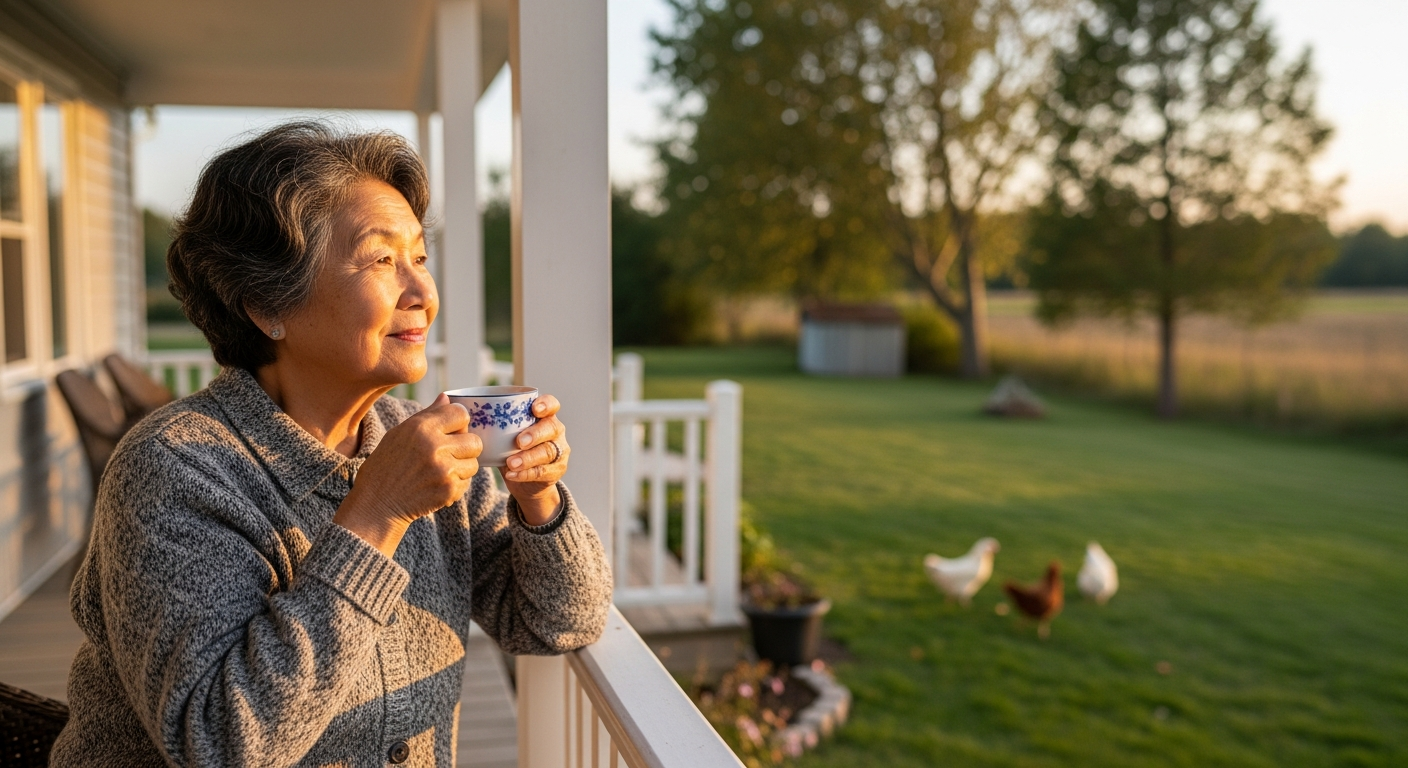
Hobby Farm vs. Commercial Farm: The Lender Distinction
Reverse mortgage lenders are in the business of lending against residential property. They are not agricultural lenders. The fundamental question is whether your property is primarily a home that happens to have some land and agricultural activity, or primarily a farm that happens to have a house on it.
Here is how the four Canadian reverse mortgage lenders generally approach this distinction:
| Lender | Max Acreage (Typical) | Agricultural Activity Permitted? | Key Requirement |
|---|---|---|---|
| HomeEquity Bank (CHIP) | Up to 10 acres (case by case) | Yes, if incidental to residential use | Must be primarily residential; no active commercial farm operations |
| Equitable Bank | Up to 10 acres (case by case) | Yes, if secondary | Principal residence designation; property taxed as residential |
| Bloom Financial | Up to 5–10 acres (newer guidelines) | Yes, if hobby-scale | Appraisal must confirm residential character |
| Home Trust | Up to 10 acres (case by case) | Yes, if minor | Property must be insurable as residential; no farm-class assessment |
According to HomeEquity Bank, the key factors in their assessment are: (1) the property's municipal tax classification, (2) the proportion of the property used for residential purposes versus agricultural purposes, (3) whether the agricultural activity generates significant commercial income, and (4) the appraiser's determination of the property's highest and best use.
The phrase "case by case" appears frequently because there is no rigid acreage cutoff published by any lender. Rick Sekhon, an Ontario reverse mortgage broker, notes: "I have seen seven-acre properties approved without issue and four-acre properties flagged for review. It depends less on the raw acreage and more on what is happening on the land and how the municipality classifies it."
What Counts as a Hobby Farm?
The Canada Revenue Agency (CRA) and Ontario's Municipal Property Assessment Corporation (MPAC) each have their own definitions, and reverse mortgage lenders consider both.
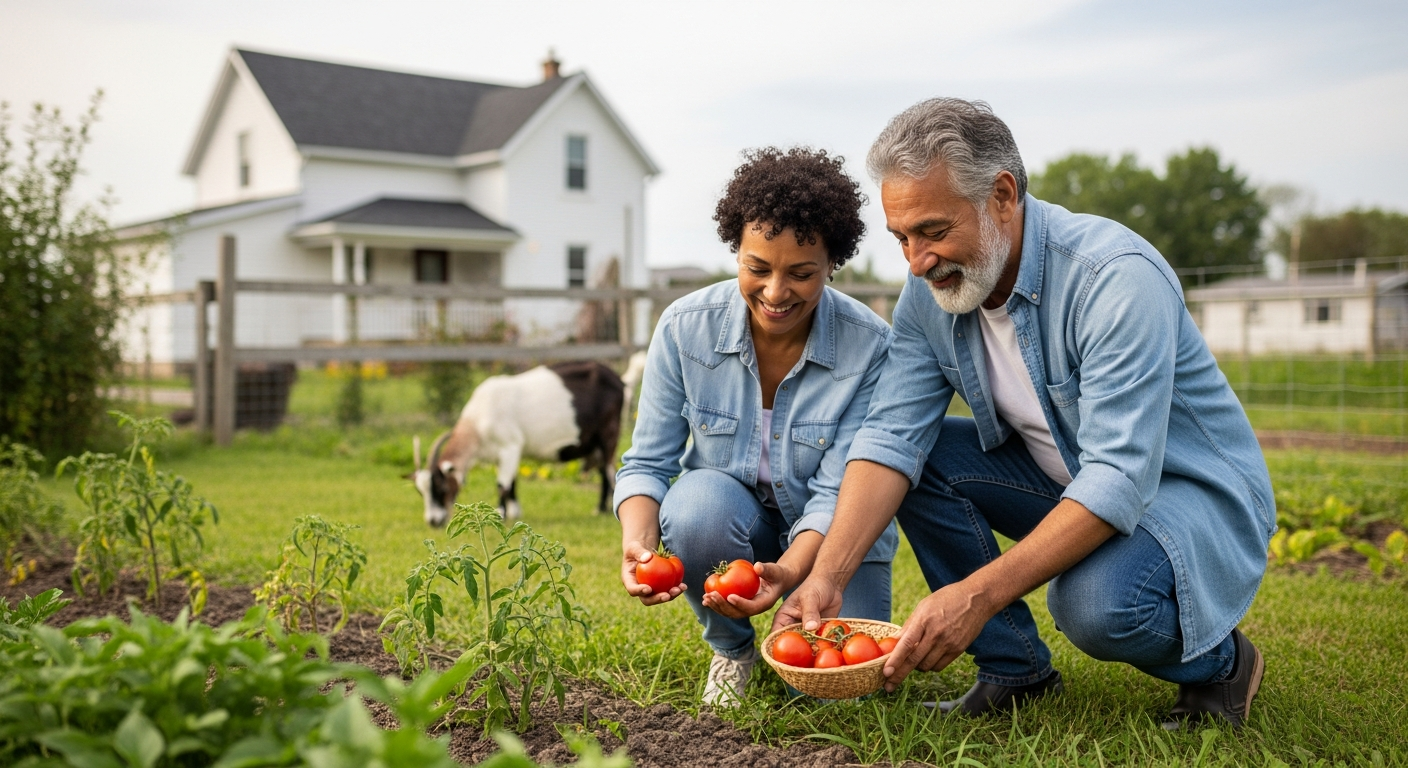
CRA Perspective
The CRA distinguishes between farming as a business and farming as a personal activity:
| Factor | Hobby Farm (Personal) | Commercial Farm (Business) |
|---|---|---|
| Primary income source | Non-farm (pension, employment, investments) | Farm operations |
| CRA farm income reported | Minimal or none; losses not deductible beyond restricted amounts | Full farm income/loss reported on T2042 |
| Reasonable expectation of profit | No, or not the primary purpose | Yes |
| GST/HST registration for farm sales | Typically not registered | Typically registered |
| Farm Support Payment Programs | Not enrolled | Enrolled (e.g., AgriStability, AgriInvest) |
If you report farm income on your tax return, that does not automatically disqualify your property. Many hobby farmers report a few thousand dollars in income from selling eggs, produce at a roadside stand, or maple syrup. What matters is whether farming is your primary livelihood or a secondary activity.
MPAC Property Classification
MPAC classifies Ontario properties for municipal tax purposes. The classification directly affects reverse mortgage eligibility:
| MPAC Classification | Reverse Mortgage Eligibility |
|---|---|
| Residential (RT) | ✓ Standard eligibility |
| Farm (FT) | ✗ Generally not eligible — signals commercial agricultural use |
| Managed Forest (TT) | Case by case — depends on residential component |
| Residential with farm outbuildings | ✓ Usually eligible if residential is the primary classification |
| Multi-use (residential + farm portions) | Case by case — lender may lend on residential portion only |
According to MPAC, a property is classified as farmland if it is used for farming purposes and meets the definition under the Assessment Act. Properties under 10 acres that are primarily residential with incidental garden or animal-keeping activity are typically classified as residential — which is the classification reverse mortgage lenders want to see.
If your property is currently classified as farm (FT) by MPAC but you believe it should be residential, you can request a reassessment. This process takes time but can resolve the eligibility question.
Outbuildings, Barns, and Appraisal Considerations
Hobby farms typically include structures beyond the main residence — barns, workshops, greenhouses, chicken coops, riding arenas, and storage buildings. How the appraiser treats these structures significantly affects both the property valuation and the lender's willingness to proceed.
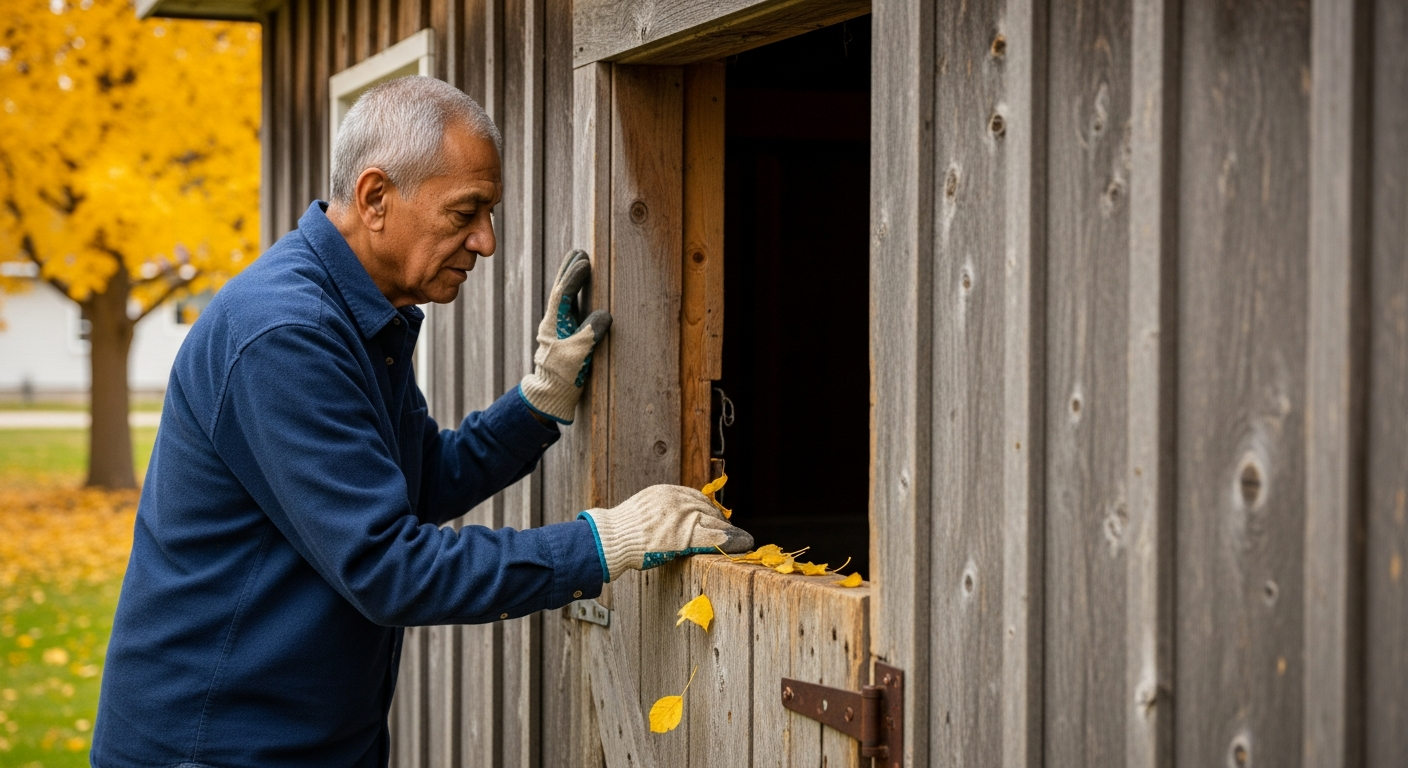
| Structure | Appraisal Treatment | Impact on Reverse Mortgage |
|---|---|---|
| Small barn (under 1,500 sq ft) | May add modest value; treated as accessory building | Generally acceptable to lenders |
| Large commercial barn | May not add value in residential appraisal; could signal commercial use | May trigger lender concerns |
| Workshop / garage | Adds value as residential outbuilding | No issue |
| Greenhouse (hobby scale) | Minimal value impact; treated as accessory | Acceptable |
| Commercial greenhouse operation | Not valued in residential appraisal | Signals commercial use — likely disqualifying |
| Riding arena (personal use) | May add value to horse-country properties | Acceptable if clearly personal, not a boarding/training business |
| Chicken coop / animal shelter | Negligible value impact | No issue for small-scale hobby operations |
| Silo or grain storage | Not valued in residential appraisal | Signals commercial farming — may disqualify |
The appraiser will value the property based on comparable residential sales in the area. If comparable sales include other hobby farm properties of similar size and character, the valuation is straightforward. If the property is unique — for example, a 10-acre parcel with a large barn in an area where most homes sit on half-acre lots — finding comparables becomes more challenging, and the appraised value may be conservative.
For a detailed look at the appraisal process, see our reverse mortgage appraisal guide.
The Principal Residence Requirement
Every reverse mortgage lender requires that the property be your principal residence — the home where you live most of the time. For hobby farm owners, this is rarely an issue because you typically live on the property full-time. But there are edge cases:
- You own a hobby farm and a city condo: You can only get a reverse mortgage on your principal residence. If you spend most of your time at the farm, the farm qualifies. If you spend most of your time in the condo, only the condo qualifies
- You recently purchased the hobby farm: Lenders want to see that you genuinely live there. A property purchased within the past few months may require additional documentation (utility bills, driver's license address, voter registration)
- You are planning to move to the hobby farm: Some retirees buy a hobby farm with the intention of moving there. The reverse mortgage cannot be arranged until you have actually moved in and established it as your primary residence
CRA Farm Income Reporting and Reverse Mortgage Eligibility
If you report farm income on your tax return, the lender may ask questions — but it is not an automatic disqualification. Here is the general framework:
| Annual Farm Income Reported | Lender Likely Response |
|---|---|
| Under $5,000 | No concern — clearly hobby-scale |
| $5,000–$15,000 | May require explanation; likely approved if non-farm income is primary |
| $15,000–$50,000 | Detailed review; lender will assess whether this constitutes a commercial operation |
| Over $50,000 | Strong signal of commercial farming; likely disqualifying for most lenders |
Rick Sekhon advises hobby farm clients to be transparent about their agricultural activities during the application process. "Lenders do not penalize you for having chickens or a big garden. They penalize you for being a commercial farm disguised as a residence. If you are genuinely a retiree who enjoys working the land, your application will be fine."
Worked Example: An 8-Acre Hobby Farm Near Perth
Consider Helen, age 72, who owns an 8-acre hobby farm property outside Perth, Ontario (Lanark County). The property includes a renovated 1,800-square-foot farmhouse, a small barn converted to a workshop, a chicken coop with 15 hens, and a large vegetable garden. Helen's late husband purchased the property in 1998 for $165,000. Helen lives there full-time.
The property is classified as residential (RT) by MPAC. Helen reports approximately $2,800 annually in farm income from selling eggs and produce at the local farmers' market. Her primary income is CPP, OAS, and a modest RRIF withdrawal — totalling $3,200 per month.
Helen wants to use a reverse mortgage to fund a new roof ($18,000), replace the well pump ($4,500), and create a financial cushion for future needs.
| Detail | Amount |
|---|---|
| Home appraised value (residential comparable basis) | $485,000 |
| Maximum reverse mortgage (approx. 44% at age 72) | $213,400 |
| Existing debts on property | $0 |
| Closing costs (legal, appraisal, admin) | $3,400 |
| Net proceeds available | $210,000 |
Helen takes $25,000 as an initial lump sum for the roof and well pump, and sets up the remaining $185,000 as a line of credit that she can draw on as needed — for future home repairs, healthcare costs, or to supplement her monthly income.
The appraisal was straightforward because there are several comparable hobby farm sales in Lanark County in the $450,000–$550,000 range. The barn/workshop added approximately $25,000 to the valuation. The chicken coop and garden had no material impact on the appraised value.
Helen's $2,800 in annual farm income was noted in the application but raised no concerns with the lender (Equitable Bank in this case). For more on how reverse mortgages work in rural Ontario, see our rural property guide.
Insurance Considerations for Hobby Farm Properties
Reverse mortgage lenders require that your property be adequately insured. Hobby farm properties can be more complex to insure than standard suburban homes:
- Outbuildings: Your policy should cover barns, workshops, and other structures. If they are excluded, the lender may require additional coverage
- Liability: Animals on the property (horses, livestock) create liability exposure. Your home insurance policy should include appropriate farm liability coverage
- Replacement cost: Rural properties may have higher replacement costs due to distance from suppliers and contractors. Ensure your coverage reflects actual replacement cost, not market value
- Specialty items: Wood stoves, wells, septic systems, and backup generators — common on hobby farms — may require specific policy endorsements
Work with an insurance broker experienced in rural and hobby farm properties to ensure your coverage satisfies the reverse mortgage lender's requirements.
Aging in Place on a Hobby Farm
Many hobby farm owners choose this lifestyle precisely because of the space, privacy, and connection to the land. A reverse mortgage supports aging in place by providing funds for:
- Accessibility modifications — ramps, wider doorways, main-floor bathroom upgrades
- Property maintenance — fencing, driveway repair, tree removal, septic system maintenance
- Utility upgrades — well water treatment systems, backup power generation, heating system replacement
- Help with property upkeep — hiring lawn care, snow removal, or a handyperson for tasks you can no longer do yourself
The line of credit option is particularly well-suited to hobby farm owners because property maintenance needs are unpredictable and seasonal. Drawing funds only when needed minimizes interest costs while ensuring the money is available.
For a detailed guide on funding home modifications with reverse mortgage proceeds, see our post on home modifications for aging in place. To explore how reverse mortgages support broader retirement planning, visit our retirement cash flow guide.
What If Your Property Does Not Qualify?
If your property exceeds lender acreage guidelines or is classified as commercial farmland, you have alternatives:
- Sever the lot: In some municipalities, you may be able to sever the residential portion (e.g., 2 acres with the house) from the agricultural portion. A reverse mortgage can then be registered against the severed residential lot. Severance is a municipal planning process that can take 6–12 months and costs $5,000–$15,000 in fees and surveys
- Reclassify with MPAC: If your property is classified as farm but is genuinely residential, request a reclassification
- Downsize: Some hobby farm owners use our farm-to-town downsizing guide as an alternative — selling the farm, purchasing a smaller town property, and applying for a reverse mortgage on the new home
- Explore debt relief alternatives: If the primary goal is debt relief, other options may be available even if the reverse mortgage route is blocked
Living Legacy Planning for Hobby Farm Owners
Hobby farms often carry deep family significance — multiple generations may have memories tied to the property. Using a reverse mortgage reduces the equity available to heirs, which can be a concern. Our living legacy guide explores strategies for balancing current financial needs with the desire to preserve the property for family.
One approach: use only the line of credit (not the full lump sum) and draw conservatively. A $210,000 credit facility does not mean you must use all of it. If Helen from our worked example draws only $50,000 over the next decade, the remaining equity is preserved for her heirs — and the interest cost is dramatically lower than if she had taken the full amount.
Frequently Asked Questions
Can I get a reverse mortgage if I board horses on my hobby farm? It depends on the scale. Boarding two or three horses for friends or neighbours as a casual arrangement is unlikely to disqualify you. Operating a 20-stall boarding stable with a riding school is a commercial enterprise and would likely disqualify the property. The lender will look at the income generated, the scale of the operation, and the MPAC classification.
My property is 15 acres. Is that automatically too large? Not automatically, but it is at the upper end of what most lenders will consider. If the residential portion occupies a small area and the remaining acreage is unused field or forest, a lender may still approve — particularly if comparable sales in the area are similar properties. The appraiser's opinion of the property's residential character is the decisive factor.
Does the CRA's restricted farm loss rule affect my reverse mortgage? No. The CRA's restricted farm loss rules (which limit how much farm loss you can deduct against other income) are a tax matter and do not directly affect reverse mortgage eligibility. However, if you are claiming farm losses, it signals to the lender that you are operating a farm — even if at a loss — which may trigger additional review.
Will the lender require me to stop farming? No. Lenders do not restrict your use of the property after the reverse mortgage is registered, provided you continue to maintain it as your primary residence and keep it in good condition. You can continue your garden, your chickens, your horses, and your farmers' market sales without any restriction from the lender.
What happens if I want to sell part of my land after getting a reverse mortgage? Selling a portion of your property while a reverse mortgage is registered requires the lender's consent. The lender will assess whether the remaining property (which secures their loan) retains sufficient value. In some cases, the lender may require a partial repayment from the sale proceeds. Discuss this possibility with your broker before applying if you are considering a future partial sale.
How does FSRAO protect hobby farm owners in reverse mortgage transactions? FSRAO requires that your mortgage broker conduct a suitability assessment — ensuring the reverse mortgage is appropriate for your circumstances. For hobby farm properties, this includes confirming that the property genuinely qualifies, that you understand the terms, and that you have received independent legal advice. If you believe the property was incorrectly assessed or the broker provided misleading guidance, FSRAO's complaint process is available to you.
A hobby farm is a home first and a farm second — and that is exactly how reverse mortgage lenders view it. If your property is under 10 acres, classified as residential, and your agricultural activity is a lifestyle choice rather than a commercial enterprise, you are almost certainly eligible. The key is working with a broker who understands rural and hobby farm properties and can match you with the right lender.
Ready to Learn More?
Get the free Ontario Reverse Mortgage Guide and find out exactly how much you could unlock from your home.
Get My Free Guide →Related Articles
Reverse Mortgage & Farm to Town Downsizing Ontario
Ontario farm owners: reverse mortgage vs selling farmland and downsizing to town. CRA rules, capital gains, principal residence exemption, and worked examples.
Read →How Reverse Mortgage Appraisals Work in Ontario
Complete guide to the reverse mortgage appraisal Ontario process: costs, preparation tips, what appraisers evaluate, and how your home's value determines borrowing limits.
Read →Reverse Mortgage on Rural Property in Ontario: What You Need to Know
Can you get a reverse mortgage on rural Ontario property? Learn about acreage limits, well and septic requirements, LTV adjustments, and which lenders cover rural areas.
Read →