
Reverse Mortgage to Equalize Estate Among Adult Children
Use a reverse mortgage to gift funds to some children and equalize inheritance fairly. Ontario estate planning guide for parents with multiple adult children.
Your home is your largest asset — worth $700,000 or more — but your financial situation is complicated. One child received help years ago (down payment for their first home, education funding, business startup). Your other children haven't received the same support. You want to be fair to all of them. A reverse mortgage allows you to gift money to other children while you're alive, ensuring true equity in your legacy.
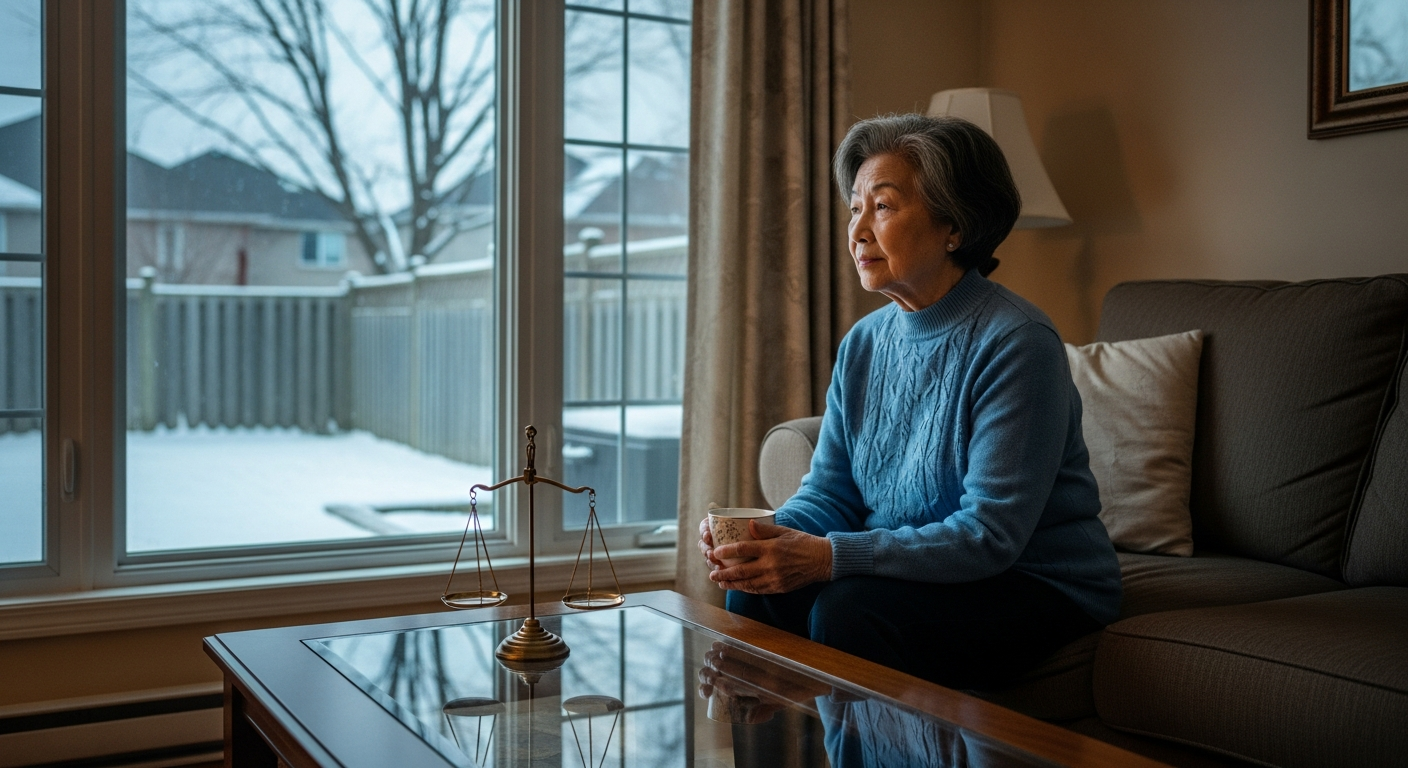
The Fairness Problem: Why Unequal Support Creates Family Conflict
Many Ontario parents face this situation:
- Child A: Received $50,000 for a down payment 15 years ago
- Child B: Received $20,000 for education costs 8 years ago
- Child C: Never received significant financial help
- Estate: Split three ways equally in the will
The mathematical issue is clear: if Child A received more support during your lifetime, their total benefit (lifetime gift + equal inheritance share) is larger than their siblings'. This creates resentment and conflict — sometimes lasting decades.
According to family lawyers in Ontario, unequal lifetime gifting combined with equal inheritance distribution is a leading cause of estate disputes among siblings.
The Traditional (Unfair) Solution
Most parents try to "fix" this through their will — but this approach is flawed:
| Approach | How It Works | The Problem |
|---|---|---|
| Equal inheritance to all | Split estate 33% each | Ignores lifetime gifts; doesn't account for prior help |
| Reduce one child's share | Leave Child A less in the will | Causes resentment; that child feels punished for being helped earlier |
| Larger inheritance to underfunded child | Leave Child C more | Creates conflict with the others; still seen as unfair |
| Proportional adjustments | Balance lifetime gifts in the will | Complex legal documents; sometimes contested |
All of these approaches are reactive. Your children figure out the unfairness only after you've passed away, when emotions are highest and lawyers are most expensive.
The Better Solution: Use a Reverse Mortgage to Gift Now
A reverse mortgage allows you to equalize your children's support while you're alive. You gift money to the children who were financially "behind," and everyone sees the fairness in real-time.
Example: The Morrison Family
The Morrisons have three adult children. Their home in Ontario is worth $750,000, and they're both retired (ages 68 and 70).
| Child | Prior Support | Current Financial Situation | Fairness Gap |
|---|---|---|---|
| Emma (oldest) | $80,000 down payment gift (15 yrs ago) | Stable, no recent needs | $80,000 ahead |
| James (middle) | $20,000 education support (8 yrs ago) | Career struggles, underemployed | $60,000 behind Emma |
| Sophie (youngest) | $0 | Starting family, mortgage stress | $80,000 behind Emma |
The parents can take out a reverse mortgage for $80,000 and gift:
- $40,000 to James (bridging his fairness gap)
- $40,000 to Sophie (bridging her fairness gap)
Result: All three children are now starting at the same baseline. When the parents pass away, the home (minus the $80,000 reverse mortgage debt) is divided equally, and no child feels unfairly treated.
Fairness Models: How Much Should You Gift?
Family lawyers recommend one of three models for equalization:
Model 1: Bring Everyone to the Highest Level
If your most-supported child received $80,000, bring all others to that level:
Total equalization cost: (number of children - 1) × highest gift amount Example: 3 children, highest prior gift = $80,000 → Total: $160,000
Model 2: Split the Difference
If one child received $80,000 and others received $0, split the excess:
Total equalization cost: Highest gift ÷ number of children Example: $80,000 ÷ 3 = $26,667 to each underfunded child
Model 3: Pro-Rata Adjustment
Account for all prior gifts and balance to a fair average:
| Child | Prior Total | Fair Share (1/3 of all) | Needs to Receive |
|---|---|---|---|
| Emma | $80,000 | $33,333 | $0 (already ahead) |
| James | $20,000 | $33,333 | $13,333 |
| Sophie | $0 | $33,333 | $33,333 |
| Total cost | $46,666 |
According to FSRAO (Financial Services Regulatory Authority of Ontario), a written document explaining your fairness model prevents misunderstandings and legal disputes later. You can include this with your will or in a separate family letter.
Reverse Mortgage Features That Support Equalization Gifting
A reverse mortgage is ideal for equalization gifting because:
✓ No monthly payments — you can't afford monthly debt service on a fixed income ✓ Line of credit option — draw funds only as you gift them, minimizing interest costs ✓ Flexible amounts — borrow what you need for equalization; don't over-borrow ✓ No credit score requirement — your credit history doesn't matter ✓ No income verification — you don't need employment income ✓ Remains private — your adult children don't need to know the reverse mortgage mechanics; they just receive gifts
According to Bloom Financial and CHIP, reverse mortgages designed for gifting are increasingly popular with Ontario retirees who want to support their adult children equitably.
The Tax Impact of Gifting Through a Reverse Mortgage
This is crucial: There is NO tax impact on you for gifting from a reverse mortgage.
| Aspect | Tax Impact |
|---|---|
| Reverse mortgage proceeds | $0 (loan, not income) |
| Gifting to children | $0 (Canada has no gift tax) |
| Impact on your OAS/GIS | $0 (gifting is not income) |
| Impact on your CPP | $0 (gifting is not income) |
| Your tax return reporting | No requirement to report gifting |
| Child's tax return reporting | Generally no impact (receiving a gift is not taxable income) |
According to the CRA, Canada does not impose a gift tax. Gifts between family members are not reportable on tax returns in most cases, and gifts received are not taxable income.
Important caveat: If you gift funds that the child then invests (stocks, bonds, real estate), any income earned on those investments is taxable to the child. But the gift itself is tax-free.
Family Communication: Making the Gifting Clear
Before setting up a reverse mortgage to equalize, have a conversation with your children. This is essential:
What to say (example):
"Your mother and I want to be fair to all of you. We've helped some of you more than others over the years, and that was right at the time. But now we want everyone to start on equal footing. We're going to gift some of you funds to make things fair. This is a gift, not a loan — you don't need to repay it. We just wanted you to know that we love you equally and we're thinking about fairness while we're still here."
Benefits of transparency:
- Children understand they're receiving gifts while you're alive (not expecting probate windfalls)
- Your intentions are clear, reducing will disputes later
- Everyone knows the fairness model beforehand
- Children can plan their lives accordingly
This conversation is far better than having them discover imbalances after you've passed away.
Documentation: How to Protect Your Equalization Plan
Even with a verbal conversation, documentation is critical. Here's what a family lawyer in Ontario recommends:
Option 1: Family Letter (Informal but Powerful)
Write a letter (not a legal document) explaining:
- The fairness model you're using
- Why you're gifting to certain children
- That gifts are not loans
- Your intentions for the will
- Store with your will; lawyer or executor shares it with children
Option 2: Addendum to Your Will
Your lawyer can add a clause explaining prior gifting and stating that:
- Certain children received gifts during your lifetime
- These gifts were intentional equalization
- The remaining estate should be divided as planned
- This prevents misinterpretation
Option 3: Formal Family Trust
If gifting is substantial (>$50,000), your lawyer can set up a family trust that:
- Distributes gifts fairly among beneficiaries
- Manages the reverse mortgage as part of the trust assets
- Clarifies that reverse mortgage debt comes from your estate, not individual children's shares
Most Ontario families use Option 1 or 2 — simple and effective.
How Much Can You Borrow for Equalization Gifting?
Your reverse mortgage amount depends on:
- Your home value
- Your age (55+ required)
- Your location (urban Ontario typically: 50–59% LTV)
Example calculation:
Home value: $600,000 Available LTV: 55% Maximum available: $330,000
To equalize fairly among three children with prior gifts totaling $100,000 in total imbalance, you might borrow $50,000–$80,000 (not the full $330,000).
According to Equitable Bank, borrowing only what you need means lower interest costs and a smaller debt burden for your estate. It's better to be conservative with equalization gifting.
Reverse Mortgage vs. Other Equalization Methods
| Method | How It Works | Best For | Drawbacks |
|---|---|---|---|
| Reverse mortgage + lifetime gifting | Borrow against home, gift to children now | Fair & transparent while alive | Interest cost, reduces estate equity |
| Will adjustments only | Leave different amounts in will | Simple legally | Children discover imbalance after death; can cause conflict |
| Life insurance | Buy policy, designate child as beneficiary | Supplement inheritance | Cost of premiums; health restrictions |
| Sell home now, distribute | Downsize, sell home, gift proceeds | Full liquid asset distribution | Lose family home; requires moving |
| Family business / property transfers | Transfer rental or business assets unequally | Complex asset situations | Requires business/property planning |
For most Ontario retirees, a reverse mortgage combined with lifetime gifting is the most practical option.
Frequently Asked Questions
If I gift $40,000 to one child, do I need to report this to the CRA?
No. Canada does not have a gift tax, and gifts between family members are not reportable to the CRA. Your child should not report receiving a gift on their tax return either. (This is different from the U.S., which has gift tax.)
What if one child is struggling financially while the others are stable — can I gift more to them?
Yes, absolutely. Equalization doesn't mean everyone gets exactly the same amount — it means everyone gets what's fair given their circumstances. If one child is facing bankruptcy and others are wealthy, gifting more to the struggling child is fair and won't create legal issues.
If I gift funds to one child and they misuse the money (gambling, debt), can I ask for it back?
Legally, no — a gift is a gift. Once you've given the money, it belongs to your child. This is why clear communication about your expectations is important. You may want to discuss how gifts should be used before gifting (e.g., "This is for your mortgage," "This is for your child's education").
Can I structure a gift as a loan to one child if they're financially stable and others receive gifts?
Yes, but this requires careful documentation. A proper promissory note signed by your child creates a legal debt. However, this complicates equalization — you'd need to account for the loan repayment in your will. Most families avoid mixing gifts and loans.
If I die before fully repaying the reverse mortgage, does the unpaid balance reduce my children's inheritance?
Yes. The reverse mortgage balance is a debt against your estate. When the home is sold (or inherited), the lender's claim is paid first, and the remaining proceeds go to your children. This is standard for any mortgage.
Should I tell my children about the reverse mortgage before I set it up?
You don't have to. It's your financial decision. However, transparency with adult children is generally healthier. At minimum, discuss the gifting plan with them so they understand your fairness intentions.
True fairness is about more than splitting your will equally — it's about ensuring each child starts at an equal place, accounting for prior support. A reverse mortgage enables you to achieve that fairness while you're alive to see your children benefit.
Also read:
- Gift home equity to family while alive
- Estate planning with a reverse mortgage
- Understanding what happens to the home when you die
Get your free Ontario Reverse Mortgage Guide →
This content is for illustrative purposes only. Estate and family gifting can have complex legal implications. Consult with a lawyer licensed in Ontario before implementing an equalization plan. Call Rick Sekhon Reverse Mortgages for the best rates and more information.
Ready to Learn More?
Get the free Ontario Reverse Mortgage Guide and find out exactly how much you could unlock from your home.
Get My Free Guide →Related Articles
Estate Planning with a Reverse Mortgage: Protecting Your Heirs' Inheritance
Understand how a reverse mortgage affects your estate. Learn about the no-negative-equity guarantee, repayment timing, and strategies to preserve inheritance.
Read →What Happens to a Reverse Mortgage When You Die in Ontario? A Guide for Families
What happens to your home and reverse mortgage when you pass away in Ontario? A clear guide for homeowners and their families on estate settlement, repayment, and protecting your heirs.
Read →Reverse Mortgage for Workplace Injury Recovery: Supporting Adult Child's Career Transition
Help your adult child rebuild their career after workplace injury. Learn how reverse mortgages fund recovery, retraining, and financial stability during career transition.
Read →