
Environmental Remediation: Funding Contamination Cleanup with Reverse Mortgage
Discover how Ontario homeowners can fund environmental remediation, soil testing, and contamination cleanup costs using reverse mortgage capital.
Your home inspector found lead in the soil. Or mold in the crawlspace. Or residual contamination from decades-old industrial use. Environmental remediation can cost $5,000 to $50,000+—money most retirees don't have reserved. A reverse mortgage can fund cleanup, protecting your health and your home's long-term value.
This is a specialized but critical use case. Many Ontario homes built before the 1980s contain environmental hazards. Aging in place is impossible if your home isn't safe. Here's how to navigate remediation costs.
Common Environmental Hazards in Ontario Homes
Lead
Lead was common in:
- Paint (pre-1978 homes; Ontario banned lead paint in 1991)
- Plumbing solder and fixtures
- Soil (especially near old industrial sites or mining areas)
Risks: Lead poisoning causes neurological damage, especially in children. Even in seniors, it affects cognition and cardiovascular health.
Remediation cost: $5,000-15,000 (testing, paint encapsulation or abatement, water line replacement).
Mold
Mold grows in:
- Basements (especially in Ontario's damp climate)
- Bathrooms and kitchens
- HVAC systems
- Crawlspaces
Risks: Respiratory issues, asthma aggravation, immune system impacts.
Remediation cost: $3,000-8,000 (testing, removal, moisture control).
Asbestos
Asbestos was used in:
- Insulation (pre-1980s)
- Vinyl floor tiles and adhesive
- Roof shingles and siding
- Pipe wrapping
Risks: Mesothelioma and lung cancer when fibers are inhaled (dormant risk if undisturbed; high risk if home renovations occur).
Remediation cost: $5,000-25,000 (professional abatement and disposal).
Radon
Radon is a naturally occurring radioactive gas entering basements through soil.
Risks: Radon is the second-leading cause of lung cancer in Canada after smoking.
Remediation cost: $1,200-2,500 (radon mitigation system installation).
PCBs and Contaminated Soil
Older homes, especially near industrial sites, may have:
- PCB-contaminated soil
- Heavy metals (arsenic, cadmium)
- Petroleum residue
Risks: Long-term health impacts, reduced home value, possible legal liability.
Remediation cost: $8,000-50,000+ (soil testing, excavation, disposal, replacement).
According to Health Canada, environmental testing and remediation in homes is an important preventive health measure, especially for seniors whose immune systems are more vulnerable to contamination exposure.
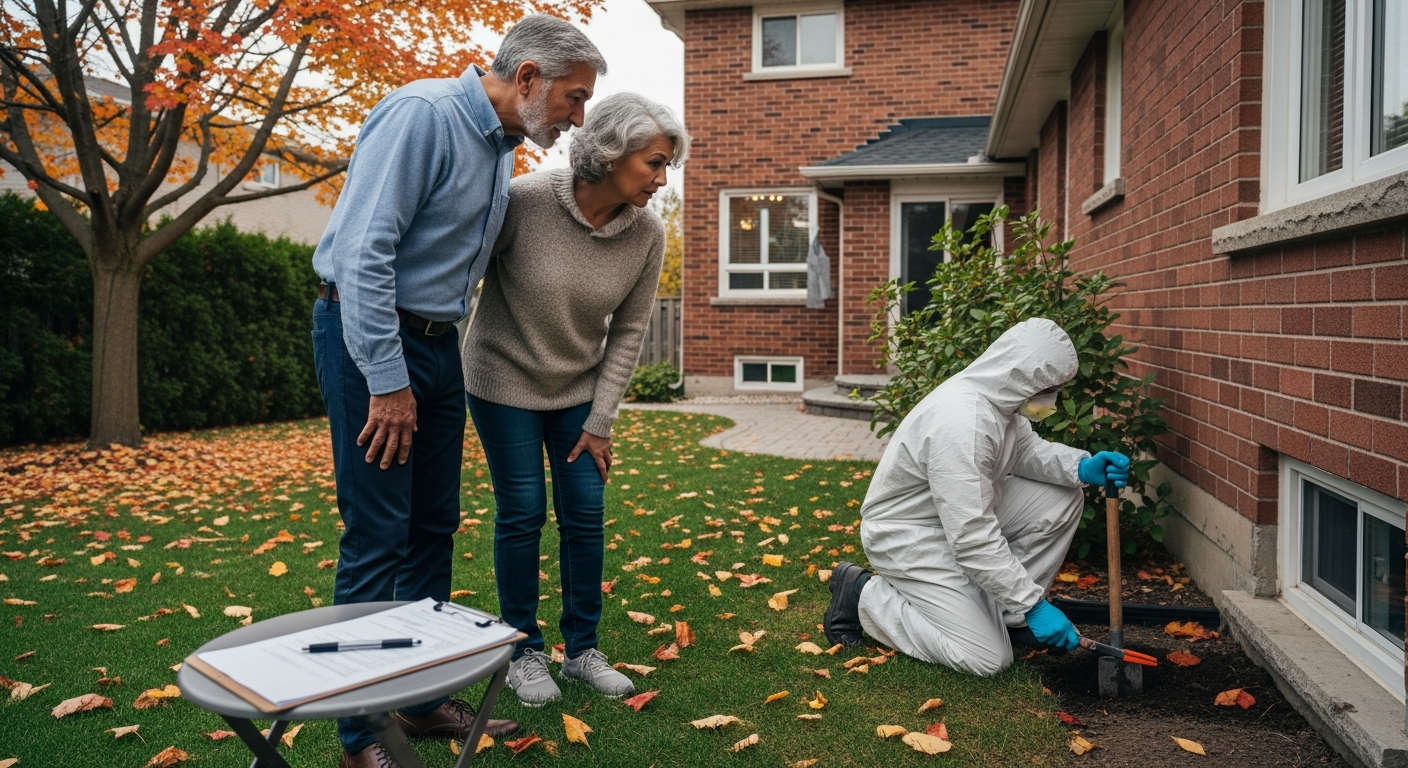
Remediation Process and Costs
Phase 1: Testing and Assessment ($500-3,000)
Before any cleanup, you need professional testing:
- Lead testing (soil, paint, water): $300-800
- Mold inspection and air quality testing: $400-800
- Radon testing: $150-300
- Asbestos survey: $300-600
- Soil contamination testing: $800-2,000
These tests are critical. They:
- Confirm the hazard exists (avoid unnecessary spending)
- Determine extent (small cleanup vs. major remediation)
- Guide remediation approach
- Provide documentation for insurance claims or future home sales
Reverse mortgage use: Borrowing $3,000-5,000 for comprehensive testing is reasonable. Testing guides all subsequent decisions.
Phase 2: Remediation ($2,000-50,000+)
Based on test results, remediation varies dramatically:
| Hazard | Severity | Remediation Approach | Cost Range |
|---|---|---|---|
| Lead paint | Minor | Encapsulation (sealing in place) | $2,000-5,000 |
| Lead paint | Severe | Full abatement (removal and disposal) | $5,000-15,000 |
| Mold | Localized | HEPA remediation + moisture control | $2,000-5,000 |
| Mold | Widespread | Major mold remediation + HVAC cleaning | $5,000-15,000 |
| Asbestos | Undisturbed | Encapsulation (safest option) | $3,000-8,000 |
| Asbestos | At-risk | Professional abatement | $8,000-25,000 |
| Radon | Any level | Radon mitigation system | $1,200-2,500 |
| Contaminated soil | Localized | Soil excavation and replacement | $5,000-15,000 |
| Contaminated soil | Extensive | Large-scale excavation and remediation | $20,000-50,000+ |
Phase 3: Follow-Up Testing ($500-2,000)
After remediation, professional re-testing confirms the hazard is eliminated. This is essential for:
- Your peace of mind
- Insurance purposes
- Future home sale documentation
- Lender requirements
Using a Reverse Mortgage for Remediation
Step 1: Get Professional Testing
Before borrowing, spend $3,000-5,000 on comprehensive testing. This tells you exactly what you're dealing with and what remediation costs will be.
Reverse mortgage strategy: If you don't have savings, borrow $5,000 for testing. It's a small, necessary expense.
Step 2: Obtain Competitive Remediation Quotes
Once testing reveals the hazard, get 3 quotes from certified remediation contractors. Costs vary significantly:
- Lead abatement: $5,000 (basic) to $15,000 (comprehensive)
- Mold remediation: $3,000 (small) to $15,000 (large)
- Asbestos abatement: $8,000 (minor) to $25,000 (major)
- Soil remediation: $8,000 (localized) to $50,000+ (extensive)
Step 3: Borrow for Remediation
Once you've chosen your contractor, use your reverse mortgage to fund the work.
Example: Tom (68) has a $400,000 home with lead paint and lead-contaminated soil. Testing reveals:
- Lead abatement cost: $12,000
- Soil excavation and replacement: $18,000
- Total: $30,000
He borrows $35,000 via reverse mortgage at 6.5% interest ($2,275/year). He pays contractors directly. His home is now safe. At his RM costs roughly $190/month—manageable from his CPP and OAS.
Health and Property Value Benefits
Remediating environmental hazards has two major benefits:
1. Health
Living in a contaminated home accelerates decline in seniors:
- Lead exposure impairs cognition and memory
- Mold exposure worsens asthma and respiratory disease
- Asbestos exposure creates long-term cancer risk
- Radon exposure increases lung cancer risk
For a senior aging in place, remediation is preventive medicine. It protects your health over the next 10-20 years.
2. Property Value
Environmental contamination can reduce home value by 10-30% if undisclosed. When you sell:
- Buyers discover the contamination during inspection
- Buyers demand price reduction
- Or, buyers walk away entirely
Remediating the hazard:
- Preserves property value
- Creates clean disclosure for future sale
- Protects your heirs' inheritance value
Example financial impact: Sarah's home is worth $450,000. If mold is discovered unsolved, a buyer might reduce their offer by $45,000-90,000 (10-20% discount). Remediating the mold ($8,000) preserves $45,000+ in property value.
From a pure financial perspective, RM-funded remediation is an investment with strong ROI.
Insurance Implications
Some environmental hazards may be covered by homeowner's insurance; others are not:
- Covered: Sudden mold growth from a pipe burst (water damage)
- Not covered: Pre-existing mold from chronic dampness
- Covered: Lead paint abatement (some policies)
- Not covered: Radon mitigation (usually excluded)
- Covered: Asbestos removal if triggered by covered peril (renovation requiring disturbing asbestos)
- Not covered: Asbestos encapsulation as preventive measure
Before borrowing, review your homeowner's policy. Some hazard remediation may be partially covered, reducing your out-of-pocket costs.
Environmental Liability and Future Sellers
If you're aware of environmental contamination and sell without remediation or disclosure, Ontario law requires disclosure. Failing to disclose can lead to:
- Lawsuit from new owner
- Your liability for remediation costs
- Fraud accusations
By remediating now, you:
- Eliminate the liability
- Protect your heirs
- Create a clean title transfer
From a legal and ethical standpoint, RM-funded remediation is the responsible choice.
Regulatory Compliance
Depending on the hazard and location, you may need:
- Ministry of Labour certification — for asbestos abatement
- Health unit approval — for some soil remediation
- Building permits — if excavation or structural work occurs
Professional remediation contractors handle compliance. But budget an extra $500-1,000 for permits and inspections.
Quick Reference: Remediation Cost Summary
| Hazard | Testing | Remediation | Re-testing | Total Range |
|---|---|---|---|---|
| Lead (paint + soil) | $800 | $12,000 | $500 | $13,300 |
| Mold (localized) | $500 | $3,000 | $400 | $3,900 |
| Mold (widespread) | $600 | $10,000 | $500 | $11,100 |
| Asbestos (undisturbed) | $500 | $5,000 | $300 | $5,800 |
| Radon | $200 | $1,500 | $150 | $1,850 |
| Contaminated soil | $1,200 | $15,000 | $500 | $16,700 |
Frequently Asked Questions
Can I get a reverse mortgage specifically for environmental remediation?
Yes. Lenders don't restrict what you use RM funds for. However, you must have sufficient home equity. Lenders typically allow 15-40% of home value as a reverse mortgage.
Will environmental contamination affect my ability to get a reverse mortgage?
No. However, during the appraisal process, the appraiser may note environmental concerns. This doesn't disqualify you—the home's value (with contamination factored in, if applicable) is what matters.
Should I disclose the environmental issue when getting a reverse mortgage?
The lender may ask about major repairs or issues. Disclose honestly. It doesn't prevent the RM; it ensures the lender has accurate information.
Can I claim remediation costs as a tax deduction?
Home remediation is a capital improvement, not deductible. However, if you're moving due to a declared environmental disaster, provincial programs may offer tax relief.
What if I remediate but contamination recurs?
This is rare if professional abatement was done properly. However, if it recurs (e.g., mold returns due to ongoing moisture), your insurance may cover it if it's related to a covered water event. Professional remediation usually includes a warranty (1-5 years) covering recurrence.
Should I remediate before or after getting a reverse mortgage?
If you have savings, remediate first. If you don't, get the RM. The sooner you remediate, the sooner you're living in a safe home. RM interest is a manageable cost compared to health risks.
Key Takeaways
- Environmental contamination is common in older Ontario homes and poses genuine health risks
- Testing and remediation costs range from $2,000 to $50,000+ depending on hazard severity
- A reverse mortgage can fund testing and remediation, protecting your health and home value
- Remediating hazards preserves property value, protects heirs' inheritance, and eliminates legal liability
- Professional contractors handle all compliance and regulatory requirements
- RM interest costs are manageable and justified by the health and financial benefits
Environmental remediation isn't a luxury—it's essential preventive health care for seniors aging in place. A reverse mortgage makes it financially feasible.
Ready to Learn More?
Get the free Ontario Reverse Mortgage Guide and find out exactly how much you could unlock from your home.
Get My Free Guide →Related Articles
Reverse Mortgage for Home Repairs When Insurance Won't Cover: Bridging Coverage Gaps
Learn how reverse mortgages can bridge home repair costs when insurance won't cover damage. A solution for Ontario seniors facing major repairs and insurance limitations.
Read →Foundation Repairs and Reverse Mortgage: Funding Structural Issues
Foundation cracks, settling, or water damage can cost $15,000–$50,000 in Ontario. Learn how a reverse mortgage funds critical structural repairs.
Read →Reverse Mortgage for Smart Home Health Monitoring: IoT Systems for Aging in Place
Use a reverse mortgage to install smart home health monitoring systems that keep you safe while aging in place in Ontario.
Read →