
Foundation Repairs and Reverse Mortgage: Funding Structural Issues
Foundation cracks, settling, or water damage can cost $15,000–$50,000 in Ontario. Learn how a reverse mortgage funds critical structural repairs.
You notice cracks in the basement wall. Water seeps in during heavy rain. A structural engineer confirms: foundation settling and water intrusion. Repair costs: $30,000–$50,000. You can't afford it from retirement savings. A reverse mortgage can provide the capital upfront, without monthly payments. But foundation work is complex—let's understand what you're actually paying for and when a reverse mortgage makes sense.
This article is for educational purposes only and does not constitute financial advice.
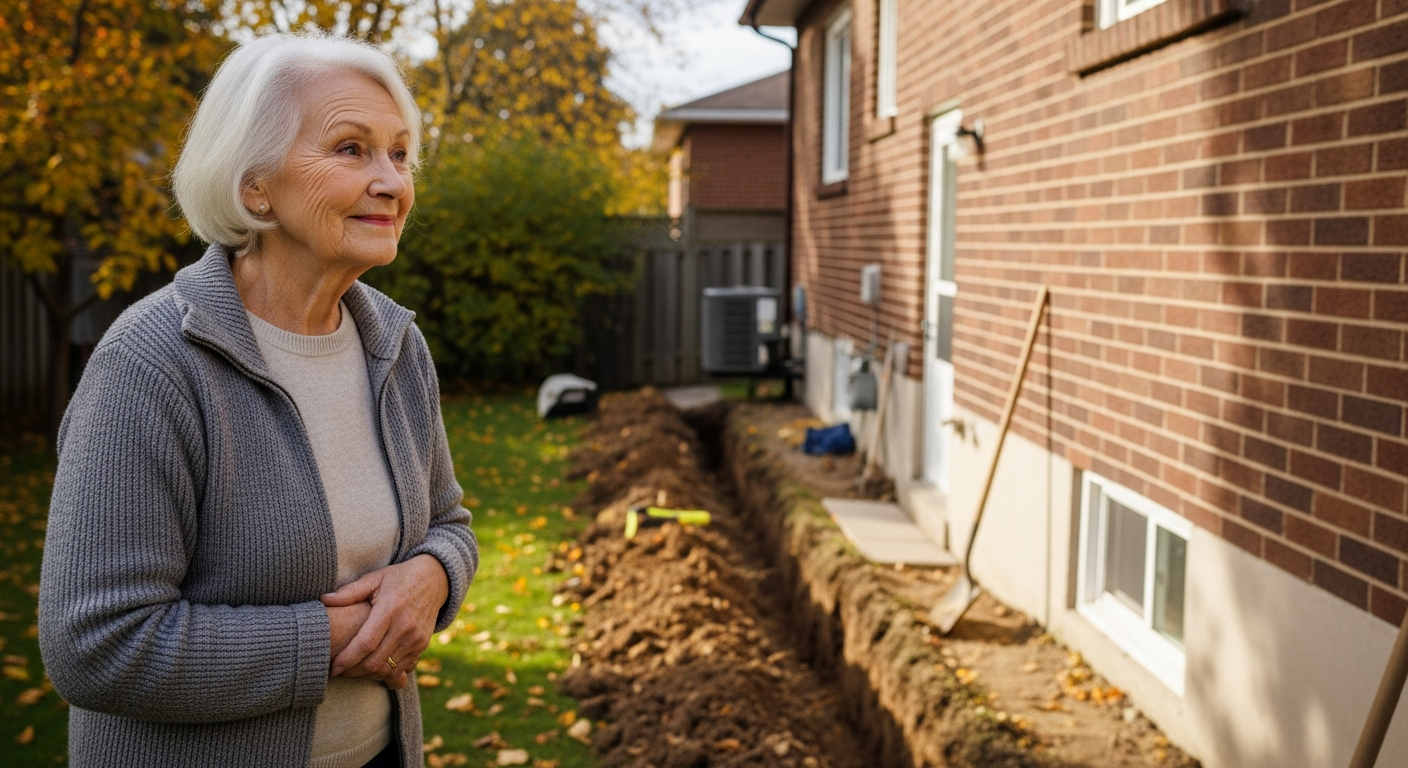
Types of Foundation Issues in Ontario Homes
Ontario's freeze-thaw climate, clay soil, and aging housing stock create specific foundation challenges:
Issue 1: Basement Wall Cracks & Bowing
What it is:
- Vertical or diagonal cracks in concrete/masonry walls
- Bowing (walls leaning inward)
- Usually caused by soil pressure or settling
Severity scale:
- Hairline cracks (<1/8 inch): Cosmetic, no repair needed
- Minor cracks (1/8–1/4 inch): Monitor; may need caulking
- Major cracks (>1/4 inch, growing): Requires professional repair
- Bowing walls: Structural emergency
Cost to repair:
- Caulking/sealing: $500–$1,500
- Carbon fiber straps: $5,000–$10,000
- Wall bracing/reinforcement: $10,000–$25,000
- Wall replacement (severe): $25,000–$50,000+
Issue 2: Water Intrusion & Basement Flooding
What it is:
- Water enters through cracks, joints, or gaps
- Dampness or flooding in basement
- Mold growth potential
Causes:
- Cracked foundation
- Poor external drainage
- Improper grading (ground sloping toward home)
- Failed waterproofing
Cost to repair:
- Interior waterproofing sealant: $2,000–$5,000
- External waterproofing + drainage: $8,000–$15,000
- Sump pump installation: $2,000–$4,000
- Drainage tile replacement: $10,000–$20,000
- Complete basement waterproofing: $15,000–$30,000
Issue 3: Foundation Settlement & Differential Movement
What it is:
- Foundation settling unevenly (common in older Ontario homes on clay)
- One corner settles more than others
- Creates cracks, uneven floors, door/window misalignment
Severity:
- Minor settlement: <1/4 inch (usually stable)
- Moderate: 1/4–1 inch (monitor, may need monitoring)
- Severe: >1 inch (structural concern, repair needed)
Cost to repair:
- Underpinning (supporting foundation): $20,000–$60,000+
- Helical piers or pilings: $30,000–$80,000+
- Carbon fiber straps: $5,000–$10,000
Issue 4: Efflorescence & Salt Damage
What it is:
- White powder on basement walls (mineral deposits)
- Occurs when water moves through concrete
- Indicates water intrusion
Cost to repair:
- Cleaning + sealing: $1,000–$3,000
- Root cause repair: Varies ($2,000–$15,000)
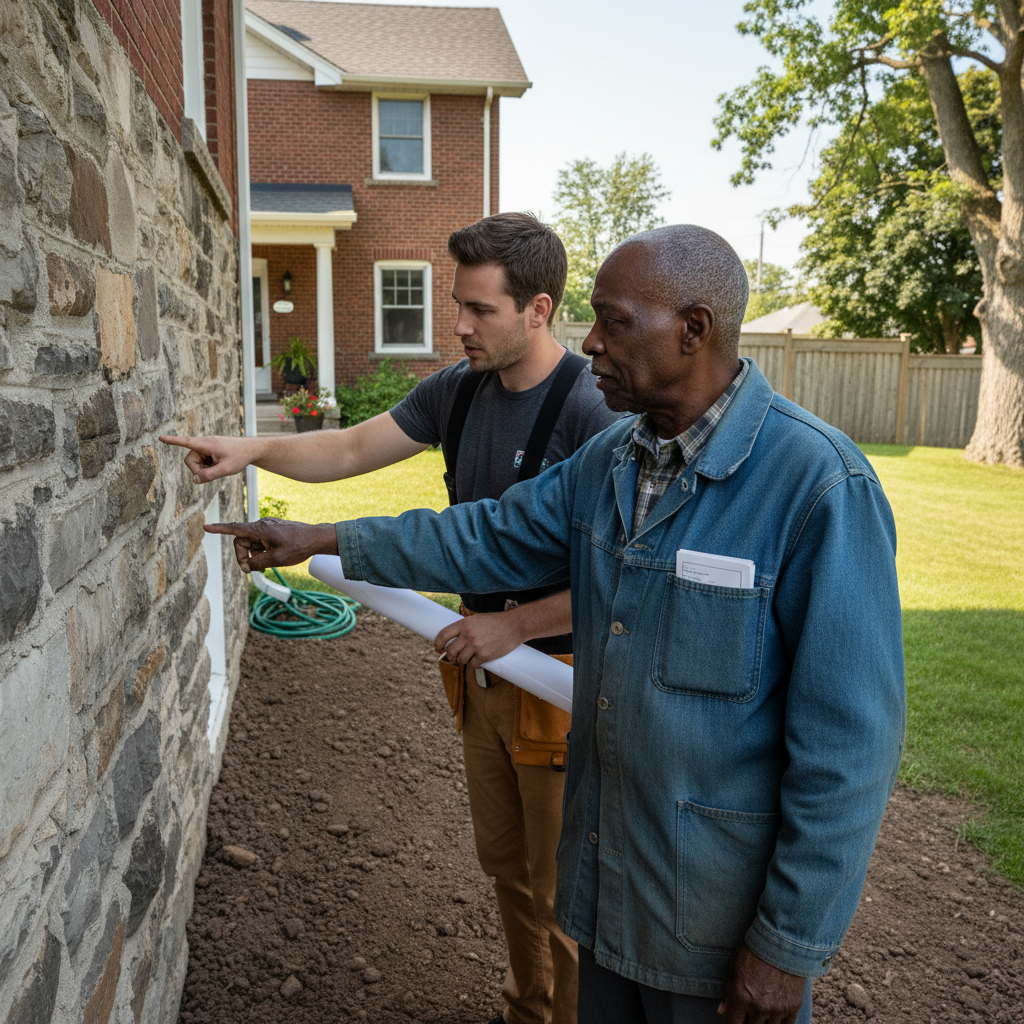
How a Reverse Mortgage Funds Foundation Repair
The Financial Strategy
Step 1: Get professional assessment
- Structural engineer inspection: $800–$1,500
- Diagnosis of issues and repair options
- Cost estimate for repairs
Step 2: Apply for reverse mortgage
- Borrow $30,000–$50,000 (based on foundation repair needs)
- No monthly payments required
- Lump sum or draws as work progresses
Step 3: Complete repairs
- Licensed contractor performs work
- Use reverse mortgage funds for payments
- Obtain permits, inspections per Ontario code
Step 4: Benefit from improved home
- Home is structurally sound
- Water intrusion resolved
- Can stay in home long-term
- Home value stabilizes (or increases)
- When you eventually sell, foundation repairs add value
Step 5: Repay reverse mortgage
- When you sell: Mortgage repaid from sale proceeds
- If you pass away: Estate pays from home sale
- As long as you live there: No repayment required
Cost Model: $35,000 Foundation Repair
Foundation assessment:             $1,200
Waterproofing + drainage repair:  $18,000
Wall reinforcement (CF straps):   $12,000
Sump pump installation:            $3,000
Permits, inspection, misc:         $1,000
─────────────────────────────────
TOTAL cost:                       $35,200

Reverse mortgage borrowed:         $35,200 @ 5.5%
Monthly interest accrual:          ~$161/month
After 10 years, total interest:    ~$25,000
Total cost with interest:          ~$60,200

Home value before repair:          $400,000
Foundation issue discount:         -$30,000 (buyer concern)
Effective home value:              $370,000

Home value after repair:           $410,000 (restored confidence)
Gain from repair:                  $40,000
Net benefit:                        $40,000 - $25,000 = $15,000+
Bottom line: The repair adds value that exceeds the interest cost, making the reverse mortgage investment worthwhile.
When Will Lender Require Foundation Work Before Closing?
Critical question: Will a reverse mortgage lender approve your application if foundation issues exist?
Lender assessment:
- Minor cracks (<1/4"): Approve as-is (note in appraisal)
- Moderate issues (bowing, water): May require repair or price adjustment
- Severe issues (active settling, major water): May require repair or decline
Strategy:
- Disclose foundation condition upfront
- Get engineer assessment showing severity
- Lender will factor into appraisal value
- Plan repairs as part of reverse mortgage (similar to roof work)
Outcome: Most lenders will approve if foundation is documented and either being repaired or acceptably priced.
DIY vs Professional: Foundation Repair Reality
Be honest: Foundation work is NOT a DIY project.
Why Professional Repair Is Non-Negotiable
| Task | DIY Risk | Professional Cost |
|---|---|---|
| Caulking small cracks | Low risk | $500–$1,500 |
| Interior waterproofing sealant | Low risk | $2,000–$5,000 |
| Carbon fiber straps | Moderate risk | Hire contractor |
| Underpinning | High risk | $20,000–$60,000 |
| Drainage tile replacement | High risk | $10,000–$20,000 |
| Sump pump installation | Low-moderate | $2,000–$4,000 |
Reality: DIY caulking might work for hairline cracks. Everything else requires licensed contractor with proper insurance and warranties.
Why:
- Structural failure risk (potential collapse)
- Warranty requirements (structural repairs must be warrantied)
- Building permits (required for major work)
- Insurance liability (if DIY fails, you're liable)
Foundation Work Permits and Inspections (Ontario)
Foundation repairs typically require:
-
Building permit (City/Town of Toronto, etc.)
- Cost: $200–$500
- Required for: Underpinning, waterproofing, sump pump, structural work
- NOT required for: Minor caulking, cosmetic sealing
-
Inspections by city
- Rough-in inspection (before concealment)
- Final inspection (after work completed)
- No cost; just scheduling
-
Contractor licensing
- Foundation work typically requires licensed contractor
- Verify contractor is insured
- Ask for liability insurance proof
-
Warranty
- Professional foundation work includes 5–10 year warranty
- Covers defects in materials/workmanship
- Important for future buyers
Timeline: Permits + inspections add 1–2 weeks to project schedule.
Cost Comparison: Reverse Mortgage vs Alternatives
Option 1: Reverse Mortgage (No Monthly Payments)
Borrow $35,000 @ 5.5% fixed
No monthly payment
After 10 years: Balance = $59,000
After 20 years: Balance = $94,000

Interest cost over 20 years: ~$59,000
Repay when: You sell, move, or pass away
Pros: No monthly burden; affordable for retirees Cons: Interest compounds; balance grows significantly
Option 2: HELOC (Home Equity Line of Credit)
Borrow $35,000 @ Prime + 0.5% (currently 5.0%)
Monthly interest-only payment: ~$146
After 10 years: Paid down ~0 (only paying interest)
After 20 years: Still owe $35,000 (never paid principal)

Total interest over 20 years: ~$102,000
Disadvantage: Monthly payment pressure
Pros: Flexible; draw as needed Cons: Monthly payments required (risky in fixed income)
Option 3: Personal Loan from Bank
Borrow $35,000 @ 7.5% (typical unsecured rate)
Monthly payment: ~$585
After 60 months: Fully repaid
Total interest: ~$9,000

Best for: Shorter repayment timeline
Problem: Monthly payment of $585 is steep on fixed income
Pros: Faster payoff; lower total interest Cons: High monthly payments (risky for retirees)
Option 4: Sell Home / Downsize
Sell for $400,000
Move to $300,000 condo
Net proceeds: ~$100,000 (after sale costs, closing)
Use to fund repairs on condo
Cost: Lost family home, relocation stress
Pros: Clean break; no debt Cons: Emotional cost; losing home identity
Foundation Repairs and Home Value
Critical insight: Foundation repair often doesn't increase market value dollar-for-dollar.
Reality:
- A home with foundation issues: Buyers discount 10–15%
- After professional repair: Discount disappears, home value normalizes
- You're not gaining value; you're stopping value loss
Example:
Home "as-is" with foundation issues: $350,000
(10% discount from $400,000 typical market value)

Home after $35,000 foundation repair: $400,000
(Back to normal market value)

Value gain from repair: $50,000
Less repair cost: -$35,000
Less interest on RM (10 yr): -$13,000
Net benefit: $2,000
Still worthwhile because: You get to stay in your home (Aging in Place), and the repairs prevent worsening of the condition.
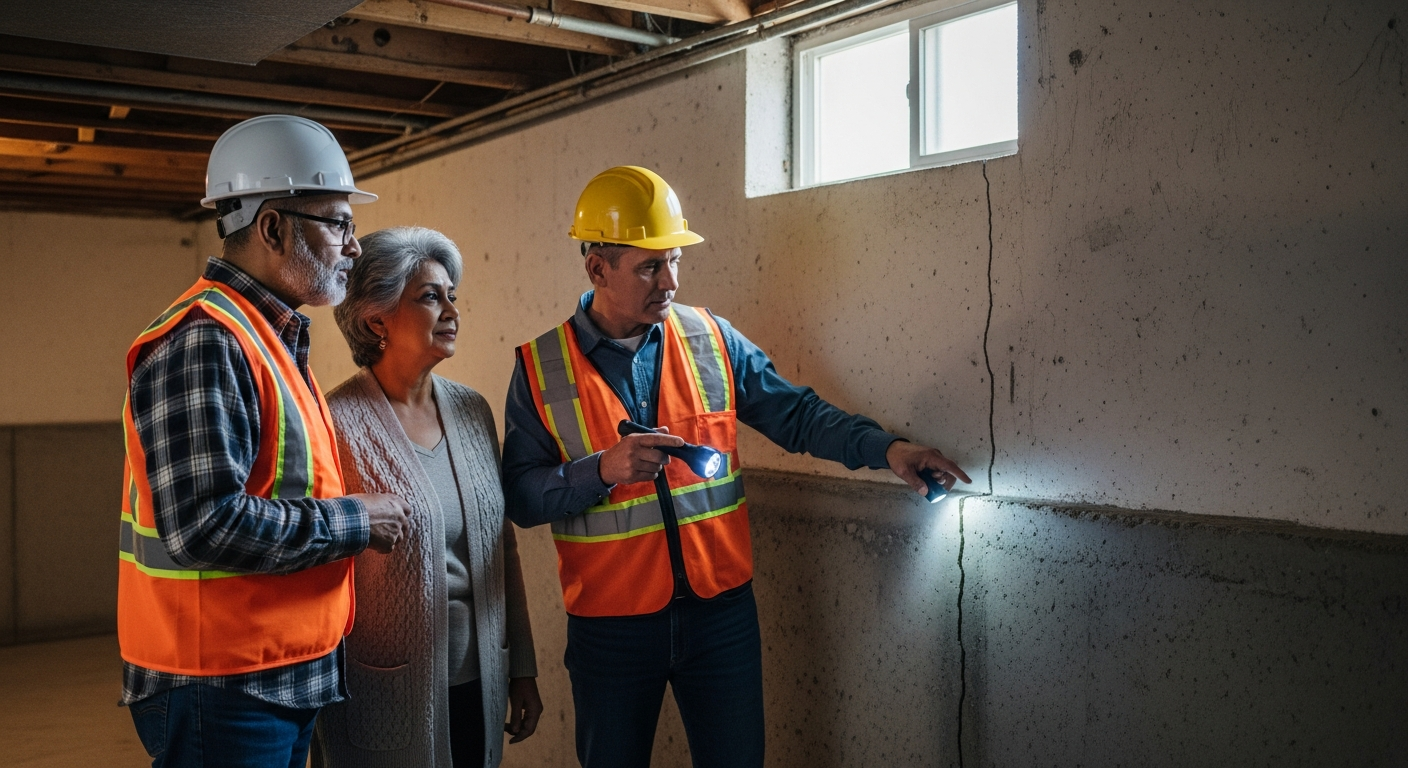
Red Flags: When Foundation Repair May Not Make Sense
Don't do foundation repair if:
❌ Home is actively sinking — More than 1" settlement in one area; structural engineer recommends underpinning (very expensive, may be unsalvageable)
❌ Mold is severe — Pervasive mold may indicate deeper structural/water issues exceeding foundation repair scope
❌ You plan to move within 2–3 years — Repair cost not recovered in value gain; not worth financing
❌ Home is in declining neighborhood — Foundation repair won't help if area is depreciating
❌ Structural engineer recommends against purchase — If expert says foundation is compromised beyond reasonable repair, listen
When it DOES make sense:
✓ You want to age in place — Foundation stability is essential for long-term residence ✓ Water intrusion is manageable — Repair scope is clear and realistic ✓ Structural engineer approves repair — Professional says it's a solvable problem ✓ Home value is stable/appreciating — Your neighborhood is solid ✓ You plan to stay 10+ years — Repair cost is amortized over your residence
FAQs: Foundation Repair and Reverse Mortgages
Will my lender approve a reverse mortgage if I have foundation issues?
Usually yes, if:
- Issues are documented (engineer assessment)
- Not actively worsening
- Repair scope is clear
- You plan to repair or accept the condition
Usually no, if:
- Structural engineer says foundation is unstable
- Active water intrusion causing interior damage
- Settling is ongoing/accelerating
Can I use reverse mortgage for foundation repair even if lender's appraiser doesn't flag the issue?
Yes. Appraiser assesses value; doesn't necessarily catch all defects. You can request reverse mortgage funds for repairs independently.
Disclose: Tell lender "I want to use proceeds for foundation repair I've identified." They'll note it in file.
If I repair the foundation with reverse mortgage funds, can I sell for more?
Not significantly. Foundation repair brings home value back to normal (removes discount), but doesn't add premium.
Exception: In competitive market, foundation repairs may make your home more attractive vs. competitors with unresolved issues.
What if the foundation repair fails after I've sold the home?
Your responsibility: Warranty from contractor (typically 5–10 years) covers this.
Buyer's recourse: If repair fails within warranty, contractor is liable (not you). Professional warranty protects against liability.
How do I know if foundation cracks are serious or cosmetic?
Get a professional assessment:
- Structural engineer: $800–$1,500 (most authoritative)
- Foundation repair specialist: Free estimate (may upsell)
- Home inspector: Limited assessment (not specialists)
Best practice: Hire structural engineer for objective assessment.
The Bottom Line
Foundation repairs are critical structural work that can cost $15,000–$50,000+. For Ontario seniors planning to age in place, a reverse mortgage is an excellent way to fund this work:
- Access capital without monthly payments
- Stabilize home structure
- Enable long-term residence in your home
- Repay when you eventually sell or pass
Key requirement: Get professional assessment first. Know what you're fixing and why. Then, a reverse mortgage can be the perfect financing solution.
Speak to a licensed mortgage professional and a structural engineer. Independent legal advice is required before closing a reverse mortgage in Ontario.
Foundation Issue Severity Quick Reference
| Indicator | Severity | Action |
|---|---|---|
| Hairline cracks (<1/8") | Cosmetic | Monitor; caulk if desired |
| Cracks 1/8"–1/4" | Minor | Monitor; seal if water entry |
| Cracks >1/4", growing | Moderate | Get engineer assessment; repair likely |
| Bowing walls | High | Emergency; structural risk |
| Active settlement (>1/2" new) | High | Structural concern; professional required |
| Water intrusion, mold | High | Waterproofing + repair urgent |
This content is for illustrative purposes only. Rates and terms may vary. Call Rick Sekhon for the best rates and more information.
Ready to Learn More?
Get the free Ontario Reverse Mortgage Guide and find out exactly how much you could unlock from your home.
Get My Free Guide →Related Articles
Failed Home Inspection? Using a Reverse Mortgage for Critical Repairs
A failed inspection reveals expensive foundation, roof, or electrical repairs. A reverse mortgage can fund these critical repairs without selling your home or going into unsecured debt.
Read →Reverse Mortgage and Deferred Home Maintenance: Catching Up on Repairs
Use a reverse mortgage to fund essential home repairs and maintenance you've deferred—preventing costly damage and maintaining aging in place.
Read →Aging in Place with a Reverse Mortgage: Home Modification Guide
How Ontario seniors can fund aging-in-place home modifications with a reverse mortgage — costs, top modifications, grants, and a complete planning guide.
Read →