
Reverse Mortgage for Home Repairs When Insurance Won't Cover: Bridging Coverage Gaps
Learn how reverse mortgages can bridge home repair costs when insurance won't cover damage. A solution for Ontario seniors facing major repairs and insurance limitations.
The Insurance Gap: What Your Homeowners Policy Actually Excludes
You've paid homeowners insurance premiums faithfully for decades. You believe you're protected against major home damage. Then disaster or deterioration strikes, and you discover a painful truth: your insurance doesn't cover it.
Common exclusions from standard homeowners policies include:
- Flooding (water from outside source)
- Sump pump overflow (water backup)
- Foundation cracks and settling
- Maintenance-related damage (neglected repairs that cause failure)
- Consequential damage (secondary damage from the covered issue)
- Cosmetic damage (visible but non-structural deterioration)
- Earthquake damage (in high-risk areas)
- Wear and tear
- Code upgrades (building to current code after damage)
For Ontario retirees on fixed incomes, an uncovered $15,000-$50,000 repair can feel catastrophic. A reverse mortgage can bridge these insurance gaps, allowing you to make necessary repairs without liquidating retirement savings.
Common Insurance Exclusions and Real Costs
Foundation Damage: $20,000-$80,000
Your home has a foundation crack. Water seeps into basement. Your insurance says: "Settling and foundation cracks are maintenance issues, not covered."
Reality: A moderate foundation crack repair costs $15,000-$40,000 depending on severity. Major foundation replacement: $50,000-$150,000.
Insurance covers: $0 Your out-of-pocket: $20,000-$50,000+
Sump Pump Failure: $8,000-$25,000
Your basement sump pump fails during heavy rain. Water floods basement, damaging flooring, drywall, belongings. Your insurance says: "Sump pump backup is excluded; water damage from backup isn't covered."
Reality: Water extraction and drying costs $3,000-$5,000. Mold remediation: $4,000-$10,000. Basement restoration: $5,000-$15,000. Total: $12,000-$30,000.
Insurance covers: $0 Your out-of-pocket: $12,000-$30,000+
Roof Damage from Neglect: $18,000-$35,000
Your roof develops a leak. Insurance inspector determines: "Roof deterioration from age/lack of maintenance; not a covered claim."
Reality: Partial roof patch costs $2,000-$5,000 temporarily. Full roof replacement: $18,000-$35,000.
Insurance covers: $0 Your out-of-pocket: $18,000-$35,000+
Code Upgrade Costs: $5,000-$50,000
Your house catches fire; kitchen is damaged. Insurance pays to rebuild kitchen to "pre-loss condition." But modern code requires upgraded electrical, HVAC, insulation that didn't exist in 1985.
Insurance covers: $12,000 (actual cash value, depreciated) Modern code upgrades needed: $8,000-$25,000+ Your out-of-pocket: $8,000-$25,000+
Deductible Erosion: $1,500-$5,000
You have damage covered by insurance. But your deductible is $2,500 (or even $5,000). Insurance pays 80%; you pay deductible + coinsurance.
Covered damage: $15,000 Insurance pays: $9,500 (after $2,500 deductible + 20% coinsurance) Your out-of-pocket: $5,500+
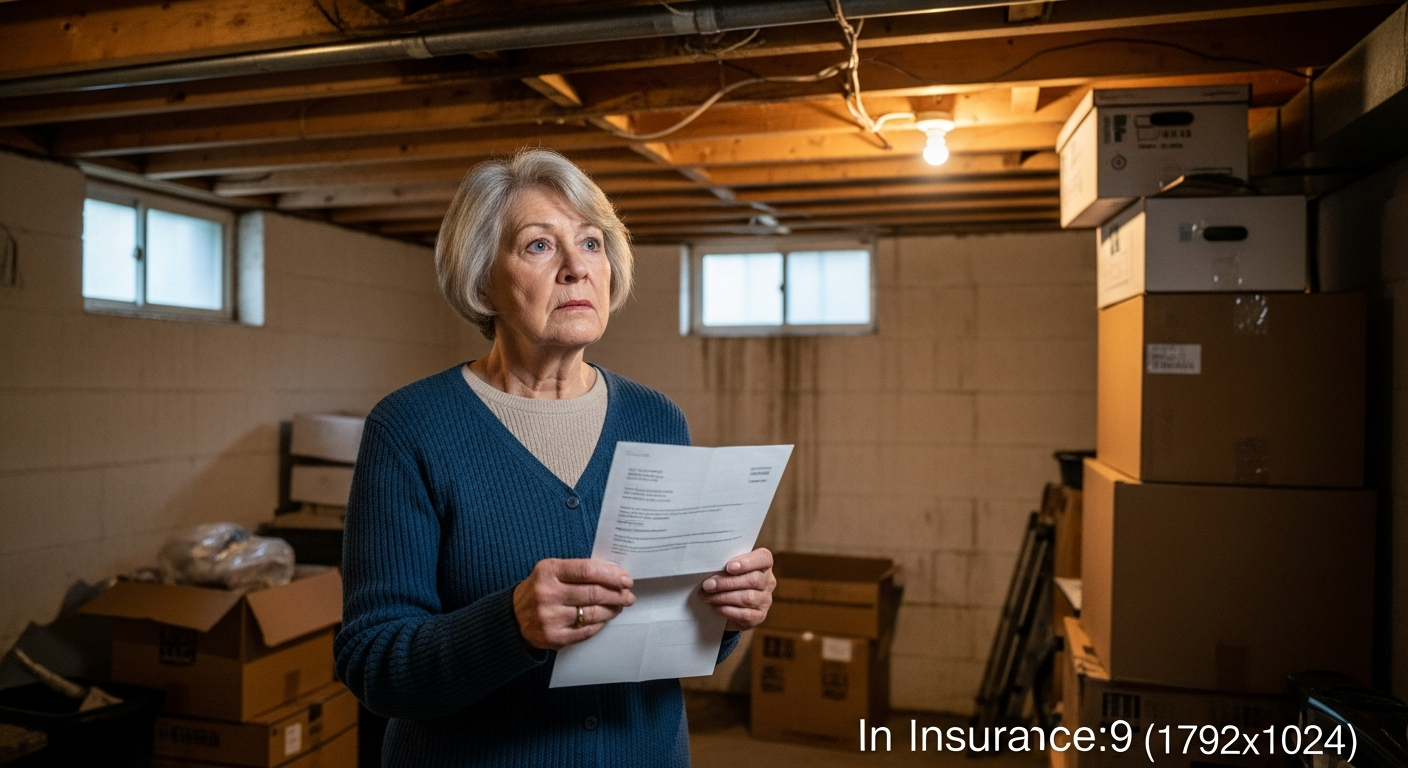
How a Reverse Mortgage Bridges Insurance Gaps
When insurance doesn't cover necessary repairs, a reverse mortgage provides:
Immediate Capital Access
- Reverse mortgage funds arrive within 4-6 weeks
- No monthly payments during your lifetime
- Allows repairs to proceed without delay
- Prevents secondary damage (water damage worsening, mold spreading)
No Asset Liquidation
- Unlike RRIF or savings withdrawal, reverse mortgage doesn't reduce your liquid retirement income
- Your investment accounts continue growing
- Tax consequences are minimal (borrowed funds, not income)
Flexible Repayment
- Repayment comes due only when you sell, move, or pass away
- No forced monthly payments affecting retirement budget
- Reduces pressure to make hurried financial decisions
No Income Qualification
- Traditional loans require proof of income and debt-servicing ability
- Reverse mortgage approves based on home equity and age, not income
- Seniors on fixed income (CPP, OAS, pensions) qualify easily
Real Scenarios: Insurance Gaps Bridged by Reverse Mortgages
Scenario 1: The Basement Flood
Helen, age 73, experiences unexpected basement flooding in her Mississauga home.
Insurance Situation:
- Her homeowners policy has a $2,500 deductible
- Water backup from sump pump failure is excluded (no flood coverage)
- Damage: $22,000 in water extraction, mold remediation, and restoration
- Insurance payout: $0 (excluded coverage)
- Her out-of-pocket need: $22,000
Her Financial Reality:
- Fixed income from CPP and OAS: $2,200/month
- RRIF balance: $120,000 (needs to last 20+ years)
- Home equity: $380,000
- Can't afford $22,000 from fixed income or she'd deplete RRIF rapidly
Reverse Mortgage Solution:
- Accesses $22,000 via reverse mortgage on her home
- Immediately engages contractors to address water damage
- Prevents mold escalation and secondary damage
- Reverse mortgage balance grows; home will appreciate
Cost-Benefit:
- $22,000 reverse mortgage grows to ~$33,000 over 15 years (5% rate)
- Home appreciates from $380,000 to $490,000+ over 15 years (3% rate)
- Net equity impact: home appreciated $110,000 while reverse mortgage grew $11,000 (net benefit: $99,000)
- Helen avoided catastrophic home damage and mold problems worth $30,000-$50,000+
Scenario 2: The Foundation Crack
George and Mary, ages 70 and 68, discover a foundation crack in their Hamilton home.
Insurance Situation:
- Homeowners policy excludes foundation settling and cracks ("maintenance issues")
- Foundation engineer estimates: Moderate crack repair $28,000; full foundation stabilization $50,000
- Insurance payout: $0
- Out-of-pocket need: $28,000-$50,000
Delay Scenario (Without Reverse Mortgage):
- They delay 3-4 years hoping to save capital
- In year 2, foundation crack worsens from 8mm to 15mm
- Water seeps into basement; mold begins growing
- Year 3: Mold remediation becomes necessary ($8,000-$12,000 additional)
- Year 4: Major structural concerns emerge; repair escalates to $45,000-$60,000
- Total cost of delay: Additional $12,000-$20,000+
Reverse Mortgage Solution (Better):
- They access $28,000 via reverse mortgage
- Engage engineer and repair contractor immediately
- Address foundation crack while it's manageable
- Prevent water infiltration and mold growth
- Home remains structurally sound; value protected
Outcome:
- Foundation repaired; home structural integrity protected
- No secondary water/mold damage
- Avoids future larger repairs
- Reverse mortgage balance: manageable in relation to protected home value
Scenario 3: The Electrical Upgrade
Robert, age 76, has an older home with outdated electrical service (60-amp fuse box from 1960s).
Insurance Situation:
- Insurance has increasingly strict requirements for older electrical systems
- Insurer sends inspection notice: "You have 12 months to upgrade electrical to 100-amp service or insurance will be cancelled"
- Upgrade cost: $6,000-$9,000
- Home value: $420,000
- If insurance is cancelled, home becomes essentially unmortgageable and unsellable
Without Reverse Mortgage:
- Robert has $3,000-$4,000 in liquid savings
- Can't save $6,000-$9,000 quickly enough before insurance deadline
- Insurance cancellation would devastate home value and his retirement security
Reverse Mortgage Solution:
- Robert accesses $8,000 via reverse mortgage line of credit
- Completes electrical upgrade within insurance deadline
- Insurance remains active; home value protected
- Avoids catastrophic consequence of insurance cancellation
Cost-Benefit:
- $8,000 reverse mortgage prevents $100,000+ loss in home value from insurance cancellation
- Small reverse mortgage balance ($12,000-$15,000 after 15 years) is trivial compared to home value protection

Preventing Insurance Gaps Before They Occur
Review Your Policy Annually:
- Request Detailed Coverage Review: Don't assume—ask your agent what's NOT covered
- Check Deductible Level: Is it $1,000, $2,500, or $5,000? Higher deductible = lower premium but larger gap
- Verify Endorsements: Optional coverages (flood, sump pump backup, earthquake) aren't always included automatically
- Update Coverage: As home value increases, ensure coverage limits keep pace
- Document Maintenance: Take photos of recent roof repairs, HVAC service, foundation work—shows you're maintaining property
Common Coverage Gaps to Address:
| Coverage | Cost | Benefit |
|---|---|---|
| Sump Pump Backup | $50-100/year | Covers water damage from sump failure |
| Flood Insurance | $100-300/year | Covers water damage from external flooding |
| Code Upgrade Endorsement | $75-150/year | Helps cover updated building code costs |
| Earthquake Coverage | $150-300/year | Essential if you're in moderate/high-risk area |
| Replacement Cost (vs. Actual Cash Value) | +$200-400/year | Pays to replace, not depreciated value |
Maintenance Prevention:
- Regular roof inspections (every 3-5 years)
- Furnace/HVAC annual servicing
- Foundation inspection if cracks are visible
- Grading and drainage around home (prevents water infiltration)
- Regular gutter cleaning and downspout extension
- These prevent "neglect-related" damage exclusions
Understanding Actual Cash Value vs. Replacement Cost
This distinction creates significant insurance gaps:
Actual Cash Value (ACV):
- Insurance pays depreciated value of damaged item
- A 20-year-old roof damaged is paid at depreciated value (~30-50% of replacement cost)
- Example: New roof costs $25,000; your 20-year-old roof is paid at $10,000-$15,000
- Gap: $10,000-$15,000 out-of-pocket
Replacement Cost Coverage:
- Insurance pays to replace with new item, not depreciated value
- Example: New roof costs $25,000; insurance pays full $25,000
- No gap; full replacement is covered
- Costs ~$200-400/year more for this coverage
For aging homeowners: Replacement cost coverage is wise investment. The small annual premium often pays for itself if major damage occurs.
Tax and Financial Planning Implications
Uninsured Loss Deduction:
- Generally, you can't deduct uninsured home repairs as tax losses
- Personal home repairs are not tax-deductible (unlike rental properties)
- This means the full $20,000-$50,000 repair cost comes out of after-tax dollars
Reverse Mortgage Interest:
- Interest on reverse mortgage for home repairs is not tax-deductible
- Interest accrues over time on principal plus prior interest
- This is different from traditional mortgages where interest is deductible
Impact on Taxable Income:
- Reverse mortgage funds themselves are not taxable income (borrowed funds)
- No income tax consequence from accessing reverse mortgage
Long-Term Planning: Building Home Maintenance Reserve
Traditional Savings Approach (Difficult for Retirees):
- Budget $200-400/month for major repairs ($2,400-$4,800/year)
- Over 10 years: $24,000-$48,000 accumulated
- Many retirees can't afford this level of savings
Reverse Mortgage Approach (More Realistic):
- Pre-approve a reverse mortgage line of credit ($50,000-$100,000)
- Access capital as major repairs occur
- Avoid monthly savings pressure on fixed income
- Manage repairs proactively when they occur, not after catastrophic delay
Hybrid Approach (Optimal):
- Budget what you can ($100-200/month) in liquid savings
- Maintain reverse mortgage line of credit for larger repairs
- This balances proactive savings with emergency capital access
Case Study: The Deferred Maintenance Crisis
Patricia, age 74, owns a home in London, Ontario valued at $410,000.
Her Situation:
- Fixed income: $2,100/month (CPP, OAS)
- Living expenses: $1,800/month
- Small monthly surplus: $300/month
- Limited savings: $15,000
Deferred Maintenance Issues:
- Roof: 22 years old (replacement due): $18,000
- Furnace: 18 years old (replacement likely in 2-3 years): $6,000
- Foundation: Minor crack visible (repair estimate): $12,000
- Total potential repairs: $36,000
Without Reverse Mortgage:
- Patricia can save $300/month = $3,600/year
- To save $36,000: 10 years
- During those 10 years, repairs worsen: roof leak causes water damage, foundation crack expands, furnace becomes emergency replacement
- Total cost with compounding: $50,000-$60,000
With Reverse Mortgage:
- Patricia accesses reverse mortgage ($50,000 available)
- Repairs roof immediately ($18,000)
- Plans furnace replacement for year 3 ($6,000)
- Addresses foundation ($12,000)
- Remaining reserve: $14,000 for other issues
- No damage escalation; repairs done properly and timely
Outcome:
- Saves $12,000-$20,000 by avoiding cascade of secondary damage
- Home remains well-maintained and valuable
- Reverse mortgage line of credit remains partially available for future needs
- Total cost is lower and timeline is compressed

When to Use Insurance vs. Reverse Mortgage
Use Insurance:
- Covered damage (storm, accident, theft)
- Sudden, unexpected events
- File claim; pay deductible; insurance covers the rest
Use Reverse Mortgage:
- Insurance doesn't cover (exclusions, gaps)
- Deductible is larger than you can absorb
- Preventive maintenance (roof before it leaks, furnace before it fails)
- Updating aging systems (electrical, plumbing)
- Code upgrades
Use Savings/RRIF:
- Small repairs under $3,000
- You have sufficient savings and don't need ongoing income
- You want to pay off reverse mortgage balance in near term
Use Combination:
- Insurance covers $15,000 of damage
- You pay $2,500 deductible
- Reverse mortgage bridges remaining gap if repair cost is $20,000 total
- Use savings for small items; reverse mortgage for major gaps
Moving Forward: Proactive Home Maintenance in Retirement
Insurance gaps aren't your fault, and they're not uncommon. Most Ontario homeowners face uncovered repairs at some point in retirement.
A reverse mortgage eliminates the impossible choice between:
- Depleting retirement savings on home repairs
- Delaying critical repairs and watching them worsen
- Forcing unwanted home sale due to deferred maintenance
You can maintain your home properly, protect its value, and preserve your retirement security. A reverse mortgage makes this possible.
Your home is likely your largest asset. Protecting it proactively—with insurance where possible and reverse mortgage capital where needed—is wisdom, not excess.
Ready to Learn More?
Get the free Ontario Reverse Mortgage Guide and find out exactly how much you could unlock from your home.
Get My Free Guide →