
Reverse Mortgage for Early Inheritance Gifting: Distribute Your Estate While Alive
Use a reverse mortgage to gift your home equity to adult children now. See your legacy in action, reduce probate costs, and equalize your estate while living.
What if you could see your children benefit from your wealth before you pass away? Instead of waiting for probate to distribute your estate through a will, a reverse mortgage lets you gift substantial sums to your adult children right now—when you can guide how the money is used and experience their gratitude directly.
This isn't about leaving nothing for your heirs. It's about redirecting some of your already-accrued home equity into your living children's current needs, while you're still here to witness the impact.
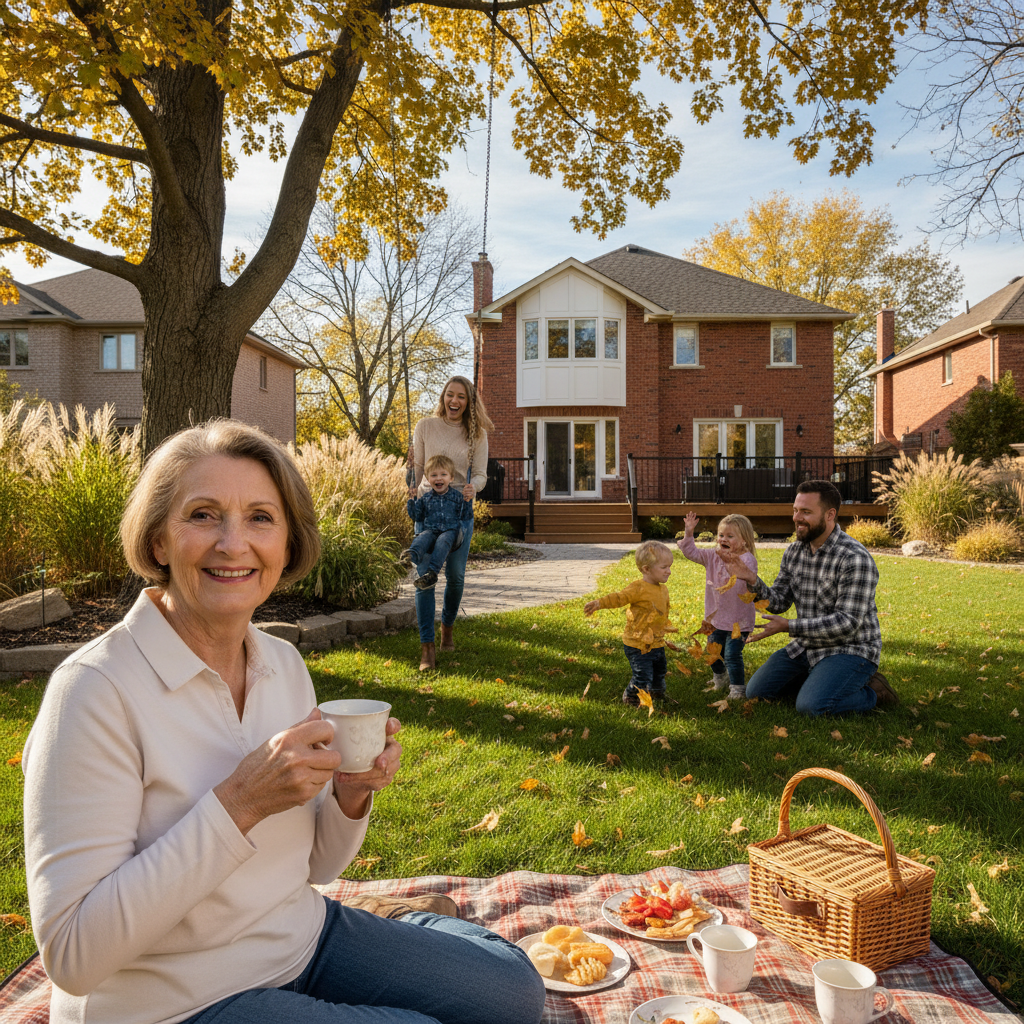
Why Give Your Estate Early?
Most inheritance happens after you're gone. Your children receive the house, assets, and money when you can no longer see the impact or guide their use. For many Ontario homeowners, that feels incomplete.
Early inheritance through a reverse mortgage changes the equation:
✓ You see the impact — watch your daughter buy her first home, your son launch his business, your grandchildren get their education ✓ You control the purpose — suggest how the gifted funds are used instead of letting them be absorbed into children's own chaotic finances ✓ You build family stories — the inheritance becomes something you experience together, not a transaction after death ✓ You equalize unfairly — if one child had more financial support growing up or faces greater challenges now, early gifting lets you correct imbalances while living ✓ You reduce probate costs — assets distributed before death avoid probate fees (14% in Ontario) and estate administration delays ✓ You reduce taxes on your estate — strategic gifting during your lifetime may offer tax advantages a lawyer can explain
According to Statistics Canada, 62% of Canadian adults over 65 say they'd prefer to see their wealth benefit their children during their lifetime rather than after death. A reverse mortgage makes this preference financially feasible.
How Reverse Mortgage Gifting Works
A reverse mortgage converts your home equity into accessible cash—with no monthly payments required. You're not taking on new debt; you're converting existing wealth you already own.
Here's the mechanism:
Your situation today:
- Home value: $600,000
- Mortgage balance: $0 (owned free and clear)
- Home equity: $600,000
- Monthly retirement income: $3,500 (CPP + small pension)
With a reverse mortgage:
- You can access $300,000–$330,000 (50-55% of home value, depending on age and location)
- This is distributed as a lump sum, line of credit, or monthly payments—your choice
- You gift $80,000 to each of your three adult children right now
- You retain $150,000+ in available credit for your own living expenses
- You still own your home fully; nothing changes except you now have liquid funds
The process is straightforward. According to Rick Sekhon Reverse Mortgages and other Ontario specialists, the application takes 2-4 weeks and costs $1,500–$3,500 in lender fees (much less than probate costs you'd pay anyway).
Strategic Gifting: Equalization and Life-Stage Support
Early estate gifting isn't random generosity. It's strategic—addressing real inequalities and current needs:
| Adult Child | Current Situation | Early Gift Strategy | Impact |
|---|---|---|---|
| Sarah (35) | No home, renting, two kids | $80,000 toward down payment | Builds equity, stabilizes housing |
| Marcus (38) | Self-employed, cash-flow volatility | $50,000 emergency fund | Protects against business downturns |
| Jennifer (42) | Divorce, rebuilding finances | $70,000 to rebuild savings | Accelerates recovery, reduces stress |
Using your reverse mortgage strategically means:
1. Addressing life-stage inequalities If one child had higher education costs, greater health challenges, or faced more hardship, early gifting lets you balance the ledger while you can discuss it.
2. Unlocking homeownership For your adult child stuck in rental cycles, a $50,000–$100,000 gift can be the down payment that breaks the cycle. They build equity; you see the home transformed.
3. Supporting entrepreneurship If your adult child is starting a business, a reverse mortgage gift provides capital without the interest burden of a business loan.
4. Grandchildren education Fund education trusts, RESP contributions, or direct tuition support. See your grandchildren graduate knowing their education was built on your legacy.
According to the Financial Consumer Agency of Canada (FCAC), home equity represents the largest wealth asset for most Canadian seniors. Accessing it strategically during your lifetime maximizes its generational benefit.
Tax-Smart Gifting: What Your Children Need to Know
Here's what people often get wrong: gifting from a reverse mortgage has different tax implications than leaving money in a will.
Key facts for your adult children:
-
The gift is not taxable to them — your children don't pay income tax on money you gift them. It's not income; it's a gift.
-
You don't get a tax deduction — you (the giver) don't get to claim a tax deduction for the gift. It's from after-tax wealth you already own.
-
Capital gains may apply to your home later — if your home appreciates after you take the reverse mortgage, that future appreciation is still yours and may be subject to capital gains when sold (though principal residence exemption usually protects you).
-
No probate on early-gifted amounts — this is the tax advantage. Money you gift during life avoids the 14% probate fee in Ontario.
Example: The Probate Advantage
Margaret, 72, has a $600,000 home and three adult children.
Without early gifting:
- She dies; her will directs the house to her children
- Probate fee: 14% on $600,000 = $84,000
- Estate shrinks by $84,000 before distribution
With early gifting via reverse mortgage:
- She gifts $75,000 to each child (3 × $75,000 = $225,000) while alive
- No probate on the $225,000 gifted early
- She retains home; upon death, remaining equity goes to estate, pays probate only on what's left
- Probate fee: 14% on $375,000 = $52,500
- Estate savings: $31,500 — money that goes to her children instead of the government

The Legal and Planning Dimension
Before gifting, consult an Ontario lawyer about:
1. Will and estate planning Your will needs to account for early gifts. If you've gifted $75,000 to one child and nothing to another, does this count as "equalization" or "advancement of inheritance"? A lawyer clarifies this to prevent conflict.
2. Joint tenancy or estate planning needs If your home might go through probate, the reverse mortgage positioning affects the timing. A lawyer coordinates these pieces.
3. Surviving spouse protection If you're married, both spouses must consent to the reverse mortgage. Early gifting doesn't reduce funds available to your spouse; your spouse's security remains protected.
4. Gift documentation Write a simple letter documenting each gift:
- "On [date], I gift $[amount] to [child] as an advancement on their inheritance"
- This prevents later disputes about whether the gift was intended or a loan
Designing Your Gifting Timeline
Early gifting doesn't mean gifting everything at once. Strategy matters:
Option 1: Lump sum distribution
- Access the full reverse mortgage amount immediately
- Distribute to all children in year one
- Advantage: See all the impact immediately; simpler emotionally and legally
- Disadvantage: Large one-time tax consideration if it triggers other financial events
Option 2: Phased gifting over 3-5 years
- Take a line of credit; gift annually
- Year 1: $30,000 per child
- Year 2: $25,000 per child
- Year 3: $20,000 per child
- Advantage: Lower annual gifting limits may trigger fewer financial questions; children receive gifts over time
- Disadvantage: Requires planning discipline; longer timeline
Option 3: Targeted gifting based on life events
- Keep funds available in a line of credit
- Gift when your child faces a known need: down payment time, business launch, education completion
- Advantage: Maximum intentionality and impact
- Disadvantage: Requires waiting and coordinating with children's timelines
Most Ontario homeowners use Option 2—phased gifting over several years. It feels manageable, reduces complexity, and lets you adjust based on actual needs.

Protecting Your Own Security
This is the critical rule: gifting your estate early should not jeopardize your own retirement.
Before you commit to early gifting, ensure:
✓ Your living costs are covered first — CPP, pension, investment income cover all your living expenses ✓ Healthcare needs are funded — aging care, medical equipment, prescription costs are planned ✓ You retain a safety net — keep 12-24 months of expenses in accessible liquid funds ✓ Home maintenance is secured — you need funds to maintain the home you still own and will eventually pass on
A reverse mortgage for early gifting should be:
- Supplemental to your income, not your primary retirement income
- Used strategically, not for ongoing annual payments to adult children
- Time-limited in your mind, not open-ended inheritance replacement
The order of priority:
- Your living expenses and security (always)
- Healthcare and aging care (always)
- Home maintenance and property taxes (always)
- Early gifting to children (only after 1-3 are secured)
Frequently Asked Questions
Will early gifting through a reverse mortgage affect my adult children's eligibility for government benefits?
No, unless the gift is so large it creates substantial new assets in their names, which might trigger asset limits for benefits like GIS. For typical gifts ($50,000–$100,000 per child), no impact expected.
Can I gift to some adult children and not others?
Yes, legally. But families sometimes experience conflict. A lawyer can help you document the reasoning (advancement on inheritance, addressing past inequalities) to prevent disputes later.
What if I die before all planned gifts are made?
The reverse mortgage becomes part of your estate and is repaid from home sales or other assets. Remaining gifted amounts are documented in your will. Your executor will follow your wishes regarding unfunded gifts.
Does a reverse mortgage prevent my children from inheriting the home?
No. You still own the home fully. Upon your death, your heirs can repay the reverse mortgage using home sale proceeds or other assets, or they can sell the home and distribute proceeds after repayment. The home is still inheritable; it's just encumbered by the loan.
Are there limits to how much I can gift per child per year?
Legally in Canada, no. You can gift any amount to adult children. If you gift large amounts (over $15,000/year per person), keep documentation clear so gifts aren't confused with loans or other financial arrangements.
Your Path Forward
Early inheritance gifting through a reverse mortgage is about intentionality—directing your wealth toward maximum family impact while you're still here to see it unfold. It's not about giving everything away; it's about strategically redistributing existing wealth to where it's most needed right now.
Consult Rick Sekhon Reverse Mortgages and an Ontario estate lawyer. Together, you'll design a gifting strategy that maximizes impact while protecting your security and simplifying your eventual estate.
Ready to Learn More?
Get the free Ontario Reverse Mortgage Guide and find out exactly how much you could unlock from your home.
Get My Free Guide →Related Articles
Using a Reverse Mortgage for Estate Equalization: Helping One Child More Than Another
Guide to using home equity to equalize inheritance among adult children. Fair distribution strategies when children have different needs and circumstances.
Read →Reverse Mortgage for an Early Inheritance: Gifting Equity to Children
Use a reverse mortgage for an early inheritance gift to children. Learn Canada's tax-free gifting rules, attribution risks, and estate planning considerations.
Read →Living Legacy: Gift Home Equity to Adult Children While You're Alive
How Ontario seniors can gift home equity to adult children during retirement using a reverse mortgage. Includes tax strategies and family planning considerations.
Read →