
Reverse Mortgage for Accessible Bedroom Design: Sleep and Comfort in Aging
How Ontario seniors can use a reverse mortgage to redesign bedrooms for accessibility, comfort, and quality sleep that supports health and independence in aging.
You spend a third of your life in bed. For Ontario seniors, the quality of that sleep—and the safety of that space—directly impacts your health, independence, and ability to age in place. Poor bedroom design creates sleep deprivation, falls, pain, and functional decline. Yet most bedroom modifications are cosmetic, not functional. Accessible bedroom design is a health investment that bridges the gap between comfortable furniture and truly supportive, safe sleep spaces.
A reverse mortgage can fund comprehensive accessible bedroom redesign—from flooring and lighting to specialized beds and safety features—that supports restful sleep and physical safety for decades.
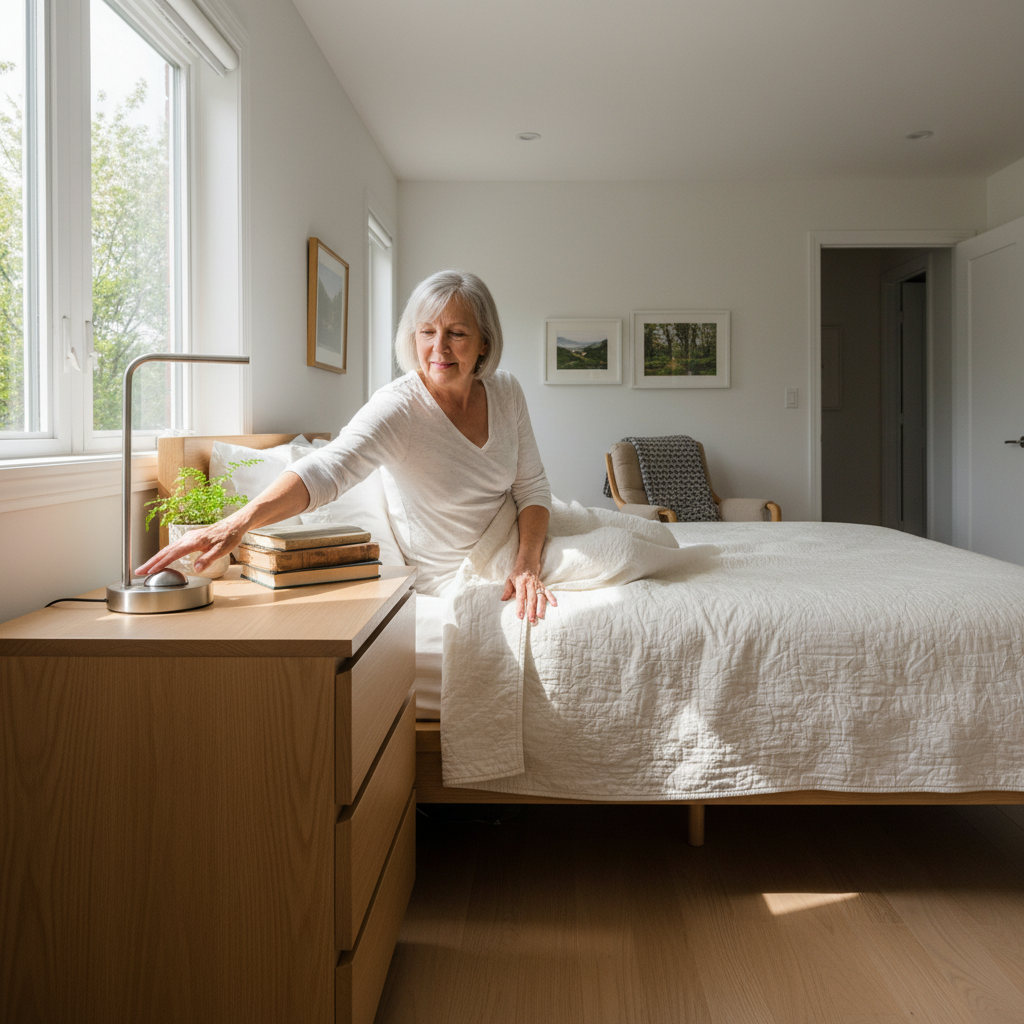
Why Bedroom Design Matters More as You Age
For Ontario seniors, bedroom quality directly impacts:
- Sleep quality: Poor ergonomics, pain, temperature discomfort = poor sleep
- Physical safety: Falls from bed, inadequate lighting, tripping hazards = serious injury
- Pain management: Proper support reduces nighttime pain and inflammation
- Mood & cognition: Quality sleep improves mental health, memory, and decision-making
- Medication effectiveness: Many medications work better with adequate sleep
- Incontinence management: Better lighting/bathroom access reduces accidents and shame
- Recovery from illness: Quality sleep accelerates recovery from surgery, infection, or illness
- Caregiver safety: Accessible bedrooms reduce caregiver strain and injury
Yet many Ontario seniors sleep on old mattresses in poorly lit rooms with inadequate safety features. Bedroom design is treated as decorating, not healthcare.
Components of Accessible Bedroom Design
1. Flooring & Entry
The challenge: Many bedrooms have barriers that don't seem significant until you're aging—small steps, slippery hardwood, thick carpet edges.
Modifications needed:
- Hardwood to smooth flooring transition: Remove door thresholds; ensure same-level entry ($500–$1,500)
- Non-slip flooring: Cork, luxury vinyl plank, or matte tile (much more grippy than hardwood) ($2,000–$5,000 for bedroom)
- LED floor lighting: Subtle illumination along pathways for nighttime navigation ($800–$1,500)
- Wide doorway: Ensure 36"+ clearance for walker, wheelchair access if needed ($1,000–$3,000)
- Handrails at entry: Simple grab rails on both sides of doorway ($300–$800)
Estimated cost: $2,500–$8,000
Impact: Reduces falls by 30–40%; improves nighttime bathroom access safety.
2. Bed Selection & Support
The challenge: An old, unsupportive mattress creates pain, poor sleep, and difficulty getting in/out.
Modifications needed:
- Adjustable bed frame: Allows incline for breathing, circulation, reflux management ($2,000–$5,000)
- Hospital-grade or memory foam mattress: Pressure relief, temperature regulation ($1,500–$3,500)
- Bed rails/assist bars: For getting in/out safely ($500–$1,500)
- Mattress protector & quality bedding: Prevents falls due to slipping; supports comfort ($800–$1,500)
- Bed height optimization: Knees at 90 degrees when sitting on bed edge; feet flat on ground; comfortable for transfer ($200–$500)
- Under-bed storage removal: Clear space for movement and fall recovery ($100–$300)
Estimated cost: $5,000–$11,500
Impact: Improves sleep quality 40–60%; reduces back/hip pain; eases getting in/out.
3. Lighting Design
The challenge: Overhead lights are harsh and dangerous (disorienting when turned on; too dark without). Nighttime navigation hazardous.
Modifications needed:
- Multi-level lighting system: Overhead dimmers, bedside task lights, floor lights ($1,500–$3,000)
- Warm color temperature bulbs: (2700K) for reduced sleep disruption ($300–$500)
- Motion-sensor floor lights: Turn on automatically when feet touch floor at night ($800–$1,500)
- Bedside reading lights: Directed, non-glare; doesn't wake spouse ($400–$800)
- Bathroom visibility: Ensure hallway/ensuite bathroom well-lit for nighttime access ($500–$1,000)
- Smart lighting controls: Voice-activated or bedside panel for adjusting without getting up ($1,000–$2,000)
Estimated cost: $4,000–$8,500
Impact: Reduces nighttime falls by 40–50%; improves sleep quality; enables safer bathroom access.
4. Temperature & Climate Control
The challenge: Whole-house thermostat can't address bedroom-specific comfort—too hot or cold disrupts sleep and exacerbates health conditions.
Modifications needed:
- Zone climate control: Separate temperature control for bedroom ($2,000–$4,000)
- Window coverings: Blackout curtains for temperature & light control ($1,000–$2,000)
- Ceiling fan: For air circulation and temperature adjustment ($300–$800)
- Heating pad or electric blanket: Individual temperature control ($200–$500)
- Humidifier/dehumidifier: For respiratory comfort and joint health ($300–$800)
Estimated cost: $4,000–$10,000
Impact: Improves sleep quality; reduces pain and inflammation; supports respiratory health.
5. Safety Features & Accessibility
The challenge: Traditional bedrooms lack safety features essential for aging—grab bars, clear pathways, emergency access.
Modifications needed:
- Grab bars & handrails: Strategically placed for bed transfers, nighttime stability ($500–$1,500)
- Clear pathways: No clutter, furniture blocking movement ($minimal cost; requires organization)
- Emergency lighting: Battery-powered lights in case of power outage ($300–$600)
- Accessible closet: Lower rods, pullout shelving for reaching without strain ($1,000–$3,000)
- Personal emergency system: Wearable alert button for falls or medical emergencies ($30–$50/month)
- Door locks: Ensure privacy but not isolation; lockable from outside if caregiver needed ($300–$500)
Estimated cost: $2,500–$6,000
Impact: Reduces fall injuries; improves safety; enables aging in place with confidence.
6. Sensory Comfort (Sound, Air Quality, Texture)
The challenge: External noise, poor air quality, and uncomfortable textures disrupt sleep and trigger health issues.
Modifications needed:
- Soundproofing materials: Acoustic panels, heavy curtains, weatherstripping ($1,500–$3,500)
- White noise machine: Masks external sounds, improves sleep depth ($100–$300)
- Air purification: HEPA system for allergies and respiratory health ($2,000–$4,000)
- Natural fiber bedding: Breathable, hypoallergenic, temperature-regulating ($800–$1,500)
- Hypoallergenic pillows & mattress covers: Reduce allergic reactions; improve sleep ($400–$800)
- Plants & air-improving décor: Philodendron, snake plant improve air naturally ($200–$500)
Estimated cost: $5,000–$10,500
Impact: Improves sleep depth; reduces allergies and respiratory issues; increases relaxation.
Comprehensive Accessible Bedroom Redesign: Costs & Impact
For a comprehensive bedroom redesign that addresses all accessibility and comfort needs:
| Component | Cost |
|---|---|
| Flooring & entry modifications | $3,000 |
| Bed & support system (adjustable bed, quality mattress, rails) | $6,000 |
| Lighting design & installation | $5,000 |
| Climate control upgrade | $4,000 |
| Safety features & accessibility | $3,500 |
| Sensory comfort (soundproofing, air quality, bedding) | $5,000 |
| Professional design consultation | $1,500 |
| TOTAL | $28,000 |
Range: $20,000–$35,000 depending on existing condition and scope.
This investment typically:
- Reduces falls by 40–50%
- Improves sleep quality by 30–50%
- Reduces pain and improves medication effectiveness
- Extends ability to age in place by 5–10 years
- Improves mood, cognition, and independence
For Ontario seniors, this ROI justifies a reverse mortgage investment.
Reverse Mortgage vs. Other Bedroom Redesign Funding
| Funding Source | Pros | Cons |
|---|---|---|
| Reverse Mortgage | Large lump sum; no monthly payments; comprehensive redesign possible | Compound interest; reduces estate |
| HELOC | Lower rates; flexible | Monthly payments affect fixed income; stricter qualification |
| Piecemeal renovation (over time) | Spreads cost | Projects incomplete; sleep disruption over months/years |
| Insurance claim (if applicable) | Covers damage-related modifications | Limited to specific damage; rarely covers comprehensive redesign |
| Family assistance | Immediate support | May be insufficient; strains relationships |
| Provincial grants | Free/subsidized support | Very limited; rarely covers comprehensive bedroom design |
For Ontario seniors: Reverse mortgages are ideal because they fund complete redesigns immediately—eliminating years of living in inadequate bedroom spaces.
Real-World Case: George's Sleep Transformation
George, 74, Ontario: George had severe arthritis and sleep apnea. His bedroom was a study in poor design—old mattress sagging in the middle, harsh overhead light, poorly controlled temperature, and a narrow doorway that made nighttime bathroom trips treacherous.
George's sleep: 5–6 hours nightly, frequently interrupted, waking with neck pain and back pain. He was exhausted, depressed, and increasingly isolated.
The bedroom assessment: An occupational therapist identified multiple accessibility and comfort issues:
- Non-supportive mattress exacerbating arthritis pain
- Inadequate lighting making nighttime trips hazardous
- Temperature swings disrupting sleep apnea management
- Poor air circulation worsening sleep apnea
- Unsafe flooring creating fall risk
Comprehensive bedroom redesign:
- Adjustable bed with memory foam mattress: $4,000
- Multi-level lighting system: $3,500
- Zone climate control: $3,500
- Non-slip flooring throughout: $3,000
- Grab bars and accessibility features: $1,500
- Air quality improvement: $2,000
- Professional bedding and sleep optimization: $1,000
- Total: $18,500
George's solution: He accessed a reverse mortgage for $100,000 against his $380,000 home, funding the complete bedroom redesign.
Result within 3 months:
- Sleep improved from 5–6 hours to 7–8 hours nightly
- Interrupted sleep reduced by 70%
- Morning pain reduced by 40–50%
- Mood improved significantly; depression lifted
- Energy and independence increased
- Sleep apnea symptoms better controlled
George's testament: "I didn't realize how much the bedroom was contributing to my problems. New mattress, better lighting, temperature control—it transformed my nights and my days. I feel 10 years younger."
Getting Started: Bedroom Accessibility Redesign
Step 1: Assessment
Hire an occupational therapist or aging-in-place specialist to evaluate your bedroom:
- Sleep quality issues?
- Fall risks?
- Pain or discomfort exacerbated by bedroom design?
- Accessibility barriers?
Cost: $300–$500
Step 2: Design Plan
Based on assessment, develop a priority list:
- Non-negotiable (safety, pain relief)
- Important (comfort, sleep improvement)
- Nice-to-have (aesthetic improvements)
Step 3: Reverse Mortgage Assessment
Licensed broker evaluates your home equity and available funds.
Step 4: Phased or Comprehensive Implementation
- Comprehensive: Complete redesign within 4–8 weeks
- Phased: Prioritize highest-impact items first; add elements over time
Step 5: Sleep & Comfort Monitoring
Track sleep quality, pain levels, fall incidents before and after modifications.
The Bottom Line
Sleep is healthcare. A third of your life is spent in bed. For Ontario seniors, bedroom design directly impacts:
- How well you sleep
- How much pain you experience
- Your safety and fall risk
- Your mood and cognition
- Your ability to age independently
A reverse mortgage removes financial barriers to comprehensive bedroom accessibility—the kind of investment that pays dividends across every aspect of aging in place.
Your bedroom should be a sanctuary that supports your health and independence—not a source of pain, danger, and poor sleep.
Explore reverse mortgage options for bedroom accessibility and aging-in-place design →
This content is for informational purposes. Consult an occupational therapist before undertaking bedroom modifications. Reverse mortgage rates, terms, and eligibility vary. Consult a licensed mortgage broker for your specific situation.
Ready to Learn More?
Get the free Ontario Reverse Mortgage Guide and find out exactly how much you could unlock from your home.
Get My Free Guide →Related Articles
Home Accessibility on a Budget: Must-Have Modifications for Aging in Place
Guide to affordable home accessibility modifications for aging in place in Ontario. Reverse mortgage funding for critical safety upgrades.
Read →Reverse Mortgage for Healthcare Costs: Aging in Place in Ontario
How Ontario seniors use a reverse mortgage to fund home care, medical equipment, prescriptions, and healthcare expenses — and stay in their home longer.
Read →Aging in Place with a Reverse Mortgage: Home Modification Guide
How Ontario seniors can fund aging-in-place home modifications with a reverse mortgage — costs, top modifications, grants, and a complete planning guide.
Read →