
Reverse Mortgage for Accessibility Professional Assessment
Fund home accessibility evaluations and professional assessments before renovations. Ontario guide for seniors planning aging-in-place modifications.
Before you spend $20,000 on accessibility renovations, you need a professional assessment to ensure you're addressing the real risks in your home. Many Ontario seniors skip the evaluation, spend money on the wrong renovations, and then realize they need different modifications. A reverse mortgage can fund a professional accessibility assessment — the smart first step that saves money and prevents costly mistakes.
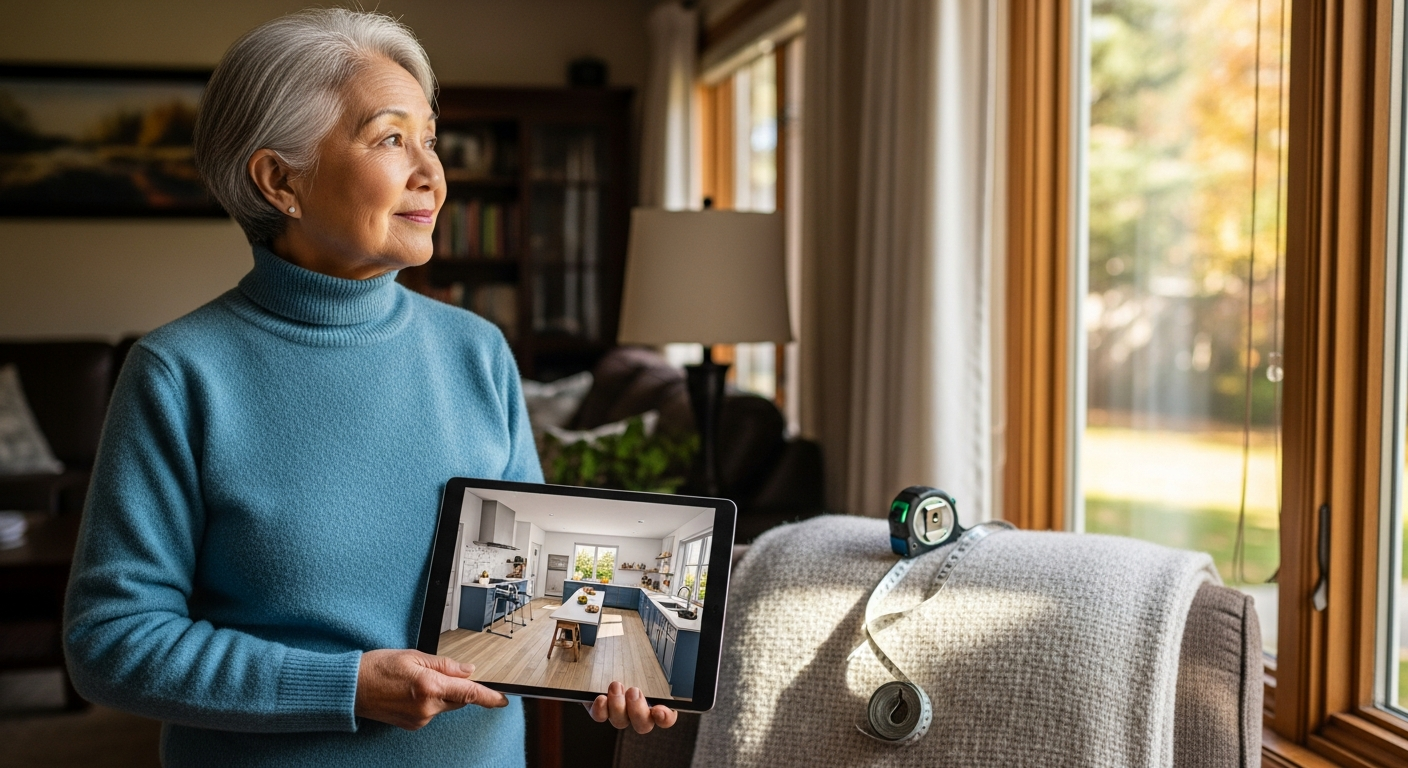
Why Professional Assessment Matters (And Most Seniors Skip It)
A professional accessibility assessment costs $500–$2,000 and typically includes:
| Assessment Component | What It Covers | Typical Cost |
|---|---|---|
| Home walkthrough with licensed evaluator | Room-by-room safety evaluation | $300–$600 |
| Fall risk assessment | Identifying specific hazards (stairs, slippery floors, poor lighting) | Included |
| Mobility analysis | How you move through spaces; areas causing difficulty | Included |
| Cognitive assessment (if needed) | Memory, navigation, wayfinding challenges | +$200–$400 |
| Written report with recommendations | Prioritized list of modifications | Included |
| Total assessment cost | $500–$2,000 |
This seems expensive compared to the cost of one specific renovation (e.g., $3,000 for a bathroom grab bar installation). Yet the assessment prevents costly mistakes:
- Grab bars installed in wrong locations (because the evaluator identified poor positioning)
- Expensive ramp installations that aren't the most practical solution
- Kitchen modifications that don't address actual workflow problems
- Stair lifts when a bedroom relocation would be better
Statistic: According to the Ontario Occupational Therapists Association, homes with professionally guided renovations see 45% fewer falls and safety incidents compared to homes where owners modify based on guesses.
What a Professional Accessibility Assessment Includes
Step 1: Physical Walkthrough
A licensed occupational therapist or certified aging-in-place specialist visits your home and evaluates:
Entrance & Exterior
- Grading and drainage around foundation
- Doorway widths and threshold heights
- Step heights and stair handrail condition
- Pathway safety (cracks, uneven surfaces)
- Lighting (motion-sensor, LED brightness)
Living Spaces
- Furniture arrangement and traffic flow
- Lighting levels in each room
- Flooring surfaces (slip hazards)
- Doorway widths (wheelchair or walker clearance, if needed)
- Furniture height (can you stand up easily?)
Kitchen
- Counter heights and reachability
- Appliance positioning and safety
- Storage accessibility (high cabinets, low drawers)
- Stove and oven safety features
- Sink accessibility and under-counter clearance
Bathroom
- Shower and bathtub entry (step height, slip risk)
- Grab bar locations and support needs
- Toilet height and seat comfort
- Sink height and faucet type
- Flooring (water hazard, slipperiness)
- Lighting and ventilation
Bedroom
- Bed height and access
- Closet and dresser accessibility
- Window operation (escape route)
- Flooring safety
- Lighting switches (reachable from bed)
Stairs & Hallways
- Tread depth and riser height
- Handrail continuity and grip comfort
- Lighting (every step visible)
- Hallway width (walker passage)
- Floor surface consistency
Step 2: Functional Assessment
The evaluator watches you move through your home and notes:
- Where you move slowly or carefully
- Where you grab walls or furniture for support
- Areas where you express concern
- Tasks that cause difficulty (climbing stairs, reaching high shelves, etc.)
- Pain points or balance challenges
This is critical information — your home might have a stair that's theoretically safe but feels precarious to you. The assessor identifies these subjective challenges, not just objective hazards.
Step 3: Prioritized Recommendations
The professional provides a prioritized list of modifications, ranked by urgency and impact:
| Priority | Type | Example | Estimated Cost |
|---|---|---|---|
| Critical | Safety hazard reducing fall risk | Handrails on stairs, bathroom grab bars | $1,000–$3,000 |
| High | Accessibility improvement with significant daily impact | Widened doorways, bedroom relocation | $3,000–$10,000 |
| Medium | Convenience or comfort enhancement | Lever-handle faucets, lowered counters | $500–$2,000 |
| Optional | Nice-to-have improvements | Decorative handrails, heated floors | $500–$5,000 |
Why this matters: Without this prioritization, many seniors waste money on low-priority improvements while critical safety issues remain unfixed.
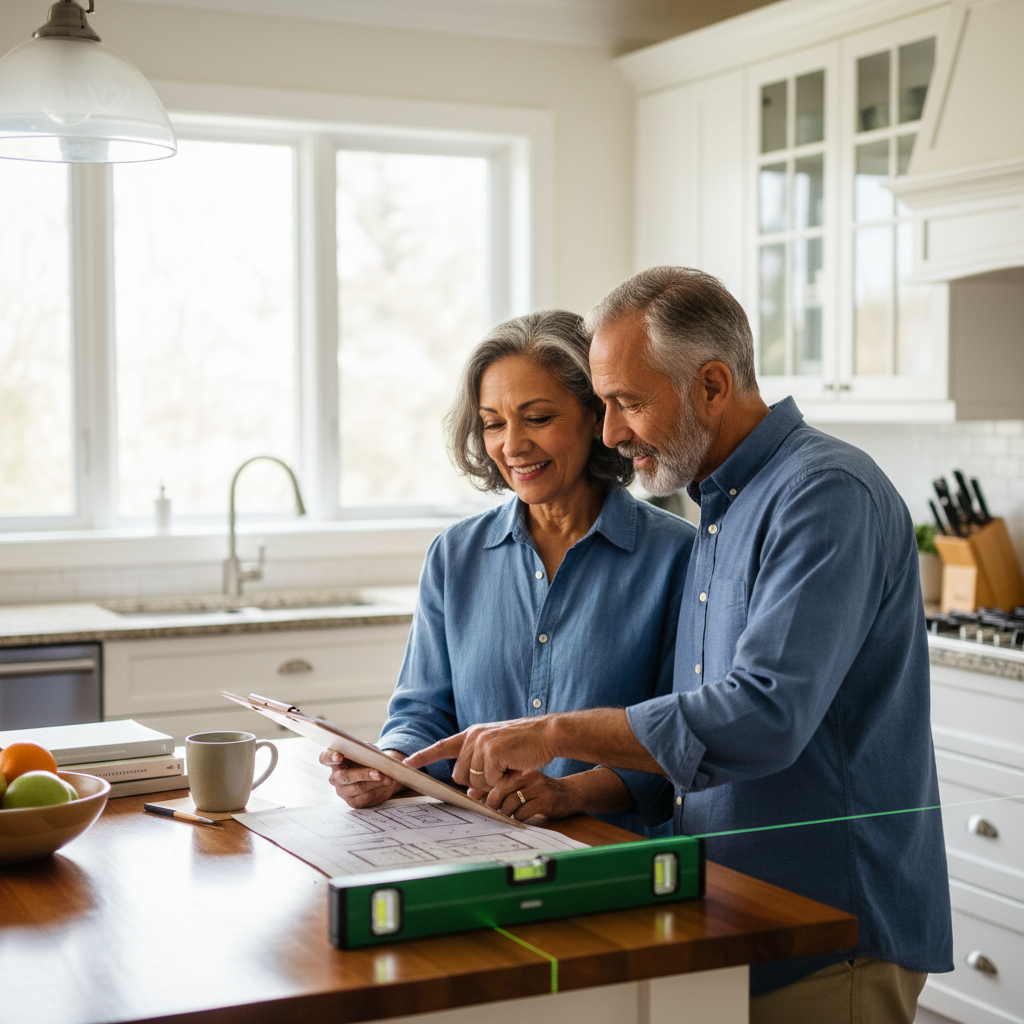
Real Example: How Assessment Prevents Costly Mistakes
Before Assessment (Guessing)
Frank, 74, decides his bathroom isn't "senior-friendly" because he struggles getting out of the tub. He budgets $8,000 for a walk-in shower renovation.
He hires a contractor, removes the tub, installs a large shower, adds grab bars, and spends $7,500.
Result: The new shower helps, but Frank's real problem was knee pain when stepping into the tub, not the tub itself. A cheaper solution (a step stool + grab bar, $300) would have worked just as well. He also didn't address the real hazard: slippery bathroom floor when exiting the shower. He didn't install non-slip flooring or mat anchors.
After Assessment (Guided)
Margaret, 74, gets a $1,200 professional accessibility assessment before renovating. The evaluator identifies:
Priority 1 (Critical): "Your bathroom floor is slippery when wet — high fall risk. Install non-slip flooring ($2,000) immediately."
Priority 2 (High): "Your tub entry is difficult due to step height. Install grab bars and a shower seat first ($800). Evaluate full tub removal later if needed."
Priority 3 (Medium): "Consider lever-handle faucets ($200) to improve accessibility."
Action plan: Margaret allocates $3,000 for Priority 1 and 2. The assessment identified the most impactful fixes, preventing expensive over-spending. She avoids a $7,500 shower renovation that wouldn't solve her actual problem.
How to Fund a Professional Assessment with a Reverse Mortgage
An accessibility assessment costs $500–$2,000 — well within a reverse mortgage draw for seniors who need to budget carefully.
Scenario: Dorothy, 69, has decided to age in place but wants professional guidance before spending $15,000+ on renovations. She's on a fixed CPP/OAS income with $200/month surplus.
Using a reverse mortgage, she can:
- Borrow $1,500 (the cost of a comprehensive accessibility assessment + written report)
- Schedule the assessment with a licensed occupational therapist
- Receive recommendations (prioritized, with cost estimates)
- Decide on renovations — informed by professional guidance, not guesswork
- Save thousands by investing in high-impact changes first
The $1,500 reverse mortgage draw costs approximately $100/year in interest (at 6.8% over 10 years). Compare that to the $3,000–$5,000 you'll likely save by making smarter renovation choices.
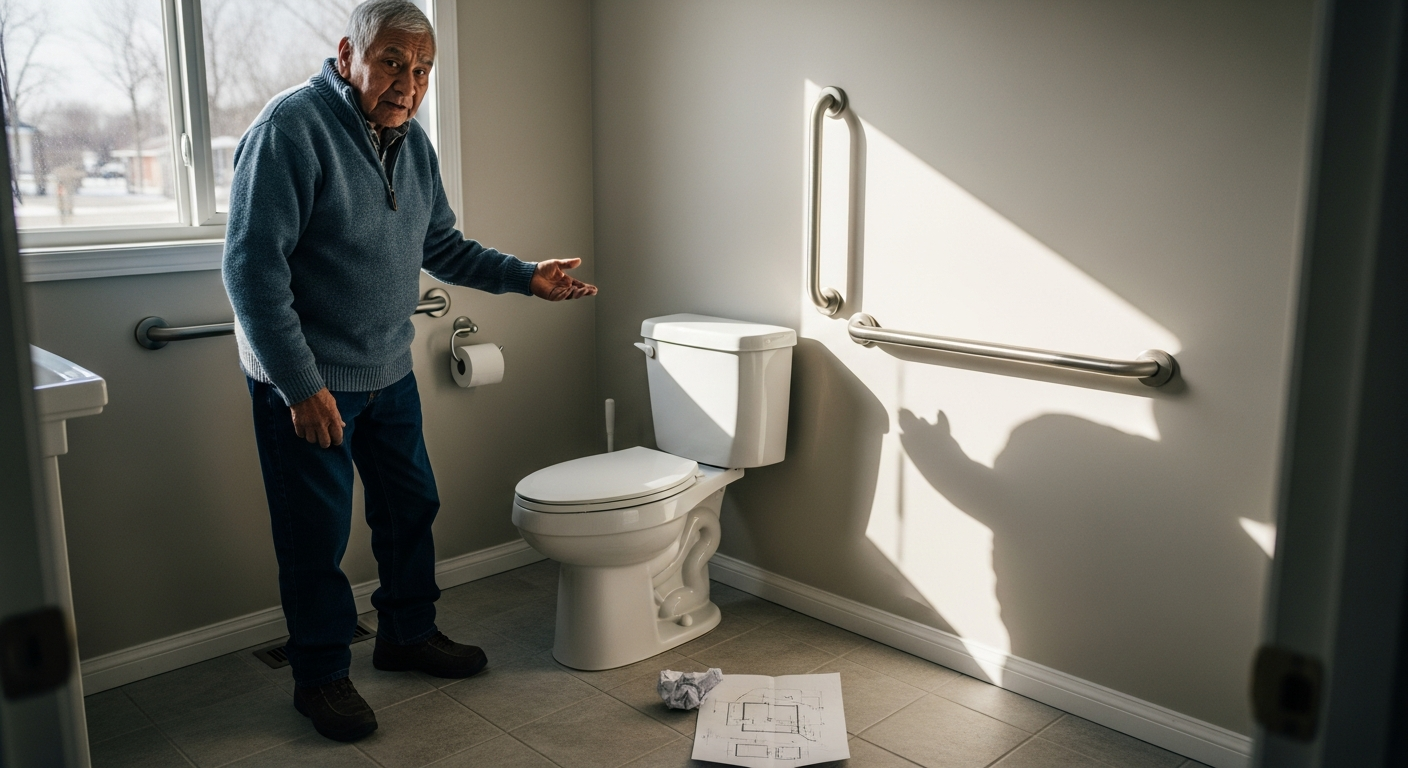
Finding a Qualified Accessibility Assessor in Ontario
Licensed Professionals
Occupational Therapists (OTs)
- Credentials: Registered OT (ROT) through the College of Occupational Therapists of Ontario (COTO)
- Cost: $100–$150/hour (typically 3–5 hours for full assessment = $300–$750)
- Insurance: Some health insurance covers OT assessments if referred by a physician
Certified Aging-in-Place Specialists (CAPS)
- Credentials: National Association of Home Builders (NAHB) certification
- Cost: $75–$125/hour
- Expertise: Renovation-focused accessibility recommendations
Home Safety Assessors
- Credentials: Various certifications (some provinces regulate, others don't)
- Cost: $300–$500 for full assessment
- Expertise: Fall risk and hazard identification
Where to Find Assessors
- Your doctor — Ask for a referral to an OT; physician referral may trigger insurance coverage
- Ontario Health (formerly LHIN) — Offers free OT assessments for some seniors; call 1-866-811-0003
- Local seniors' centers — Often have lists of trusted assessors
- Canadian Occupational Therapy Association — cota.ca has a practitioner finder
- Contractor associations — Certified home accessibility contractors (often ACE certified) in your area
Tax and Benefit Implications
Great news: Using a reverse mortgage to fund an accessibility assessment has zero tax or benefit impact.
| Aspect | Impact |
|---|---|
| Reverse mortgage proceeds | Not taxable income |
| Professional assessment fees | Generally not tax-deductible (unless rehabilitation is related to disability) |
| Your OAS/GIS | No reduction |
| Your CPP | No reduction |
According to the CRA, professional assessments for aging-in-place modifications are not typically tax-deductible for seniors. However, if the assessment leads to renovations that qualify for the Home Accessibility Tax Credit (which some seniors may qualify for), consult a tax professional for implications.
Reverse Mortgage vs. Other Funding Options for Assessment
| Funding Option | How It Works | Best For |
|---|---|---|
| Reverse mortgage line of credit | Borrow $1,500 for assessment; no monthly payments | Retirees on fixed income |
| HELOC | Borrow $1,500; make interest-only payments | Employed homeowners with income |
| Out-of-pocket savings | Pay assessment directly from savings | Seniors with emergency reserves |
| Health insurance | Some policies cover OT assessment with physician referral | Seniors with supplementary coverage |
| Government programs | Ontario Health may offer free assessments | Qualifying seniors (low-income, mobility issues) |
For most Ontario seniors, a reverse mortgage line of credit is the most practical option — minimal cost, no monthly payments, and access to additional funds if renovations become necessary.
Frequently Asked Questions
Can I find a free or low-cost accessibility assessment through Ontario Health?
Yes, possibly. Ontario Health (formerly LHIN) offers occupational therapy assessments to some seniors, often at no cost. Call 1-866-811-0003 to see if you qualify. Eligibility is based on income, age, and functional needs. This should be your first stop before paying for a private assessment.
How long does a professional accessibility assessment take?
Typically 2–4 hours, including the home walkthrough, functional evaluation, and written recommendations. You'll receive a report within 1–2 weeks.
Do I need a doctor's referral to get a professional accessibility assessment?
Not necessarily. You can hire an OT or certified assessor privately without a referral. However, a physician referral may allow health insurance coverage, so it's worth asking your doctor first.
Will the assessment recommendations be too expensive to implement?
The assessment will rank recommendations by priority. Focus on the Critical and High priority items first. You don't have to implement everything at once — you can phase renovations over several years based on your budget.
Can I challenge the assessment recommendations if I disagree?
Of course. The assessment is a guide, not a mandate. If an assessor recommends a $10,000 kitchen renovation and you disagree, you're free to skip it. However, the professional's expertise often reveals safety issues you've overlooked, so their input is valuable.
Will an accessibility assessment affect my home value when I sell?
Generally no. The assessment is a service, not a permanent modification to your home. When you sell, your real estate agent will list your home as-is. If you've completed renovations based on the assessment, those improvements might increase your home value — but the assessment itself doesn't impact it.
An accessibility assessment is the smart first step in aging in place. It prevents costly mistakes, identifies true priorities, and ensures your renovations actually solve your real problems. Fund it through a reverse mortgage and make smarter decisions about your home.
Also read:
- Aging in place home modifications guide
- Home renovations for safety and accessibility
- Understanding home modification costs
Get your free Ontario Reverse Mortgage Guide →
This content is for illustrative purposes only. Assessment costs and professional availability vary. Consult with a qualified occupational therapist for recommendations specific to your situation. Call Rick Sekhon Reverse Mortgages for the best rates and more information.
Ready to Learn More?
Get the free Ontario Reverse Mortgage Guide and find out exactly how much you could unlock from your home.
Get My Free Guide →Related Articles
Reverse Mortgage for Home Accessibility: Age in Place Renovations
Fund accessibility renovations and aging-in-place modifications using reverse mortgage proceeds in Ontario.
Read →Aging in Place with a Reverse Mortgage: Home Modification Guide
How Ontario seniors can fund aging-in-place home modifications with a reverse mortgage — costs, top modifications, grants, and a complete planning guide.
Read →Reverse Mortgage for Workplace Injury Recovery: Supporting Adult Child's Career Transition
Help your adult child rebuild their career after workplace injury. Learn how reverse mortgages fund recovery, retraining, and financial stability during career transition.
Read →