
Fund Home Modifications to Age in Place: Ontario Guide
Discover how a reverse mortgage can finance accessibility upgrades, care services, and renovations to stay safely in your Ontario home as you age.
"I want to stay in my home as I age, but modifications and care will be expensive." If you're approaching your 60s or already in retirement, the desire to remain in a familiar, cherished home is natural. Yet aging safely at home requires practical investments—grab bars, stairlifts, accessibility upgrades, and potentially in-home care services.
This article is for educational purposes only and does not constitute financial advice.

The Cost of Aging in Place
Staying home is significantly cheaper than moving to a care facility, but it requires upfront investment:
| Modification | Typical Cost |
|---|---|
| Bathroom accessibility (grab bars, shower seat, raised toilet) | $2,000–$5,000 |
| Stairlift installation | $3,000–$15,000 |
| Main floor bedroom/bathroom conversion | $10,000–$25,000 |
| Kitchen accessibility upgrades (lower cabinets, pull-out shelves) | $5,000–$12,000 |
| Widening doorways for mobility aids | $1,000–$3,000 per door |
| Ramp installation (outdoor access) | $1,500–$3,000 |
| In-home care services (part-time) | $20–$30/hour |
| In-home care services (full-time) | $5,000–$8,000/month |
Many Ontario homeowners have the equity to fund these upgrades but not the monthly cash flow during retirement. A reverse mortgage unlocks that equity without requiring employment income.
How a Reverse Mortgage Funds Aging in Place
A reverse mortgage allows you to access your home's equity as a lump sum or line of credit. Unlike traditional loans, there are no monthly payments during your lifetime. You can use the funds for any purpose—including aging-in-place modifications and care.
According to the Financial Consumer Agency of Canada (FCAC), this strategy is particularly suitable for homeowners who:
- Have paid off or nearly paid off their traditional mortgage
- Plan to remain in their home long-term
- Have significant home equity ($250,000+)
- Want to avoid downsizing or moving to institutional care
Eligible Home Modifications
A reverse mortgage can fund:
✓ Structural modifications
- Stairlifts, elevators, ramps
- Bathroom renovations (accessible showers, walk-in tubs)
- Bedroom moves to main floor
- Door widening for wheelchair access
✓ Accessibility features
- Grab bars, handholds, non-slip flooring
- Lighting upgrades for visibility
- Smart home technology (voice-controlled thermostats, lighting)
- Emergency alert systems
✓ Care services
- Live-in or part-time personal support workers
- Occupational therapy assessments
- Physical rehabilitation services
- Nursing visits
✓ Home maintenance
- Roofing, siding, foundation work (necessary for long-term occupancy)
- Heating/cooling system upgrades
- Plumbing and electrical updates
✗ Cosmetic renovations (kitchen remodels for resale value are secondary to aging-in-place function)
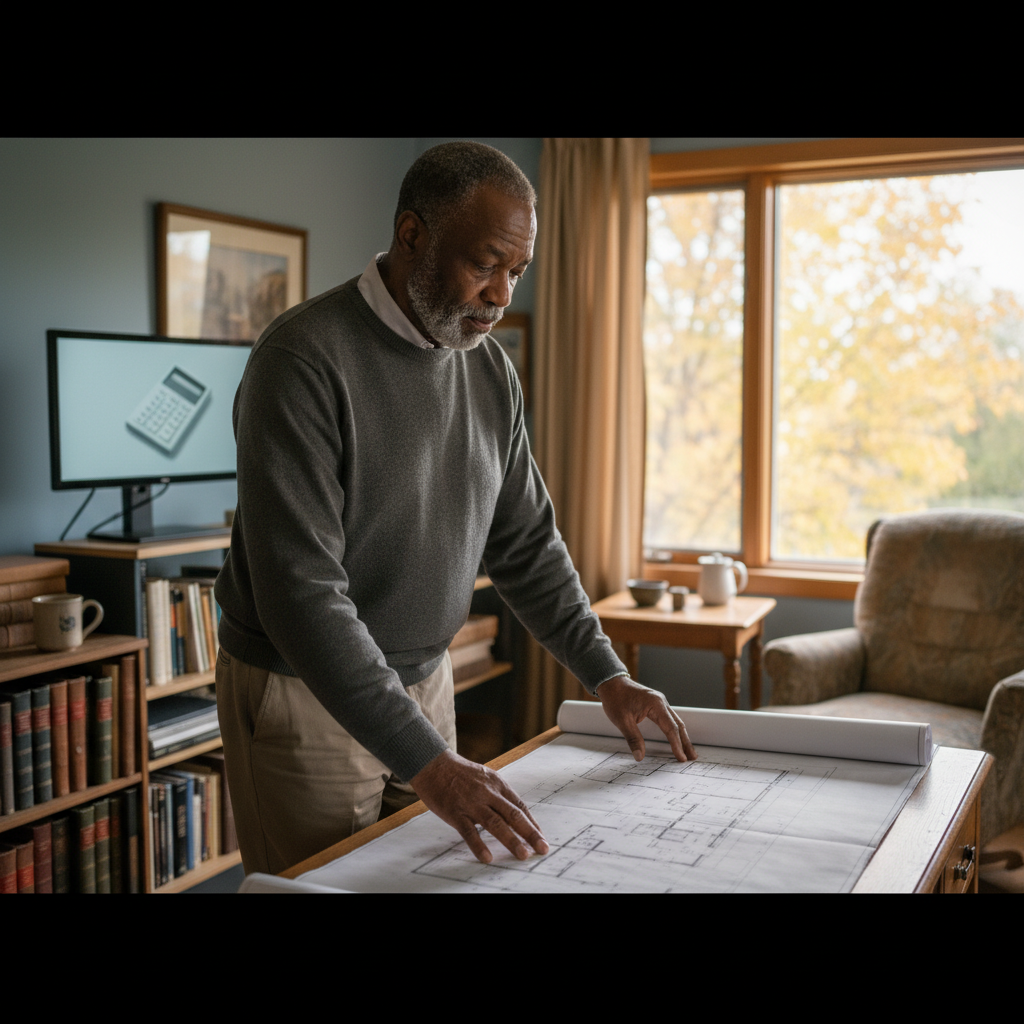
Real Example: Dorothy's Aging-in-Place Plan
Dorothy, 72, is a widow in London, Ontario. Her home is worth $350,000 and is mortgage-free. She has arthritis and mobility challenges; her doctor recommends staying home rather than moving to a facility.
Her aging-in-place budget:
- Bathroom renovation with walk-in tub and grab bars: $8,000
- Main floor bedroom conversion: $12,000
- Stairlift for upstairs (guest bedroom access): $7,000
- Smart home technology: $2,000
- In-home care (part-time, 2 years): $30,000
- Total: $59,000
Using a reverse mortgage with Equitable Bank:
- Home valued at $350,000
- Borrows at 55% = $192,500 available equity
- Uses $65,000 for aging-in-place investments
- Retains $127,500 for future care needs
- No monthly payments; lives at home with full accessibility
By age 80, if Dorothy still occupies the home, the reverse mortgage balance will have grown to ~$97,000 (with accrued interest at 7%). Her heirs or estate would repay this from home sale proceeds.
Comparison: Reverse Mortgage vs Other Aging-in-Place Funding Options
| Funding Method | Monthly Cost | Equity Preserved | Complexity |
|---|---|---|---|
| Reverse mortgage | $0/month | Reduced (interest accrues) | Moderate (legal fees, appraisal) |
| HELOC (home equity line of credit) | $300–$500 on $60K | Higher | High (credit/income verification required) |
| Downsizing to smaller home | Avoids payments | Liquid cash available | High (moving, selling, buying) |
| Home equity loan | $400–$600/month | Similar to HELOC | High (traditional underwriting) |
| Government grants | $0–$10,000 subsidy | Full equity preserved | Very high (application process, eligibility limits) |
For Ontario seniors without strong employment income, a reverse mortgage often wins because no income or credit verification is required.
Ontario-Specific Resources for Aging in Place
Government Programs That Complement Reverse Mortgages
Ontario Renovation Tax Credit — If you're doing accessibility renovations, some costs may be tax-deductible under the Home Accessibility Tax Credit (federal program).
Assistive Devices Program (ADP) — Ontario covers up to 75% of the cost for prescribed medical devices like stairlifts, mobility aids, and accessible equipment (up to $3,000–$5,000 per device). Use reverse mortgage funds for the remainder.
CCAC (Community Care Access Centre) — Now part of Ontario Health, this assesses aging-in-place needs and can recommend modifications. Some services are publicly funded; others require private pay.
Municipal Tax Deferral for Seniors — Some Ontario municipalities allow seniors to defer property tax increases while living in their home. Combine this with reverse mortgage funding for maximum sustainability.
According to Ontario Health's Aging at Home strategy, seniors who remain in their own homes (with proper modifications) report significantly higher life satisfaction than those in institutional settings. Investing in aging in place isn't just financially smart—it's emotionally beneficial.

Structuring a Reverse Mortgage for Long-Term Aging in Place
When planning a reverse mortgage specifically for aging in place, structure it strategically:
Option 1: Lump Sum
Borrow all available funds upfront. Pay for all modifications immediately, retain surplus for future care costs. Simplest approach; interest accrues on full amount from day one.
Option 2: Line of Credit
Some lenders (including CHIP and Equitable Bank) offer reverse mortgage lines of credit. Draw funds as needed for modifications and care. Interest accrues only on amounts drawn—potentially saving interest on funds not immediately needed.
Option 3: Hybrid Approach
Borrow enough for immediate modifications as a lump sum ($50K–$80K). Retain remaining available equity as a line of credit for future care expenses.
Speak with Rick Sekhon, a licensed reverse mortgage specialist, about which structure suits your timeline and care projections.
Drawbacks and Important Considerations
Aging in place with a reverse mortgage involves real tradeoffs:
- Interest compounds over time. At 7% annually, a $60,000 reverse mortgage grows to ~$84,000 in 10 years. This reduces inheritance for heirs.
- You must maintain the property. Taxes, insurance, utilities, and upkeep remain your responsibility. The home must stay in livable condition.
- Prepayment penalties apply if you want to repay early—typically 3 months of interest.
- The loan becomes due when you move or pass away, triggering a home sale if heirs can't refinance.
- Care costs may exceed projections. If full-time care becomes necessary, costs could outpace available equity.
Eligibility Checklist for Aging-in-Place Reverse Mortgages
- Age 55+ — all registered homeowners must meet this threshold
- Primary residence in Ontario (or another province with reverse mortgage availability)
- Minimum equity — typically 40%+ of home value (most lenders require $250K+ in equity to justify fees)
- No income verification required
- No credit check
- Sound mind — sufficient cognitive capacity to understand the product (lenders may require cognitive assessment)
Age alone doesn't disqualify you. Homeowners in their 80s and 90s regularly obtain reverse mortgages for aging-in-place funding.
Steps to Fund Aging-in-Place Modifications
- Assess your home and needs — Work with an occupational therapist to identify necessary modifications.
- Get cost estimates — Obtain 2–3 quotes for major renovations (bathroom, stairlift, bedroom conversion).
- Calculate total funding needed — Include renovations, care services, and a buffer for contingencies.
- Get your home appraised — A reverse mortgage lender will appraise to determine available equity.
- Obtain reverse mortgage quotes — Contact CHIP, Equitable Bank, Bloom Financial, and Home Trust for rate quotes.
- Arrange Independent Legal Advice — Required in Ontario; your lawyer explains obligations and protections.
- Close the reverse mortgage — Funds are deposited; you direct payment to contractors and care providers.
- Proceed with modifications — Hire contractors, schedule care services, and enjoy your accessible home.
Key Takeaways
| Concept | Explanation |
|---|---|
| What is aging in place? | Staying in your own home as you age, with modifications and care services to support independence. |
| What modifications does a reverse mortgage fund? | Accessibility upgrades, stairlifts, bathroom renovations, in-home care services, and home maintenance. |
| How much can I borrow? | Up to 45–55% of your home's value, depending on age and lender. |
| Do I make monthly payments? | No. Interest accrues on the balance; you repay when you sell, move, or pass away. |
| What if I outlive my projections? | Some reverse mortgages offer line-of-credit options for additional borrowing. Plan conservatively. |
Frequently Asked Questions
Can I get a reverse mortgage if I'm already receiving home care?
Yes. In fact, receiving care strengthens your case, as it demonstrates a genuine aging-in-place need. The reverse mortgage funds can formalize and expand those services.
What if I need more money for care after I've used the reverse mortgage funds?
If you structured the reverse mortgage as a line of credit, you may have remaining available equity to draw. If not, you'd need to explore other options (selling the home, downsizing). Plan conservatively by overestimating care costs.
Can my family get a reverse mortgage to fund my aging-in-place care?
No. The borrower must be the homeowner, and they must be at least 55 years old. Your adult children cannot borrow against your home without being registered owners.
Will aging-in-place modifications reduce my home's resale value?
Most accessibility modifications (grab bars, accessible showers, main-floor bedrooms) add functional value and appeal to older buyers. Major structural changes (ramps, widened doorways) have minimal impact on value. You're not renovating for resale—you're staying home.
Is a reverse mortgage the only way to fund aging-in-place modifications?
No. Other options include HELOCs (if you qualify for credit), home equity loans, government grants (limited availability), and personal savings. However, reverse mortgages are uniquely accessible to seniors without strong employment income or perfect credit.
The Bottom Line
Aging in place is achievable with proper funding. A reverse mortgage unlocks your home's equity to finance the modifications and services that let you remain independent, safe, and in control of your environment.
The cost—reverse mortgage interest compounding over time—is often worth the benefit of staying home rather than moving to institutional care, which costs far more monthly and eliminates independence.
Speak to a licensed mortgage professional. Independent legal advice is required before closing a reverse mortgage in Ontario.
Quick Reference
| Topic | Details |
|---|---|
| Typical modifications | Bathrooms: $2K–$5K. Stairlifts: $3K–$15K. Main-floor bedroom: $10K–$25K. |
| In-home care cost | Part-time: $20–$30/hr. Full-time: $5K–$8K/month. |
| Reverse mortgage rates (2026) | 6.5–7.3% depending on lender |
| No monthly payments | Interest accrues; you repay when you move or pass away |
| Eligibility age | 55 years old minimum |
This content is for illustrative purposes only. Rates may vary. Call Rick Sekhon for the best rates and more information.
Ready to Learn More?
Get the free Ontario Reverse Mortgage Guide and find out exactly how much you could unlock from your home.
Get My Free Guide →Related Articles
Reverse Mortgage Eligibility in Ontario: Complete 2026 Guide
Everything Ontario homeowners need to know about qualifying for a reverse mortgage in 2026. Covers age requirements, home equity, property types, and the application process.
Read →Reverse Mortgage Interest Rates Ontario 2026: Current Rates & What They Mean
Current reverse mortgage interest rates in Ontario for 2026. Compare rates from CHIP, Equitable Bank, Bloom, and Home Trust. Learn what rates mean for your home equity over time.
Read →Reverse Mortgage for Smart Home Health Monitoring: IoT Systems for Aging in Place
Use a reverse mortgage to install smart home health monitoring systems that keep you safe while aging in place in Ontario.
Read →