
Reverse Mortgage vs Moving in With Adult Children: Complete Comparison
Should you stay in your home with a reverse mortgage or move in with adult children? Financial and emotional comparison for Ontario seniors.
You've reached retirement, and your adult children are asking: "Would you be happier living with us?" The idea of moving in with family sounds appealing — and financially, it might seem logical — but staying in your home with a reverse mortgage might offer more independence, dignity, and genuine affordability than you think. This guide compares the two options head-to-head so you can make the right choice for your situation.
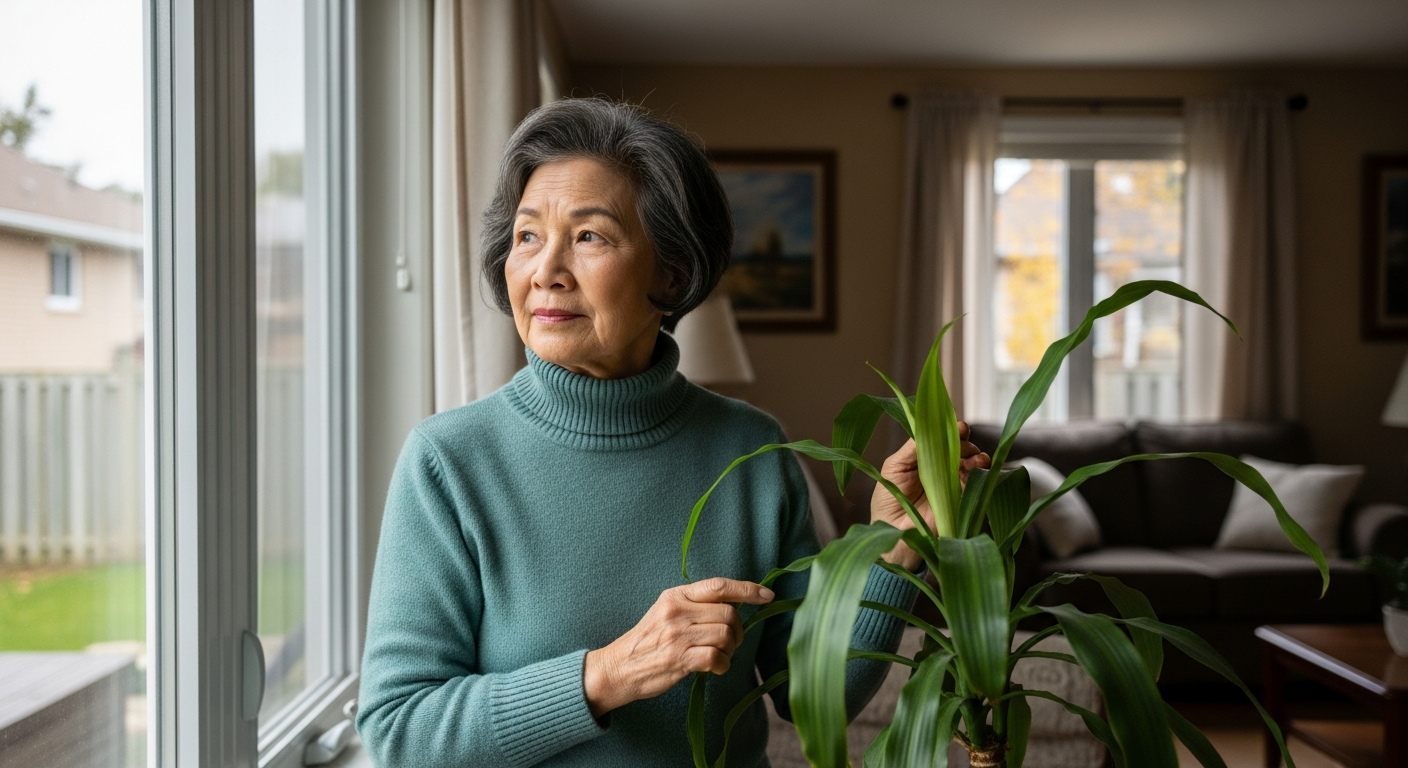
The Multi-Generational Housing Question: Why It's Front-and-Center
In Ontario and across Canada, multi-generational living is increasing. Adult children are staying home longer, aging parents need support, housing costs are rising, and family values emphasize togetherness. For many families, moving in together makes intuitive sense.
But intuition and financial reality don't always align.
The decision between staying in your home with a reverse mortgage and moving in with adult children involves tradeoffs around:
- Independence vs. convenience
- Privacy vs. shared expenses
- Control vs. financial burden
- Dignity vs. family obligation
- Long-term care planning vs. short-term comfort
Let's analyze both options side by side.
Option 1: Stay in Your Home With a Reverse Mortgage
The basic premise: Access your home equity through a reverse mortgage, funding aging in place, home modifications, and independence in your own home.
Costs: Reverse Mortgage Approach
| Expense | Annual Cost |
|---|---|
| Mortgage interest (on $200,000 borrowed @ 6.54%) | $13,080/year |
| Property tax | $3,000–$5,000/year |
| Home maintenance and repairs | $3,000–$5,000/year |
| Utilities, heating, property insurance | $3,500–$4,500/year |
| Total annual cost | $22,580–$27,580/year |
Key advantages:
- ✓ Full independence and control
- ✓ Privacy and dignity maintained
- ✓ No family dynamics or obligation
- ✓ Home remains your asset to inherit
- ✓ Familiar environment; low relocation stress
- ✓ Professional caregiving support available
- ✓ Can set own rules about visits, schedules
Key challenges:
- ✗ Responsible for all home maintenance
- ✗ Vulnerable to major repairs (roof, furnace, electrical)
- ✗ Social isolation if you don't actively maintain friendships
- ✗ May need to hire professional care if health declines
- ✗ Interest accrues on reverse mortgage over time
- ✗ May eventually need to downsize or move to care facility
Option 2: Move in With Adult Children
The basic premise: Sell your home or move in while family handles housing, share expenses and caregiving, enjoy family togetherness.
Costs: Multi-Generational Housing Approach
Assume your adult child owns a home worth $650,000 and you move in:
| Expense | Annual Cost (Your Share) |
|---|---|
| Utilities (split) | $1,200–$1,800 |
| Property tax contribution | $800–$1,200 |
| Groceries and household supplies (split) | $2,400–$3,600 |
| Home maintenance (split) | $1,500–$2,500 |
| Caregiving help (if needed) | $0–$5,000+ |
| Total annual cost | $6,000–$14,100/year |
Key advantages:
- ✓ Dramatically lower housing costs
- ✓ Built-in caregiving support from family
- ✓ Enhanced social engagement with family
- ✓ Shared meal preparation and household tasks
- ✓ Grandchildren proximity (if applicable)
- ✓ Safety monitoring from family members
Key challenges:
- ✗ Loss of independence and privacy
- ✗ Potential family conflict over rules, space, decisions
- ✗ Your home (and equity) is sold — asset lost from your estate
- ✗ Depends entirely on adult child's stability (job, marriage, finances)
- ✗ If adult child faces hardship (job loss, divorce), you may need to leave
- ✗ Complex legal/tax implications (who owns the home? how is inheritance handled?)
- ✗ Potential resentment if caregiving burden becomes heavy
- ✗ Limits your autonomy in health decisions, visitors, lifestyle

Real-World Scenario: Patricia vs. Margaret
Patricia's story: Reverse mortgage approach
Patricia, 72, lives in her paid-off $750,000 Toronto home. She obtained a $200,000 reverse mortgage to fund accessibility modifications ($30,000), build emergency reserves ($50,000), and create a home care fund ($120,000 over 8 years).
Her annual costs: approximately $22,500 (taxes, utilities, maintenance, insurance, modest home care as needed).
Her adult daughter lives 15 minutes away and visits weekly. Patricia maintains her independence, hosts family dinners, and has autonomy over her care decisions. When Patricia passes, the home is sold to repay the reverse mortgage (~$300,000 balance); the remaining ~$450,000 equity goes to her daughter.
Margaret's story: Multi-generational approach
Margaret, 72, moved in with her adult son and his family two years ago after her husband passed. She sold her home for $750,000. The home mortgage was paid off, and Margaret received $750,000 in proceeds.
Margaret's annual housing costs (split with son): approximately $8,000. She contributes to groceries, utilities, and property tax. She's involved in grandchild care. The arrangement seemed perfect initially.
The plot twist: Margaret's son lost his job and is struggling with anxiety. The family is considering a move to a more affordable city. Margaret's son's marriage is strained under financial pressure. Margaret, who'd expected stability, now feels the household tension daily and worries about her son's wellbeing.
Moreover, Margaret's $750,000 is in a bank account earning minimal interest. It's dwindling for living costs and will eventually run out, leaving her with no home, no equity, and dependent on her son's family for housing in her 80s or 90s.
Financial Projection: 15-Year Outlook
Let's project both scenarios over 15 years, starting with a 72-year-old:
Patricia (Reverse Mortgage):
| Year | Home Value | RM Balance | Net Equity | Patricia's Age |
|---|---|---|---|---|
| 1 | $750,000 | $200,000 | $550,000 | 72 |
| 5 | $780,000* | $270,000 | $510,000 | 76 |
| 10 | $820,000* | $370,000 | $450,000 | 81 |
| 15 | $860,000* | $520,000 | $340,000 | 86 |
*Assumes 0.9% annual home appreciation
Patricia's home appreciates, her reverse mortgage balance grows, but her net equity remains substantial. At 86, if she needs long-term care, the home is sold; the reverse mortgage is repaid (~$520,000); and approximately $340,000 is available for care or passes to her daughter.
Margaret (Multi-Generational):
| Year | Cash Reserves | Son's Home Equity (Margaret's share assumed) | Margaret's Age | Notes |
|---|---|---|---|---|
| 1 | $750,000 | $0 (lives in son's home) | 72 | |
| 5 | $625,000 | $0 | 76 | Spent $25,000/year on living costs |
| 10 | $500,000 | $0 | 81 | Spent $25,000/year |
| 15 | $375,000 | $0 | 86 | Spent $25,000/year; declining rapidly |
Margaret's cash is depleting. She has no home equity. If her son's situation improves, she might have a claim to some of the home's equity, but this is legally murky and creates family tension. More likely, at 86, Margaret is dependent entirely on her son's generosity and whatever remains in her bank account.
Both women have spent approximately $375,000 over 15 years, but Patricia still owns a home and has equity; Margaret owns nothing and is entirely dependent on family.
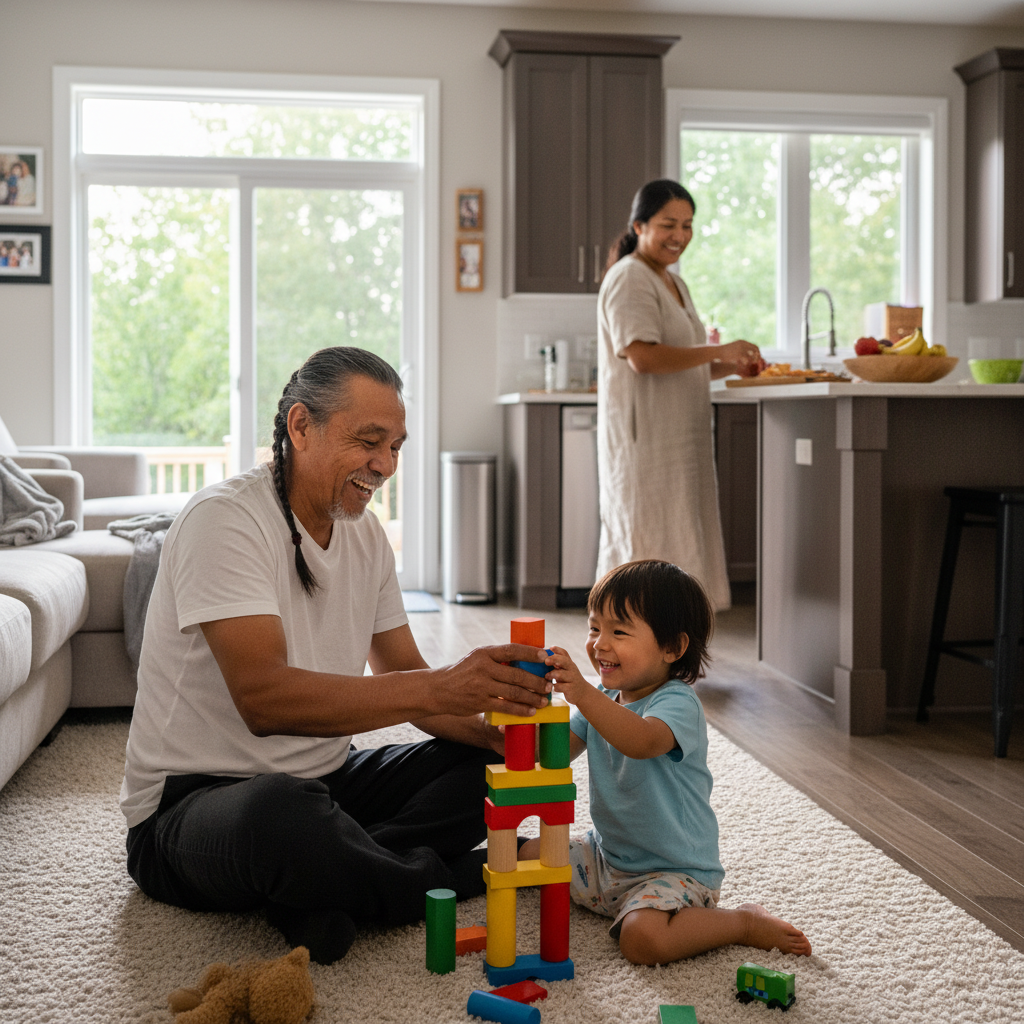
According to Statistics Canada, seniors living independently report significantly higher life satisfaction and better mental health outcomes than seniors living in dependent housing situations, even when financial resources are identical.
The Intangible Factors: Independence, Dignity, and Control
Beyond finances, consider the non-monetary dimensions:
| Factor | Reverse Mortgage | Multi-Generational |
|---|---|---|
| Decision-making power | Full autonomy | Shared with family |
| Scheduling and routines | Your control | Family consensus needed |
| Visitor flexibility | Anytime | Subject to household norms |
| Care decisions | Your choice | Family input/pressure |
| Risk of family conflict | Low | High (boundaries, obligations) |
| Life satisfaction | Generally high | Variable; depends on family dynamics |
| Sense of burden on family | Low | Often high (even if not voiced) |
For many seniors, staying in their own home with a reverse mortgage preserves not just financial independence but psychological wellbeing and self-determination.
When Moving in With Adult Children Makes Sense
Multi-generational living is the right choice if:
✓ Your adult child has stable housing and financial security ✓ The family has explicitly discussed and agreed to the arrangement ✓ Your health requires active, daily caregiving (dementia, mobility limits) ✓ You prefer family engagement over independence ✓ The family dynamic is genuinely positive (no resentment, clear boundaries) ✓ You have no concern about being a "burden"
When a Reverse Mortgage Is Better
A reverse mortgage and independent living is preferable if:
✓ You value independence and autonomy ✓ Your adult children are building their own families and careers ✓ You want to avoid family financial entanglement ✓ You're capable of managing a household with hired help ✓ You prefer privacy and the ability to make your own decisions ✓ You want to preserve an inheritance for your children ✓ You worry about being a burden on family
Frequently Asked Questions
Can I do both — start with a reverse mortgage and move in later if needed?
Absolutely. Many seniors structure a reverse mortgage as a flexible line of credit, staying independent while preserving the option to relocate if circumstances change. You're not locked in.
What if my health changes and I need daily care?
A reverse mortgage funds professional caregiving (in-home care, assisted living, eventual nursing care) without requiring you to move or depend on family.
Will moving in with my children affect my CPP, OAS, or GIS?
No. Government benefits are based on age, residence, and income — not on housing arrangements. Moving in doesn't trigger any benefit loss.
What are the legal implications of moving in with my adult child?
Consult a lawyer, but generally: if you're selling your home and contributing cash, you should have a written agreement clarifying expectations, financial contributions, and what happens if circumstances change (job loss, divorce, etc.).
The Bottom Line
A reverse mortgage at 72 gives you:
- Independence and control
- A home to pass on (equity after repayment)
- Professional caregiving flexibility
- Privacy and dignity
- Financial autonomy
Moving in with adult children gives you:
- Lower immediate costs
- Family support and togetherness
- Built-in supervision
- Shared household management
- But at the cost of independence and future security
For most Ontario seniors with home equity, a reverse mortgage preserves both financial security and personal dignity far better than dependency on adult children.
Ready to Learn More?
Get the free Ontario Reverse Mortgage Guide and find out exactly how much you could unlock from your home.
Get My Free Guide →Related Articles
Reverse Mortgage vs Downsizing: Which Is Right for You?
Compare reverse mortgages and downsizing as strategies to access home equity. Explore pros, cons, and scenarios for each option.
Read →Fund Home Modifications to Age in Place: Ontario Guide
Discover how a reverse mortgage can finance accessibility upgrades, care services, and renovations to stay safely in your Ontario home as you age.
Read →Reverse Mortgage for Multi-Generational Homes Ontario
How Ontario homeowners 55+ can use a reverse mortgage to fund basement suites, in-law suites, and ADUs for multi-generational living — with no monthly payments.
Read →