
Reverse Mortgage When Your Spouse Becomes Your Caregiver: Financial Restructuring
One spouse's health declines; the other becomes a full-time caregiver. How does reverse mortgage planning change when roles flip? Ontario couples need a new financial strategy.
Your spouse was diagnosed with early-stage dementia at 68. You're now their full-time caregiver—managing medications, coordinating appointments, handling finances, and eventually managing activities of daily living. You've gone from a two-income household (or two independent retirees) to a one-person operation where the secondary earner is now fully responsible for the household and the primary earner's care. Your reverse mortgage was fine when you were both contributing; now everything has changed. How do you restructure your finances when the caregiver role transforms your household from a partnership into a medical caregiving situation?
This scenario affects tens of thousands of Ontario couples annually. When one spouse becomes a caregiver for the other, the financial and emotional landscape shifts dramatically. A reverse mortgage originally designed for retirement income becomes a tool for managing caregiving costs—medications, home modifications for accessibility, respite care, and ultimately long-term care transition. Without restructuring, you'll deplete equity paying for care that could be managed more efficiently.
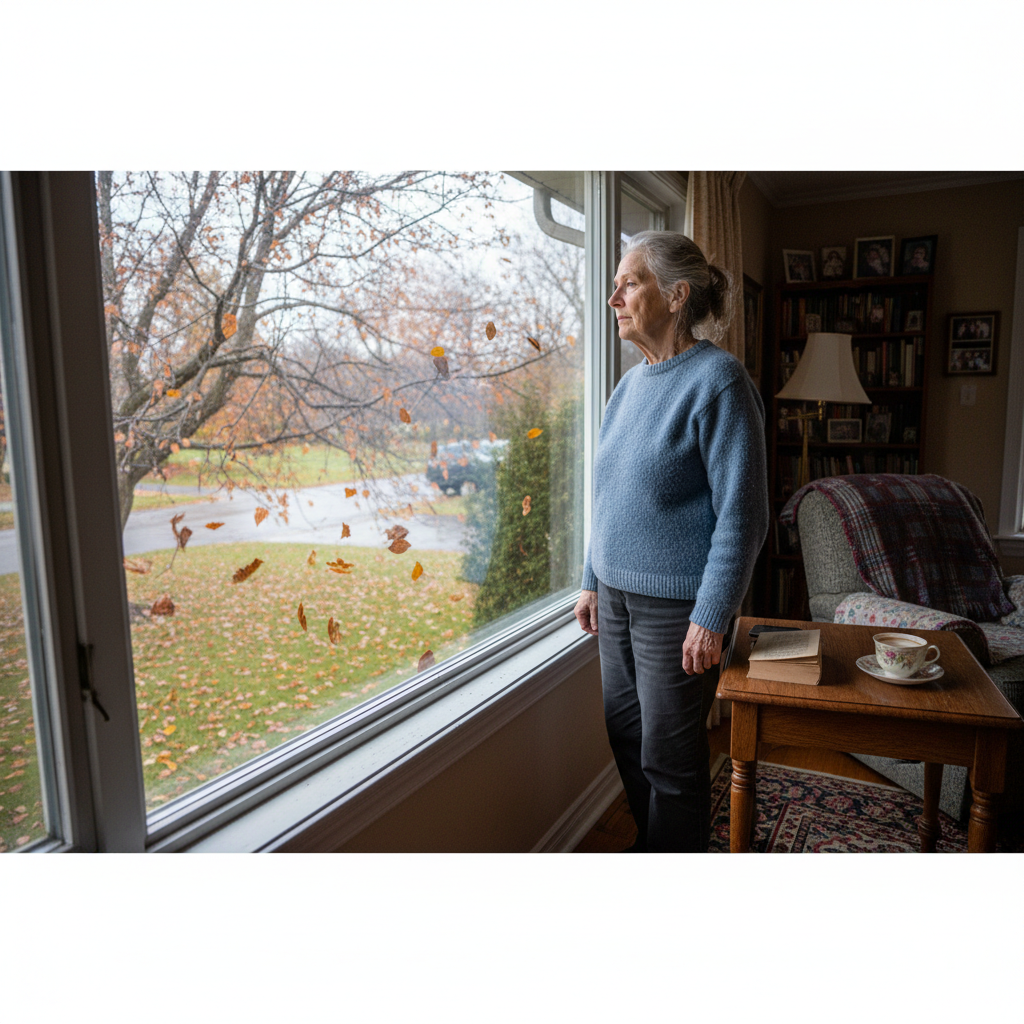
The Financial Impact of Spousal Caregiving
When one spouse becomes a full-time caregiver, the household loses:
- Income from the caregiver spouse — If they were working, employment income ends
- Time for secondary employment — Caregivers can't realistically hold jobs
- Flexibility for income-generating activities — Appointments and care needs are unpredictable
- Both spouses' discretionary time — Life becomes structured around medical schedules
Meanwhile, new expenses emerge:
| Caregiving Expense | Typical Monthly Cost | Annual Cost |
|---|---|---|
| Medications (if not covered) | $100–$300 | $1,200–$3,600 |
| Home modifications for accessibility | $0–$500 (amortized) | $0–$6,000 |
| Respite care (occasional) | $200–$600 | $2,400–$7,200 |
| Adult day programs or activities | $300–$700 | $3,600–$8,400 |
| Specialized equipment (walkers, lifts) | $100–$300 (amortized) | $1,200–$3,600 |
| Potential total monthly increase | $700–$2,400 | $8,400–$28,800 |
For a household previously operating on a combined income or fixed retirement income, adding $700–$2,400/month in expenses while losing one spouse's income (if employed) creates a severe cash flow crisis.
Real example: Tom and Linda
Tom, 70, was still working part-time ($1,500/month). Linda, 68, was on a fixed pension ($2,200/month). Combined household income: $3,700/month. They had a $140,000 reverse mortgage with monthly draws of $600 for discretionary spending.
When Tom was diagnosed with Parkinson's disease:
- Tom left part-time work (losing $1,500/month)
- Linda became his full-time caregiver (unable to continue volunteer work she enjoyed)
- New caregiving expenses: medications, home modifications, eventually respite care
New financial reality:
- Income: $2,200/month (Linda's pension only)
- Reverse mortgage draw: $600/month
- Total available: $2,800/month
- Fixed expenses (property tax, insurance, utilities): $1,800/month
- Caregiving expenses: $1,200/month
- Shortfall: $200/month
Tom and Linda needed to restructure immediately.

Restructuring Strategy 1: Increase Reverse Mortgage Draws
The simplest solution is often to increase reverse mortgage draws to cover the caregiving expense gap. Tom and Linda increased their monthly draw from $600 to $800, creating a $200 buffer.
Cost of this approach: Increasing draws by $200/month adds $2,400/year to your reverse mortgage debt. Over 10 years, that's $24,000 in additional principal, plus interest. At 5.8% annual interest, the total cost of these additional draws is approximately $8,500 in interest.
| Year | Additional Draw/Year | Cumulative Borrowed | Interest Cost That Year | Total Owed |
|---|---|---|---|---|
| 1 | $2,400 | $2,400 | $139 | $2,539 |
| 5 | $2,400 | $12,000 | $696 | $12,696 |
| 10 | $2,400 | $24,000 | $1,392 | $25,392 |
When to use this approach: ✓ Short-term caregiving situation (expected 2–5 years) ✓ Caregiver has other income sources or assets ✓ You have substantial home equity remaining
When to avoid: ✗ Long-term or permanent caregiving situation (10+ years) ✗ Limited home equity (under $150,000 remaining) ✗ Caregiver has no independent financial security
Restructuring Strategy 2: Optimize Government Benefits and Programs
Before increasing reverse mortgage draws, explore whether you qualify for benefits or programs that offset caregiving costs:
| Program | Eligibility | Monthly Benefit | How it Helps |
|---|---|---|---|
| CPP-D (Caregiver supplement) | Caregiver providing significant care | $50–$200 | Recognizes caregiver's role |
| OAS + GIS + Spousal Supplement | Combined household income under threshold | $600–$1,500 | Increases household income |
| Provincial caregiver support programs | Varies by province; Ontario has limited programs | $200–$800 | Respite care or equipment funding |
| Registered Disability Savings Plan (RDSP) | If care recipient qualifies for Disability Tax Credit | $500–$2,500/year | Tax-sheltered savings for future care |
| Home Care Services (subsidized) | Income-tested; varies by municipality | $1,000–$3,000/month | Professional care reducing unpaid burden |
Critical point: Many Ontario couples don't realize they're eligible for these programs because they assumed income was "too high" or didn't know the programs existed. Before increasing reverse mortgage draws, spend 2 hours investigating government support.
Example: Tom and Linda, Take 2
After investigation, Tom and Linda discovered:
- Tom qualified for CPP-D supplement: +$150/month
- Their combined household income dropped below GIS threshold: +$280/month additional GIS
- They qualified for subsidized home care services: $1,200/month value, cost $300/month
New financial reality:
- Original income: $2,200
- CPP-D supplement: +$150
- GIS increase: +$280
- Home care subsidy saved: $900 (reducing need for paid caregiver)
- Total improvement: $1,330/month
They no longer needed to increase reverse mortgage draws! Government programs covered the gap.
According to Service Ontario, many Ontario seniors don't claim benefits they're eligible for. Common reasons: complexity of application, shame about needing help, or simple lack of awareness. Taking 2–3 hours to investigate government support can save thousands in reverse mortgage debt.
Restructuring Strategy 3: Downsize While Both Spouses Can Participate
If caregiving expenses are unsustainable, downsizing becomes an option. However, timing is critical: Downsize while the care recipient spouse is healthy enough to participate in the decision. Once cognitive decline or immobility is advanced, forcing a move becomes cruel and complicated.
Downsizing timeline:
| Stage | Timing | Opportunity |
|---|---|---|
| Early diagnosis (minimal impact) | Years 1–3 | Ideal time to downsize; both spouses can make decisions |
| Moderate impact (safety concerns emerging) | Years 3–5 | Harder to execute; may be necessary for accessibility |
| Advanced needs (major mobility/cognitive changes) | Years 5+ | Very difficult; moving becomes traumatic |
Downsizing example: Original home value: $550,000 Reverse mortgage balance: $140,000 Net equity: $410,000
Downsize to: $350,000 home Net proceeds from sale: $350,000 - $140,000 (payoff) = $210,000
This $210,000 can fund:
- Smaller home's purchase: $50,000 (downpayment or cash purchase if fully downsized)
- Renovation for accessibility: $30,000
- Caregiving expense reserve: $80,000 (funding 4–5 years of care costs)
- Emergency fund: $50,000
When downsizing makes sense: ✓ Care needs are expected to be long-term (10+ years) ✓ Current home is too large or expensive to maintain ✓ Both spouses can participate in the decision ✓ Care recipient is still healthy enough to adapt to new environment ✓ Downsized home is more accessible or easier to maintain
When downsizing doesn't work: ✗ Care recipient is too cognitively or physically impaired to handle a move ✗ Emotional attachment to home is very strong ✗ Limited accessible housing available in your area ✗ You want to preserve the family home for inheritance

Supporting the Caregiver Spouse's Health and Independence
Caregiving is exhausting and often leads to caregiver burnout, depression, and health decline. A reverse mortgage restructuring should explicitly include support for the caregiver spouse's wellbeing:
Respite care: Regular breaks (weekly or monthly) where a professional caregiver takes over, allowing the spouse to rest, pursue interests, or simply have a mental break.
Cost: $400–$800/week for in-home respite care Impact: Prevents caregiver burnout; maintains caregiver's health and mental stability Reverse mortgage allocation: Set aside $200–$400/month for respite care funding
Adult day programs: Community programs where the care recipient attends activities (social, therapeutic) 2–3 days/week while the caregiver has personal time.
Cost: $50–$150/day Impact: Provides structure for care recipient; structured break for caregiver Reverse mortgage allocation: Can be funded from increased draws or government programs
Caregiver support groups: Often free or low-cost, these groups provide emotional support and practical advice from other caregivers. Many meet virtually (reducing transportation burden).
Cost: Free–$50/meeting Impact: Reduces isolation; provides coping strategies Reverse mortgage allocation: Minimal cost, high value
Quick Reference: Restructuring Actions After Spouse Becomes Caregiver
| Action | Timeline | Impact |
|---|---|---|
| Assess caregiving expense increase | Week 1 | Quantify the financial gap |
| Investigate government benefits (CPP-D, GIS, home care) | Week 1–2 | Potential $500–$1,500/month additional income |
| Review reverse mortgage current terms and capacity | Week 2 | Understand available options |
| Set up respite care or day programs | Week 3 | Support caregiver health |
| Consult lawyer about power of attorney (if not done) | Month 1 | Ensure legal authority for future decisions |
| Consider downsizing (if appropriate) | Month 1–3 | Large restructuring option; requires time |
| Increase reverse mortgage draws (if needed) | Month 2 | Last resort; only after benefits explored |
Frequently Asked Questions
If my spouse becomes incapacitated, can they still be on the reverse mortgage?
This depends on the lender and the degree of incapacity. If your spouse loses mental capacity, they can no longer make decisions about the reverse mortgage. However, if you have power of attorney, you can make decisions on their behalf. Consult your lender about their specific policies.
Will my spouse's caregiving role affect our government benefits?
Potentially. Some programs recognize caregiving responsibilities, while others don't. CPP-D includes a caregiver supplement. GIS calculations might change based on household composition. Consult Service Ontario or a benefits advisor to understand your specific situation.
What if my spouse becomes so ill they need to move to long-term care?
The reverse mortgage remains your debt. If you move to long-term care, the lender typically grants 6–12 months grace period before requiring repayment. At that point, you can sell the home, move to a smaller home, or use other assets to repay. See the separate step guide on long-term care transition for full details.
Should I increase reverse mortgage draws or use savings for caregiving expenses?
Generally, prioritize using government benefits and programs first, then savings if available, and only then increase reverse mortgage draws. Increasing debt should be last resort because it costs you in interest.
How do I know if the caregiver spouse will be okay financially after the care recipient passes?
This is critical estate planning. Ensure your will and financial plans protect the surviving caregiver spouse. Speak with an estate lawyer about structuring your will to protect the caregiver spouse's financial security.
Moving Forward With Restructuring
When one spouse becomes a caregiver, everything changes. But you have options. Before increasing reverse mortgage debt, explore government benefits and programs. Restructure your home and lifestyle if needed. Most importantly, support the caregiver spouse's health and wellbeing—their burnout will make everything else harder. With careful planning, you can sustain caregiving at home while preserving financial stability.
Ready to Learn More?
Get the free Ontario Reverse Mortgage Guide and find out exactly how much you could unlock from your home.
Get My Free Guide →Related Articles
Reverse Mortgage for Aging Caregivers: Managing Your Health While Supporting Others
Aging caregivers need financial support too. Fund respite care, wellness, and medical needs while caring for aging parents or relatives.
Read →Aging Together: Reverse Mortgage to Help Couples Stay in Their Home
For couples aging together, a reverse mortgage enables one spouse to manage care for the other while staying in your shared home. Here's how it works and what to plan for.
Read →Reverse Mortgage for the Caregiver Spouse: Maintaining Personal Financial Independence
When one spouse becomes a full-time caregiver, household income drops. Learn how a reverse mortgage can help caregiving spouses maintain financial independence while supporting their partner's care needs.
Read →