
Scaling Your Retirement Micro-Business: Growth Strategy with Reverse Mortgage
Use a reverse mortgage to expand your successful home-based side business into a full retirement income stream in Ontario.
You've been running a successful Etsy shop, freelance consulting, or home-based service business for three years—generating $20,000–$30,000 annually—but you've hit a ceiling. You need capital to scale: hire help, invest in inventory, upgrade technology, and take on bigger clients. A reverse mortgage allows you to inject growth capital into your proven business without taking on high-interest debt or selling shares in your company.
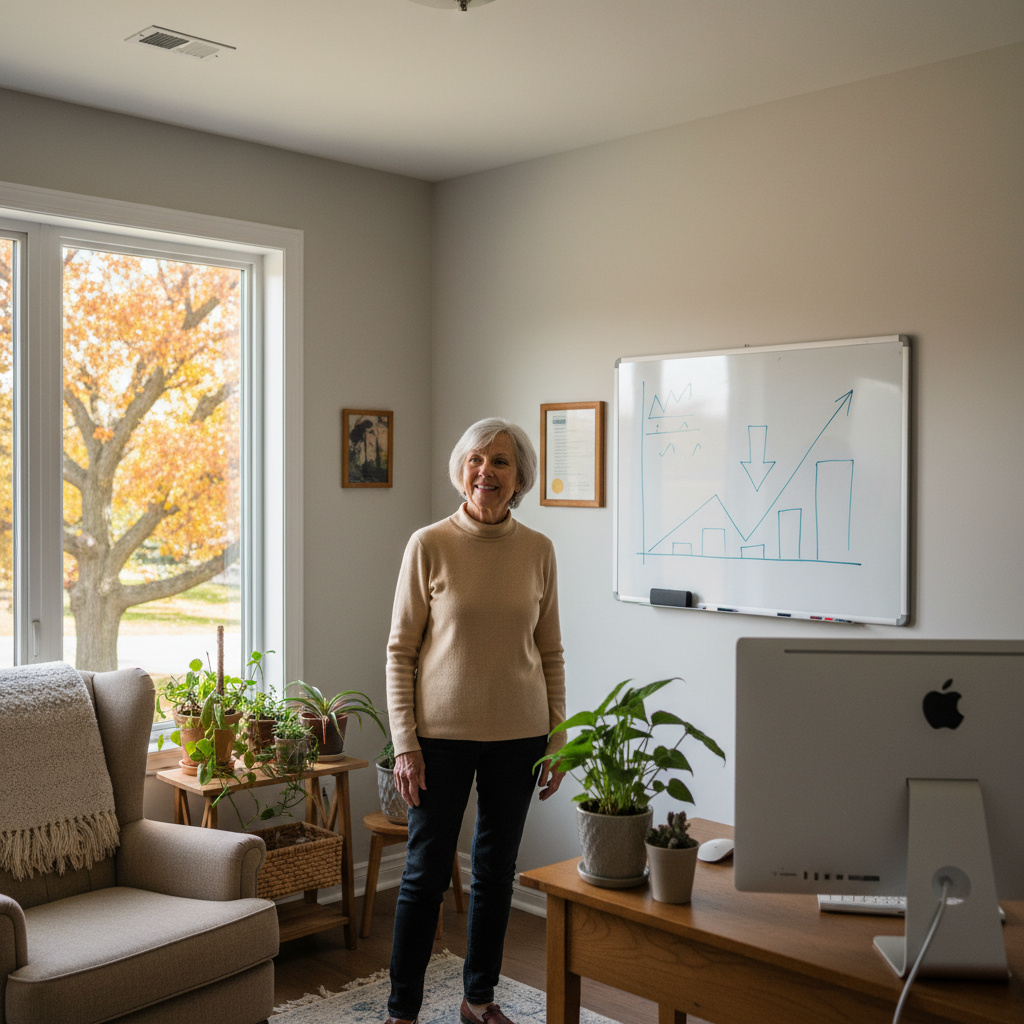
The Scaling Problem for Retirement Business Owners
Many retirees with successful micro-businesses face a frustrating plateau. Your business generates income, but growth requires capital you don't have:
| Growth Bottleneck | What's Needed | Cost |
|---|---|---|
| Can't hire help (you're the bottleneck) | Part-time assistant or contractor | $20,000–$40,000/year |
| Outdated website limits marketing | Professional redesign, SEO, paid ads | $5,000–$15,000 |
| Inventory or materials shortage | Stock to fulfill larger orders | $5,000–$25,000 |
| Technology upgrades needed | Better software, equipment | $3,000–$10,000 |
| Opportunity for larger contracts | But need upfront capital to deliver | $10,000–$50,000 |
Without this capital, your $25,000/year micro-business stays at $25,000—when it could scale to $60,000–$100,000+ with proper investment.
A reverse mortgage provides the working capital to transition from "side hustle" to "significant retirement income stream."
Real-World Scenario: Patricia's Virtual Assistant Business
Patricia (68) spent 35 years as an office manager. When she retired at 62, she started offering virtual assistant services to small businesses—scheduling, email management, invoicing, customer communication. Her rate: $40/hour.
Year 1 (2022): She works 10 hours/week, earns $20,800/year. Her pension is $32,000/year. Total income: $52,800/year. Comfortable but modest.
Year 3 (2024): She now has 12 regular clients with 25 hours/week of work, earning $52,000/year. Clients want more hours of her time, but she's at capacity working alone.
The ceiling: She can't work 50+ hours/week at age 68. She needs a business structure, not just a solo service.
The solution: Patricia's home is worth $625,000. She takes a $35,000 reverse mortgage to:
- Hire a part-time virtual assistant (student or semi-retired person): $15,000/year
- Invest in workflow automation software: $3,000
- Improve her website and online presence: $5,000
- Marketing and client outreach: $4,000
- Working capital buffer: $8,000
Result: Patricia now manages a small 2-person team. Client capacity increases 150%. Her business revenue grows from $52,000 to $125,000. She takes $70,000 (28 hours/week overseeing the assistant), her assistant takes $40,000 (16 hours/week), and the business has $15,000 annual profit.
Her total retirement income: $32,000 (pension) + $70,000 (business) = $102,000/year. The reverse mortgage investment has expanded her income by $50,000/year—paying for itself in less than one year.
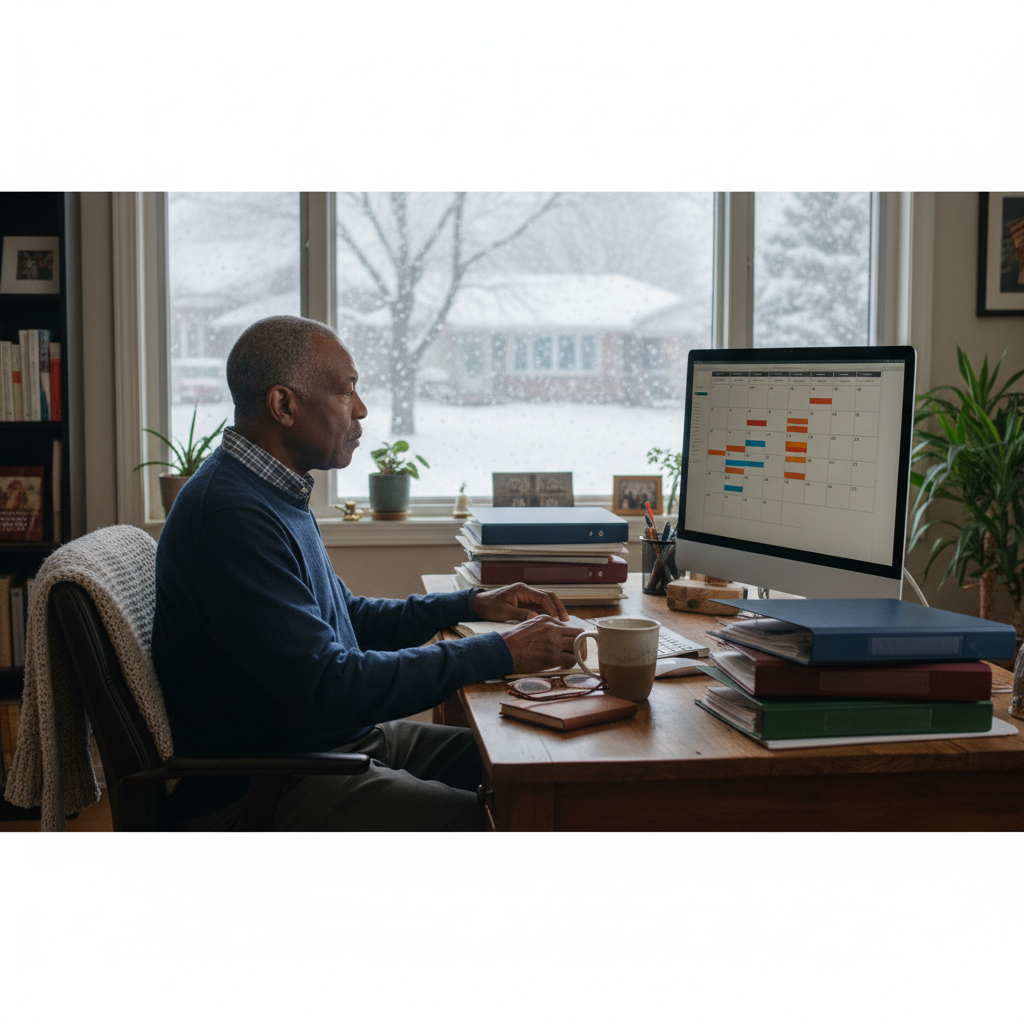
Critical Categories for Growth Investment
Before using reverse mortgage capital, identify exactly where growth will happen:
✓ Hire complementary help: Administrative assistant, bookkeeper, technical specialist who handles work you can't do (so you focus on client relationships and strategy)
✓ Improve technology/efficiency: Software, automation, upgraded equipment that increases output per hour
✓ Marketing and client acquisition: Website improvements, online advertising, professional development that attracts larger contracts
✓ Inventory or materials: For product-based businesses, stock to fulfill larger orders
✗ Personal expenses disguised as business: Vacation property, luxury car, personal gifts (defeats the purpose and creates tax problems)
✗ Speculative expansion: New service lines without evidence customers want them
✗ Keeping all capital to yourself: Growth requires sharing—either with employees or reinvestment
The difference between successful growth and wasted investment is discipline: invest only in areas directly tied to increased revenue or efficiency.
Tax Implications and Business Structure
According to the CRA, reverse mortgage proceeds are loan advances (not income) and are 100% tax-free. Business growth expenses funded by a reverse mortgage generate normal business deductions:
- Employee/assistant wages: Fully deductible
- Software and technology: Deductible capital or operating expense
- Marketing and advertising: Deductible
- Interest on reverse mortgage: If funds are invested in income-producing business, interest may be deductible (consult a tax accountant)
Consult an Ontario accountant before scaling your business. Simple sole-proprietor structure may not be optimal once revenue exceeds $75,000–$100,000. A corporate structure might provide better tax efficiency.

Managing Risk While Scaling
Scaling increases business risk (more employees, larger contracts, more complexity). Manage this:
✓ Start with part-time help — hire a contractor or part-time employee before expanding to full-time ✓ Test new services — take on 1–2 new client types before fully investing in that service ✓ Maintain cash reserves — reverse mortgage capital should include 3–6 months of operating expenses as buffer ✓ Liability insurance — upgrade your business insurance to reflect increased revenue and employee exposure ✓ Accounting support — hire a bookkeeper or accountant to manage growing complexity
A reverse mortgage provides capital, but disciplined business management ensures scaling succeeds.
Frequently Asked Questions
How much capital is typically needed to scale a $25,000/year business?
Most micro-business owners need $25,000–$50,000 to hire help and improve systems. Larger businesses ($50,000+/year) might need $50,000–$100,000 for significant scaling.
Should I hire an employee or a contractor for scaling help?
Start with a contractor (lower commitment, flexibility). Once you've validated the need and have stable revenue growth, transition to an employee for better control and training.
What if my scaling investment doesn't generate expected growth?
Unlike equity investment, a reverse mortgage is a loan—you still own your business 100%. If growth is slower than expected, you can adjust expenses and continue running the business without the distraction of investor relations. You have flexibility.
Could scaling my business affect my OAS or GIS benefits?
If you're receiving means-tested benefits like GIS, increased business income may affect your eligibility. Consult Service Canada before scaling significantly. Most retirees' modest business income ($30,000–$60,000/year) has minimal impact on benefits.
Next Steps
Your proven micro-business has growth potential. A reverse mortgage can provide the working capital to scale from side-hustle to significant income stream. Speak with Rick Sekhon Reverse Mortgages to explore how much capital you could access for business growth.
Ready to Learn More?
Get the free Ontario Reverse Mortgage Guide and find out exactly how much you could unlock from your home.
Get My Free Guide →Related Articles
Reverse Mortgage for Home-Based Craft or Artisan Business
Fund your retirement artisan business setup with a reverse mortgage. Ontario guide for senior entrepreneurs launching home-based craft ventures.
Read →Reverse Mortgage for Home Office Setup: Creating a Productive Retirement Workspace
Fund your home office with a reverse mortgage. Create a productive retirement workspace for consulting, hobbies, or part-time work in Ontario.
Read →Reverse Mortgage for Consulting Transition: Funding Your Independent Business
Learn how Ontario seniors can use reverse mortgages to fund a consulting business transition, covering startup costs and cash flow during the early phases.
Read →