
Reverse Mortgage for Home-Based Craft or Artisan Business
Fund your retirement artisan business setup with a reverse mortgage. Ontario guide for senior entrepreneurs launching home-based craft ventures.
You've spent 40 years working for others, and now you want to turn your passion — woodworking, jewelry, pottery, painting, weaving — into a home-based business in retirement. The startup costs for a proper workshop and equipment feel daunting on a fixed income. A reverse mortgage lets you fund your artisan business while maintaining cash flow, turning your passion into income or legacy.
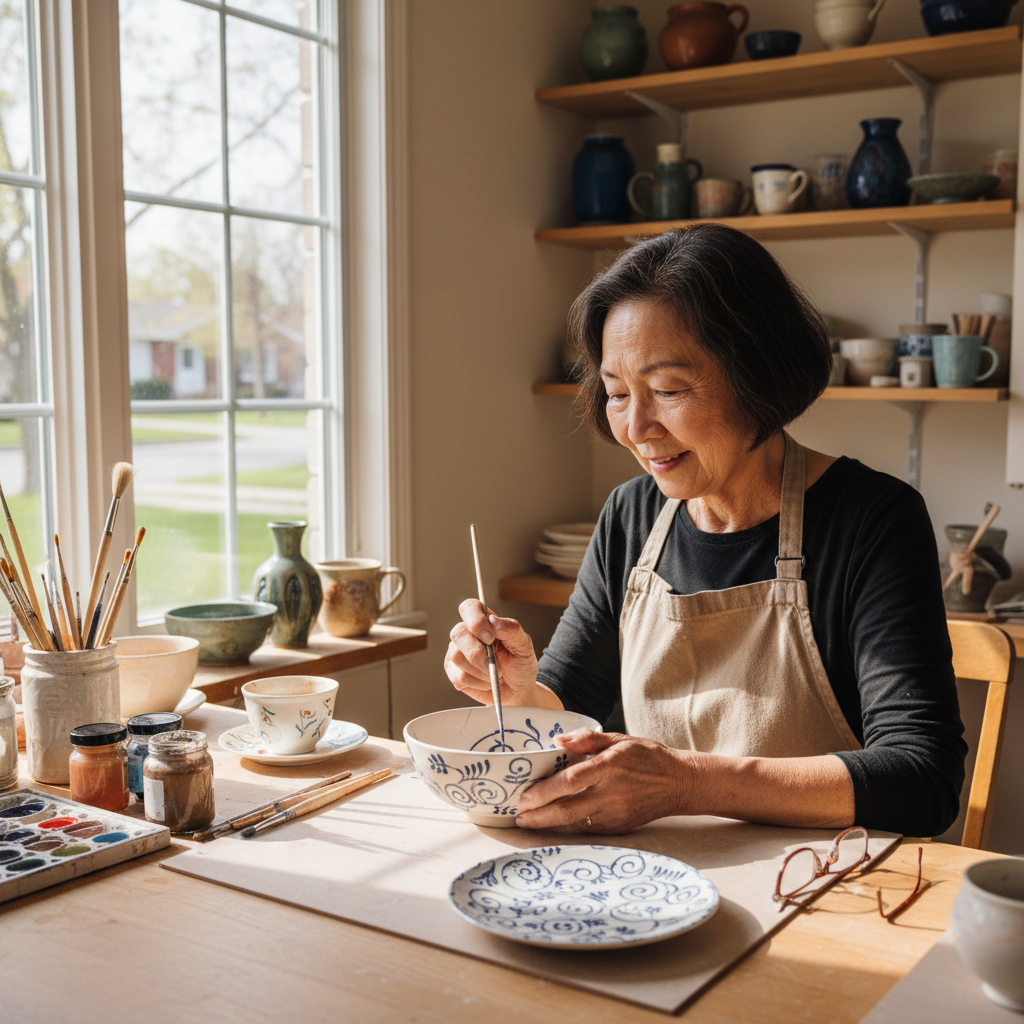
Why Retirees Are Launching Home Craft Businesses
The cottage industry of home-based artisan businesses is booming among Ontario retirees. A 2025 Statistics Canada survey found that 23% of retirees aged 65–75 are engaged in some form of self-employment or side business, up from 12% a decade ago.
Why this shift?
- Extra income: Social Security alone doesn't meet lifestyle expectations
- Purpose: Retirement feels empty without meaningful work
- Legacy: Creating something tangible and lasting
- Flexibility: Work on your own schedule, not a boss's
- Market opportunity: Handmade/artisan goods command premium prices online and at local markets
Ontario specifically has a thriving artisan market. Etsy shop owners, craft fair vendors, and local studio artists are building sustainable income streams in their 60s and 70s.
The Startup Cost Reality for Home Craft Businesses
Before you can sell your first item, you need:
Setup Costs by Craft Type
| Craft Type | Equipment & Tools | Workshop Space Setup | Licensing & Insurance | Total Initial Cost |
|---|---|---|---|---|
| Woodworking | $3,000–$8,000 (saw, sander, lathe, workbench) | $2,000–$5,000 (workbench, ventilation) | $500–$1,500 | $5,500–$14,500 |
| Jewelry (metal) | $2,000–$5,000 (kiln, torch, tools) | $1,000–$3,000 (workbench, safety) | $300–$800 | $3,300–$8,800 |
| Pottery/Ceramics | $3,000–$7,000 (wheel, kiln) | $2,000–$4,000 (studio setup) | $400–$1,000 | $5,400–$12,000 |
| Textile Arts (weaving) | $2,000–$6,000 (loom, tools) | $1,500–$3,000 (space) | $300–$800 | $3,800–$9,800 |
| Painting/Printmaking | $1,000–$3,000 (supplies, press) | $1,000–$2,000 (studio area) | $300–$600 | $2,300–$5,600 |
| Leatherworking | $1,500–$4,000 (cutting, stamping tools) | $1,000–$2,500 (workspace) | $300–$800 | $2,800–$7,300 |
Plus ongoing costs:
- Inventory materials: $200–$500/month
- Utilities (heating, electricity for kiln/equipment): $100–$300/month
- Insurance (product liability): $150–$400/month
- Website/marketing: $50–$200/month
- Shipping supplies: $100–$300/month
Total first-year cost: $8,000–$20,000+ depending on craft type and ambition level.
For a retiree on fixed income (CPP/OAS ~$2,000–$3,000/month), saving $8,000–$15,000 takes 4–8 months of cutting discretionary spending. A reverse mortgage accelerates this to immediate action.
Real Example: The Potter's Second Act
Margaret, 68, spent 35 years as a teacher in Ontario. She has a lifelong passion for pottery but never had time to pursue it seriously. She's now retired with CPP ($1,500/month) and a teacher's pension ($1,200/month) = $2,700/month total income.
Her home (paid off) is worth $550,000. Her expenses are $1,900/month (property tax, utilities, food, healthcare).
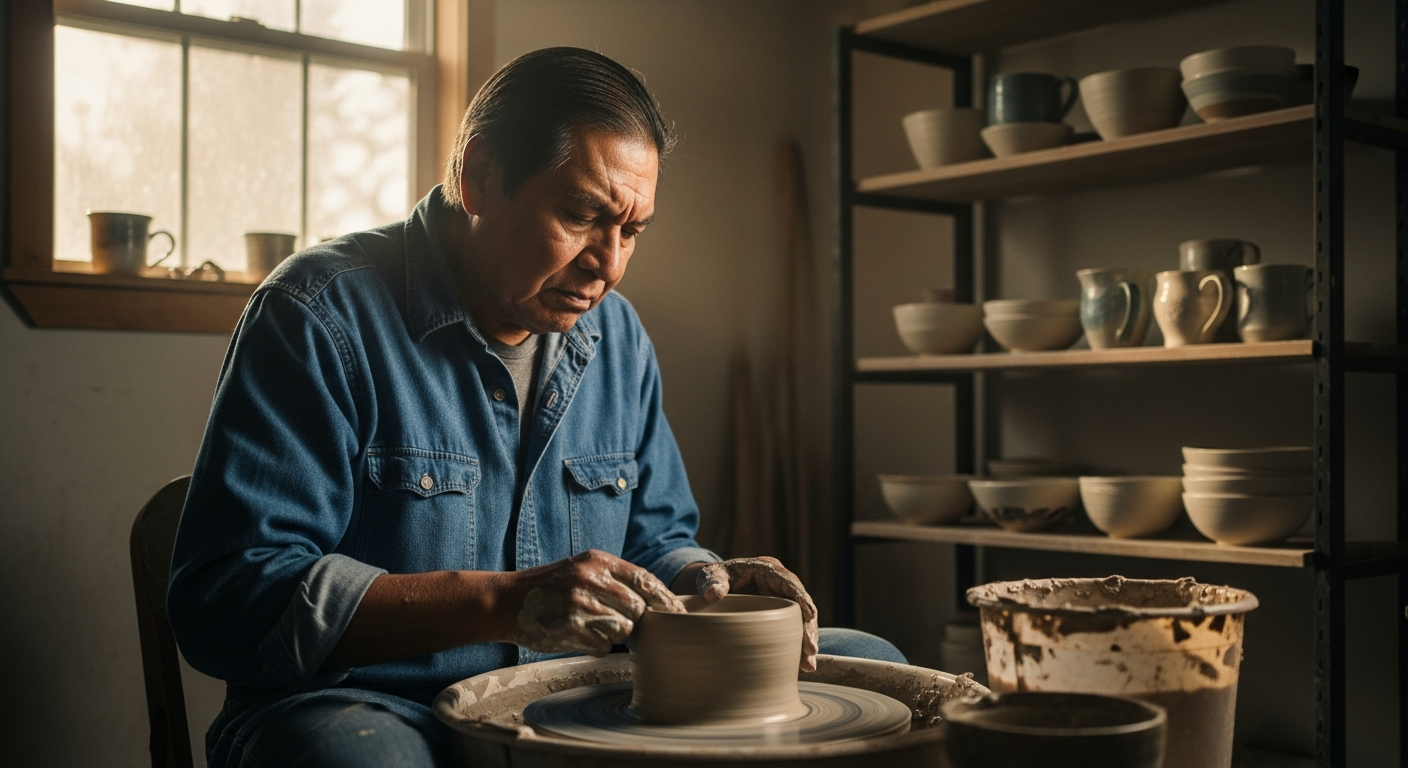
Margaret's dream: Set up a pottery studio in her garage, create handmade dinnerware sets, and sell through craft fairs, galleries, and an online Etsy shop.
The reality: She needs:
- A kiln ($3,500)
- A pottery wheel ($2,000)
- Workbench and tools ($1,500)
- First inventory of clay, glazes, supplies ($1,500)
- Website and branding ($1,000)
- Total: $9,500
Saving $9,500 on her current budget would mean cutting $200/month for 48 months. That's 4 years of waiting while she watches clay supplies gather dust.
Alternative: Margaret gets a $10,000 reverse mortgage and launches her studio immediately.
Business plan:
- Year 1: Produce 200 handmade dinnerware sets, sell at $180/set = $36,000 gross revenue
- Less materials, Etsy fees, craft fair booth costs: ~$15,000 expenses
- Net income from pottery: $21,000 (first year, ramping up)
- Plus her regular income: $2,700/month = $32,400/year
- Total Year 1 income: $53,400
Her fixed expenses are $1,900/month ($22,800/year). She's profitable immediately, and she's using the $10,000 reverse mortgage as an accelerator, not a long-term debt burden.
Within 12–18 months, Margaret has fully paid back the reverse mortgage from pottery income and is operating cash-flow positive for the remaining years of her life.
Reverse Mortgage vs. Other Funding Options for Artisan Business
| Funding Source | Cost | Requirements | Best For |
|---|---|---|---|
| Reverse mortgage | 6.5–7.3% interest | Age 55+, home ownership | Immediate funding, no monthly payments |
| Personal savings | 0% | Have savings | Low-risk, no debt |
| Bank personal loan | 7–10% interest | Employment income | Shorter repayment timeline |
| HELOC | 7.5%+ interest | Strong credit, some income | Flexible revolving credit |
| Family loan | 0% (typically) | Family willing to help | No interest, but relationship risk |
| Small business loan (SBA-style) | 6–9% interest | Business plan, financial projections | Larger amounts, specific requirements |
| Kickstarter/Crowdfunding | 0% (investment model) | Product, marketing savvy | Pre-sales, brand building |
For most Ontario retirees launching home artisan businesses, a reverse mortgage is the best option because:
✓ No monthly payment (your business income may fluctuate) ✓ Competitive interest rate (better than personal loans) ✓ Quick approval (days to weeks, not months) ✓ No business plan requirement (lenders don't scrutinize your pottery skills) ✓ Flexible use of funds (equipment, inventory, marketing)
Setting Up Your Home Workshop Legally and Safely
Before you launch, address these practical matters:
Zoning and Home Business Permits
Most Ontario municipalities allow home-based businesses, but:
- Check your local zoning bylaws (some residential areas restrict business use)
- Get a home occupation permit if required (usually $50–$200 fee)
- Ensure your business doesn't create noise, traffic, or nuisance issues for neighbors
Cost: $50–$200 and a few hours of paperwork
Business Insurance (Critical)
Homeowner's insurance does NOT cover business liability. You need:
- Product Liability Insurance: Covers injuries/damage from your products ($500–$1,500/year)
- Home Business Insurance: Covers equipment and inventory in your home workspace ($300–$800/year)
- Business Liability: General liability for accidents in your workspace ($200–$600/year)
Total annual insurance cost: $1,000–$2,900
This is non-negotiable — if a customer is injured or a product causes damage, your personal homeowner's insurance will not cover it.
Self-Employment Taxes and HST
Once your artisan business generates income:
- You must report net income on your personal tax return (Line 10499)
- If you earn >$30,000/year in revenue, you must register for HST and collect 13% on sales
- You can deduct business expenses: materials, equipment depreciation, utilities (prorated for workspace), insurance, marketing
Professional assistance: A tax accountant familiar with small craft businesses will cost $500–$1,500/year but save you money in deductions and compliance.
Realistic Revenue Expectations (First Year vs. Long-Term)
Year 1: Ramping Up
- Realistic sales: 30–60 items sold at craft fairs, online, and direct (if you're good and market well)
- Revenue per item: $150–$300 depending on craft
- Year 1 gross revenue: $4,500–$18,000
- Less expenses: 50–60% of revenue (materials, marketing, fees)
- Net income: $1,800–$8,100 (highly variable)
Truth: Most artisans break even or have modest profit in Year 1. You're building reputation and customer base.
Year 2–3: Steady State
- Repeat customers: 40–50% of sales (online reviews, craft fair regulars)
- Increased efficiency: Production time per item decreases; profit margins improve
- Gross revenue: $12,000–$30,000
- Net income: $5,000–$15,000+
Year 3+: Mature Business
- Annual revenue: $20,000–$50,000+ (if you actively market)
- Net profit: $10,000–$25,000+ (depending on craft type and volume)
The takeaway: A reverse mortgage funded artisan business is a reasonable income supplement in retirement, not a path to wealth. However, it provides:
- Sense of purpose and engagement
- Supplemental income (reducing reliance on CPP/OAS)
- Creative fulfillment
- Potential legacy (your handmade work outlives you)
Tax and Benefit Implications
| Aspect | Impact |
|---|---|
| Reverse mortgage proceeds | Not taxable; used to fund business setup |
| Business net income | Taxable (you report it) |
| OAS clawback | Applies if net business income exceeds threshold (~$90,000) |
| GIS reduction | Applies if net business income exceeds GIS income limit (~$20,000) |
| CPP impact | No impact; CPP is fixed regardless of business income |
According to the CRA, self-employment income is taxable, but you can deduct all business expenses (materials, equipment, utilities-prorated, insurance, marketing). Keeping good records is essential.
Important caveat: If your artisan business generates significant net income (>$20,000/year), you may lose GIS eligibility or face OAS clawback. Speak with a tax professional to understand thresholds and plan accordingly.
Frequently Asked Questions
If my artisan business succeeds, can I expand beyond my home workshop?
Yes. Once you've validated the market and built a customer base, you might rent commercial space. The reverse mortgage funds your initial home setup; future business growth is funded from business income (or a separate small business loan, which is easier to obtain once you have profitable operations).
Do I need a business license or incorporation to operate a home craft business in Ontario?
For a sole proprietorship (simplest structure), you likely don't need formal incorporation. You register for HST once you exceed $30,000 revenue and report income on your personal tax return. Speak with a lawyer or accountant for your specific situation.
What if my home craft business doesn't generate income — am I stuck with the reverse mortgage debt?
Yes. A reverse mortgage is a loan against your home equity, regardless of business success. However, if the business is unsuccessful, you have options:
- Repay the reverse mortgage from your fixed income (slow payoff)
- Sell the home and repay from sale proceeds
- Leave it to your estate (your heirs repay when they inherit)
This is why conservative borrowing ($5,000–$10,000) is wise for business startups with uncertain outcomes.
Can I use reverse mortgage funds for inventory and then repay when I sell products?
Yes, this is an excellent use case. You borrow for inventory, produce goods, sell them, and repay from sales proceeds. If your pottery sets sell for $180 and cost $40 in materials, you're profitable per unit. A line-of-credit reverse mortgage structure supports this workflow perfectly.
Are there government grants or subsidies for seniors launching home businesses?
Ontario has limited programs. Check:
- Ontario Small Business Support Program (not senior-specific, but available)
- Local economic development offices in your municipality
- Craft council grants (Ontario Crafts Council sometimes funds member initiatives)
- IRAP (Industrial Research Assistance Program) — for product development
Most programs are modest (<$5,000) and competitive. A reverse mortgage is more reliable.
Your passion and expertise deserve a second act. A reverse mortgage lets you fund your home artisan business without years of scrimping, launching you into a creative and potentially profitable retirement venture.
Also read:
- Fund your passion project in retirement
- Consulting business transition strategies
- Home business income and retirement benefits
Get your free Ontario Reverse Mortgage Guide →
This content is for illustrative purposes only. Business success is not guaranteed. Revenue projections are illustrative and vary widely. Consult with a tax professional and business advisor before launching a home business. Call Rick Sekhon Reverse Mortgages for the best rates and more information.
Ready to Learn More?
Get the free Ontario Reverse Mortgage Guide and find out exactly how much you could unlock from your home.
Get My Free Guide →Related Articles
Fund Your Passion Project: Using a Reverse Mortgage for Creative Retirement Goals
Retirement isn't just about financial stability—it's about purpose. A reverse mortgage can fund the creative projects, hobbies, and pursuits you've deferred for 40 years.
Read →Reverse Mortgage for Consulting Transition: Funding Your Independent Business
Learn how Ontario seniors can use reverse mortgages to fund a consulting business transition, covering startup costs and cash flow during the early phases.
Read →Reverse Mortgage for Workplace Injury Recovery: Supporting Adult Child's Career Transition
Help your adult child rebuild their career after workplace injury. Learn how reverse mortgages fund recovery, retraining, and financial stability during career transition.
Read →