
Retirement Budget Planning with a Reverse Mortgage in Canada
Master retirement budget planning with a reverse mortgage in Canada. Learn how to integrate home equity into your income plan for a secure retirement.
"I did everything right — saved in my RRSP, paid off my mortgage, lived within my means — so why does my retirement budget still feel so tight?" This is the quiet frustration of thousands of Canadian retirees who discover that decades of responsible planning still leave a gap between their income and the life they envisioned. The reason is straightforward: most retirement plans account for investment income and government benefits, but ignore the single largest asset most Canadians own — their home. A reverse mortgage closes that gap.
This article is for educational purposes only and does not constitute financial advice.
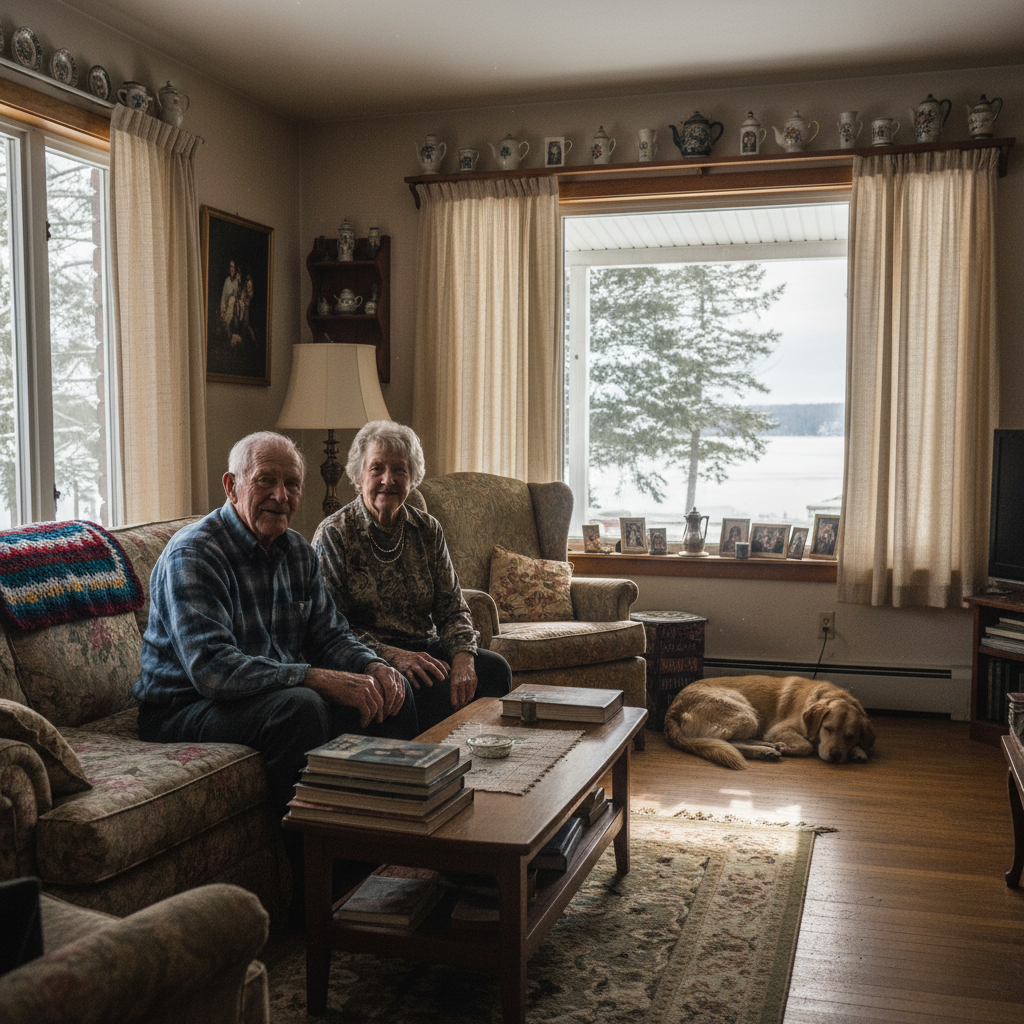
The Retirement Income Gap Most Canadians Face
The gap between what Canadian retirees need and what their traditional income sources provide is well-documented. Government benefits provide a foundation, but rarely enough on their own.
Here is what the standard retirement income sources deliver for a typical Ontario couple in 2026:
| Income Source | Annual Amount (Couple) | Monthly Amount |
|---|---|---|
| CPP (both spouses, average) | $22,000 | $1,833 |
| OAS (both spouses, full) | $18,400 | $1,533 |
| Employer pension (one spouse) | $14,000 | $1,167 |
| RRIF minimum withdrawal ($300K) | $16,800 | $1,400 |
| Total gross income | $71,200 | $5,933 |
| After tax (estimated) | $60,500 | $5,042 |
Now compare that to what a comfortable retirement actually costs in Ontario:
| Expense Category | Monthly Cost (Couple) | Annual Cost |
|---|---|---|
| Property taxes | $500 | $6,000 |
| Home insurance | $175 | $2,100 |
| Utilities (gas, hydro, water) | $400 | $4,800 |
| Groceries | $900 | $10,800 |
| Transportation (car + insurance) | $600 | $7,200 |
| Home maintenance | $400 | $4,800 |
| Health/dental (not covered by OHIP) | $350 | $4,200 |
| Phone, internet, subscriptions | $200 | $2,400 |
| Clothing and personal | $200 | $2,400 |
| Entertainment, dining, travel | $600 | $7,200 |
| Gifts and charitable giving | $200 | $2,400 |
| Total monthly expenses | $4,525 | $54,300 |
In this example, the couple technically has enough — about $500 per month in surplus. But this budget leaves almost no room for major repairs, car replacement, dental work, helping family members, or any of the unexpected expenses that inevitably arise. One $15,000 furnace replacement wipes out the surplus for two and a half years.
According to Statistics Canada, the average total spending of Canadian households headed by someone aged 65 or older was approximately $55,000 per year in the most recent Survey of Household Spending, with housing, transportation, and food representing the three largest categories.
Where a Reverse Mortgage Fits in Your Budget
A reverse mortgage does not replace your existing income sources — it supplements them. Think of it as unlocking a fourth leg of the retirement income stool, alongside government benefits, registered savings, and pensions.
CHIP (HomeEquity Bank), Equitable Bank, and Bloom Financial all offer reverse mortgage products that can be structured as monthly income, a lump sum, a line of credit, or a combination. For budget planning purposes, the monthly income option is often the most useful because it creates a predictable, recurring cash flow.
Here is what adding a reverse mortgage income stream looks like for our example couple, assuming a home valued at $650,000 and a monthly advance of $1,500:
| Income Source | Monthly (Before Reverse Mortgage) | Monthly (After Reverse Mortgage) |
|---|---|---|
| CPP + OAS + Pension | $4,533 | $4,533 |
| RRIF withdrawal (after tax) | $1,050 | $1,050 |
| Reverse mortgage income | $0 | $1,500 |
| Total monthly income | $5,583 | $7,083 |
| Monthly expenses | $4,525 | $4,525 |
| Monthly surplus | $1,058 | $2,558 |
That extra $1,500 per month — $18,000 per year — transforms a tight budget into a comfortable one. Critically, the reverse mortgage income is tax-free: it is not considered income by the Canada Revenue Agency (CRA), which means it does not push you into a higher tax bracket, trigger OAS clawback, or reduce your GIS. For complete details on tax treatment, see our reverse mortgage tax implications guide →.
The Budget Planning Framework: Five Steps
Rick Sekhon, an Ontario reverse mortgage broker, has developed a straightforward framework for helping clients integrate a reverse mortgage into their retirement budget:
Step 1: Map your guaranteed income. List all income sources that will continue for life: CPP, OAS, employer pensions, annuities. These form your income floor.
Step 2: Calculate your essential expenses. Housing costs, food, utilities, insurance, basic healthcare, transportation. These are non-negotiable.
Step 3: Identify the gap. If your guaranteed income does not cover essential expenses, you have a structural deficit. If it does, identify how much discretionary spending you want to fund.
Step 4: Determine how much of the gap registered savings can fill. Calculate how long your RRIF and TFSA can sustain withdrawals at the required rate. Be honest about longevity — planning to age 95 is prudent.
Step 5: Size your reverse mortgage to fill the remaining gap. Work with Rick Sekhon to determine the right monthly advance or credit line to bridge the shortfall without over-borrowing.
Eligibility requires being a Canadian homeowner aged 55 or older. For full eligibility details, see our reverse mortgage eligibility guide →.
Reducing RRIF Withdrawals to Save on Taxes
One of the most powerful budget strategies involves using a reverse mortgage to reduce the amount you withdraw from your RRIF each year. This has a cascading tax benefit.
Consider this scenario for a single Ontario retiree with $250,000 in a RRIF:
| Strategy | Annual RRIF Withdrawal | Reverse Mortgage Income | Marginal Tax Rate | Tax Paid on RRIF | Net Income |
|---|---|---|---|---|---|
| No reverse mortgage | $30,000 | $0 | ~26% (Ontario + federal) | $7,800 | $22,200 |
| With reverse mortgage | $15,000 | $15,000 (tax-free) | ~20% | $3,000 | $27,000 |
By cutting the RRIF withdrawal in half and replacing it with tax-free reverse mortgage income, this retiree saves $4,800 per year in taxes — a 21.6% improvement in net income. Over 10 years, that is $48,000 in tax savings.
According to the CRA, RRIF withdrawals above the annual minimum are subject to withholding tax at rates of 10% (up to $5,000), 20% ($5,001–$15,000), and 30% (over $15,000) in all provinces except Quebec. These withholdings are applied against your total tax owing at filing time.
For a complete comparison of RRIF withdrawals versus reverse mortgage income, see our RRIF vs. reverse mortgage guide →. For strategies around delaying CPP and OAS while using a reverse mortgage to bridge the gap, see our CPP/OAS delay strategy guide →.
Building a Budget That Lasts 30 Years
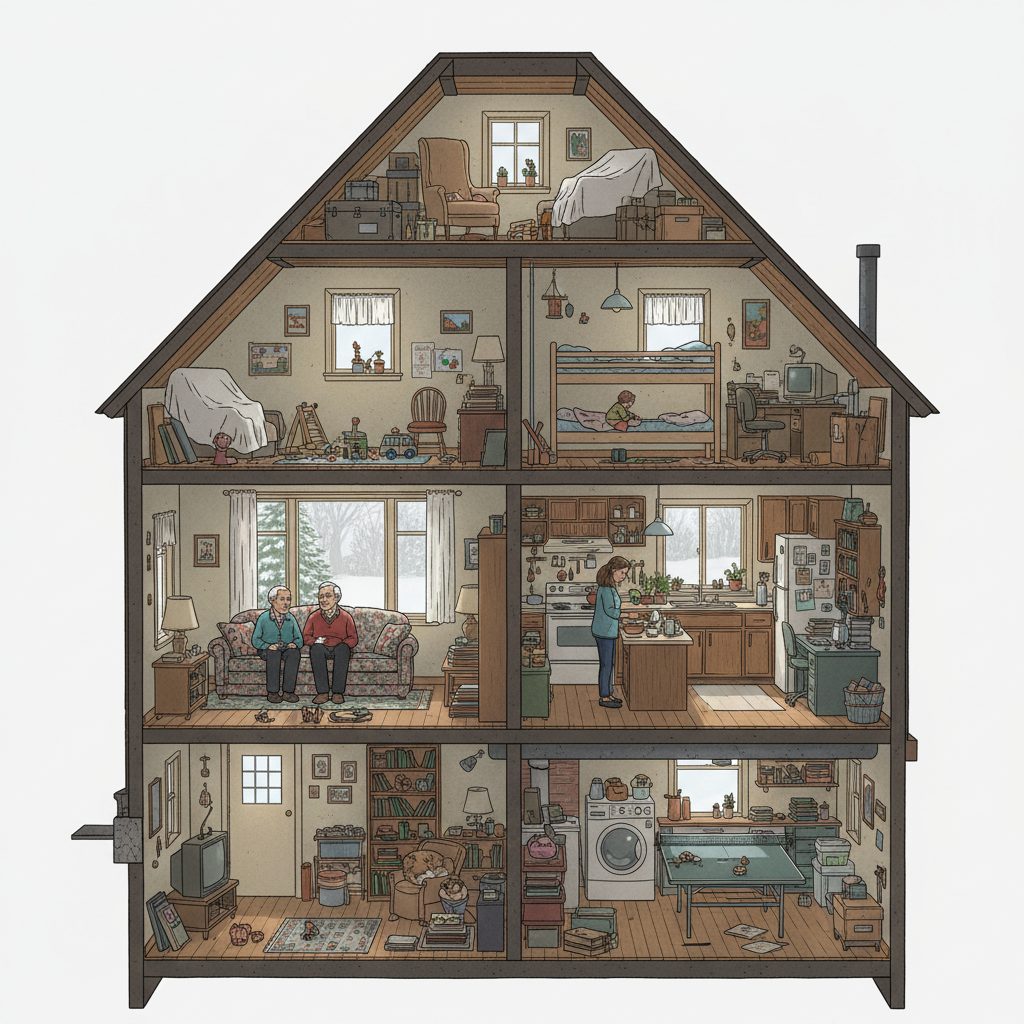
The biggest risk in retirement is not a bad year in the stock market — it is running out of money in year 25 when you still have years left to live. A reverse mortgage adds a longevity buffer that traditional plans lack.
Here is a 30-year projection comparing two approaches for a 65-year-old Ontario couple with a $650,000 home and $350,000 in registered savings:
| Year | Age | RRIF Balance (No RM) | RRIF Balance (With RM) | Reverse Mortgage Balance | Home Value (2% growth) | Total Net Worth (With RM) |
|---|---|---|---|---|---|---|
| 0 | 65 | $350,000 | $350,000 | $0 | $650,000 | $1,000,000 |
| 5 | 70 | $278,000 | $318,000 | $45,200 | $717,800 | $990,600 |
| 10 | 75 | $192,000 | $270,000 | $104,500 | $792,500 | $958,000 |
| 15 | 80 | $88,000 | $205,000 | $182,800 | $875,000 | $897,200 |
| 20 | 85 | $0 | $128,000 | $285,600 | $965,500 | $807,900 |
| 25 | 90 | $0 | $42,000 | $419,300 | $1,065,000 | $687,700 |
| 30 | 95 | $0 | $0 | $542,000 | $1,175,000 | $633,000 |
Without a reverse mortgage, the RRIF is depleted by age 85 — and the couple must rely solely on CPP, OAS, and whatever they can scrape together. With a reverse mortgage supplementing their income, the RRIF lasts until age 95, and total net worth remains substantial throughout.
The No-Negative-Equity Guarantee ensures the couple will never owe more than their home's value at repayment. For a full explanation, see our inheritance protection guide →.
Inflation-Proofing Your Budget
Inflation is the silent enemy of fixed-income retirees. CPP and OAS are indexed to inflation, but many pension plans are not, and RRIF withdrawals erode purchasing power as the underlying investments may not keep pace.
A reverse mortgage can serve as an inflation adjustment tool. If your expenses increase by $500/month due to rising costs, you can increase your reverse mortgage draw to compensate — without the tax consequences of increasing RRIF withdrawals.
Rick Sekhon often structures reverse mortgage plans with this flexibility built in: "I recommend starting with a modest monthly advance and leaving room to increase it over time. Many clients start at $1,000 per month and gradually increase to $2,000 or more as costs rise. The credit line structure makes this straightforward."
For a broader perspective on how reverse mortgages protect against inflation, see our inflation protection guide →.
Common Budget Mistakes to Avoid
Based on Rick Sekhon's experience working with Ontario retirees, here are the most common retirement budget mistakes — and how a reverse mortgage helps avoid them:
Mistake 1: Underestimating healthcare costs. OHIP covers basics, but dental work, hearing aids, prescription drugs, and physiotherapy add up quickly. Budget at least $4,000–$6,000 per year per person for uncovered healthcare costs after age 70.
Mistake 2: Ignoring home maintenance. A home that was affordable to maintain at age 55 becomes increasingly expensive as systems age. Budget $5,000–$10,000 per year for a home over 20 years old.
Mistake 3: Assuming investment returns will bail you out. Sequence-of-returns risk means a bad market in your early retirement years can permanently damage your portfolio's sustainability.
Mistake 4: Not accounting for spousal survivor income drop. When one spouse dies, CPP and OAS survivor benefits replace only a portion of the deceased's income. Having a reverse mortgage credit line provides a buffer during this transition.
Mistake 5: Treating the home as untouchable. Many retirees would rather deplete their savings and reduce their quality of life than access their home equity. This is often the costliest mistake of all.
For seniors specifically dealing with debt in retirement →, addressing high-interest obligations first can dramatically improve monthly cash flow. And for those focused on retirement income optimization →, the reverse mortgage is one piece of a larger puzzle.
Working with Rick Sekhon on Your Retirement Budget
Rick Sekhon offers a comprehensive retirement budget consultation for Ontario homeowners considering a reverse mortgage. The process includes:
- Income mapping: Review all current and future income sources, including CPP, OAS, pensions, RRIF/RRSP, TFSA, and investment income.
- Expense analysis: Identify fixed, variable, and discretionary expenses, including anticipated future costs.
- Gap identification: Calculate the monthly shortfall (or surplus) and project it over a 20–30 year horizon.
- Reverse mortgage sizing: Determine the optimal amount and structure (monthly income, credit line, or combination) to fill the gap sustainably.
- Tax optimization: Coordinate reverse mortgage income with RRIF withdrawal timing to minimize lifetime tax paid.
This consultation is free, with no obligation to proceed. Rick works with all major reverse mortgage lenders — CHIP (HomeEquity Bank), Equitable Bank, Bloom Financial, and Home Trust — to find the best fit for each client's situation.
The FCAC (Financial Consumer Agency of Canada) and FSRAO (Financial Services Regulatory Authority of Ontario) regulate the professionals and institutions involved in reverse mortgage transactions, ensuring you receive transparent and fair advice.
If you are exploring how to leave a financial legacy for your family → while still enjoying a comfortable retirement, the budget planning process can help you find the right balance.
Frequently Asked Questions
How much reverse mortgage income can I receive monthly?
The amount depends on your age, home value, and property location. As a general guideline, a 70-year-old Ontario homeowner with a $600,000 home might qualify for $1,000–$2,500 per month in scheduled advances. Rick Sekhon can provide a specific estimate based on your circumstances.
Does reverse mortgage income affect my CPP or OAS?
No. Reverse mortgage proceeds are not income under the Income Tax Act. They do not appear on your tax return, do not affect your CPP or OAS entitlement, and cannot trigger the OAS recovery tax (clawback). This is confirmed by the CRA.
Can I adjust my reverse mortgage payments over time?
This depends on the lender and product structure. Some products allow you to increase or decrease your monthly advance within your approved limit. Others require a formal modification. Rick Sekhon can explain the flexibility options available from each lender.
What happens to my budget if interest rates change?
If you chose a fixed-rate reverse mortgage, your rate is locked for the term and does not change. Variable-rate products will fluctuate with market rates. For most budget planning purposes, Rick Sekhon recommends the fixed-rate option for predictability. For a comparison of fixed and variable rates, see our rate comparison guide →.
Should I use a reverse mortgage before or after depleting my RRIF?
In most cases, using a reverse mortgage earlier — to reduce RRIF withdrawals rather than replace them — produces a better tax outcome. This allows your RRIF investments to compound longer while reducing your annual taxable income. The optimal timing depends on your specific tax situation.
How does a reverse mortgage affect my estate?
The outstanding balance (including accrued interest) is repaid from the home's sale proceeds when the last borrower moves out or passes away. The remaining equity goes to your estate. With conservative borrowing, many clients leave substantial equity for their heirs even after 15–20 years of reverse mortgage income. For current rate information, see our interest rates guide →.
Ready to build a retirement budget that actually works? Rick Sekhon offers free, no-obligation consultations for Ontario homeowners.
Ready to Learn More?
Get the free Ontario Reverse Mortgage Guide and find out exactly how much you could unlock from your home.
Get My Free Guide →Related Articles
Bridging the Pension Income Gap with a Reverse Mortgage in Canada
Bridge the pension income gap with a reverse mortgage in Canada. Learn how tax-free home equity supplements CPP, OAS, and workplace pensions for seniors.
Read →RRIF Drawdowns vs Reverse Mortgage: Retirement Cash Flow Planning
RRIF drawdown vs reverse mortgage for retirement cash flow — which strategy preserves more wealth? Ontario-focused guide with OAS clawback scenarios and tax analysis.
Read →How to Supplement CPP and OAS with a Reverse Mortgage in Canada
Ontario retirees: learn how a reverse mortgage creates tax-free income to supplement CPP and OAS without triggering clawbacks or affecting GIS eligibility.
Read →