
Reverse Mortgage for Purchasing Accessible Housing: Finding the Right Home in Ontario
Use a reverse mortgage to buy an accessible home designed for aging in place. Complete guide to purchasing accessible housing in Ontario after 55.
Are you ready to move to a home that's already accessible and doesn't require expensive renovations? Many Ontario seniors assume they must choose between staying in an aging home or downsizing to a small condo. A reverse mortgage offers a third path: buying an already-accessible home that suits your current and future needs.
This article is for educational purposes only and does not constitute financial advice.
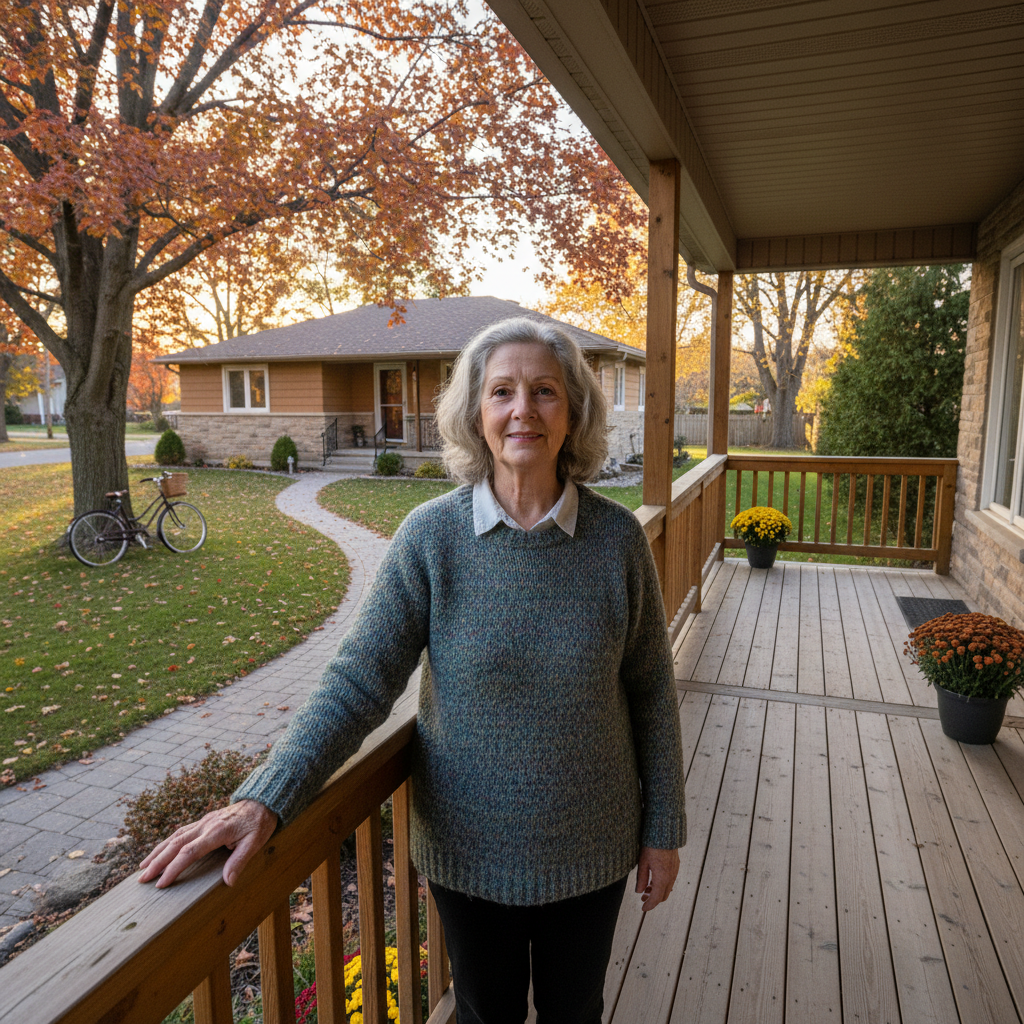
Aging in place is a powerful goal—staying in a home you love, in a community you know, as you grow older. But not all homes support that vision. A house built in the 1970s with narrow hallways, multiple stairs, and steep entry ramps may force you to renovate significantly or move away.
Purchasing an already-accessible home eliminates this dilemma. And a reverse mortgage makes it possible without burdening yourself with a traditional 25-year mortgage payment in retirement.
Why Purchase Accessible Housing in Retirement?
The Real Costs of Aging-in-Place Renovations
If your current home isn't accessible, you face two paths: renovate or relocate. Renovation costs can be substantial:
| Modification Type | Typical Cost in Ontario | Urgency |
|---|---|---|
| Ramp installation (4–8 feet) | $800–$3,000 | High (immediate mobility) |
| Widened doorways for wheelchairs | $2,000–$8,000 | Medium (future-proofing) |
| Accessible bathroom (grab bars, walk-in shower) | $5,000–$25,000 | High (safety critical) |
| Bedroom on main floor conversion | $10,000–$40,000 | High (avoid stairs) |
| Elevator or stair lift installation | $3,000–$25,000 | Medium (depends on layout) |
| Kitchen accessibility modifications | $4,000–$20,000 | Medium (convenience and safety) |
| Total comprehensive accessibility project | $25,000–$121,000+ | Varies |
Many seniors delay these renovations because the upfront cost feels overwhelming. A reverse mortgage can unlock funds for immediate accessibility, but an alternative is simpler: purchase a home that's already accessible.
Benefits of Accessible Housing Purchase
✓ Move-in ready — No contractor delays or ongoing renovations. Start your retirement immediately.
✓ Predictable costs — No budget overruns common with renovations. You know the total property cost upfront.
✓ Future-proofed design — An accessible home supports you for 10, 15, or 20+ years of aging, not just today.
✓ Lower stress — Renovations are disruptive. Buying accessible eliminates months of dust, noise, and disruption.
✓ Retain equity — Some renovations don't return full value in resale. Accessible homes typically maintain or appreciate in value.
How a Reverse Mortgage Enables Accessible Home Purchase
A reverse mortgage allows homeowners 55+ to unlock home equity without selling the current property or taking a traditional mortgage payment. For purchasing an accessible home, this creates a pathway:
The Accessible Home Purchase Strategy
Step 1: Access your current home's equity Your home is worth $500,000 with $100,000 remaining mortgage. A reverse mortgage lets you access approximately $175,000–$195,000 in equity (55–59% of home value).
Step 2: Repay your existing mortgage Use reverse mortgage funds to pay off the remaining $100,000 mortgage. This frees up the property and any future appreciation.
Step 3: Purchase or contribute to an accessible home Use the remaining $75,000–$95,000 as a down payment or contribution toward an accessible home. Pair this with a traditional mortgage for the remaining purchase price, or use it as a substantial down payment to reduce traditional mortgage burden.
Step 4: Potentially keep or sell your original home If you keep the original property, it's now mortgage-free and can be rented out, held for adult children, or sold later. If you sell, proceeds go to your estate or heirs.
Real Example: Robert and Linda's Story
Robert, 62, and Linda, 61, own a 2-bedroom bungalow in Mississauga worth $580,000 with a $95,000 remaining mortgage. Robert's arthritis is worsening, and stairs are becoming difficult. They found a single-story accessible home in their neighbourhood for $520,000—with an open floor plan, accessible bathroom, zero-step entry, and wider doorways.
Using a CHIP Life Mortgage reverse mortgage on their original property, they accessed $210,000 in equity. After paying off their $95,000 mortgage, they had $115,000 for a down payment on the accessible home. They financed the remaining $405,000 with a traditional 5-year mortgage at a competitive rate.
Result: They moved into an accessible home within 8 weeks, eliminated the stress of managing two properties, and positioned themselves for aging in place.
Finding Accessible Housing in Ontario
Where to Search
| Resource | Type | Best For |
|---|---|---|
| Real Estate Agent (age-friendly specialist) | Professional search | Comprehensive market knowledge |
| AARP Ontario / Age-Friendly Housing | Non-profit guides | Information on communities designed for aging |
| Local health authorities | Government resources | Seniors' housing programs and subsidies |
| MLS listings (filter by "accessible" keyword) | Online search | Homes already marketed as accessible |
| Builder new-construction programs | New homes | Purpose-built accessible designs |
Key Features of Accessible Homes
When touring homes, prioritize these features:
✓ Zero-step entry — No stairs at the front or side entrance
✓ Wide hallways and doorways — Minimum 36–48 inches for wheelchair access or future walker use
✓ Main-floor bedroom and bathroom — Avoid stairs for sleeping, showering, toileting
✓ Accessible kitchen — Lowered counters, open space under sink for wheelchair clearance
✓ Accessible bathroom — Walk-in shower or tub with grab bars, accessible toilet height, roll-in design
✓ No split-level layout — Single-story or all living on one floor is ideal
✓ Adequate lighting — Bright, well-lit rooms reduce fall risk for vision-impaired seniors
✓ Parking considerations — Accessible driveway or nearby street parking (no distant garage)
Combining Reverse Mortgage + Traditional Mortgage
Most accessible home purchases involve both a reverse mortgage (on your current property) and a traditional mortgage (on the new home). Here's how lenders view this:
Lender Considerations
-
Reverse mortgage lenders (CHIP, Equitable Bank, etc.) approve based on home equity, age, and property type—not your ability to pay a monthly mortgage.
-
Traditional mortgage lenders (banks, credit unions) will assess the new home purchase using income, credit, and debt-to-income ratios. The presence of a reverse mortgage on another property may be noted but typically doesn't disqualify you if you have sufficient retirement income.
-
Multiple mortgages — You can hold both a reverse mortgage (current home) and a traditional mortgage (new home) simultaneously, though this requires careful qualification.
According to FSRAO (Financial Services Regulatory Authority of Ontario), reverse mortgages must be the first mortgage on the property. If you're buying a new home with a traditional mortgage first, the reverse mortgage remains on your original property, not the new one.
Important Considerations
✗ Carrying two properties temporarily — If you keep your current home while buying accessible housing, you'll pay taxes, insurance, and maintenance on both until one is sold.
✗ Market timing risk — If you're selling your current home to fund the purchase, a market downturn could reduce equity available for the new home.
✗ Strain on retirement income — Even though a reverse mortgage requires no monthly payment, a traditional mortgage on the new home will. Ensure your retirement income supports this payment.
✗ Complexity in estate planning — Two properties and two mortgages require clear wills and beneficiary designations to avoid confusion.
Frequently Asked Questions
Can I use a reverse mortgage to purchase a new home directly?
Not directly. Lenders typically require the reverse mortgage to be on an existing property with established equity. Once you unlock that equity, you can use it as a down payment on a new home, which you'd finance separately.
What if I want to downsize to a smaller accessible home?
If your current home is worth more than the accessible home you want to buy, a reverse mortgage works perfectly. You'll have funds left over after purchase. Consult with Rick Sekhon about structuring this to maximize your financial flexibility.
Will I owe capital gains tax on selling my current home?
No. Your principal residence in Ontario is exempt from capital gains tax, regardless of profit or how it's financed. If you're keeping your current home and buying a second property, only the new home qualifies for principal residence exemption.
What happens to the reverse mortgage if I sell my current home?
The reverse mortgage must be repaid when you sell. Proceeds from the sale are used to settle the loan. Any remaining equity goes to you or your estate.
Are accessible homes more expensive than regular homes?
Not necessarily. Prices depend on location, size, and market conditions. An accessible home in an established neighbourhood may cost less than a fixer-upper requiring extensive renovation.
Action Steps: Getting Started
Step 1: Get a property assessment Have your current home appraised to understand your available equity.
Step 2: Consult with Rick Sekhon A reverse mortgage specialist will explain how much you can access and your borrowing options for purchase or renovation.
Step 3: Engage a real estate agent experienced with senior housing Look for agents who specialize in age-friendly or accessible homes in your preferred Ontario neighbourhood.
Step 4: Pre-qualify for a traditional mortgage Before house hunting, get pre-qualification from your bank or credit union to know your budget for the accessible home purchase.
Step 5: Obtain independent legal advice Required by Ontario law before closing a reverse mortgage. Your lawyer ensures you understand all terms and implications.
Step 6: Tour accessible homes and make your move Once approved, you're ready to purchase your new accessible home.
Get your free Ontario Reverse Mortgage Guide →
Speak to a licensed mortgage professional. Independent legal advice is required before closing a reverse mortgage in Ontario.
This content is for illustrative purposes only. Rates may vary. Call Rick Sekhon for the best rates and more information.
Consult a qualified tax advisor for guidance specific to your situation.
Ready to Learn More?
Get the free Ontario Reverse Mortgage Guide and find out exactly how much you could unlock from your home.
Get My Free Guide →Related Articles
Reverse Mortgage vs Downsizing: Which Is Right for You?
Compare reverse mortgages and downsizing as strategies to access home equity. Explore pros, cons, and scenarios for each option.
Read →Reverse Mortgage for Home Renovations: Aging in Place Guide for Ontario Seniors
Learn how to use a reverse mortgage to fund home renovations and modifications that let you age in place safely and comfortably in your Ontario home. Includes cost examples and step-by-step process.
Read →Aging in Place with a Reverse Mortgage: Home Modification Guide
How Ontario seniors can fund aging-in-place home modifications with a reverse mortgage — costs, top modifications, grants, and a complete planning guide.
Read →