
Reverse Mortgage to Prevent Forced Home Sale: When Staying Home Matters Most
Facing financial pressure to sell your home? Learn how a reverse mortgage can help you stay in your Ontario home instead of forced selling.
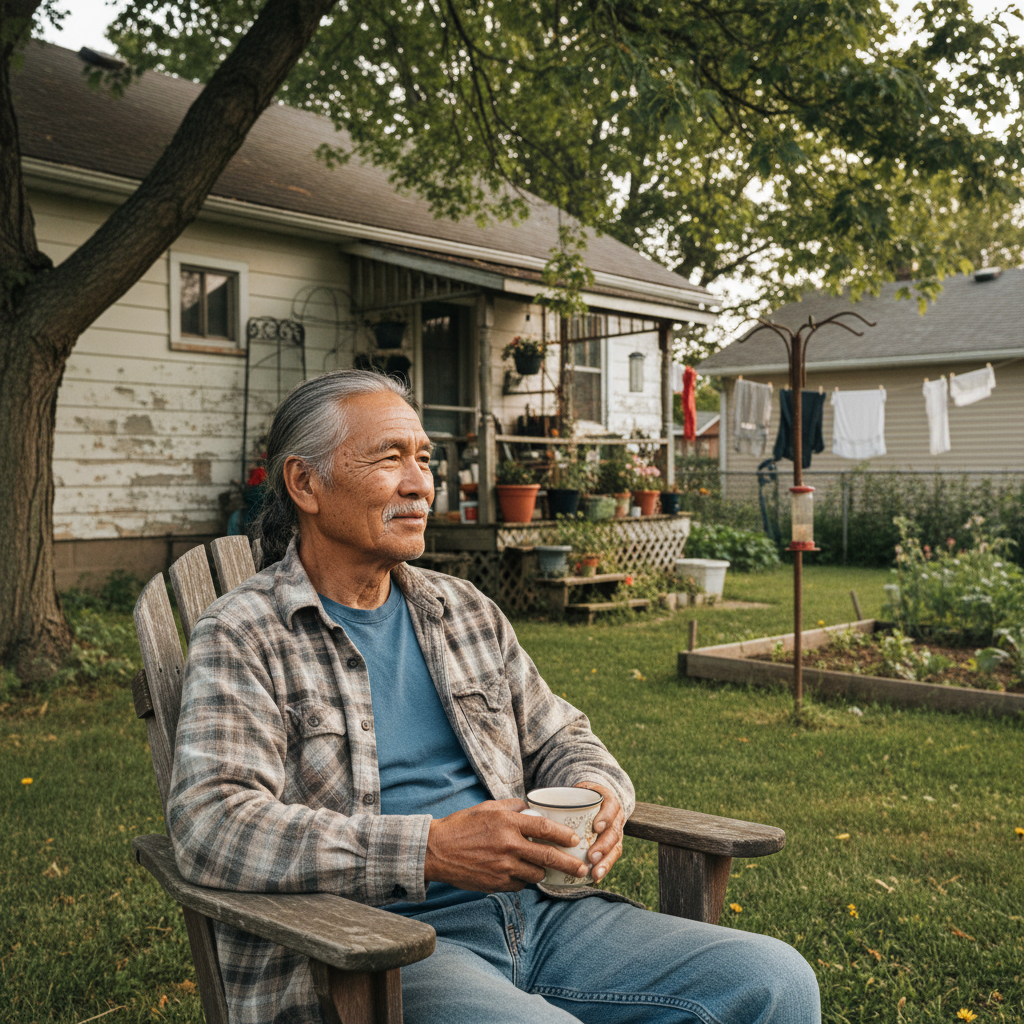
Your home is more than a financial asset—it's your sanctuary, your independence, and often the anchor of your life. For many Ontario seniors, the thought of being forced to sell feels like losing control. A reverse mortgage could be the tool that lets you stay.

The Forced Sale Scenario: When Staying Home Becomes a Choice
Seniors face forced selling situations for different reasons, and not all of them are purely financial. Some face:
- Property tax arrears — falling behind on taxes creates a debt that can trigger a lien or forced sale
- Unexpected repair costs — a major roof, foundation, or HVAC failure that you can't afford without selling
- Medical or care expenses — the cost of at-home care, medical equipment, or travel for treatment strains your finances
- Loss of a spouse's income — when one partner passes or moves to long-term care, household income drops dramatically
- Rising property taxes — Ontario property assessments climbing, creating unaffordable annual bills
- Mortgage stress after career interruption — job loss, illness, or injury that disrupts your ability to make payments
The common thread: You could afford to stay if you could access cash without selling. That's exactly what a reverse mortgage does.
Understanding Forced Sale vs Choice to Downsize
This is crucial to understand because a forced sale and a choice to downsize are fundamentally different.
| Aspect | Forced Sale | Choice Downsize |
|---|---|---|
| Reason | Financial crisis, legal obligation, health emergency | Lifestyle change, want smaller space, simplify life |
| Timeline | Urgent (weeks to months) | Flexible (months to years) |
| Leverage in negotiation | Weak (lender/creditor in control) | Strong (you choose when/to whom) |
| Your emotional state | Distressed, reactive | Thoughtful, intentional |
| Home condition | May be compromised (deferred maintenance) | Typically well-maintained |
| Proceeds after sale | Often depleted by legal/sale costs | Cleaner, more control over use |
If you're facing a forced sale, a reverse mortgage might be the difference between losing your home on someone else's timeline and keeping it on your own terms.
How a Reverse Mortgage Prevents Forced Sale
Scenario: Margaret in Mississauga
Margaret, 73, has lived in her $725,000 home for 42 years. It's fully paid. Two years ago, her husband died, and her household income dropped by $3,200/month from his pension. She's managing her own CPP and OAS ($2,100/month), but property taxes have climbed to $850/month, and she just received a notice that her 35-year-old roof needs replacement—$18,000.
Without action, Margaret faces:
- Month 1-2: Roof leak causes water damage
- Month 3: She can't afford emergency repairs; contractors threaten to place a lien
- Month 6: Property becomes uninsurable due to roof damage
- Month 12: Lender (if mortgaged) or municipality could initiate forced sale
Margaret's reverse mortgage solution: She applies for a $150,000 reverse mortgage line of credit (she qualifies for up to $360,000 given her age and home value). She pays the $18,000 for the roof immediately, keeps $120,000 as an emergency fund for property taxes and maintenance, and remains in her home. No monthly payments. No forced sale. She stays.
According to the Financial Consumer Agency of Canada, property tax arrears are one of the top reasons seniors lose their homes. A reverse mortgage accessed proactively can prevent this crisis entirely.
The Cases Where a Reverse Mortgage Saves Your Home
Case 1: Property Tax Arrears
Ontario has a Property Tax Arrears Payment Assistance Program for some seniors, but eligibility is limited. A reverse mortgage lets you access funds immediately to catch up on taxes before a lien is placed.
Amount needed: Usually $5,000-$30,000 depending on arrears and property value
Timeline: Reverse mortgage funds in 30-45 days; property tax payment can happen immediately
Outcome: Avoid lien, keep your home, maintain credit
Case 2: Critical Home Repairs
Homes built in the 1950s-1980s now need major systems replaced: roofs, furnaces, foundations. These often cost $10,000-$50,000. If you can't afford them and the home becomes unlivable or uninsurable, selling becomes forced.
Amount needed: Depends on repair (roof $15,000-$25,000, foundation $10,000-$60,000, HVAC $8,000-$15,000)
Timeline: Reverse mortgage closes quickly; you can negotiate with contractors to wait 4-6 weeks
Outcome: Home restored, you stay, value preserved
Case 3: Healthcare Costs
Home care, medical equipment, or travel for specialized treatment can drain retirement savings fast. Many seniors think they must sell to afford care. A reverse mortgage lets you fund care while staying home.
Amount needed: Home care averages $25,000-$60,000/year depending on intensity; a few years of funding = $50,000-$150,000
Timeline: Reverse mortgage accessed as line of credit or monthly draws
Outcome: Access to quality care without selling your sanctuary

The Alternative: Why Downsizing Isn't Always Better
Many people assume "if you can't afford it, sell and downsize." But downsizing has hidden costs and risks that often offset the equity you gain:
| Cost/Benefit | Downsizing | Reverse Mortgage |
|---|---|---|
| Sale real estate commissions | 4-5% of sale price ($29,000-$36,000 on $725K home) | 0% |
| Legal and closing costs | 1-2% ($7,000-$14,000) | 2-3% ($10,000-$15,000) |
| Emotional cost | High (leaving lifelong home) | Moderate (stay home) |
| Market timing risk | Must sell in any market condition | No urgency |
| Moving costs | $5,000-$15,000 | $0 |
| Time to close | 60-120 days | 30-45 days |
| Your lifestyle | Must adjust to new home, community | No disruption |
| Home value appreciation | Lost (you're out of the market) | Maintained (you stay) |
If you sold that $725,000 home, paid commissions and legal fees, you'd have $685,000 left. A condo in Mississauga is now $450,000-$550,000. You'd net maybe $150,000-$200,000. With a reverse mortgage, you keep your $725,000 asset growing and pay only the interest as it compounds.
When NOT to Use a Reverse Mortgage to Stay
Be honest with yourself: staying in your current home might not be the right answer if:
- The home requires constant expensive repairs — if it's an old, deteriorating property with recurring major costs, staying might drain your equity faster than you think
- You can't safely manage the home alone — if you need help with daily living, are you really able to stay safely?
- The home is too large for your current needs — maintaining 4 bedrooms and 2 bathrooms when you live alone costs real money in heating, maintenance, property tax
- Your family is telling you it's unsafe — if adult children are genuinely concerned about your ability to stay safely, listen
- You're using a reverse mortgage primarily to fund in-home care that costs more than a care facility — sometimes a care facility is actually more cost-effective
In these cases, downsizing might genuinely be better, and a reverse mortgage should only be a bridge strategy while you plan a thoughtful move.
The Financial Math: Reverse Mortgage vs Forced Sale
Let's compare outcomes for a 73-year-old homeowner facing a $20,000 roof repair with $1,800/month income from pensions.
Option 1: Forced Sale
- Home sells for $725,000
- Real estate commission (4.5%): -$32,625
- Legal/closing costs: -$8,000
- Capital gains tax (0% on principal residence): $0
- Net proceeds: $684,375
- Buy condo: -$500,000
- Down payment, legal, inspection, insurance setup: -$20,000
- Final net position: $164,375 in the bank
- New condo fees/property tax: $800-$1,000/month
- Quality of life: Changed home, changed community, changed independence
Option 2: Reverse Mortgage
- Borrow $150,000 via reverse mortgage
- Pay roof and maintain emergency fund: -$18,000
- Closing costs: -$4,500
- Current position: $127,500 available, $725,000 home still owned
- Interest accrues over 15 years: approx. $200,000
- Estate value when passed (age 88): ~$525,000 (value may have appreciated)
- Heirs receive: Approximately $525,000 minus $150,000 borrowed + $200,000 interest = $175,000
- Quality of life: Stayed home, stayed in community, stayed independent for 15 more years
According to Statistics Canada, seniors who age in place have better health outcomes, fewer falls, and lower depression rates than those who move to unfamiliar environments. The social cost of staying home can be as important as the financial cost.
Steps to Take Before Forced Sale
If you're facing a forced-sale scenario:
-
Stop and breathe. Don't make decisions in crisis mode. Forced sales rarely happen overnight; there's usually time.
-
Identify the specific threat. Is it property taxes, repairs, mortgage payments, or something else? Until you know the exact problem, you can't solve it.
-
Get a property assessment and repair estimate. Know what your home is actually worth and what repairs actually cost. Avoid guessing.
-
Talk to a financial advisor (not a lender). A fee-only financial planner can help you model reverse mortgage vs downsizing vs other options.
-
Consult an Ontario lawyer specializing in elder law. They can help protect you from predatory tactics and ensure any decision is legally sound.
-
Investigate government programs. Ontario Seniors Home Safety Tax Credit, property tax deferrals, and other programs may help. FSRAO has a list at ontario.ca.
-
Contact Rick Sekhon Reverse Mortgages for a no-obligation quote. Understand what you could access, what it would cost, and whether it solves your specific problem.
-
If you proceed with a reverse mortgage, set aside 30-40% of proceeds as an emergency fund. Don't access all available equity at once.
Quick Reference: Comparing Your Options
| Situation | Best Choice | Why | Timeline |
|---|---|---|---|
| Property tax arrears | Reverse mortgage | Fast access, prevents lien | 30-45 days |
| Major critical repair | Reverse mortgage | Keeps home functional, stays solvent | 30-45 days |
| General cash flow crisis | Reverse mortgage | Access emergency funds, no payments | 30-45 days |
| Too much home for needs | Downsize | Reduces ongoing costs | 3-4 months |
| Multiple problems + unsafe situation | Move to care facility | Solves safety + cost | 2-6 months |
| Can't decide | Reverse mortgage + delay | Buys time to think clearly | 30-45 days |
Frequently Asked Questions
Will a reverse mortgage ruin my inheritance for my children?
It will reduce it, depending on how much you borrow and how long you live. If you borrow $150,000 at age 73 and live to 90, your heirs inherit about $175,000 less than they would have. Many seniors decide that living independently for 15 more years is worth that trade-off for their children.
What if I get the reverse mortgage but don't actually need it yet?
Set up a line of credit instead of a lump sum. You pay interest only on what you actually draw. Keep it in reserve for when you need it.
Can the lender force me to sell later?
No, as long as you continue to live in the home, maintain property taxes, and keep the home in reasonable condition. The lender can only force repayment if you die, move to long-term care permanently, or let the home fall into disrepair.
What if my home value drops after I take out a reverse mortgage?
You're still protected. Canada's Reverse Mortgage Lenders follow a "no negative equity guarantee"—your estate will never owe more than the home is worth. If your home drops to $600,000 but you owe $200,000, your heirs owe only the difference, not more.
Is a reverse mortgage better than a home equity line of credit (HELOC)?
For seniors 55+, yes. HELOCs require income verification and excellent credit, and typically carry variable rates. Reverse mortgages require neither. If you're retired and your credit isn't perfect, a reverse mortgage is more accessible.
The Bottom Line
Your home is your independence. A reverse mortgage isn't the right tool for everyone, but for seniors facing forced sale situations, it can be the difference between staying in your sanctuary and losing it. The key is acting proactively, not in crisis mode.
If you're facing a forced-sale situation, consult with Rick Sekhon Reverse Mortgages to understand your options. Sometimes the simple act of knowing you could stay changes everything.
Ready to Learn More?
Get the free Ontario Reverse Mortgage Guide and find out exactly how much you could unlock from your home.
Get My Free Guide →Related Articles
Reverse Mortgage vs Downsizing: Which Is Right for You?
Compare reverse mortgages and downsizing as strategies to access home equity. Explore pros, cons, and scenarios for each option.
Read →Using a Reverse Mortgage as an Emergency Fund in Retirement
Discover how a reverse mortgage can serve as an emergency fund in retirement for Ontario seniors. Compare options, costs, and setup strategies.
Read →Reverse Mortgage for Workplace Injury Recovery: Supporting Adult Child's Career Transition
Help your adult child rebuild their career after workplace injury. Learn how reverse mortgages fund recovery, retraining, and financial stability during career transition.
Read →