
Do Pools & Hot Tubs Affect Your Reverse Mortgage?
How inground pools, above-ground pools, and hot tubs impact your Ontario reverse mortgage appraisal, insurance requirements, and lender approval.
If you're an Ontario homeowner 55+ with a backyard pool or hot tub, you've likely wondered whether that water feature helps or hurts your reverse mortgage application. The short answer: an inground pool in good condition can add $10,000 to $50,000 to your appraised value, while an above-ground pool adds little — and a neglected pool of any type can actually reduce your home's appeal to appraisers. Here's everything you need to know before applying through CHIP by HomeEquity Bank, Equitable Bank, Bloom Financial, or Home Trust.
How Pools Impact Ontario Home Appraisals
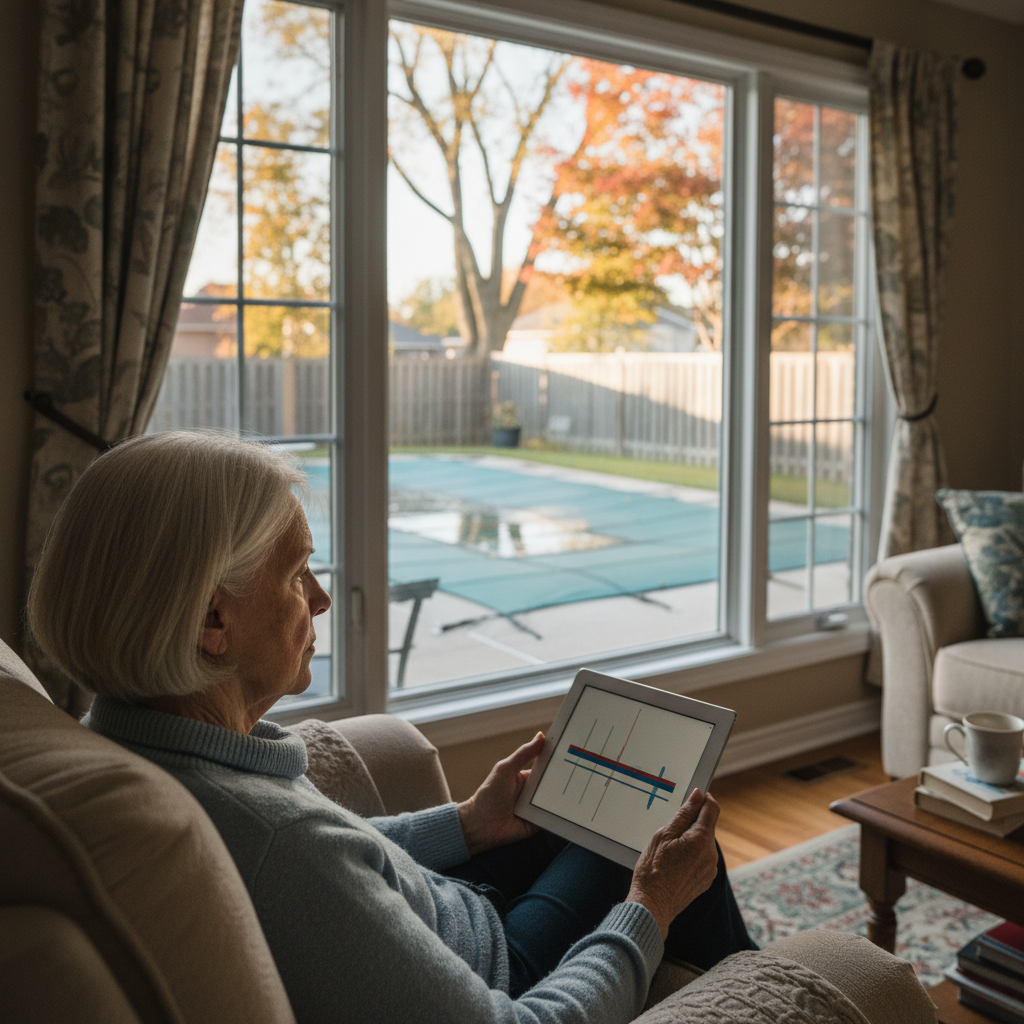
The relationship between swimming pools and property value in Ontario is nuanced. Unlike a kitchen renovation or new roof — upgrades that almost universally add value — pools are what appraisers call a "market-dependent improvement." In some neighbourhoods and price ranges, a pool is expected and adds significant value. In others, it's viewed as a maintenance liability.
According to the Appraisal Institute of Canada, residential appraisers evaluate pools based on the contributory value principle: how much does the pool contribute to the property's overall market value compared to similar homes without pools? This means the same pool can be worth $40,000 in one neighbourhood and only $5,000 in another.
| Pool Type | Typical Install Cost | Appraised Value Added | Value Recovery Rate |
|---|---|---|---|
| Inground concrete/gunite | $60,000–$120,000 | $20,000–$50,000 | 25–50% |
| Inground vinyl liner | $40,000–$70,000 | $15,000–$35,000 | 30–50% |
| Inground fiberglass | $45,000–$80,000 | $18,000–$40,000 | 30–50% |
| Above-ground (permanent) | $5,000–$15,000 | $0–$3,000 | 0–20% |
| Above-ground (temporary) | $1,000–$5,000 | $0 | 0% |
| Hot tub (built-in) | $15,000–$30,000 | $5,000–$15,000 | 25–50% |
| Hot tub (portable) | $3,000–$12,000 | $0–$2,000 | 0–15% |
When Pools Add the Most Value
Pools contribute the most to your appraised value — and therefore to your reverse mortgage borrowing power — in specific circumstances:
- ✓ Premium neighbourhoods where pools are common (Oakville, King City, parts of Barrie waterfront)
- ✓ Properties valued above $800,000 where buyers expect resort-style outdoor living
- ✓ Well-maintained pools with updated equipment, clean decking, and proper fencing
- ✓ Heated pools with extended-season capability (solar or gas heating)
- ✓ Pools with complementary landscaping — professional hardscaping, lighting, and outdoor kitchens
When Pools Hurt Value
There are real scenarios where a pool can actually reduce your reverse mortgage amount:
- ✗ Neglected or damaged pools — cracked concrete, torn liners, broken equipment
- ✗ Non-compliant fencing — failing to meet Ontario's municipal pool enclosure bylaws
- ✗ Above-ground pools — rarely add meaningful appraised value
- ✗ Oversized pools on small lots — consuming too much usable yard space
- ✗ Pools in lower-price-point markets — where buyers view pools as a liability, not an asset
"I've seen pools add $40,000 to a Mississauga appraisal and subtract perceived value from a smaller property in Oshawa. Context is everything — and a good appraiser accounts for what the local market expects." — Rick Sekhon, Reverse Mortgage Broker
Insurance Requirements and Lender Considerations
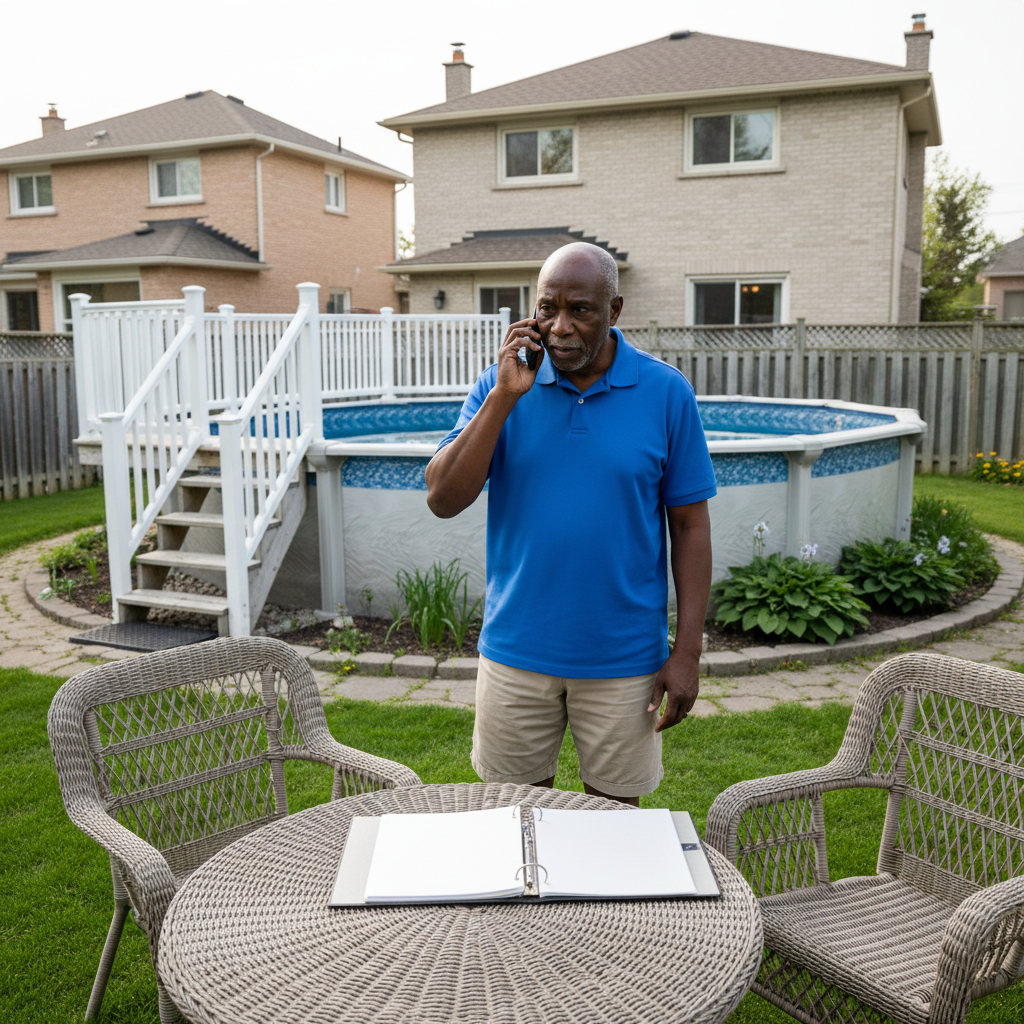
All four reverse mortgage lenders in Canada require homeowners to maintain adequate property insurance as a condition of the loan. When you have a pool or hot tub, insurance requirements expand significantly.
What Lenders Require
| Requirement | CHIP (HomeEquity Bank) | Equitable Bank | Bloom Financial | Home Trust |
|---|---|---|---|---|
| Property insurance | ✓ Required | ✓ Required | ✓ Required | ✓ Required |
| Liability coverage (pool) | ✓ $1M minimum | ✓ $1M minimum | ✓ $1M minimum | ✓ $1M minimum |
| Pool in good repair | ✓ Required | ✓ Required | ✓ Required | ✓ Required |
| Compliant fencing | ✓ Required | ✓ Required | ✓ Required | ✓ Required |
| Ongoing maintenance | ✓ Borrower obligation | ✓ Borrower obligation | ✓ Borrower obligation | ✓ Borrower obligation |
According to the Financial Consumer Agency of Canada (FCAC), homeowners with swimming pools should carry at minimum $1 million in personal liability insurance, and many financial advisors recommend $2 million. This additional liability coverage typically costs $50 to $150 per year on top of your base home insurance premium.
Insurance Cost Impact
Owning a pool increases your annual insurance costs, which is relevant because reverse mortgage lenders require you to keep insurance current:
| Insurance Component | Without Pool | With Inground Pool | With Pool + Hot Tub |
|---|---|---|---|
| Base home insurance | $1,200–$2,000/yr | $1,200–$2,000/yr | $1,200–$2,000/yr |
| Pool liability rider | $0 | $50–$150/yr | $75–$200/yr |
| Equipment coverage | $0 | $100–$200/yr | $150–$300/yr |
| Total annual insurance | $1,200–$2,000 | $1,350–$2,350 | $1,425–$2,500 |
These costs don't affect your reverse mortgage qualification — again, reverse mortgages don't require income qualification — but they do represent ongoing expenses you must budget for. Homeowners looking to manage their overall expenses in retirement may find our guide on retirement cash flow strategies helpful.
Ontario Pool Safety Bylaws and Your Reverse Mortgage
Every Ontario municipality has pool enclosure bylaws, and compliance matters for your reverse mortgage. During the appraisal, the appraiser notes the condition of fencing and safety features. Non-compliance can be flagged as a property deficiency.
Common Municipal Requirements
Most Ontario municipalities require:
- Minimum 1.5-metre (5-foot) fence enclosing the pool area
- Self-closing, self-latching gate that opens outward from the pool
- No climbable features within 1 metre of the fence exterior
- Locking mechanism at least 1.5 metres from the ground
- Building permit for inground pool installation
If your pool fencing is non-compliant, the lender may require you to bring it up to code before closing the reverse mortgage. This is typically a $2,000 to $5,000 expense that can often be addressed quickly with a licensed fence contractor.
The Financial Services Regulatory Authority of Ontario (FSRAO) doesn't directly regulate pool safety, but the mortgage brokering standards they oversee require that properties meet all applicable municipal bylaws. Your broker — such as Rick Sekhon Reverse Mortgages — will identify any compliance issues early in the process.
Hot Tubs: A Separate Appraisal Category
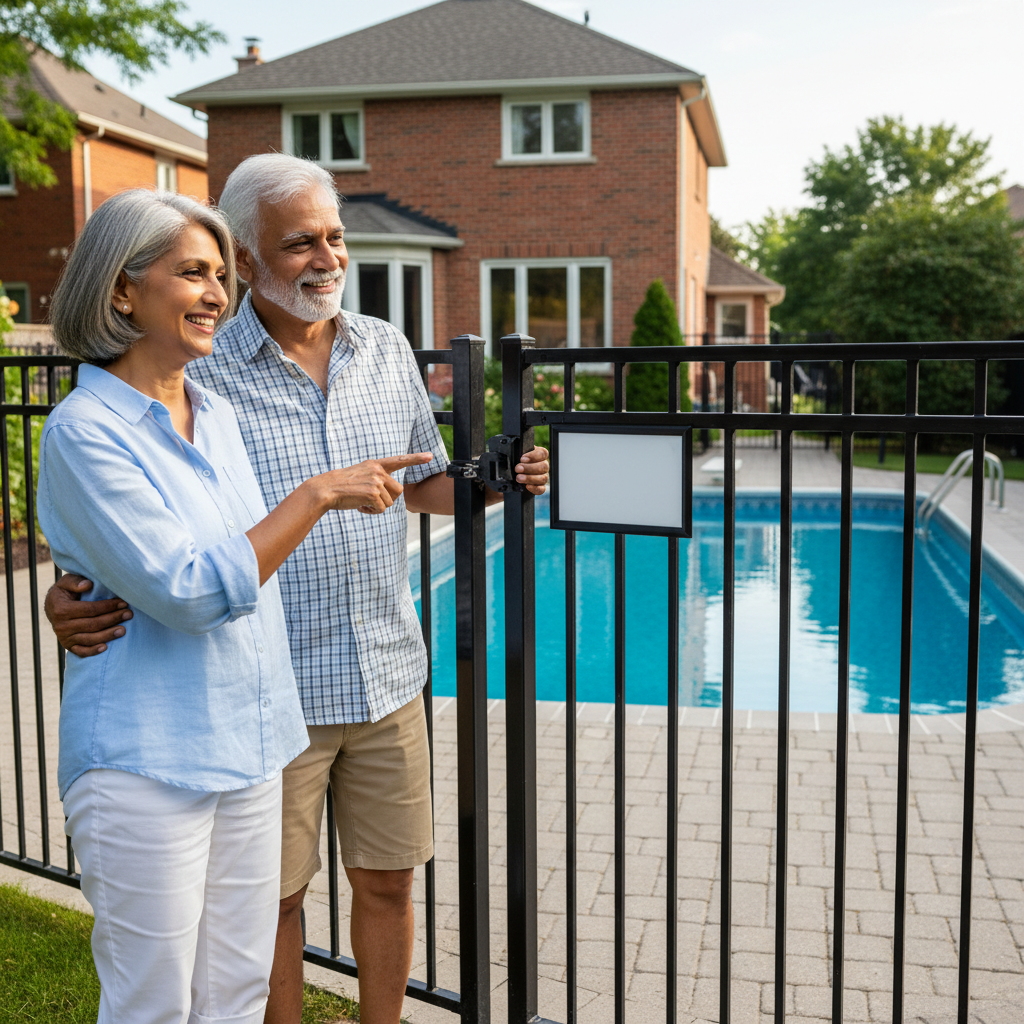
Hot tubs are treated differently from pools in the appraisal process. The key distinction is whether the hot tub is a permanent built-in installation or a portable unit.
Built-In vs. Portable Hot Tubs
Built-in hot tubs ($15,000–$30,000 installed):
- ✓ Considered a permanent improvement
- ✓ Included in appraised value ($5,000–$15,000 added)
- ✓ Professional installation with dedicated electrical and plumbing
- ✓ Often integrated into deck or patio design
Portable hot tubs ($3,000–$12,000):
- ✗ Considered personal property, not a fixture
- ✗ Typically excluded from appraised value
- ✗ Can be removed by the homeowner at any time
- ✗ Still require insurance liability coverage
For reverse mortgage purposes, only built-in hot tubs contribute to your borrowing amount. However, even a portable hot tub triggers insurance requirements that the lender will verify.
Hot Tub Maintenance Costs
| Annual Expense | Estimated Cost |
|---|---|
| Electricity (heating & pumps) | $600–$1,200 |
| Chemicals and water treatment | $200–$400 |
| Water refills (2–3x per year) | $50–$100 |
| Filter replacements | $100–$200 |
| Annual professional service | $150–$300 |
| Insurance rider | $25–$75 |
| Total annual cost | $1,125–$2,275 |
Maintaining Pool Value for Your Reverse Mortgage
If you already have a pool and plan to apply for a reverse mortgage, maximizing the pool's appraised value is straightforward:
Before the appraisal:
- Ensure the pool is clean, filled, and operational (if in season)
- Repair any visible damage to the pool surface, decking, or coping
- Confirm fencing meets municipal bylaws
- Replace any broken or outdated equipment covers
- Tidy the surrounding landscape
Ongoing maintenance:
- Budget $3,000–$6,000 annually for pool maintenance (chemicals, opening/closing, minor repairs)
- Replace vinyl liners every 7–10 years ($4,000–$8,000)
- Resurface concrete/gunite pools every 10–15 years ($8,000–$15,000)
- Replace pool equipment (pumps, filters, heaters) every 8–12 years ($2,000–$5,000)
This ongoing maintenance is part of the property upkeep obligation that all reverse mortgage lenders require. Letting the pool fall into disrepair could trigger a property condition review, which is something no homeowner wants.
For those considering whether to invest in pool upgrades versus other home improvements, our post on reverse mortgage home renovations in Ontario compares the ROI of different renovation categories.
Should You Install a Pool Using Reverse Mortgage Funds?
Some Ontario homeowners 55+ consider using reverse mortgage proceeds to install a pool they've always wanted. Here's a realistic assessment:
Arguments in favour:
- ✓ Enjoy the pool for years or decades of retirement
- ✓ Adds value to the property (partially offsetting the cost)
- ✓ No monthly payments on the reverse mortgage
- ✓ Quality of life improvement — health, relaxation, family gatherings
- ✓ Complements aging-in-place living with low-impact exercise options
Arguments against:
- ✗ Poor financial return — you'll recover only 25–50% of the install cost in appraised value
- ✗ Ongoing maintenance costs ($3,000–$6,000/year)
- ✗ Higher insurance premiums
- ✗ Physical demands of maintenance increase with age
- ✗ Seasonal use in Ontario (typically May–September without significant heating)
"Installing a pool with reverse mortgage funds is absolutely a lifestyle decision, not a financial one. If swimming and outdoor entertaining will genuinely improve your retirement, it can be worth every dollar. But don't do it expecting a financial return." — Rick Sekhon, Reverse Mortgage Broker
If you're weighing this kind of lifestyle investment against other uses for your equity — such as helping family through a living legacy or consolidating debt in retirement — a free consultation can help you model the numbers.
Closing a Pool: When Removal Adds Value
In some cases, removing a pool actually increases property value. If you have an older, deteriorating pool that would cost $15,000+ to repair, decommissioning and filling it in ($5,000–$10,000) can be the smarter move. The resulting usable backyard space may appeal more to the market — and to the appraiser.
This is particularly true for:
- Above-ground pools that are past their useful life
- Inground pools with structural damage
- Properties where the pool consumes most of the backyard
- Markets where pools are not commonly valued
Your appraiser and broker can advise on whether your specific pool is an asset or a liability for your reverse mortgage application. For more on the appraisal process itself, see our guide on the reverse mortgage appraisal process in Ontario.
Get your free Ontario Reverse Mortgage Guide →
Frequently Asked Questions
Will my inground pool increase my reverse mortgage amount?
Yes, in most cases. A well-maintained inground pool in a neighbourhood where pools are common can add $15,000 to $50,000 to your appraised value. At a typical 35% loan-to-value ratio, that translates to $5,250 to $17,500 in additional borrowing power. The exact amount depends on pool type, condition, neighbourhood, and overall property value.
Does an above-ground pool affect my reverse mortgage?
Above-ground pools add minimal to no appraised value — typically $0 to $3,000 at most. Appraisers generally view them as personal property rather than permanent improvements. However, you'll still need adequate liability insurance coverage, which all four reverse mortgage lenders require.
Do I need to disclose my pool to the reverse mortgage lender?
Yes. The appraiser will note the pool during their property inspection, and your insurance policy must include pool liability coverage. All four lenders — CHIP, Equitable Bank, Bloom Financial, and Home Trust — require that pools meet municipal safety bylaws and that you carry appropriate insurance. Disclosure happens naturally through the appraisal and insurance verification process.
Can I use reverse mortgage funds to repair or upgrade my pool?
Absolutely. There are no restrictions on how you use reverse mortgage proceeds. Many Ontario seniors use funds for pool resurfacing, equipment replacement, deck upgrades, or adding heating systems to extend the swim season. These improvements can also help maintain or increase the property's appraised value over time.
What if my pool fencing doesn't meet current bylaws?
The lender may require you to bring the fencing into compliance before the reverse mortgage closes. Most municipal pool enclosure bylaws require a minimum 1.5-metre fence with a self-closing, self-latching gate. Upgrading non-compliant fencing typically costs $2,000 to $5,000. Your broker can identify this issue early so it doesn't delay closing.
Does a hot tub require additional insurance for my reverse mortgage?
Yes. Both built-in and portable hot tubs require liability coverage on your home insurance policy. Most insurers include hot tubs under the same liability rider as pools, typically adding $25 to $75 per year to your premium. The reverse mortgage lender will verify that your insurance covers all water features on the property. For more on how reverse mortgages work in Ontario, including insurance requirements, see our detailed guide.
Ready to Learn More?
Get the free Ontario Reverse Mortgage Guide and find out exactly how much you could unlock from your home.
Get My Free Guide →Related Articles
How Much Can I Get from a Reverse Mortgage in Ontario? (2026)
Find out how much you can get from a reverse mortgage in Ontario. See LTV ranges by age, home value comparison tables, and factors that affect your amount.
Read →How Reverse Mortgage Appraisals Work in Ontario
Complete guide to the reverse mortgage appraisal Ontario process: costs, preparation tips, what appraisers evaluate, and how your home's value determines borrowing limits.
Read →Reverse Mortgage for Workplace Injury Recovery: Supporting Adult Child's Career Transition
Help your adult child rebuild their career after workplace injury. Learn how reverse mortgages fund recovery, retraining, and financial stability during career transition.
Read →