
Reverse Mortgage Partial Repayment Options in Canada (2026)
Explore reverse mortgage partial repayment options in Canada for 2026. Learn how voluntary payments reduce your balance and protect estate value.
Can you make payments on a reverse mortgage even though you don't have to — and if so, how much can it save you over time? Many Canadian homeowners are surprised to learn that partial repayment is not only allowed but can be a powerful strategy for managing costs. The answer involves understanding penalty thresholds, lender-specific rules, and the mathematics of compound interest.
This article is for educational purposes only and does not constitute financial advice.

This guide covers every partial repayment option available to Canadian reverse mortgage holders in 2026, including penalty-free allowances, lump-sum strategies, and interest-only approaches that can dramatically reduce total borrowing costs.
Why Partial Repayment Matters on a Reverse Mortgage
The defining feature of a reverse mortgage is that no monthly payments are required. You receive funds — as a lump sum, scheduled advances, or a combination — and the loan balance (principal plus accrued interest) is repaid only when you sell, move out, or pass away. But the absence of mandatory payments does not mean payments are prohibited.
Because reverse mortgages use compound interest, the loan balance grows over time. According to the Financial Consumer Agency of Canada (FCAC), borrowers should understand that interest compounds on both the original principal and previously accrued interest, which means the total amount owed can increase significantly over a long holding period.
Here is a simplified example of how compound interest affects a $150,000 reverse mortgage at 6.99% over various time horizons:
| Years Held | Balance (No Payments) | Balance (10% Annual Repayment) | Savings |
|---|---|---|---|
| 5 | $210,082 | $168,540 | $41,542 |
| 10 | $294,267 | $186,320 | $107,947 |
| 15 | $412,145 | $201,750 | $210,395 |
| 20 | $577,297 | $215,890 | $361,407 |
The difference between making voluntary partial repayments and making none at all can be hundreds of thousands of dollars over a long period. That is why Rick Sekhon, a licensed Ontario mortgage broker, recommends that every borrower understand their repayment options before signing.
For a deeper look at how interest compounds over time, see our detailed analysis at reverse mortgage compound interest projections.
Penalty-Free Repayment Allowances by Lender
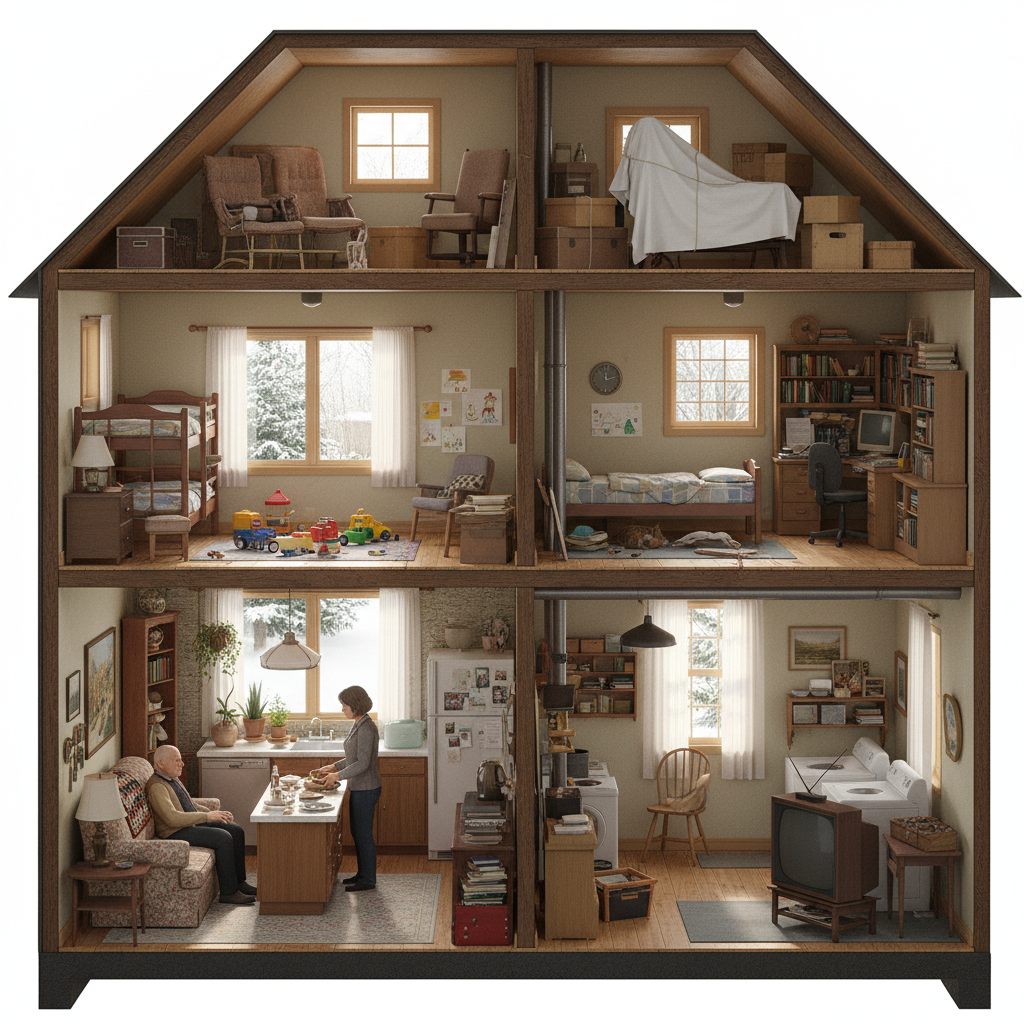
Each reverse mortgage lender in Canada sets its own rules for how much you can repay voluntarily without triggering a prepayment penalty. Understanding these thresholds is essential for building a repayment strategy.
HomeEquity Bank (CHIP Reverse Mortgage)
HomeEquity Bank, the largest reverse mortgage provider in Canada and issuer of the CHIP Reverse Mortgage, allows borrowers to repay up to 10% of the original principal amount per year without any prepayment penalty. This is calculated on the original loan amount, not the current balance.
For example, if you borrowed $200,000 through the CHIP program, you can repay up to $20,000 per year penalty-free regardless of what the current balance is.
Key details for CHIP borrowers:
- Penalty-free allowance: 10% of original principal per year
- Penalty if exceeded: Typically 3 months' interest on the amount exceeding the allowance (in the first 3 years) or an Interest Rate Differential (IRD) calculation
- Timing: Payments can be made at any point during the year
- Unused allowance: Does not carry forward to the next year
Equitable Bank
Equitable Bank entered the reverse mortgage market to compete with HomeEquity Bank and offers its own prepayment privileges. Equitable Bank also permits up to 10% of the original principal to be repaid annually without penalty.
Key details for Equitable Bank borrowers:
- Penalty-free allowance: 10% of original principal per year
- Penalty structure: Similar IRD or 3-month interest penalty for amounts exceeding the annual allowance
- Flexibility: Lump-sum payments accepted throughout the year
Bloom Financial
Bloom Financial operates as a newer entrant offering reverse mortgage products in select Canadian markets. Their prepayment terms may differ from the established lenders, so borrowers should confirm specific allowances directly with Bloom.
| Lender | Penalty-Free Annual Allowance | Penalty Type | Minimum Payment |
|---|---|---|---|
| HomeEquity Bank (CHIP) | 10% of original principal | 3 months' interest or IRD | No minimum |
| Equitable Bank | 10% of original principal | 3 months' interest or IRD | No minimum |
| Bloom Financial | Varies by contract | Varies | Confirm with lender |
According to the Office of the Superintendent of Financial Institutions (OSFI), federally regulated lenders must disclose all prepayment terms clearly before a mortgage is finalized. Always review your commitment letter carefully.
For tips on avoiding penalties when you want to repay faster, visit our guide on how to avoid prepayment penalties.
Four Partial Repayment Strategies
There are several approaches to making voluntary payments on your reverse mortgage. Each suits a different financial situation.
Strategy 1: Interest-Only Payments
The most popular approach is to pay only the monthly interest accruing on your loan. This prevents the balance from growing while keeping the principal intact.
For a $150,000 reverse mortgage at 6.99%, the monthly interest charge is approximately $874. If you can afford to pay this amount each month, the loan balance remains at $150,000 indefinitely — and you never erode your home equity further.
This approach is favoured by retirees who receive steady pension, CPP, or OAS income and want to preserve estate value. For more on how reverse mortgage proceeds interact with government benefits, see our retirement cash flow planning page.
Strategy 2: Annual Lump-Sum Payments
If monthly payments feel burdensome, consider making a single annual lump-sum payment. Many retirees use a portion of their tax refund, RRSP withdrawal, or other annual windfall to make one payment per year within the penalty-free allowance.
Example on a $200,000 CHIP mortgage:
| Year | Balance Without Payment | Annual $20,000 Payment | Year-End Balance With Payment |
|---|---|---|---|
| 1 | $213,980 | $20,000 | $193,980 |
| 2 | $229,348 | $20,000 | $188,175 |
| 3 | $245,854 | $20,000 | $182,014 |
| 4 | $263,602 | $20,000 | $175,478 |
| 5 | $282,704 | $20,000 | $168,547 |
After five years, the borrower who makes annual lump-sum payments owes $168,547 versus $282,704 — a difference of $114,157.
Strategy 3: Partial Principal Reduction
Some borrowers choose to make periodic payments that exceed the interest but stay within the 10% penalty-free allowance. This gradually reduces the principal and creates a declining balance over time.
This is an excellent strategy for homeowners who want to use their reverse mortgage as a short-term bridge — for example, those waiting for a pension to start, expecting an inheritance, or planning to sell in 5 to 7 years. Rick Sekhon often recommends this approach to clients who have temporary income gaps but expect their cash flow to improve.
Strategy 4: Hybrid Approach
A hybrid strategy combines interest-only payments during lean months with larger lump-sum payments when extra funds are available. This gives maximum flexibility while still keeping the balance under control.
For those exploring whether partial repayment or full exit is the right choice, see our guide on how to get out of a reverse mortgage in Canada.
How Partial Repayment Affects Your Estate
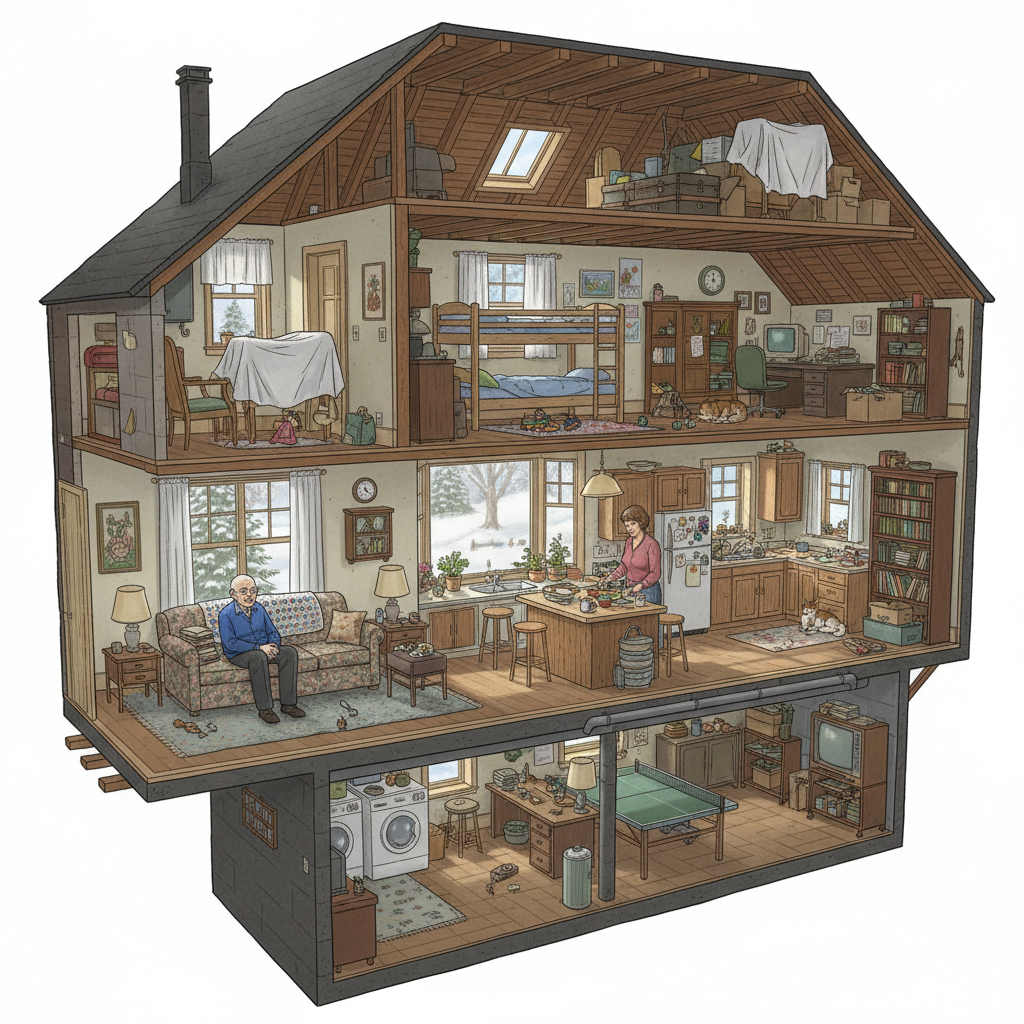
One of the primary motivations for making voluntary payments is to preserve home equity for heirs. The more you repay during your lifetime, the more equity remains in the property when the loan is settled.
Consider an Ontario home currently worth $700,000 with a $200,000 reverse mortgage at 6.99%:
| Scenario | Balance After 10 Years | Remaining Equity | Equity as % of Home Value |
|---|---|---|---|
| No payments made | $392,356 | $307,644 | 44% |
| Interest-only payments | $200,000 | $500,000 | 71% |
| $20,000/year lump sum | $168,320 | $531,680 | 76% |
(Assumes home value stays constant at $700,000 for illustration. In practice, Ontario home values have historically appreciated, which further protects equity.)
It is important to note that all reverse mortgages in Canada carry a no-negative-equity guarantee. This means you or your estate will never owe more than the fair market value of the home at the time of sale. For a full explanation, see our article on reverse mortgage inheritance implications in Ontario.
If preserving a legacy for your family is a priority, partial repayment combined with a reverse mortgage can be a smart way to access cash now while still leaving meaningful wealth behind. Learn more about this approach on our living legacy planning page.
Tax Considerations for Partial Repayment
Reverse mortgage proceeds are tax-free in Canada because they are classified as loan proceeds, not income. This means receiving funds from a reverse mortgage does not affect your OAS, GIS, or other income-tested benefits.
However, the interest paid on a reverse mortgage is generally not tax-deductible for personal use. According to the Canada Revenue Agency (CRA), mortgage interest is only deductible when the borrowed funds are used for income-producing purposes — such as investing in a rental property or an investment portfolio.
If you used part of your reverse mortgage proceeds for investment purposes and can trace the funds, the interest attributable to that portion may be deductible. Consult a tax professional for guidance specific to your situation.
For a comprehensive overview of the tax treatment of reverse mortgages, read our detailed guide on reverse mortgage tax implications in Canada.
Eligibility for Making Partial Repayments
Any borrower with an active reverse mortgage can make voluntary partial repayments. There is no special application or approval process. You simply contact your lender or set up a payment through the method they provide.
To be eligible for a reverse mortgage in the first place, you must be a Canadian homeowner aged 55 or older living in your principal residence with sufficient home equity. For the full eligibility breakdown, see our Ontario eligibility guide.
Working With Rick Sekhon on Your Repayment Plan
Rick Sekhon works with Ontario homeowners to build customized repayment plans that fit their retirement budget. Whether you want to make interest-only payments, annual lump sums, or a hybrid approach, Rick can model the numbers for your specific loan and help you understand the long-term impact on your estate.
Rick also helps borrowers compare the total cost of a reverse mortgage across lenders — including fees, rates, and prepayment terms — so you can choose the product with the most favourable repayment flexibility. For a side-by-side breakdown of all costs, visit our complete guide to reverse mortgage fees and costs in Ontario.
If you are considering using a reverse mortgage for debt relief, partial repayment can be especially valuable. You consolidate high-interest debts immediately and then gradually reduce the reverse mortgage balance over time at a much lower effective cost. Learn more on our debt relief page.
Current Reverse Mortgage Interest Rates in Ontario (2026)
Understanding rates is essential for calculating your repayment amounts. As of early 2026, reverse mortgage rates in Ontario typically range from approximately 6.50% to 8.50%, depending on the lender, term, and product.
For the latest rate comparison, see our updated guide on reverse mortgage interest rates in Ontario for 2026.
The Financial Services Regulatory Authority of Ontario (FSRAO) oversees mortgage brokers in the province and ensures that all rate disclosures meet provincial standards.
Frequently Asked Questions
Can I make monthly payments on a CHIP reverse mortgage?
Yes. HomeEquity Bank allows voluntary monthly payments on the CHIP Reverse Mortgage. You can pay interest only, a fixed amount, or any amount up to the annual penalty-free allowance. There is no obligation to make any payment, but the option is available.
What happens if I exceed the 10% penalty-free allowance?
If you repay more than 10% of your original principal in a single year, you will likely be charged a prepayment penalty on the excess amount. The penalty is typically the greater of three months' interest or an Interest Rate Differential (IRD) calculation. Contact your lender before making a large payment to confirm the exact penalty.
Does making partial repayments change my reverse mortgage terms?
No. Making voluntary payments does not alter the terms of your reverse mortgage agreement. Your interest rate, maturity conditions, and other terms remain the same. The payments simply reduce your outstanding balance.
Can I set up automatic monthly payments?
Most lenders allow you to arrange automatic payments from your bank account. Contact your lender's servicing department to set this up. Rick Sekhon can also help you coordinate this during the loan setup process.
Is it better to make partial repayments or invest the money instead?
This depends on your personal financial situation. If your reverse mortgage rate is 6.99% and you can earn a guaranteed return higher than that after tax, investing may be more efficient. However, for most retirees, the guaranteed "return" of reducing a 6.99% compounding debt is very attractive. Consult a financial advisor for personalized guidance.
Will partial repayments affect my government benefits?
No. Making payments on your reverse mortgage does not affect your CPP, OAS, or GIS benefits. These payments are simply reducing a loan balance — they are not considered income or a withdrawal of any kind.
Ready to Learn More?
Get the free Ontario Reverse Mortgage Guide and find out exactly how much you could unlock from your home.
Get My Free Guide →Related Articles
Reverse Mortgage Prepayment Penalties in Canada: How to Avoid Them
Learn how reverse mortgage prepayment penalties work in Canada and proven strategies to avoid or minimize them with CHIP and Equitable Bank.
Read →Reverse Mortgage Fees in Ontario: Every Cost Explained (2026)
Full breakdown of every cost involved in an Ontario reverse mortgage: setup fees, appraisal, legal fees, title insurance, and ongoing costs. No surprises.
Read →How to Get Out of a Reverse Mortgage in Canada (2026)
Planning to exit a reverse mortgage? This guide covers prepayment penalties, open vs closed terms, the interest rate differential, and all four exit routes available to Canadians.
Read →