
Reverse Mortgages for Immigrants & New Canadians
Reverse mortgage eligibility for immigrants and new Canadians. No citizenship required — permanent residents qualify. Documents, rights, and ILA guide.
If you immigrated to Canada and own your home, you are almost certainly eligible for a reverse mortgage — and you do not need to be a Canadian citizen to qualify. Permanent residents, landed immigrants, and even some non-citizens with sufficient Canadian property ownership history can access reverse mortgage products from HomeEquity Bank (CHIP), Equitable Bank, and other Canadian lenders. Yet many newcomer communities remain unaware of this option, partly because reverse mortgages are unfamiliar in most countries of origin and partly because the eligibility requirements are widely misunderstood. This guide covers everything immigrant and new Canadian homeowners in Ontario need to know.
This article is for educational purposes only and does not constitute financial advice.

The eligibility criteria for reverse mortgages in Canada are simpler than most people expect — and they are designed in a way that naturally accommodates newcomers who have built equity in Canadian real estate.
Eligibility Requirements: What You Need and What You Don't
The most important fact for immigrant homeowners: reverse mortgage qualification in Canada does not depend on income, credit score, or citizenship status. Here is the complete picture:
| Requirement | Details | Relevant to Immigrants? |
|---|---|---|
| Age | 55 or older (youngest person on title) | Same for everyone |
| Property ownership | Must own the home and live in it as primary residence | ✓ You must be on title |
| Citizenship | NOT required | ✓ Permanent residents qualify |
| Permanent residency | Required by most lenders | ✓ PR card or COPR needed |
| Income verification | NOT required | ✓ No income documentation needed |
| Credit score | NOT required | ✓ No credit check |
| Employment | NOT required | ✓ Retired, employed, or unemployed — all qualify |
| Existing mortgage | Allowed — reverse mortgage pays it off first | Common for newer homeowners |
| Language | No English/French fluency requirement | ✓ ILA available in other languages |
According to the Financial Consumer Agency of Canada (FCAC), reverse mortgage eligibility is primarily based on the borrower's age and the value of their home. There is no income qualification test because no regular payments are required.
Rick Sekhon Reverse Mortgages works with immigrant homeowners across Ontario and has helped clients from dozens of countries access reverse mortgage products in their preferred language.
Permanent Residency: The Key Requirement

While Canadian citizenship is not required, most reverse mortgage lenders do require that borrowers hold permanent resident status. Here is how different immigration statuses affect eligibility:
| Immigration Status | Eligible for Reverse Mortgage? | Notes |
|---|---|---|
| Canadian citizen | ✓ Yes | No restrictions |
| Permanent resident (PR) | ✓ Yes | Full eligibility with valid PR card |
| Convention refugee with PR | ✓ Yes | Same as permanent resident |
| Work permit holder | ✗ Generally no | Temporary status; may qualify with some lenders case-by-case |
| Student visa holder | ✗ No | Temporary status |
| Visitor / tourist | ✗ No | No residency status |
| Non-resident property owner | ✗ Generally no | Must be primary residence |
| Expired PR card (still PR) | ✓ Yes, with proof | PR status does not expire; only the card does |
An important distinction: permanent resident status in Canada does not expire. Only the PR card expires. If your PR card has expired but you have maintained your residency obligation (living in Canada for at least 730 days in the last 5 years), you are still a permanent resident and still eligible. You may need to renew your PR card before the lender can verify your status, but the underlying eligibility remains.
Documents Needed
The documentation for a reverse mortgage is straightforward, but immigrant homeowners should prepare the following:
Identity and status documents:
- Valid PR card (or Confirmation of Permanent Residence if PR card is being renewed)
- Government-issued photo ID (Ontario driver's licence, Ontario photo card, or passport)
- Social Insurance Number (SIN)
Property documents:
- Property tax bill (most recent)
- Home insurance policy
- Existing mortgage statement (if applicable)
- Property survey or legal description (your lawyer can obtain this)
No documents needed for:
- Income or employment
- Tax returns
- Credit report
- Bank statements
- Investment accounts
| Document | Where to Obtain | Typical Processing Time |
|---|---|---|
| PR card renewal | IRCC online portal | 45–90 days |
| Ontario photo card | ServiceOntario | Same day (in person) |
| Property tax bill | Your municipality | Available online |
| Title search | Your lawyer or Ontario Land Registry | 1–3 business days |
Rick Sekhon assists with document checklists and can advise on what to prepare before your application, reducing delays.
Cultural Attitudes Toward Home Equity
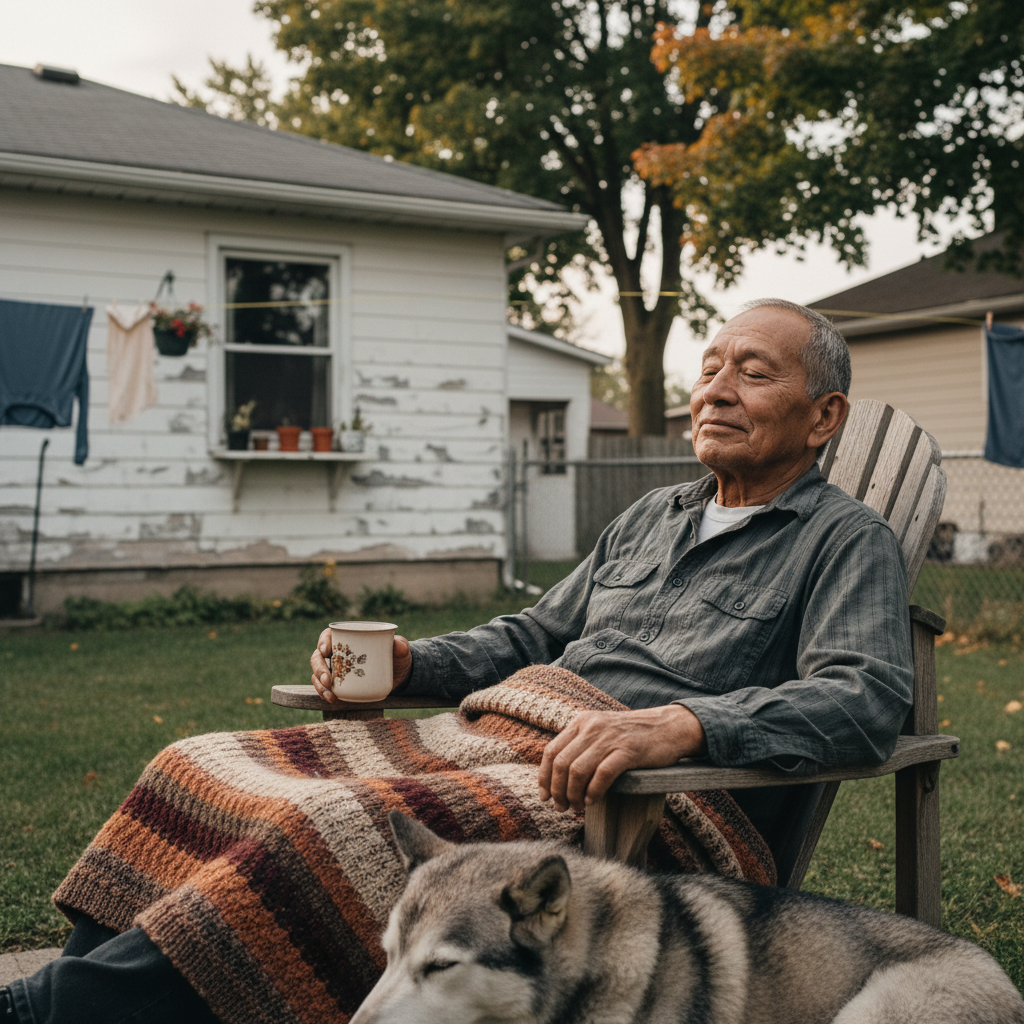
In many cultures, homeownership carries deep significance beyond financial value. The family home is a symbol of achievement, security, and legacy. This can make the idea of borrowing against home equity feel uncomfortable — even wrong.
These feelings are valid and deserve respect. But they should be informed by facts:
Common concern: "Borrowing against the home dishonours what we built." A reverse mortgage does not diminish what you built. You retain full ownership, full control, and the right to leave the home to your children. The equity reduction is a financial trade-off, not a loss of achievement. Many immigrant families find that the reverse mortgage actually honours their sacrifices — by allowing them to enjoy the quality of life they worked decades to earn, rather than being equity-rich and cash-poor.
Common concern: "My children expect to inherit the home." In many newcomer families, there is an expectation that the home will pass to the next generation. A reverse mortgage does reduce the inheritance — but typically not as dramatically as people fear. On an $800,000 Ontario home with a $200,000 reverse mortgage at 6.74% for 10 years, the balance grows to approximately $380,000. If the home appreciated at 3% annually to $1,075,000, the remaining equity is roughly $695,000. The home still passes to the heirs with substantial value.
Common concern: "This product does not exist in my home country, so I don't trust it." Reverse mortgages are a regulated Canadian financial product, overseen by the FCAC at the federal level and the FSRAO (Financial Services Regulatory Authority of Ontario) at the provincial level. They have been available in Canada since 1986. The no-negative-equity guarantee from HomeEquity Bank and Equitable Bank provides protection that does not exist in many countries' mortgage systems.
"Reverse mortgages in Canada provide a no-negative-equity guarantee, meaning borrowers will never owe more than the fair market value of their home." — Financial Consumer Agency of Canada
No Credit Score, No Income Verification: Why This Matters
For many immigrant homeowners, the absence of income and credit requirements is the most significant advantage of a reverse mortgage over other borrowing options.
| Borrowing Option | Income Required? | Credit Score Required? | Accessible to Retired Immigrants? |
|---|---|---|---|
| Reverse mortgage | ✗ No | ✗ No | ✓ Highly accessible |
| HELOC | ✓ Yes | ✓ Yes (usually 650+) | ✗ Difficult if retired |
| Conventional mortgage refinance | ✓ Yes | ✓ Yes (usually 600+) | ✗ Difficult if retired |
| Personal loan | ✓ Yes | ✓ Yes (usually 680+) | ✗ Very difficult |
| Credit card | ✓ Implied | ✓ Yes | ✗ High interest |
Many newcomers who arrived in Canada mid-career may not have built a long Canadian credit history, even if they were financially successful in their country of origin. Others may have retired shortly after arriving, leaving a thin credit file. A reverse mortgage bypasses both issues entirely.
For homeowners dealing with debt, a reverse mortgage can provide debt relief without the income verification that other options demand.
Independent Legal Advice in Your Language
Ontario law requires every reverse mortgage borrower to receive independent legal advice (ILA) from a lawyer who is not connected to the lender. This is a consumer protection designed to ensure you fully understand the agreement before signing.
For immigrant homeowners, this protection is especially important — and it is available in your language. Ontario has lawyers practising in virtually every language spoken in the province. Your ILA lawyer can:
- Explain the reverse mortgage agreement in your first language
- Answer questions about how the charge affects your property rights
- Confirm the no-negative-equity guarantee
- Ensure you understand repayment triggers
- Review all fees and costs
Rick Sekhon maintains a referral network of multilingual lawyers across Ontario who are experienced in reverse mortgage ILA. Whether you speak Mandarin, Cantonese, Punjabi, Hindi, Urdu, Tamil, Tagalog, Arabic, Farsi, Portuguese, Italian, Korean, or any other language, there is a qualified lawyer available.
For more on the ILA process, read our independent legal advice guide.
Common Scenarios for Immigrant Homeowners
Scenario 1: Retired with CPP/OAS but limited savings. You arrived in Canada at age 45, worked for 20 years, and retired at 65. Your CPP is lower than the maximum because you did not contribute for the full 39 years. Your OAS may also be reduced if you have fewer than 40 years of Canadian residency. A reverse mortgage supplements this income gap with tax-free funds that do not affect your GIS, OAS, or CPP benefits.
Scenario 2: Sponsoring family members. You are financially responsible for sponsored family members (parents or spouse). The sponsorship undertaking means you cannot access social assistance for them, and the financial burden is significant. A reverse mortgage provides funds to meet these obligations without selling your home.
Scenario 3: Funding aging-in-place modifications. You want to stay in the home and community where your family lives. Modifications like a main-floor bedroom, accessible bathroom, or stair lift cost $20,000–$80,000. A reverse mortgage funds these improvements while allowing you to stay near grandchildren and the community support network you have built.
Scenario 4: Paying off the existing mortgage. You still carry a conventional mortgage with monthly payments that strain your retirement budget. A reverse mortgage pays off the existing mortgage, eliminating monthly payments entirely. The retirement cash flow improvement can be transformative.
According to Statistics Canada, immigrants who arrived in Canada between 1990 and 2010 and who are now aged 55+ have homeownership rates comparable to Canadian-born seniors in many Ontario communities, particularly in the Greater Toronto Area, Ottawa, and Hamilton. This means a large and growing population of immigrant homeowners may benefit from reverse mortgage products.
Bloom Financial and Home Trust also serve immigrant homeowners in Ontario, providing additional options. Comparing offers from multiple lenders through a broker ensures you receive the best available rate and terms.
Get your free Ontario Reverse Mortgage Guide →
Frequently Asked Questions
Can my spouse qualify if they are under 55 but I am over 55?
No. Both people on title must be 55 or older. If your spouse is on title and under 55, you must wait until they turn 55. Alternatively, if your spouse is not on title (you are the sole owner), you can qualify on your own — but your spouse would need to receive independent legal advice and consent to the mortgage. Discuss this with Rick Sekhon to understand the implications for both scenarios.
Does a reverse mortgage affect my immigration status?
No. A reverse mortgage has no impact on your permanent residency, citizenship application, or any immigration process. It is a private financial transaction between you and a Canadian lender. It does not create a government debt or obligation.
Will reverse mortgage income affect my GIS or OAS?
No. Reverse mortgage advances are classified as loan proceeds, not income. They do not appear on your tax return and have no effect on income-tested benefits including Guaranteed Income Supplement (GIS), Old Age Security (OAS), Ontario Trillium Benefit, or any other means-tested program. Read our Canada FAQ for more details.
What if I own the home jointly with a family member who is not my spouse?
This is common in newcomer families where adult children helped purchase the home. All people on title must meet the eligibility requirements (age 55+, permanent resident). If a younger family member is on title, you may need to explore removing them from title before applying — which has its own legal and tax implications. Independent legal advice is critical in this scenario. See our eligibility guide for more details.
Can I get a reverse mortgage on a property I purchased recently?
Yes, there is no minimum ownership period. However, you must have sufficient equity in the home. If you purchased recently with a large conventional mortgage, the reverse mortgage must be large enough to pay off the existing mortgage first, with remaining funds available to you. The LTV available to you depends on your age and the property value, not how long you have owned it.
What if my home is in a family trust?
Homes held in trusts generally do not qualify for reverse mortgages, as the lender requires individual(s) to be registered as owner(s) on title. If your home is in a trust structure — common in some cultures for estate planning — you would need to transfer it out of the trust before applying. This has significant legal and tax implications and should be discussed with both a lawyer and a tax professional before proceeding.
Ready to Learn More?
Get the free Ontario Reverse Mortgage Guide and find out exactly how much you could unlock from your home.
Get My Free Guide →Related Articles
Why You Need Independent Legal Advice for a Reverse Mortgage in Ontario
Independent legal advice is mandatory for reverse mortgages in Ontario. What the lawyer explains, ILA costs, how to find a lawyer, and what to ask.
Read →Reverse Mortgage Canada FAQ: 25 Most Asked Questions Answered (2026)
The 25 most frequently asked questions about reverse mortgages in Canada, answered clearly and completely. Updated for 2026 with current rates, rules, and lender information.
Read →Reverse Mortgage Eligibility in Ontario: Complete 2026 Guide
Everything Ontario homeowners need to know about qualifying for a reverse mortgage in 2026. Covers age requirements, home equity, property types, and the application process.
Read →