
Stay Near Grandchildren: Reverse Mortgage Options
Use a reverse mortgage to stay near grandchildren instead of downsizing and moving away. Emotional and financial case for aging in place near family.
The house where your grandchildren learned to walk, where holidays happen, where they run straight to "their" bedroom when they visit — that house is worth more than its appraised value. For thousands of Ontario grandparents, the pressure to downsize and "unlock equity" means moving away from the family network they spent decades building. A reverse mortgage offers an alternative: stay in your home, stay in your neighbourhood, and stay close to the grandchildren who need you as much as you need them. This article makes both the emotional and financial case for aging in place near family — and shows exactly how the numbers compare to downsizing and moving.
This article is for educational purposes only and does not constitute financial advice.
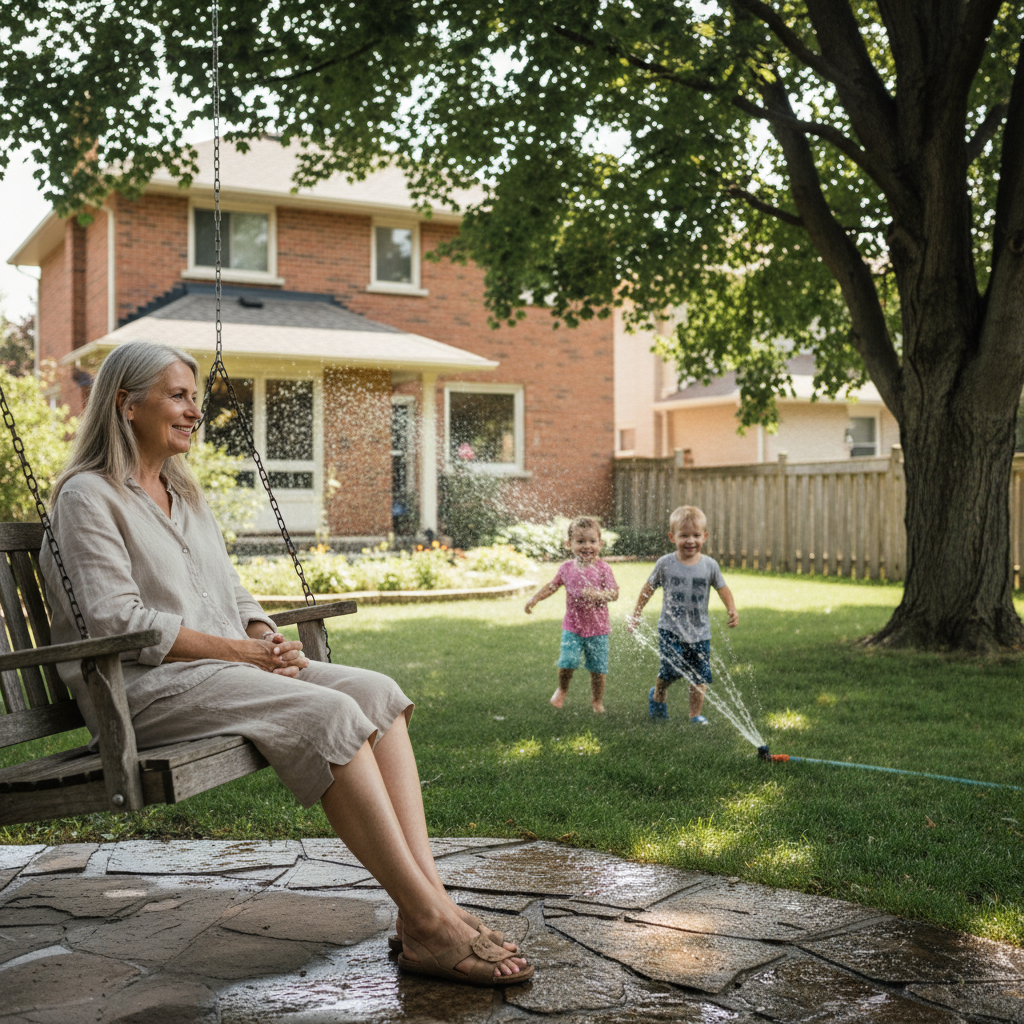
The decision between downsizing and staying is never purely financial. But understanding the full financial picture — including the economic value of grandparent proximity — can clarify a decision that feels impossibly complicated.
The Real Cost of Moving Away from Family
When financial advisors recommend downsizing, they typically calculate the equity freed up by selling a large home and buying something smaller. What they rarely calculate is what you lose.
| What Downsizing Gains | What Downsizing Loses |
|---|---|
| Cash from equity difference | Proximity to grandchildren |
| Lower property taxes (maybe) | Established community and friendships |
| Smaller maintenance burden | The family gathering place |
| Perceived simplicity | Informal childcare arrangement |
| Healthcare providers who know you | |
| Neighbourhood familiarity (walkability, routines) | |
| Emotional stability of home continuity |
According to Statistics Canada, nearly 40% of Canadian grandparents who live within 30 minutes of their grandchildren provide regular childcare. When grandparents move farther away, this informal support network collapses — affecting both generations.
The financial value of that lost childcare alone is significant, as we will quantify below.
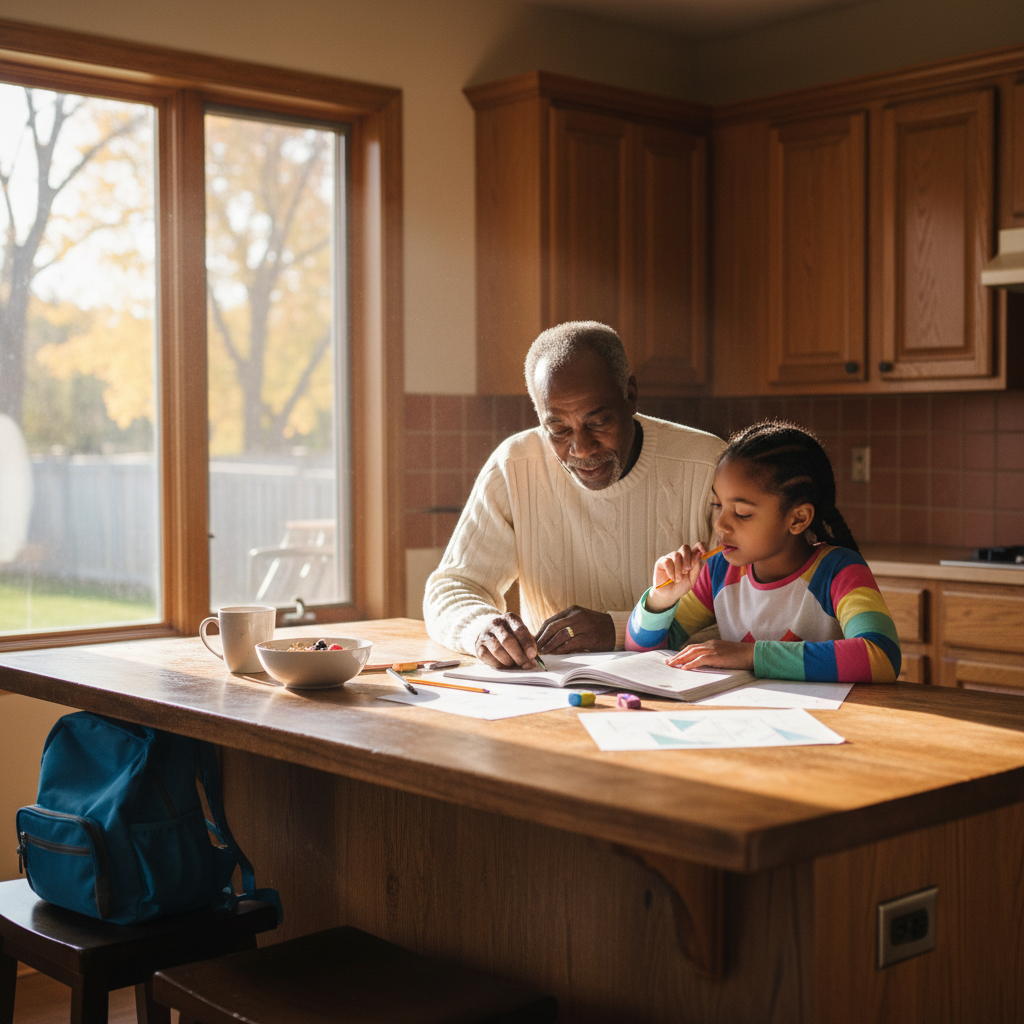
The Economic Value of Grandparent Proximity
Grandparent childcare is not just emotionally valuable — it has a measurable dollar equivalent. In Ontario, the average cost of childcare varies by age and region:
| Childcare Type | Average Annual Cost in Ontario (2026) | Grandparent Equivalent Value |
|---|---|---|
| Infant daycare (full-time) | $12,000–$22,000 | Same, if grandparent provides care |
| Toddler daycare (full-time) | $10,000–$18,000 | Same |
| Before/after school care | $5,000–$9,000 | Same |
| Summer camp / vacation care | $2,000–$5,000 | Same |
| Occasional/emergency babysitting | $2,000–$4,000/year | Same |
| Total for one grandchild | $15,000–$25,000/year | $15,000–$25,000/year |
Even if a grandparent provides only part-time care — two or three days per week, or after-school pickup — the economic value easily reaches $15,000–$20,000 per year per grandchild. Over a decade, that is $150,000–$200,000 in family economic value that is lost when the grandparent moves away.
"Informal childcare by grandparents represents a significant contribution to the Canadian economy, estimated at billions of dollars annually in unpaid labour." — Vanier Institute of the Family
This economic contribution is real money that your adult children would otherwise need to spend on paid childcare. By staying near your grandchildren, you are providing a financial gift to your family that rivals or exceeds the inheritance they might receive from the equity you "freed up" by downsizing.
Rick Sekhon Reverse Mortgages helps Ontario families quantify this value as part of the reverse mortgage decision process, because the numbers often change the conversation entirely.
Downsizing Regret: What the Data Shows
The assumption that downsizing leads to a simpler, happier life is not always supported by evidence.
A 2024 survey by Royal LePage found that nearly 30% of Canadian seniors who downsized reported regret within two years. The most common reasons:
- ✗ Missing the old neighbourhood and neighbours
- ✗ The new home felt unfamiliar and isolating
- ✗ Loss of regular contact with grandchildren
- ✗ Underestimating the emotional cost of leaving a long-time home
- ✗ The financial benefit was smaller than expected after transaction costs
- ✗ New community lacked walkable amenities and services
The financial reality of downsizing is also less rosy than it appears:
| Downsizing Cost | Typical Amount |
|---|---|
| Real estate commission (sell) | 4–5% of sale price |
| Legal fees (sell + buy) | $3,000–$5,000 |
| Land transfer tax (buy) | 1–2% of purchase price |
| Moving costs | $3,000–$8,000 |
| Renovations to new home | $5,000–$30,000 |
| Furniture replacement | $2,000–$10,000 |
| Temporary housing (if needed) | $3,000–$6,000 |
| Total transaction costs | $30,000–$80,000+ |
On an $800,000 home, selling costs alone (commission + legal) consume $35,000–$45,000. If you buy a $500,000 condo, the land transfer tax adds another $6,500. Before you have unpacked a single box, you have spent $50,000–$70,000 — money that is gone permanently.
Worked Example: Downsizing vs Staying with a Reverse Mortgage
Let's compare two paths for a 68-year-old Ontario couple with an $800,000 home, no mortgage, who need $150,000 in additional retirement funds.
Path A: Downsize and Move
| Item | Amount |
|---|---|
| Sell home | $800,000 |
| Less: real estate commission (4.5%) | -$36,000 |
| Less: legal fees | -$3,500 |
| Net sale proceeds | $760,500 |
| Purchase condo | -$500,000 |
| Less: land transfer tax | -$6,500 |
| Less: legal fees (buy) | -$2,000 |
| Less: moving costs | -$5,000 |
| Less: condo setup/renovations | -$10,000 |
| Cash remaining | $237,000 |
| Monthly condo fees | $650/month ($7,800/year) |
| Lost childcare value (2 grandchildren nearby) | $30,000/year equivalent |
| Distance from grandchildren | Increased |
After 10 years, accounting for $7,800/year in condo fees (increasing 3% annually), the couple has spent approximately $89,000 on condo fees alone. Net position: the $237,000 invested at 4% grew to roughly $351,000, minus $89,000 in condo fees = $262,000 in financial assets, plus a $500,000 condo (appreciated to ~$672,000) = $934,000 total net worth.
Path B: Stay with Reverse Mortgage
| Item | Amount |
|---|---|
| Home value | $800,000 |
| Reverse mortgage advance | $150,000 |
| Setup costs (appraisal, legal, admin) | ~$3,000 |
| Net cash received | $147,000 |
| Monthly condo fees | $0 |
| Proximity to grandchildren | Unchanged |
| Childcare value preserved | $30,000/year equivalent |
After 10 years at 6.74% interest, the reverse mortgage balance grows to approximately $285,000. The home, appreciating at 3% annually, is worth approximately $1,075,000. Net equity: $790,000. Plus the $147,000 received (if invested at 4%, now ~$218,000) = $1,008,000 total net worth.
| Metric | Downsize (Path A) | Stay with RM (Path B) | Difference |
|---|---|---|---|
| Total net worth after 10 years | $934,000 | $1,008,000 | +$74,000 (RM wins) |
| Transaction costs | ~$63,000 | ~$3,000 | -$60,000 saved |
| Annual condo fees paid | $89,000 over 10 years | $0 | -$89,000 saved |
| Childcare value preserved | Lost | $300,000 over 10 years | +$300,000 family value |
| Grandchild proximity | Reduced | Maintained | Priceless |
The reverse mortgage path produces a higher net worth and preserves the family proximity. The downsizing path loses $63,000 in transaction costs, pays $89,000 in condo fees, and sacrifices the grandparent-grandchild relationship.
Using a Reverse Mortgage to Fund Home Modifications for Grandchild Visits
Many grandparents use part of their reverse mortgage to make the home more functional for multi-generational visits and care:
Accessibility modifications that serve both grandparents and young grandchildren:
- Main-floor bedroom conversion: $8,000–$15,000
- Accessible bathroom (walk-in shower, grab bars): $10,000–$25,000
- Widened doorways: $1,500–$3,000 per doorway
- Non-slip flooring throughout: $5,000–$12,000
Grandchild-friendly additions:
- Dedicated grandchild bedroom: $5,000–$10,000 (furnishing an existing room) to $40,000–$80,000 (building an addition)
- Fenced backyard play area: $3,000–$8,000
- Finished basement family space: $20,000–$50,000
These modifications serve double duty: they make the home safer for aging in place and more welcoming for the grandchildren whose visits keep life meaningful. Read our home modifications guide for detailed planning advice.
HomeEquity Bank (CHIP), Equitable Bank, Bloom Financial, and Home Trust all allow reverse mortgage funds to be used for home renovations without restriction. There is no requirement to justify how you spend the money.
The Family Proximity Premium
Financial planners talk about the "equity premium" of stocks over bonds. There should be an equivalent concept for family proximity — call it the "family proximity premium."
This premium includes:
- Grandchildren who know their grandparents deeply, not superficially
- Emergency availability (picking up a sick grandchild from school)
- Shared meals, homework help, and daily interaction
- Reduced social isolation for grandparents (a significant health factor)
- Preserved holiday traditions and family routines
- The ability to watch grandchildren grow up in real time, not through video calls
According to a 2023 study published in JAMA Internal Medicine, older adults who provide regular childcare for grandchildren have a 37% lower mortality risk compared to those who do not. The health benefits of active grandparenting are measurable and significant.
Having the family conversation about a reverse mortgage — where you explain that staying close is worth more than maximizing the inheritance — often brings families closer rather than creating conflict. Most adult children would rather have a present, engaged grandparent for their kids than a larger inheritance in 20 years.
Rick Sekhon helps facilitate these family discussions, providing the financial data that supports the emotional decision many families want to make but feel they cannot afford. The FSRAO requires transparency in all mortgage transactions, and Rick ensures every family member who wants to be involved has access to the numbers.
For families considering a living legacy approach — giving financial help to children and grandchildren now rather than waiting — a reverse mortgage can fund both the grandparent's aging in place and meaningful gifts to the next generation. See our guide on funding a grandchild's wedding for one example.
Get your free Ontario Reverse Mortgage Guide →
Frequently Asked Questions
Will my grandchildren's parents (my adult children) resent the reverse mortgage?
This is a common worry, but in practice, most adult children support the decision once they understand the numbers. When they see that staying close preserves $15,000–$20,000/year in childcare value, maintains the family gathering place, and still leaves substantial equity in the estate, the reverse mortgage often looks like the best option for everyone. Our family conversation guide provides a framework for this discussion.
Can I use reverse mortgage funds to help my grandchildren directly?
Yes. There are no restrictions on how you use reverse mortgage funds. Some grandparents contribute to RESPs, help with first home down payments, fund extracurricular activities, or simply cover the cost of hosting regular family dinners. The funds are tax-free and do not affect your OAS, CPP, or GIS benefits.
What if I need to move to a care facility eventually?
If you permanently leave your home, the reverse mortgage becomes due and is typically repaid by selling the home. However, "permanently" is the key word. If you enter a care facility temporarily (for rehabilitation, for example), you can return home and the mortgage continues unchanged. If both spouses are on the mortgage, the loan continues as long as one spouse remains in the home. Planning for this possibility is part of the retirement cash flow strategy.
How does a reverse mortgage affect my ability to leave the home to my children?
Your home still passes to your estate and heirs. The reverse mortgage balance is repaid from the home's value at the time of sale, and the remaining equity goes to your beneficiaries. With Ontario home appreciation, most families find that substantial equity remains even after 15–20 years of a reverse mortgage. The no-negative-equity guarantee from HomeEquity Bank and Equitable Bank ensures the debt never exceeds the home value.
Can I still host family gatherings and have grandchildren stay overnight?
Absolutely. You are the full owner of your home. A reverse mortgage changes nothing about how you use your property. You can host as many people as you like, as often as you like. You can have grandchildren stay overnight, host holidays, and use every room exactly as you always have. The lender has no say in how you live in your home.
What if my neighbourhood changes and my children move away?
This is a valid consideration. If your adult children relocate and the proximity advantage disappears, you can reassess. A reverse mortgage can be repaid at any time by selling the home (with potential prepayment charges in early years). The flexibility to stay or sell remains yours throughout. Rick Sekhon Reverse Mortgages can help you evaluate whether the reverse mortgage still makes sense if your family circumstances change.
Ready to Learn More?
Get the free Ontario Reverse Mortgage Guide and find out exactly how much you could unlock from your home.
Get My Free Guide →Related Articles
Using a Reverse Mortgage to Fund a Grandchild's Wedding
How to use a reverse mortgage to fund a grandchild wedding in Canada. Tax-free gifting, costs, process, and how to give generously without selling your home.
Read →How to Talk to Your Family About Getting a Reverse Mortgage
A practical guide for Ontario seniors on how to talk to family about getting a reverse mortgage — conversation frameworks, common concerns, and tips.
Read →Aging in Place with a Reverse Mortgage: Home Modification Guide
How Ontario seniors can fund aging-in-place home modifications with a reverse mortgage — costs, top modifications, grants, and a complete planning guide.
Read →