
Reverse Mortgage for Home Security: Upgrade Your Safety System in Retirement
Fund home security upgrades, surveillance systems, and smart locks with a reverse mortgage. Keep your home safe while aging in place in Ontario.
As you age in place, security becomes personal—not just about property protection, but peace of mind. Many Ontario seniors discover that upgrading outdated locks, adding surveillance, and installing modern security systems transforms how safe they feel in their own homes. A reverse mortgage can fund these upgrades without selling your home or taking on monthly payments.

Why Home Security Matters More in Retirement
The statistics are sobering. According to the Canadian Anti-Fraud Centre, seniors are targeted in home intrusions, package theft, and fraud attempts at disproportionately high rates. Beyond crime prevention, security upgrades also address practical safety concerns: monitoring entry points, detecting falls through emergency response systems, and maintaining visibility of who arrives at your door.
Many Ontario homes built in the 1960s–1990s still have original locks, minimal outdoor lighting, and no surveillance capability. Upgrading these systems wasn't a priority when you were working and more mobile. In retirement, especially if you're aging in place, that calculus changes.
The challenge is cost. Quality home security systems—including professional installation, cameras, smart locks, and monitoring services—can run $8,000 to $25,000 depending on scope. For homeowners on fixed incomes, this expense feels daunting. A reverse mortgage allows you to fund these upgrades without monthly payments, making the investment feasible.
Common Security Upgrades Ontario Seniors Fund
Smart Locks and Entry Monitoring
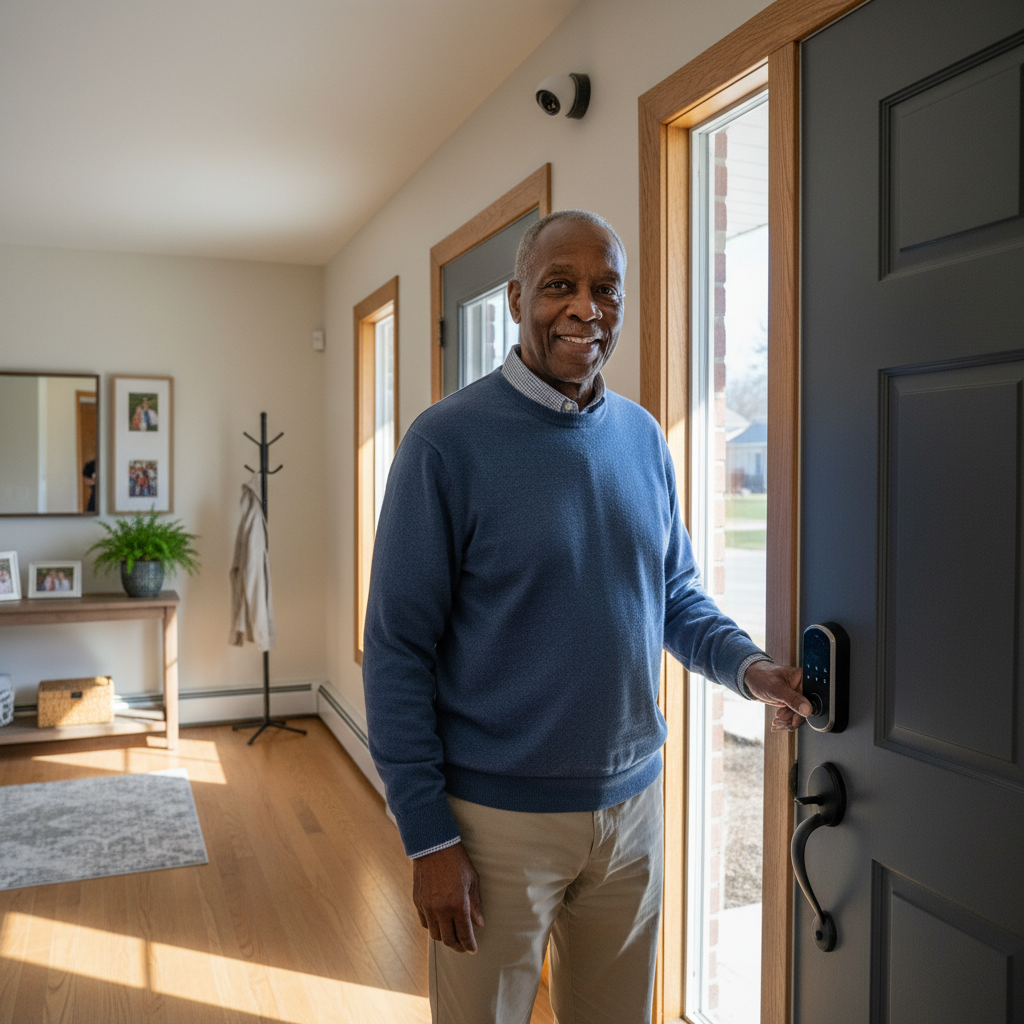
Traditional deadbolts require you to physically unlock doors. Smart locks let authorized family members access your home using their phones, eliminate fumbling for keys, and create audit trails showing who entered and when.
Cost: $1,500–$4,000 installed Benefit: No more emergency lockouts; adult children can check you've safely unlocked the door; you can grant access to caregivers without changing locks.
Security Cameras and Video Doorbells
A video doorbell lets you see who's at the door before opening it—essential if you have mobility challenges or live alone. Multi-camera systems covering entry points, driveways, and shared living spaces provide comprehensive monitoring.
Cost: $2,500–$8,000 installed Benefit: Deters package theft and intrusion; you can check on activity remotely if you travel; video evidence if theft or vandalism occurs.
Professional Monitoring and Emergency Response
Many modern systems integrate with professional monitoring services. If a door or window breach is detected, the system alerts a monitoring centre, which can contact you or dispatch police.
Cost: $40–$80 monthly, plus $2,000–$5,000 installation Benefit: 24/7 protection even when you're away; emergency response if you fall and need help; integration with medical alert systems.
Outdoor Lighting and Motion Detection
Adequate outdoor lighting eliminates dark entry points and deters trespassers. Motion-activated lights near doorways and along walkways reduce falls and illuminate unexpected visitors.
Cost: $1,000–$3,000 for comprehensive outdoor lighting Benefit: Reduced fall risk at night; deters intruders; identifies obstacles when returning home in darkness.
How a Reverse Mortgage Makes Security Upgrades Affordable
Unlike a HELOC (which requires monthly interest payments), a reverse mortgage allows you to access your home equity and defer repayment until you move, sell, or pass away. This is particularly valuable for security upgrades because:
-
No monthly cash flow impact — on a fixed income, monthly HELOC payments can strain your budget. Reverse mortgage advances don't require monthly repayment.
-
Funds available immediately — security upgrades aren't something you can delay. With a reverse mortgage line of credit, you can withdraw funds as you need them (e.g., stage 1: smart locks and doorbell; stage 2: full camera system; stage 3: professional monitoring).
-
Family can help with decisions — unlike taking out additional debt secretly, a reverse mortgage is transparent. You can involve adult children in planning upgrades, which also allows them to assess whether additional modifications (grab bars, widened doorways) should happen simultaneously.
Cost of Deferral
The tradeoff is that interest compounds on the borrowed amount. If you take a $15,000 reverse mortgage advance at 6.54% interest (Equitable Bank's 2026 rate), the balance grows:
| Year | Balance |
|---|---|
| Year 1 | $15,980 |
| Year 3 | $18,030 |
| Year 5 | $20,390 |
| Year 7 | $23,080 |
If you plan to stay in your home 10+ years, this compounding cost is real. However, compare it to the security benefits and the alternative cost of hiring private security or paying for an insecure living situation.
Real-World Example: Margaret's Security Upgrade
Margaret, 68, has lived in her Burlington, Ontario bungalow for 35 years. Her husband passed away three years ago. She felt increasingly vulnerable—the locks were original, her driveway was dark at night, and she had no way to verify who was at her door without walking to it.
Her situation:
- Home value: $650,000
- Limited monthly income: CPP $1,800 + pension $1,200 = $3,000
- Desired upgrades: smart locks, video doorbell, driveway lighting, professional monitoring
Cost of upgrades: $12,000
Options Margaret considered:
| Option | Cost | Pros | Cons |
|---|---|---|---|
| Take out a HELOC | $12,000 at 6.50% | Own funds available | $780/year interest + repayment obligation |
| Downsize to a condo | Avoids debt | Loses her home of 35 years; selling costs $15,000+ | |
| Delay indefinitely | No upfront cost | Never feels secure; falls increase risk | |
| Reverse mortgage | $12,000 via RM at 6.54% | No monthly payment; keeps home; peace of mind | Interest compounds; balance grows to ~$17,000 in 5 years |
Margaret chose the reverse mortgage. She accessed $12,000, completed the upgrades within two months, and began using her monitoring app to verify visitors. The security system reduced her anxiety about living alone. She also discovered that her adult daughter could grant herself access with the smart lock, allowing check-ins without Margaret having to answer the door during bad weather.
Five years later, Margaret's reverse mortgage balance sits at $17,000. She still plans to live in her home another 10+ years. The cost of this security and peace of mind—$5,000 in accrued interest over five years, or roughly $1,000/year—felt worthwhile for her retirement quality of life.
Integration with Broader Aging-in-Place Strategy
Security upgrades rarely happen in isolation. When you're planning a comprehensive aging-in-place approach, bundling security improvements with other renovations often makes sense:
- Grab bars + smart locks — secure entry combined with safe movement within the home
- Lighting upgrades + motion detection — reduces fall risk and deters intrusion
- Emergency response monitoring + medical alert — unified safety ecosystem
This is why talking to a reverse mortgage advisor makes sense. Rather than funding security in isolation, you can model funding a full aging-in-place package: accessibility ramps, bathroom safety, lighting, security, and monitoring all in one project. The upfront conversation often reveals synergies that reduce total cost.
Finding Reputable Security Installers
One caution: not all security companies are reputable. Some target seniors with high-pressure sales tactics or unnecessary upgrades. When planning your project:
- Get 2–3 quotes from established local companies
- Check references and online reviews on Google and Trustpilot
- Ensure the system uses standard protocols (not proprietary systems that lock you into one vendor)
- Ask about monitoring centre certifications and response times
- Verify what happens if the company closes or you move
Many reputable security companies (ADT, Telus Smart Home, local alarm companies) offer design consultations at no cost. Use these to identify genuine needs before deciding on scope and budget.
Managing the Reverse Mortgage + Security System Combination
Once you've taken a reverse mortgage advance for security upgrades, a few best practices help manage the debt:
- Treat it as a long-term investment — if you plan to stay 10+ years, the compound interest cost is manageable. If you think you'll move in 2–3 years, a HELOC might be cheaper.
- Monitor your balance annually — reverse mortgage statements show how much you've borrowed and how much it has grown. Watching this helps you understand true cost and plan for repayment if you sell later.
- Bundle additional aging-in-place costs strategically — if you need bathroom renovations next year, bundling with the security project under one reverse mortgage advance may save on application fees.
- Communicate with heirs — tell your adult children about the reverse mortgage and security system. They may offer to help repay it if you want to preserve more inheritance, or they may prefer you enjoy your security and age in place peacefully.
The Bottom Line
Your home is where you should feel safest. For many Ontario seniors, outdated security leaves them vulnerable to theft, fraud, or simply the anxiety of not knowing who's at the door. A reverse mortgage makes it affordable to upgrade to modern security without straining your retirement budget.
Security improvements are not frivolous—they're foundational to aging in place with dignity and confidence. If you've been putting off these upgrades because of cost, explore how a reverse mortgage could help you reclaim peace of mind while staying in your home.
Next steps:
- Schedule a consultation to discuss your security concerns and aging-in-place goals
- Get quotes from 2–3 reputable security installers
- Model the cost of a reverse mortgage advance against other funding options
- Make an informed decision about your home's future and your safety
Ready to explore reverse mortgage options for home security? Reach out to discuss your specific situation and how you can fund the upgrades that matter most to you.
Ready to Learn More?
Get the free Ontario Reverse Mortgage Guide and find out exactly how much you could unlock from your home.
Get My Free Guide →Related Articles
Reverse Mortgage for Home Accessibility: Age in Place Renovations
Fund accessibility renovations and aging-in-place modifications using reverse mortgage proceeds in Ontario.
Read →Fund Home Modifications to Age in Place: Ontario Guide
Discover how a reverse mortgage can finance accessibility upgrades, care services, and renovations to stay safely in your Ontario home as you age.
Read →Reverse Mortgage for Smart Home Technology: Aging in Place Safety
Fund smart home safety systems with a reverse mortgage. Install fall detection, voice controls, and monitoring systems for secure aging in place in Ontario.
Read →