
Setting Up a Home-Based Therapy Practice with a Reverse Mortgage
Use a reverse mortgage to fund your home-based therapy practice setup in Ontario and generate retirement income.
Are you a therapist, counselor, psychologist, or social worker approaching retirement, and you want to maintain professional identity and income on your own terms? Many Ontario mental health professionals have the credentials, client relationships, and desire to build a home-based private practice in their later career. A reverse mortgage provides the capital to invest in professional office space, certification costs, and business infrastructure—allowing you to generate sustainable retirement income while serving your community.
The Investment Required for a Home-Based Therapy Practice
Starting a private therapy practice requires significant upfront costs that many therapists underestimate. From a 650 sq ft home office to professional liability insurance, the investment ranges from $15,000–$50,000 depending on your specific needs:
| Practice Requirement | Estimated Cost |
|---|---|
| Professional office space renovation (soundproofing, comfortable seating, lighting) | $5,000–$15,000 |
| Furniture and equipment (desk, comfortable client seating, filing systems) | $2,000–$5,000 |
| Technology and software (EHR systems, telehealth platform, client management) | $3,000–$8,000 |
| Professional liability insurance (annual, essential for private practice) | $1,500–$3,000/year |
| Professional certifications and continuing education | $2,000–$5,000 |
| Business licensing, permits, and legal setup in Ontario | $1,000–$2,000 |
| Marketing and professional website | $1,000–$3,000 |
| Emergency operating capital (6 months' expenses while building client base) | $10,000–$20,000 |
Total investment: $25,000–$61,000 (first year, including operating capital)
A reverse mortgage makes this investment possible without delaying your practice launch or depleting retirement savings.

Why Home-Based Private Practice Works in Retirement
For experienced therapists, a home-based private practice offers significant advantages:
✓ Flexible scheduling — see 8–15 clients per week on your timeline (not your employer's) ✓ Higher income per client hour — private practice rates ($125–$200/hour) exceed employed therapist salaries ✓ Professional identity maintained — you're still a practicing therapist serving clients ✓ Tax advantages — home office deduction, business expenses, professional development write-offs ✓ Community impact — many therapists want to continue serving clients, especially in underserved areas ✓ Telehealth option — see clients across Ontario or Canada from your office ✓ Sustainable workload — you control hours and client volume
Many Ontario therapists earning $60,000–$80,000 in agency employment generate $40,000–$60,000 income by seeing 10–12 clients weekly in private practice, with significantly more control over their schedule and client population.
Real-World Scenario: Dr. Sharma's Transition
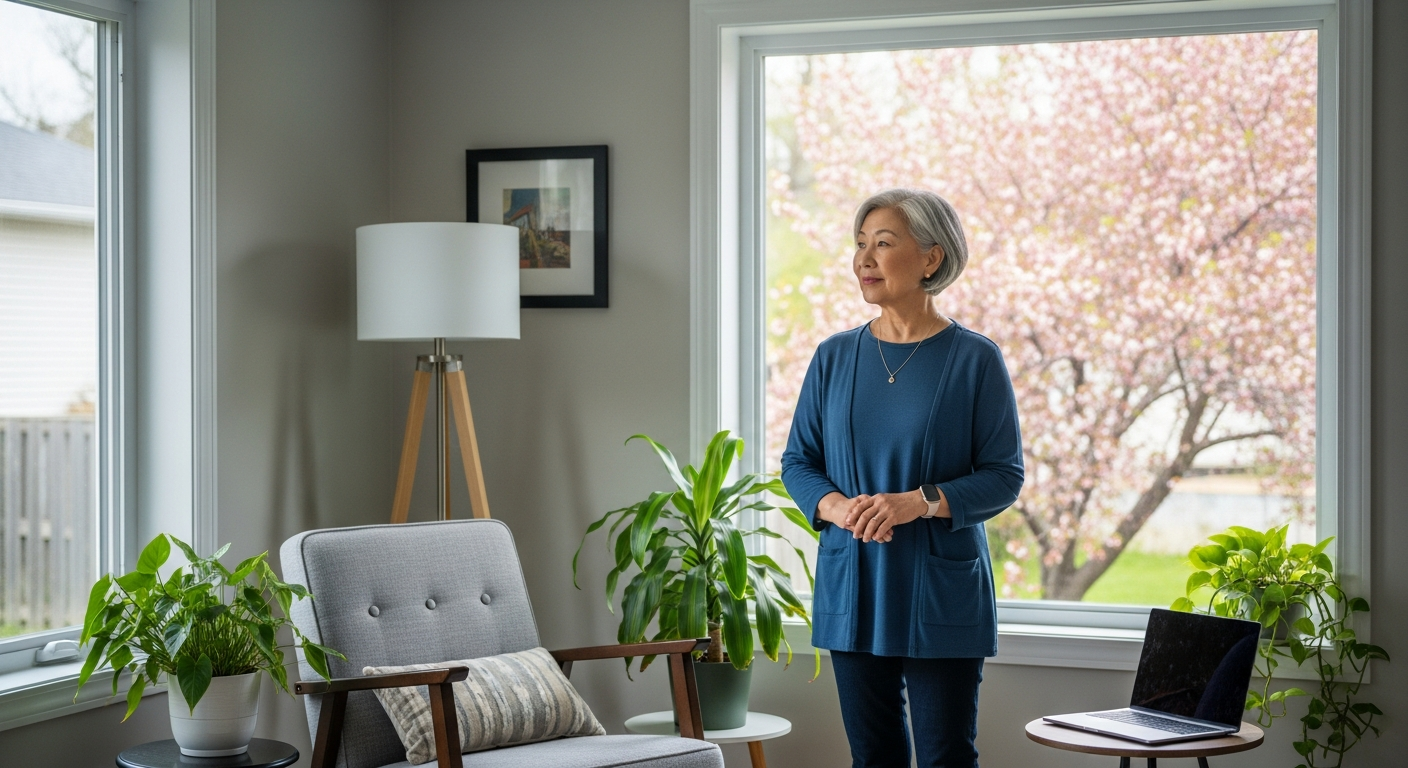
Dr. Priya Sharma (64) is a registered psychologist employed by a Toronto community mental health center. She's approaching retirement but wants to continue serving clients—particularly new immigrant families working through trauma and adjustment challenges. She decides to launch a small private practice rather than fully retire.
Initial challenge: She needs $35,000 to set up a professional home office, obtain telehealth certification, secure liability insurance, and create a professional website. Her retirement savings are already allocated. She qualifies for a reverse mortgage on her $750,000 home.
Solution:
- Reverse mortgage: $40,000 lump sum at 5.5%
- Office renovation and equipment: $12,000
- Professional certifications/technology: $5,500
- Liability insurance (first year): $2,000
- Operating capital: $20,500
Outcome: 6 months later, Dr. Sharma has built a client base of 12 regular clients, each paying $150/hour, seeing her 1–2 times per week. Monthly income: $7,200–$9,600. Annual income: $86,400–$115,200. She's serving more vulnerable clients than ever before, maintaining professional identity, and generating sustainable income that supplements her pension.
Regulatory and Insurance Considerations in Ontario
Before launching, understand Ontario's regulatory requirements:
Regulated professionals:
- Psychologists — must be registered with Professional Psychologists College of Ontario (PsyPA)
- Social workers — must meet Ontario College of Social Workers and Social Service Workers (OCSWSSW) standards
- Counselors — verify if your credential requires specific registration (varies by title)
All private therapists need professional liability insurance (errors and omissions insurance) — typically $1,500–$3,000 annually for independent practice. This is non-negotiable for client protection and your legal safety.
Consult an Ontario business lawyer to structure your practice legally (sole proprietor, corporate structure, etc.). The cost is minimal and essential for tax and liability purposes.
Tax Benefits of Home-Based Therapy Practice
According to the CRA, you can deduct:
- Home office space (proportional to office size)
- Professional development and continuing education
- Technology and software subscriptions
- Insurance and business licenses
- Marketing and professional development
A reverse mortgage is completely tax-free, and the business income you generate is your legitimate self-employment income—fully deductible for business expenses.
Frequently Asked Questions
Can I do telehealth therapy from a home-based practice?
Yes. Telehealth is well-established in Ontario, and many private therapists see clients across Canada from their home office. You'll need secure video conferencing software, privacy compliance, and potentially credential verification with OSAP (Ontario Student Assessment Program) if handling insurance billing.
What's the realistic timeline from setup to generating $4,000/month income?
Most therapists report 6–12 months to build a sustainable client base of 10–15 regular clients, assuming they have an existing referral network. If starting completely from scratch, allow 12–18 months.
How should I structure my reverse mortgage funds to cover operating costs during the ramp-up period?
Many therapists take a $40,000–$50,000 lump sum, allocate $25,000 for setup, and reserve $15,000–$25,000 as operating capital (6 months of expenses) while the practice builds. This reduces financial stress during the crucial early months.
Does a home-based therapy practice affect my OAS or GIS eligibility?
Income from self-employment may affect means-tested benefits like GIS. Consult a tax accountant or Service Canada before launching to understand the specific impact on your benefits. Generally, modest self-employment income ($30,000–$40,000/year) has minimal impact on most retirees' benefits.
Next Steps
If you're a therapist wanting to transition to private practice with financial security, a reverse mortgage can fund your professional launch. Speak with Rick Sekhon Reverse Mortgages to explore how much capital you could access for your practice setup.
Ready to Learn More?
Get the free Ontario Reverse Mortgage Guide and find out exactly how much you could unlock from your home.
Get My Free Guide →Related Articles
Reverse Mortgage for Home Office Setup: Creating a Productive Retirement Workspace
Fund your home office with a reverse mortgage. Create a productive retirement workspace for consulting, hobbies, or part-time work in Ontario.
Read →Reverse Mortgage for Community Volunteering and Part-Time Work Funding
Fund volunteering training, part-time work startup, and community engagement with a reverse mortgage. Stay active and purposeful in retirement.
Read →Reverse Mortgage for Consulting Transition: Funding Your Independent Business
Learn how Ontario seniors can use reverse mortgages to fund a consulting business transition, covering startup costs and cash flow during the early phases.
Read →