
Reverse Mortgage for Home Air Filtration: Funding Allergy and Respiratory Relief
How Ontario seniors with allergies and respiratory conditions can use a reverse mortgage to install whole-home air filtration systems, HVAC upgrades, and air quality improvements.
Breathing is supposed to be automatic. For Ontario seniors with allergies, asthma, COPD, or other respiratory conditions, poor indoor air quality turns breathing into a struggle. Dust, pollen, mold spores, pet dander, and outdoor pollution accumulate in homes—especially older ones. Clean air becomes a health necessity, not a luxury. A reverse mortgage lets you invest in professional-grade air filtration systems that transform your home into a respiratory-healthy sanctuary.
Why Indoor Air Quality Matters More as You Age
For Ontario seniors with respiratory conditions, indoor air quality directly impacts quality of life:
- Asthma & allergies: Triggered by dust, pollen, pet dander, mold—all invisible in your home
- COPD (Chronic Obstructive Pulmonary Disease): Even "clean-looking" air can contain particulates that trigger exacerbations
- Sleep quality: Poor air quality disrupts sleep; clean air improves oxygen levels during rest
- Infection risk: Better air filtration reduces airborne viruses and bacteria—critical for aging immune systems
- Medication effectiveness: When you're breathing easier, respiratory medications work better
- Independence: Improved breathing means less limitation on activities and better quality of life
Yet many Ontario homes—especially older ones—have poor air circulation and ineffective filtration. Upgrading your air quality is a health investment that compounds over time.
Air Filtration Systems: Options and Costs
Whole-Home HVAC Filtration Upgrades
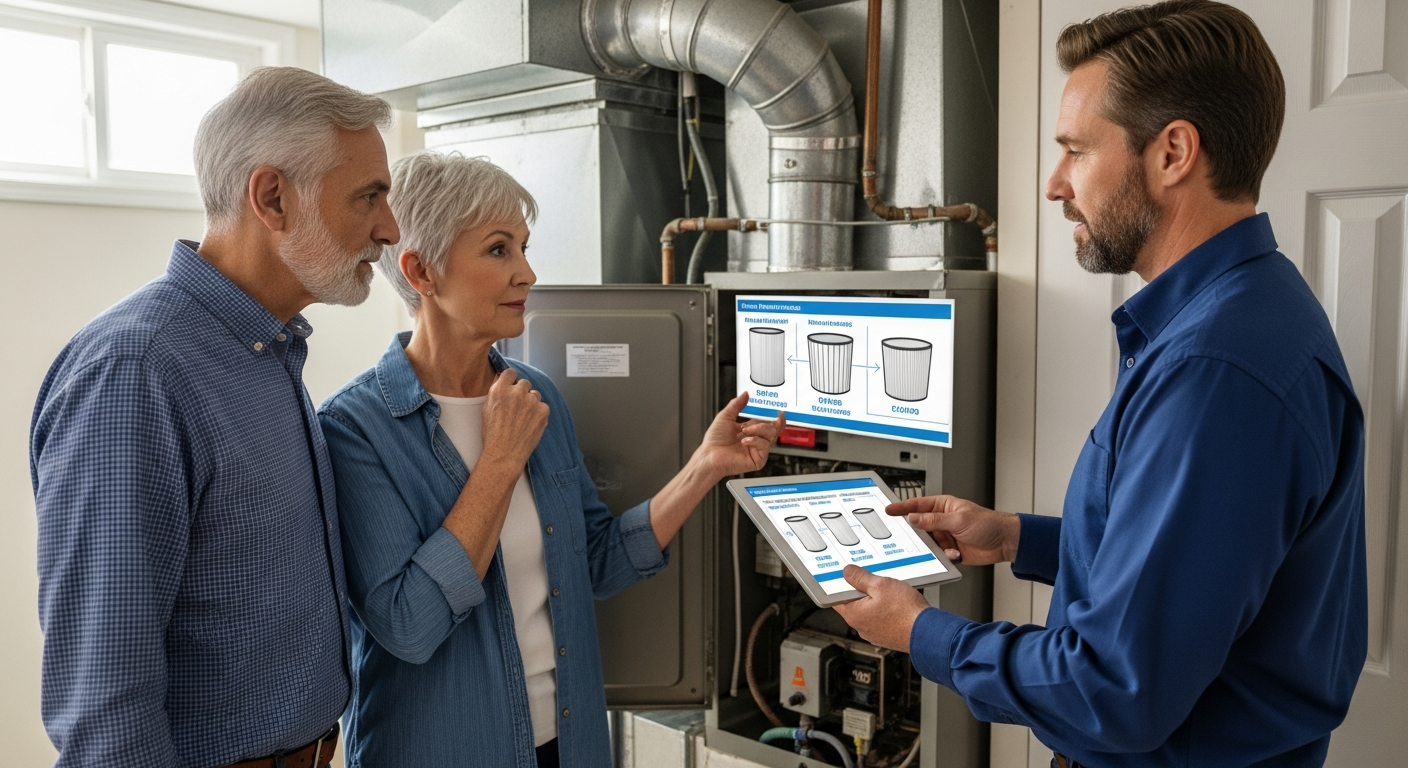
System type: Installation of high-MERV (Minimum Efficiency Reporting Value) filters and improved ductwork in your existing HVAC system.
| MERV Rating | Filtration Capability | Best For | Cost (Installation) |
|---|---|---|---|
| MERV 8–11 | Catches dust, pollen, pet dander | General home health; basic allergies | $500–$1,500 |
| MERV 13 | Catches smaller particles; blocks more allergens | Moderate allergies, asthma | $1,500–$3,000 |
| MERV 16 | Hospital-grade filtration; captures bacteria, viruses | Severe allergies, COPD, immunocompromised | $3,000–$6,000 |
| HEPA filters | 99.97% particle capture; medical-grade | Severe respiratory conditions | $4,000–$8,000 |
Note: Higher MERV ratings require professional ductwork evaluation—some older homes need duct sealing or modifications first.
Standalone HEPA Air Purifiers
System type: Portable or wall-mounted purifiers that clean room-by-room air.
| System Type | Coverage | Cost (Unit + Installation) | Benefit |
|---|---|---|---|
| Portable HEPA purifier | 1 room (300–500 sq ft) | $400–$1,500 per unit | Start small; move between rooms |
| Multiple room purifiers | Bedroom, living room, kitchen | $2,500–$5,000 total | Targeted protection in main spaces |
| Wall-mounted purifier | Whole-home integration | $2,000–$4,000 | Professional appearance; quiet operation |
Reality check: Portable purifiers work but don't address whole-home air quality. Most respiratory specialists recommend whole-home systems.
Whole-Home ERV/HRV Systems
System type: Energy Recovery Ventilator (ERV) or Heat Recovery Ventilator (HRV) systems that exchange stale indoor air for filtered outdoor air while retaining temperature control.
Benefit: Brings in fresh outdoor air (filtered) while exhausting stale indoor air—critical in airtight modern homes where indoor pollution concentrates.
Cost: $5,000–$12,000 (installation, ductwork, integration with existing HVAC)
Best for: Seniors with severe asthma, COPD, or multiple allergies who spend significant time at home.
UV Light & Duct Sanitization
System type: UV light installed in HVAC ducts kills airborne bacteria, viruses, and mold spores.
Cost: $1,500–$3,500 (installation + annual maintenance)
Best for: Respiratory conditions worsened by infection risk or visible mold in ductwork.
Real Health Conditions That Benefit From Air Filtration
Condition 1: Allergic Rhinitis & Seasonal Allergies
Symptoms: Sneezing, nasal congestion, itchy eyes—worse in spring/fall in Ontario.
Air filtration benefit: MERV 13+ filters capture pollen before it enters your breathing space. Many seniors report significant symptom improvement within weeks.
Cost: $1,500–$3,000 for MERV 13 HVAC upgrade
Condition 2: Asthma
Symptoms: Wheezing, chest tightness, difficulty breathing—triggered by dust, allergens, air pollution.
Air filtration benefit: HEPA or hospital-grade filtration (MERV 16+) reduces asthma triggers. Studies show improved lung function and fewer exacerbations with high-quality air filtration.
Cost: $3,000–$6,000 for MERV 16 or HEPA system
Condition 3: COPD (Chronic Obstructive Pulmonary Disease)
Symptoms: Shortness of breath, chronic cough, reduced exercise tolerance—worsened by air pollution and indoor particulates.
Air filtration benefit: Medical-grade filtration (HEPA with ERV) removes fine particulates that trigger exacerbations. Patients often report improved breathing capacity and fewer hospitalizations.
Cost: $8,000–$15,000 for comprehensive system (HEPA + ERV + duct sealing)
Condition 4: Mold Sensitivity & Aspergillosis Risk
Symptoms: Respiratory distress, cough, fever—from airborne mold spores. Critical risk for immunocompromised seniors.
Air filtration benefit: HEPA filtration + UV duct sanitization captures/kills mold spores. Combined with dehumidification, this virtually eliminates airborne mold risk.
Cost: $6,000–$10,000 (HEPA + UV + dehumidification system)
Condition 5: Environmental Sensitivities
Symptoms: Headaches, fatigue, breathing difficulty triggered by chemical off-gassing, perfumes, cleaning products.
Air filtration benefit: Activated carbon filters (in HEPA systems) capture volatile organic compounds (VOCs). Whole-home system removes chemical odors and off-gassing.
Cost: $4,000–$8,000 (HEPA with activated carbon)
Why A Reverse Mortgage Funds Air Quality Better Than Alternatives
| Funding Option | Pros | Cons | Suitable? |
|---|---|---|---|
| Reverse Mortgage | No monthly payments; large access; tax-free | Compound interest; reduces estate | Excellent for comprehensive systems |
| HELOC | Lower rates; pay interest-only | Requires mortgage payments; tighter approval | Good for lower-income seniors |
| Home Equity Loan | Fixed rate; predictable | Monthly payments; may not qualify at 70+ | Moderate |
| Personal savings | No debt; quick | Depletes retirement funds; usually insufficient | Only if system <$3,000 |
| Insurance claim | Covers water/mold damage | Doesn't cover preventive filtration | N/A for health upgrades |
Most Ontario seniors with respiratory conditions choose reverse mortgages because monthly payments aren't feasible on fixed CPP/OAS income. Whole-home air filtration systems cost $5,000–$15,000—a significant expense that shouldn't require monthly payments.
Step-by-Step: Installing a Respiratory-Health Air System
Step 1: Professional Air Quality Assessment ($300–$600)
Hire an HVAC specialist or industrial hygienist to test your home's air quality. Tests measure:
- Particulate matter (PM 2.5 and PM 10)
- Allergens (dust, pollen, pet dander)
- Mold spore counts
- VOCs (volatile organic compounds)
- Humidity levels
- Carbon dioxide levels
Output: A report identifying your specific air quality issues and recommended solutions.
Step 2: HVAC System Evaluation ($200–$400)
Your HVAC contractor evaluates your existing system:
- Age and efficiency of furnace/air conditioner
- Ductwork condition (leaks, blockages, mold)
- Filter accessibility and replacement costs
- Capacity to handle higher-MERV filters or additional equipment
Output: Contractor recommends whether to upgrade filters, add purifiers, or install new system.
Step 3: Choose Your Air Filtration Solution ($1,500–$15,000)
Based on assessment and evaluation, choose:
- Budget option: Upgrade to MERV 13 filters + portable HEPA purifier ($2,000–$3,000)
- Mid-range: MERV 16 HVAC system + wall-mounted purifier ($5,000–$8,000)
- Comprehensive: HEPA whole-home system + ERV/HRV + UV duct sanitization ($10,000–$15,000)
Step 4: Reverse Mortgage Access
Apply for a reverse mortgage with a licensed broker. Clearly communicate the purpose: respiratory health improvement through air filtration.
- You'll receive a quote for your available equity
- You can borrow $5,000–$50,000+ depending on age and home value
- Funds are tax-free and available within 4–6 weeks
- No monthly payments—only interest compounds on borrowed amount
Step 5: Installation & Integration (2–4 weeks)
Licensed HVAC contractors install new equipment and integrate with existing systems. Modern systems integrate with smart home technology, allowing you to monitor air quality in real-time.
Step 6: Maintenance & Monitoring (Ongoing)
- Filter replacements: Every 3–6 months ($50–$200 per filter)
- Annual HVAC service: $150–$300
- UV bulb replacement: Every 1–2 years ($100–$200)
- Air quality monitoring: Free apps through your purifier/system
Real-World Case: Ontario Senior With COPD
James, 72, Ottawa: James had COPD from years of exposure in manufacturing. His oxygen levels were declining despite medication. His pulmonologist recommended improving his home's air quality—but James and his wife, on CPP/OAS, couldn't afford the $12,000 system his HVAC contractor quoted.
Solution: James and his wife accessed a reverse mortgage for $100,000 against their $380,000 home. They funded:
- Comprehensive HEPA air filtration system: $8,000
- ERV system for fresh air exchange: $4,500
- UV duct sanitization: $2,000
- Smart monitoring system: $1,500
- Total: $16,000
Result within 3 months:
- James's oxygen saturation improved from 88% to 92%
- He could walk further without shortness of breath
- His sleep quality improved (fewer nighttime breathing episodes)
- His medication effectiveness increased (fewer exacerbations)
James credits the air filtration system with adding 2–3 years of active life. He views it as one of the best health investments he's made—and the reverse mortgage made it possible.
Questions to Ask Your Doctor
Before investing in air filtration:
- Does my condition benefit from air filtration? (Most respiratory conditions do)
- What level of filtration should I target? (MERV 13, MERV 16, HEPA?)
- Should I add a dehumidification or UV system? (Depends on your specific condition)
- How quickly might I see improvement? (Usually 2–6 weeks)
- Are there government grants or programs that cover home health modifications for respiratory conditions? (Ontario Seniors Home Safety Tax Credit, Accessibility Tax Credit, RAP program)
The Bottom Line
Respiratory conditions aren't just an inconvenience—they limit your independence, quality of life, and potentially your lifespan. Clean air is healthcare. A reverse mortgage lets you invest in your respiratory health without monthly payments or income requirements.
For Ontario seniors with asthma, allergies, COPD, or mold sensitivity, whole-home air filtration systems represent one of the highest-ROI health investments available. You breathe easier, sleep better, move more, and live fuller.
Your home should support your health—not compromise it.
Explore reverse mortgage options for health improvements like air filtration →
This content is for informational purposes. Always consult your physician before undertaking home health modifications. Reverse mortgage rates, terms, and eligibility vary. Consult a licensed mortgage broker for your specific situation.
Ready to Learn More?
Get the free Ontario Reverse Mortgage Guide and find out exactly how much you could unlock from your home.
Get My Free Guide →Related Articles
Reverse Mortgage for Home Winterization and Climate Adaptation in Ontario
Ontario winters are getting unpredictable, with extreme cold and ice storms. Use a reverse mortgage to winterize your home and adapt to changing climate challenges for reliable comfort.
Read →Reverse Mortgage for Healthcare Costs: Aging in Place in Ontario
How Ontario seniors use a reverse mortgage to fund home care, medical equipment, prescriptions, and healthcare expenses — and stay in their home longer.
Read →Aging in Place with a Reverse Mortgage: Home Modification Guide
How Ontario seniors can fund aging-in-place home modifications with a reverse mortgage — costs, top modifications, grants, and a complete planning guide.
Read →