
Gift Home Equity to Your Children: Reverse Mortgage for Living Legacy
Help your adult children while you're alive by gifting home equity through a strategic reverse mortgage. Experience the joy of seeing your generosity in action.
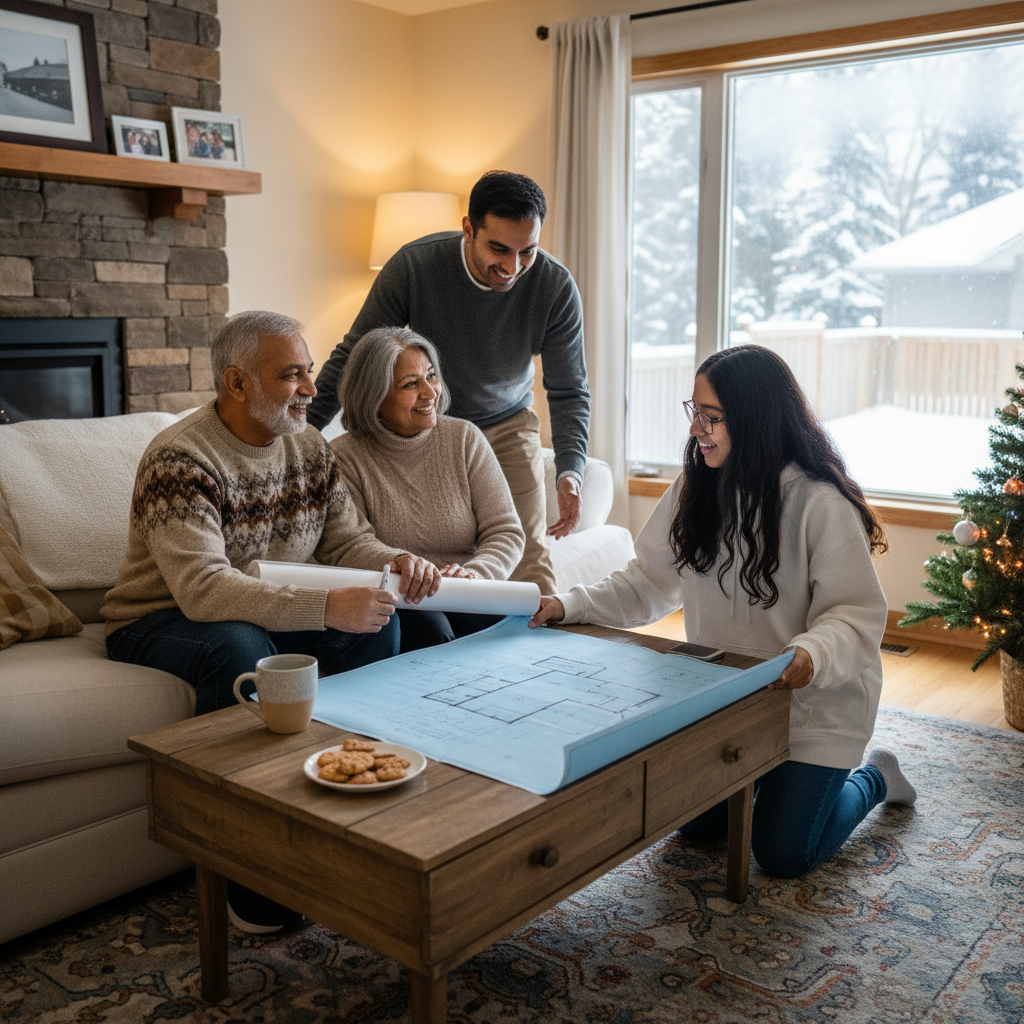
"I'd love to help my kids with a down payment or pay for their education, but all my wealth is locked in my home. How can I access it while I can still see them benefit?" Many wealthy homeowners feel the same conflict: decades of home equity appreciation, the means to be generous, but no mechanism to gift money to children without selling the family home. A reverse mortgage changes this equation. It unlocks home equity while you're alive, allowing you to see your children enjoy your gift and experience the psychological reward of multi-generational wealth transfer while you're here to witness it.
This article is for educational purposes only and does not constitute financial advice.

The Living Legacy Opportunity
Traditional estate planning assumes wealth transfer happens after your death. Your will distributes home equity to your heirs, who sell the home and divide proceeds. You never see the impact.
A reverse mortgage enables living legacy — transferring wealth to the next generation while you're alive to see and experience the results:
- Watch your daughter's first home become a family gathering place
- See your grandchildren attend the university your gift made possible
- Witness your son's business launch with working capital you provided
- Know that your generosity changed your family's trajectory
According to CARP (Canada's Association for the Fifty-Plus), seniors who gift money to adult children report significantly higher life satisfaction and family connection than those who defer all wealth transfer to post-death distribution.
How Much Can You Gift?
A reverse mortgage doesn't require you to give away your home. You remain the owner, living in the property for life. You simply borrow against your equity and gift the proceeds.
| Home Value | Max Reverse Mortgage (55%) | Prudent Gift Amount (25% of value) |
|---|---|---|
| $400,000 | $220,000 | $100,000 |
| $500,000 | $275,000 | $125,000 |
| $600,000 | $330,000 | $150,000 |
| $700,000 | $385,000 | $175,000 |
| $800,000 | $440,000 | $200,000 |
A "prudent" gift is 20–30% of home value, allowing you to maintain financial safety while being meaningfully generous.
Real-World Scenario: Jennifer's Multigenerational Gift
Jennifer, 68, Toronto home valued at $650,000:
- No mortgage remaining
- Pension: $3,500/month
- Goals: Help two adult children with major financial milestones
- Planned gifts:
- Daughter (age 35): $60,000 down payment on first home
- Son (age 32): $40,000 student loan payoff + moving costs for new job
- Total: $100,000
Traditional approach: Sell home now, downsize to $400,000 property, net $200,000 after costs. But Jennifer loses her beloved home.
Reverse mortgage approach:
- Borrow $100,000 (15% of home value, well below 55% max)
- Set up structured drawdown: $30,000 in month 1 (daughter), $35,000 in month 2 (son), $35,000 retained for own emergencies
- Interest cost: ~$45,000 over 10 years
- Monthly payment: $0
- Outcome: Jennifer stays in her home, gifts $100,000 to children while alive, and experiences their success firsthand
Cost-benefit: Jennifer pays $45,000 in interest to remain in her home and gift $100,000. She views this as excellent value for both the financial gift to her children and the lifestyle benefit of staying put.
Why This Matters Psychologically
Research in gerontology shows that generosity in the final years of life is profoundly linked to life satisfaction and meaning. Seniors who actively contribute to their family's wellbeing — rather than passively waiting to disinherit — report:
- Higher sense of purpose
- Stronger family relationships
- Greater emotional satisfaction
- Reduced regret and anxiety about legacy
One senior described it: "Seeing my daughter's face when I gave her the down payment check — that was worth more than any inheritance would have been after I was gone."
Structuring the Gift: Legal and Tax Considerations
Is a Gift Taxable?
No. In Canada, gifts between family members are not subject to income tax or capital gains tax — regardless of the source of the gift or the amount.
- You borrow $100,000 via reverse mortgage
- You gift $100,000 to your child
- Tax consequence: Zero
The reverse mortgage is a loan (not taxable). The gift is a gift (not income to your child). No tax forms required.
According to the Canada Revenue Agency (CRA), gifts between family members are not taxable to either the giver or the receiver. The only exception is gifts of property with unrealized capital gains — but a direct cash gift has no tax consequence.
Documenting the Gift
While gifts are not taxable, documenting them properly protects both you and your child:
Best practice:
- Create a simple letter stating the gift was made as a gift, not a loan
- Example: "This $60,000 is given to [Child Name] as a gift, with no expectation of repayment. No interest is owed."
- Date and sign the letter (or have a notary sign for formality)
- Keep a copy for your records
Why? If you die soon after gifting, clarity prevents disputes about whether the amount should be deducted from the child's inheritance or was a gift already distributed.
Strategic Timing: Gifting Before the Will is Read
Some families find it valuable to gift during the parent's lifetime specifically to:
- Equalize inheritances (e.g., one child got a down payment gift; balance the will accordingly)
- Reduce the estate size (inheritance tax planning)
- Create clear records (gifts are documented; inheritances are defined in the will)
This requires intentional planning with an estate lawyer.

Gift Scenarios: Where the Money Goes
Scenario 1: Down Payment on a Home
- Daughter, age 32, needs $75,000 down payment
- You gift $75,000 via reverse mortgage
- She buys her first home; you visit regularly and watch it become her family's gathering place
- Cost to you: ~$33,000 in interest over 10 years (assuming you hold the $75,000 balance)
Scenario 2: Education or Professional Development
- Son, age 28, wants to return to university for an MBA
- Professional education typically costs $40,000–$80,000
- You gift $50,000; he covers the balance with student loans
- He graduates; his career earnings increase significantly; you see the payoff
- Your gift accelerated his professional achievement
Scenario 3: Business Startup
- Daughter, age 35, has a business idea but needs working capital
- Investors will co-fund, but she needs a personal injection of $60,000
- You gift $60,000; her business launches
- You watch her entrepreneurial success unfold
- Her business thrives; her family benefits
Scenario 4: Life Crisis Support
- Son goes through a divorce; he needs $40,000 to cover legal fees and move to new housing
- You gift $40,000, easing his transition and demonstrating unconditional parental support
- He rebuilds his life with dignity; you've played a crucial role
The No-Negative-Equity Guarantee Protects Everyone
You gift $100,000 to your children. The reverse mortgage grows to $200,000 in debt over 15 years (due to compounding interest). When you pass away, the home sells for $750,000. The estate:
- Repays the $200,000 reverse mortgage
- Distributes the remaining $550,000 to heirs
The No-Negative-Equity Guarantee means your heirs will never owe more than the home is worth — so the gift you gave to one child doesn't financially harm the others.
According to HomeEquity Bank, the issuer of CHIP reverse mortgages, the No-Negative-Equity Guarantee ensures that as long as you honour the mortgage terms, your estate will never owe more than the fair market value of your home at the time the loan becomes due.
This protection is critical for gifting scenarios. It means you can gift boldly without fear that compound interest will exceed home value and create a burden for your heirs.
Drawback: Reduced Estate for Other Heirs
An important reality: if you gift $100,000 to one child via a reverse mortgage, and that $100,000 grows to $200,000 in debt, the estate left for all heirs is reduced by $200,000 compared to a no-reverse-mortgage scenario.
Is this fair to other heirs? This is a family values question:
- Some parents believe gifting to one child while alive is fine if documented clearly in the will
- Others prefer to equalize by adjusting the will (e.g., that child's inheritance is reduced by the gift amount)
- Others view the gift as separate from estate planning (each child gets what the will specifies)
Best practice: Discuss the gifting and estate plan with an estate lawyer and family members to ensure clarity and prevent conflict.
Frequently Asked Questions
Can I gift the reverse mortgage proceeds to an adult child, or must they be used for my own expenses?
You can use reverse mortgage proceeds for any purpose, including gifting to family members. Lenders do not restrict the use of funds (they're not loans from the government with restricted purposes). Use them as you wish.
What if my child wants to repay the gift later?
Gifts are not loans. If you frame it as a gift, your child is not obligated to repay. However, some families structure it as an interest-free family loan with repayment terms — this is different (and more complex, tax-wise). If you want repayment possibility, consult a lawyer.
Should I tell my other children I'm planning a large gift to one child?
Family communication is important. Some parents tell all children about the gifting plan upfront; others handle it privately. There's no rule, but transparency prevents surprises or hurt feelings later. Consider discussing with your lawyer.
Does my child owe tax on a gift?
No. In Canada, gifts are never taxable to the receiver. Your child does not report it as income on their tax return.
What if I gift money, but my financial situation deteriorates?
Gifts are irrevocable — you cannot take the money back. However, if you subsequently need funds and have a structured reverse mortgage drawdown, you can retain additional funds for your own needs.
Can I set conditions on the gift (e.g., "use only for a down payment, not anything else")?
You can express your intention, but you cannot legally enforce conditions on a gift. Once the money is transferred, your child can use it for any purpose. If you want legal control, consult a family lawyer about trusts or conditional loan structures (more complex).
The Living Legacy Difference
Estate planning is important. But living legacy — giving while you can see the impact — is a different and profound experience. A reverse mortgage makes this possible:
- You experience your generosity in action
- Your family bonds deepen as you support major milestones
- Your children understand your values and commitment to their wellbeing
- You model the kind of generosity you hope they'll show their own children
For homeowners with significant equity who want to be generous while alive, a reverse mortgage is a uniquely powerful tool.
Speak to a licensed mortgage professional. Independent legal advice is required before closing a reverse mortgage in Ontario.
This content is for illustrative purposes only. Rates may vary. Call Rick Sekhon for the best rates and more information.
Related Reading
Ready to Learn More?
Get the free Ontario Reverse Mortgage Guide and find out exactly how much you could unlock from your home.
Get My Free Guide →Related Articles
Reverse Mortgage Eligibility in Ontario: Complete 2026 Guide
Everything Ontario homeowners need to know about qualifying for a reverse mortgage in 2026. Covers age requirements, home equity, property types, and the application process.
Read →What Happens to a Reverse Mortgage When You Die in Ontario? A Guide for Families
What happens to your home and reverse mortgage when you pass away in Ontario? A clear guide for homeowners and their families on estate settlement, repayment, and protecting your heirs.
Read →Reverse Mortgage for Workplace Injury Recovery: Supporting Adult Child's Career Transition
Help your adult child rebuild their career after workplace injury. Learn how reverse mortgages fund recovery, retraining, and financial stability during career transition.
Read →