
Reverse Mortgage on a Farmhouse or Rural Property in Ontario
Can you get a reverse mortgage on a farm or rural property in Ontario? Special rules, lender restrictions, and workarounds for agricultural real estate.
"I own a 50-acre farm with a farmhouse, and I'm 62 looking to retire in a few years. Can I get a reverse mortgage on the farm?" This question comes up regularly from rural Ontarians who have significant equity in agricultural property but face unique financing challenges. The answer is nuanced: most mainstream reverse mortgage lenders will not finance agricultural properties or farms with active operations. However, several workarounds exist, and specialized lenders are beginning to offer rural reverse mortgages. This guide explains the rules, why farms are complicated, and your realistic options.
This article is for educational purposes only and does not constitute financial advice.
The Core Problem: Why Farms Don't Qualify
Most Canadian reverse mortgage lenders—including CHIP, Equitable Bank, HomeEquity Bank, and Home Trust—have explicit exclusions in their lending criteria:
Standard reverse mortgage policy:
- Property must be a principal residence (owner-occupied home)
- Property cannot be used for commercial or agricultural purposes
- Property cannot be part of an active farm operation
- Property must be within a serviced residential area (near utilities, roads, services)
Why the restriction?
- Risk assessment — Farms have seasonal income, commodity price volatility, and crop/animal loss risks; lenders cannot reliably model repayment capacity
- Valuation difficulty — Farm valuations are complex; lenders prefer standard residential appraisals
- Market liquidity — Rural property sells slower than urban/suburban homes; lenders worry about forced sales if borrower dies or defaults
- Zoning complications — Agricultural property may have restrictions on residential-only use; lenders avoid these complexities
- Inheritance and succession — Family farms often have succession disputes; lenders avoid entanglement
The result: most farmers and rural Ontarians cannot access conventional reverse mortgages.
Exception 1: The Farmhouse with No Active Farm Operation
If you own a farmhouse on acreage but the property is no longer used for farming, some lenders will consider it a rural residential property rather than agricultural.
Criteria that help: ✓ You own the farmhouse but the land is not actively farmed ✓ You've separated the residence from any active farm operation ✓ The property is zoned residential or residential-rural (not agricultural) ✓ You have clear deed showing the residence is your principal residence ✓ The property is within reasonable proximity to urban services (within 30–50 km of a town)
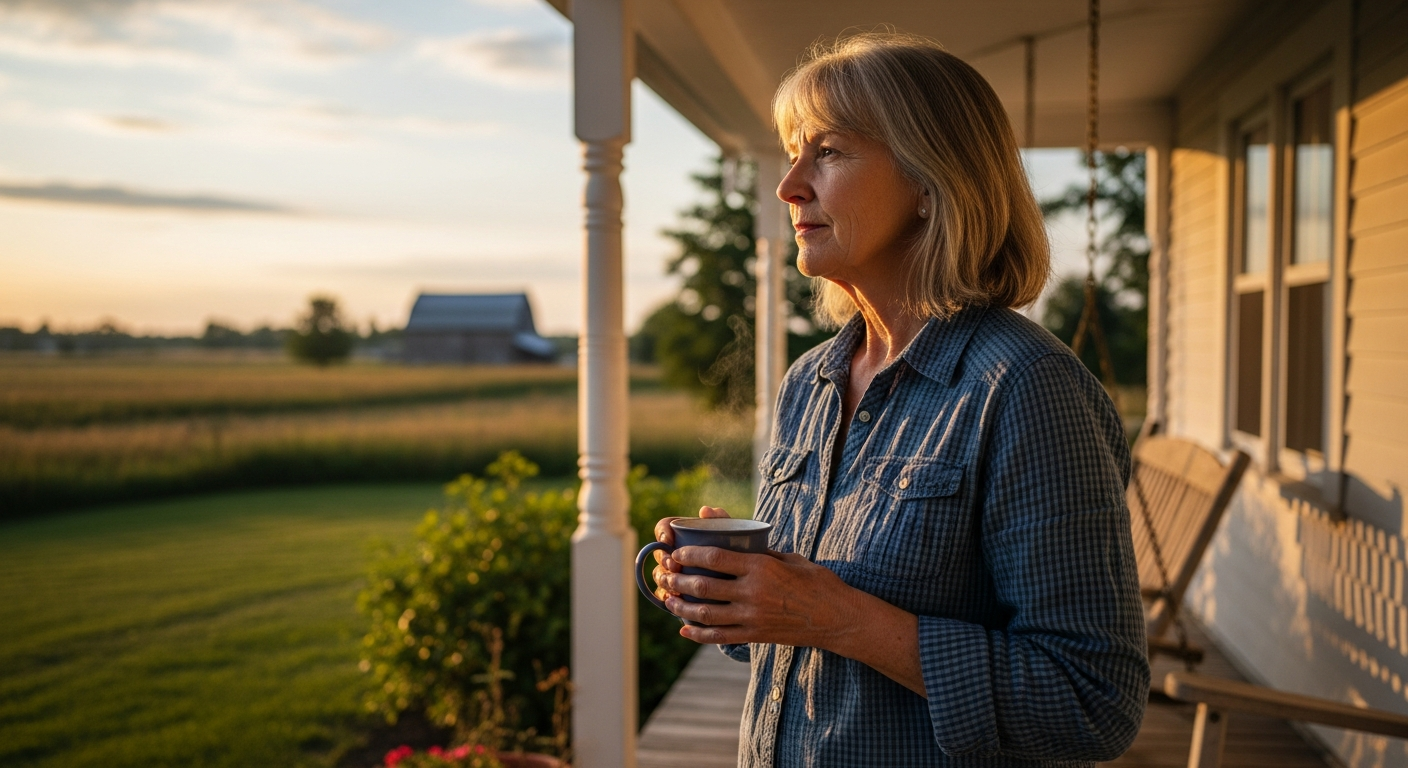
Example: Margaret, 66, owns 10 acres with a farmhouse in rural Ontario. She inherited the property from her parents, who farmed it 20 years ago. Today, the land is used only for personal use (gardens, privacy buffer). Margaret may qualify for a reverse mortgage if she can prove the property is residential, not agricultural.
| Lender | Will Consider "Retired Farmhouse"? | Notes |
|---|---|---|
| CHIP | Sometimes | Case-by-case; requires non-farming confirmation |
| Equitable Bank | Sometimes | More flexible than CHIP on rural properties |
| HomeEquity Bank | Rarely | Stricter on acreage and agricultural zoning |
| Home Trust | Sometimes | Varies by property; valuation challenges |
| Bloom Financial | Rarely | Focuses on standard residential |
To qualify:
- Obtain a property tax assessment confirming residential zoning (not agricultural zoning)
- Provide a statutory declaration stating no farming operations occur on the property
- Get a professional appraisal emphasizing residential value, not farm/land value
- Work with Rick Sekhon to find a lender willing to consider your specific property
Exception 2: Agricultural Debt Consolidation Program (ADCP)
Ontario has a specialized program—the Agricultural Debt Consolidation Program (ADCP)—designed for farmers and agricultural operators. However, it is not a reverse mortgage. Instead, it's a traditional loan program with different rules.
ADCP overview:
- Administered by Farm Credit Canada (FCC) and Ontario's Ministry of Agriculture
- Designed for active farmers with agricultural operations
- Requires income verification and debt service qualification (not reverse mortgage-friendly)
- Not a "no-payment" product; monthly payments required
- Interest rates are competitive (often lower than traditional lenders)
- Can be used for consolidation, equipment, land purchases, or working capital
Comparison: ADCP vs. Reverse Mortgage
| Feature | ADCP | Reverse Mortgage |
|---|---|---|
| For active farmers? | Yes | No |
| Monthly payments required? | Yes | No |
| Income/credit check? | Yes | No |
| Typical age range | 18–75 | 55+ |
| Fixed interest rate? | Yes (usually) | Yes |
| Repayment timeline | 5–25 years | No set timeline; repaid at sale/move |
ADCP is useful if you're a working farmer needing to consolidate debt, but it won't help if you're retired and need no-payment financing.
Workaround 1: Separate the Residence from the Farm
If your farmhouse is on the same parcel as active farm operations, consider separating the property legally.
How it works:
- Contact a real estate lawyer
- Create a legal subdivision: split the farmhouse + 1–2 acres from the larger farm parcel
- The subdivision creates a new legal property deed
- The smaller parcel (farmhouse) becomes a residential property; the larger parcel (farm) remains agricultural
- You can now apply for a reverse mortgage on the residence
Costs:
- Lawyer fees: $1,500–$3,000
- Surveying and subdivision costs: $2,000–$5,000
- Municipal processing fees: $500–$1,500
- Total: $4,000–$9,500
Benefits:
- Opens access to reverse mortgage financing on the residence
- Makes estate planning simpler (can gift residence separately from farm)
- Reduces property tax assessment on the residential parcel (may save money long-term)
Drawbacks:
- Time-consuming (4–8 weeks)
- May complicate farm succession (if all heirs don't get equal pieces)
- Doesn't help if the entire property must stay together for farm viability
Workaround 2: Sell the Farm, Buy a Residential Property
This is the most straightforward option for many rural seniors.
Strategy:
- Sell the farm (or farm off the land; keep the residential parcel)
- Use proceeds to purchase a residential home in a town or city
- Apply for a standard reverse mortgage on the new property
Example: Bob, 67, owns a 100-acre dairy farm worth $1.5 million. He wants to retire. He:
- Sells the farm for $1.5 million
- Purchases a $550,000 home in a nearby small town
- Has $950,000 in proceeds; no mortgage debt
- If needed at 70, can borrow $250,000–$300,000 via reverse mortgage on the town home
- Remaining $600,000–$700,000 in proceeds invested for retirement income
Pros:
- Accesses full reverse mortgage benefits
- Simplifies estate (residential property is easier to manage)
- Reduces ongoing property taxes and maintenance (especially if farm was large)
Cons:
- Must sell the farm (may be emotionally difficult)
- Real estate transaction costs: ~5–7% ($75,000–$105,000 on $1.5M sale)
- May face capital gains tax on farm sale if property appreciated
- Requires finding suitable residential property in your region
Workaround 3: Specialized Rural Lenders
A small number of Canadian lenders are beginning to offer reverse mortgages on rural and agricultural properties. These are newer products and may not be widely advertised.
Emerging lenders:
- Some credit unions in Ontario (rural-focused) are experimenting with rural reverse mortgages
- Specialized agricultural lenders occasionally bundle reverse mortgage products
- Private lenders may finance rural properties at higher rates (8–12%) with stricter terms
To access specialized lenders:
- Contact Rick Sekhon — he works with lenders across Canada and may know of rural options
- Call your local farm organization (Ontario Federation of Agriculture, local agricultural society) for lender recommendations
- Contact Farm Credit Canada (FCC) — they don't offer reverse mortgages but may refer you to partners
Note: Specialized lenders often charge 1–3% higher rates due to increased risk and complexity. Ensure the cost is justified before committing.
Workaround 4: Accelerate Retirement, Pay Off Debt
If a reverse mortgage isn't accessible, consider:
- Downsize the property — Sell the farm or acreage; move to a smaller residential property; use proceeds for debt payoff and retirement income
- Accelerate farm sale — Sell now while you're healthy and can manage the transition; use proceeds for retirement
- Transfer to heirs early — If you plan to pass the farm to children anyway, do so while alive and take a reverse mortgage on your new residential property instead
Tax Implications of Farm Sale and Purchase
Important note: Selling a farm property may trigger significant capital gains tax.
| Scenario | Tax Consequence |
|---|---|
| Sell farmhouse + acreage (not principal residence) | Capital gains on appreciation beyond purchase price (50% inclusion rate) |
| Sell farmhouse + acreage (claimed as principal residence) | No capital gains (principal residence exemption) |
| Sell farmland (working farm) | Potential capital gains tax; potentially eligible for rollover under certain conditions |
Consult a tax advisor before selling farm property. You may be eligible for specialized rollover or deferral strategies that reduce immediate tax liability.
According to the CRA, the principal residence exemption (which exempts your home from capital gains tax) can apply to farmhouses, but only if the entire property was designated as your principal residence throughout ownership. If you used part of the property for farming, the exemption may be partial.
Special Consideration: Agricultural Land Reserve and Zoning
If your property is in Ontario's Agricultural Land Reserve or has agricultural zoning restrictions:
- Lenders will not finance it (even if you're not actively farming) because zoning restricts residential use
- You may need a zoning change before lenders will consider financing
- Zoning changes require municipal approval and can take 6–12 months
- Even with a zoning change, lenders may still decline if the property retains "agricultural character"
Bottom line: If zoning is restrictive, residential financing (including reverse mortgages) will be very difficult. Selling and relocating to a standard residential property is more practical.
Frequently Asked Questions
Can I get a reverse mortgage on rental property I own in addition to my principal residence?
No. Reverse mortgages are available only on your principal residence (the home you live in). If you own a farm and a separate residential home you live in, you can get a reverse mortgage on the residential home—not the farm.
What if I own a farmhouse but rent it out—can I get a reverse mortgage?
No. If the property is a rental (income property), it does not qualify as a principal residence. Reverse mortgages are available only on owner-occupied principal residences.
Can my adult child (also living on the farm) co-own the reverse mortgage?
Only if the child is 55+ and is a registered owner on the property title. If the property is in your name only, the child cannot be a co-borrower. After your death, the property would be subject to probate and estate settlement.
Is there a reverse mortgage option if I live in an acreage outside any town (no nearby services)?
Unlikely. Most lenders require the property to be within reasonable proximity to utilities, roads, and services. Very remote acreage is difficult to finance via any mortgage product.
What if I own a farmhouse but it's zoned for commercial/agritourism use?
Lenders will not finance properties zoned for commercial or mixed-use purposes. You would need to rezone to residential-only before approaching lenders. Rezoning can take 6–12 months and is not guaranteed.
Can I use a reverse mortgage to buy a farm?
No. Reverse mortgages are available only on properties you already own (for owners 55+). They cannot be used to purchase new properties. If you're buying a property, you'd need a traditional mortgage.
Speak to a licensed mortgage professional. Independent legal advice is required before closing a reverse mortgage in Ontario.
This content is for illustrative purposes only. Rates may vary. Call Rick Sekhon for the best rates and more information.
Ready to Learn More?
Get the free Ontario Reverse Mortgage Guide and find out exactly how much you could unlock from your home.
Get My Free Guide →Related Articles
Reverse Mortgage Eligibility in Ontario: Complete 2026 Guide
Everything Ontario homeowners need to know about qualifying for a reverse mortgage in 2026. Covers age requirements, home equity, property types, and the application process.
Read →Reverse Mortgage Application Process: Step-by-Step Guide for Ontario
Complete step-by-step guide to the reverse mortgage application process in Ontario. Learn the timeline from first call to funding, typically 3-6 weeks.
Read →Aging in Place with a Reverse Mortgage: Home Modification Guide
How Ontario seniors can fund aging-in-place home modifications with a reverse mortgage — costs, top modifications, grants, and a complete planning guide.
Read →