
Reverse Mortgage for Debt Consolidation in Ontario: Complete Guide
How Ontario seniors use a reverse mortgage to eliminate high-interest debt, stop monthly payments, and restore cash flow in retirement. Real numbers included.
"I owe $78,000 across three credit cards and a car loan — how am I supposed to retire on this?" If you are carrying consumer debt into retirement on a fixed income, the monthly interest alone can make financial stability feel out of reach. For Ontario homeowners aged 55 and older, a reverse mortgage for debt consolidation offers a way to wipe out high-interest obligations in one move — without creating new monthly payments. This guide explains exactly how it works, when it makes sense, and what to watch for.
This article is for educational purposes only and does not constitute financial advice.
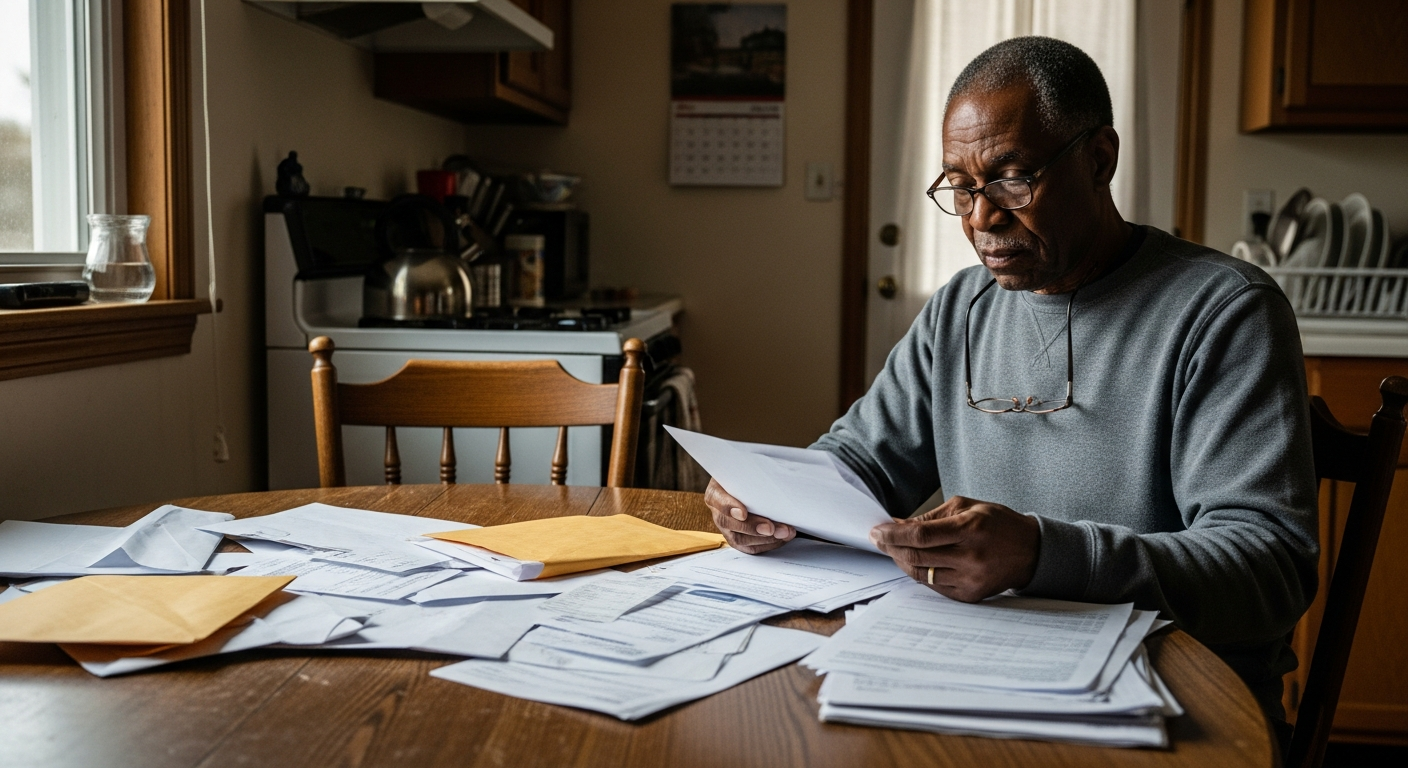
The Debt Problem Facing Ontario Retirees
Carrying debt into retirement is increasingly common. Rising costs of living, healthcare expenses, and family support obligations have left many Ontario seniors with significant liabilities at a time when their income has become fixed.
According to Statistics Canada, the proportion of Canadians aged 55–64 carrying debt rose from 62% in 2005 to over 74% in 2023, with average non-mortgage debt among pre-retirees exceeding $25,000.
The challenge with consumer debt in retirement is compounding. Credit card interest rates in Canada typically run 19.99%–29.99% annually. On a $20,000 balance at 19.99%, making only minimum payments could take over 25 years to clear — costing more than $35,000 in interest.
| Debt Type | Typical Interest Rate | $20,000 Balance — Monthly Min. Payment | Years to Pay Off at Min. | Total Interest Paid |
|---|---|---|---|---|
| Credit card (standard) | 19.99% | ~$400–$600 | 25+ years | $35,000+ |
| Department store card | 28.99% | ~$600–$700 | 30+ years | $55,000+ |
| Personal line of credit | 8%–12% | ~$200 | 10–15 years | $6,000–$10,000 |
| Car loan | 7%–14% | ~$400–$450 (fixed term) | 4–6 years | $2,000–$4,000 |
| Reverse mortgage interest rate | 6.54%–7.99% | $0 (no payments required) | Due when home sold | Compounds on balance |
How Debt Consolidation with a Reverse Mortgage Works
A reverse mortgage can be used to pay off any outstanding debts in a single transaction. Here is the basic structure:
- You apply for a reverse mortgage based on your age and home's appraised value
- Lender advances funds (lump sum or staged draws)
- You use the proceeds to pay off credit cards, car loans, lines of credit, or other obligations
- No monthly payments are required on the reverse mortgage — interest compounds on the balance
- The loan is repaid when you sell the home, permanently move out, or pass away
The result: your monthly cash flow increases by the amount you were previously paying in debt service.
Real-World Scenario: Margaret, 68, Ottawa
Margaret has a $750,000 home, no existing mortgage, and three debts totalling $85,000:
- Credit card: $30,000 at 19.99% → monthly minimum ~$600
- Car loan: $22,000 at 9.9% → monthly payment $450
- Personal LOC: $33,000 at 9.5% → monthly minimum ~$315
Total monthly debt payments: $1,365
| Factor | Before Reverse Mortgage | After Reverse Mortgage |
|---|---|---|
| Monthly debt payments | $1,365 | $0 |
| Reverse mortgage balance | $0 | $85,000 |
| Annual interest on reverse mortgage (est. 7%) | N/A | ~$5,950 (compounds, no payment) |
| Available monthly income | Fixed pension/CPP/OAS | Same — plus $1,365 freed up |
| Home ownership retained | Yes | Yes |
Margaret frees up $1,365 per month — effectively giving herself a significant raise on her fixed pension income, without having to sell her Ottawa home or qualify for a new loan based on income.
The Interest Rate Trade-Off
The most important calculation in debt consolidation is the effective interest rate comparison. A reverse mortgage currently carries rates between 6.54% (Equitable Bank) and 7.99% (CHIP variable), compounding semi-annually.
This rate is:
- Lower than credit card rates by a wide margin (12–23% lower)
- Comparable to or slightly above personal lines of credit and car loans
This means consolidating credit card debt into a reverse mortgage is almost always financially advantageous. Consolidating lower-rate debt (such as a personal LOC at prime + 1%) requires more careful analysis, because the flexibility you lose (no-payment structure) comes with the cost of compounding interest.
According to the FCAC, the effective annual interest rate on a reverse mortgage, when compounding is factored in, is typically 0.10%–0.50% above the stated nominal rate. Borrowers should request the Annual Percentage Rate (APR) from their lender to make accurate comparisons.
For current reverse mortgage rates across all four lenders, see our Ontario reverse mortgage interest rates guide →.
What Types of Debt Make Most Sense to Consolidate?
Not all debt is equally worth consolidating into a reverse mortgage. Here is a practical framework:
| Debt Type | Consolidate into Reverse Mortgage? | Reason |
|---|---|---|
| Credit card (19.99%+) | Strongly recommended | Rate arbitrage is 12–22% in your favour |
| Store card (28.99%+) | Strongly recommended | Maximum rate reduction |
| Personal LOC (8%–12%) | Usually worthwhile | Eliminates required payment; modest rate difference |
| Car loan (7%–10%) | Often worthwhile | Eliminates payment; slight rate benefit |
| Student loan (prime-based) | Moderate | Evaluate remaining term vs compounding effect |
| Existing mortgage | Required — must be paid out first | Reverse mortgage must be in first position |
Important: If you have an existing conventional mortgage, it must be paid off as part of the reverse mortgage closing. The net funds available to you will be the reverse mortgage proceeds minus your existing mortgage balance.
The One Drawback You Must Understand
Reverse mortgage interest compounds on the outstanding balance. Unlike a credit card minimum payment that chips away at the principal, a reverse mortgage balance grows over time because no payments are required.
Consider the long-term math: $85,000 at 7% compounding annually for 10 years grows to approximately $167,000. If your home appreciates from $750,000 to $1,005,000 over the same period (4% annually), you still have approximately $838,000 in net equity. But borrowers who are not comfortable with a growing balance should model their specific numbers carefully with an advisor.
The key principle: if high-interest debt is crushing your monthly cash flow and your home is appreciating, the compounding reverse mortgage balance may be a far smaller problem than the debt you are replacing.
When Debt Consolidation with a Reverse Mortgage Makes Sense

This approach works particularly well when:
- Your monthly debt payments exceed $800 and are straining your budget
- Most of your debt carries interest rates above 10%
- You plan to remain in your home for 5+ years
- Your home has significant equity (no or minimal existing mortgage)
- Qualifying for a conventional loan or HELOC is not realistic given your income
It warrants more careful consideration when:
- Most of your debt is low-rate (under 5%)
- You anticipate needing to sell your home in the short term (under 3 years)
- Your home value is at or near the minimum ($250,000)
To understand how this option compares to alternatives like downsizing or a HELOC, see our reverse mortgage vs downsizing comparison → and the reverse mortgage vs HELOC guide →.
For seniors on fixed incomes who also want to protect government benefits, the tax-free nature of reverse mortgage proceeds means this strategy does not affect OAS, GIS, or CPP — a significant advantage over liquidating RRSPs or RRIFs. For more detail on this, see our tax implications guide →.
Those navigating the Debt Relief persona will find this approach frequently discussed, as it is one of the most powerful tools available to Ontario seniors facing consumer debt in retirement.
FAQ
Can I use a reverse mortgage to pay off all my debts at once? Yes. A reverse mortgage lump sum can be used to pay off any outstanding unsecured debts (credit cards, car loans, personal lines of credit) and secured debts (existing mortgages or HELOCs, which must be paid out at closing). Your lawyer and mortgage broker will coordinate the payouts as part of the closing process.
Does consolidating debt into a reverse mortgage affect my credit score? Paying off credit cards and loans will generally improve your credit score over time by reducing your credit utilisation ratio. There is no negative credit impact from taking out a reverse mortgage itself.
What if I accumulate new debt after using my reverse mortgage for consolidation? Your reverse mortgage does not prevent you from taking on new unsecured debt. However, building up new credit card debt after consolidation would recreate the same cash flow problem. Many borrowers use this as an opportunity to reset their relationship with credit and operate on a cash basis in retirement.
Can I get a reverse mortgage if I currently have a conventional mortgage? Yes, but the reverse mortgage must be in first position — meaning your existing mortgage must be paid off at closing from the reverse mortgage proceeds. Your net available funds are your reverse mortgage limit minus your current mortgage balance.
Will paying off my debt with a reverse mortgage affect my OAS or GIS payments? No. Reverse mortgage proceeds are not considered income under Canada's tax rules, so they do not affect your eligibility for OAS, GIS, or any other income-tested benefits. This is a significant advantage compared to RRIF withdrawals, which are taxable and could reduce your GIS entitlement.
How do I start the debt consolidation process with a reverse mortgage? Contact Rick Sekhon Reverse Mortgages for a no-cost consultation. He will review your debts, calculate your available reverse mortgage amount, and help you determine whether the numbers make sense for your specific situation. If they do, he coordinates the lender application, appraisal, and legal process through to closing.
Speak to a licensed mortgage professional. Independent legal advice is required before closing a reverse mortgage in Ontario.
Get your free Ontario Reverse Mortgage Guide →
This content is for illustrative purposes only. Rates may vary. Call Rick Sekhon for the best rates and more information.
Ready to Learn More?
Get the free Ontario Reverse Mortgage Guide and find out exactly how much you could unlock from your home.
Get My Free Guide →Related Articles
Reverse Mortgage Eligibility in Ontario: Complete 2026 Guide
Everything Ontario homeowners need to know about qualifying for a reverse mortgage in 2026. Covers age requirements, home equity, property types, and the application process.
Read →Reverse Mortgage Interest Rates Ontario 2026: Current Rates & What They Mean
Current reverse mortgage interest rates in Ontario for 2026. Compare rates from CHIP, Equitable Bank, Bloom, and Home Trust. Learn what rates mean for your home equity over time.
Read →Reverse Mortgage for Workplace Injury Recovery: Supporting Adult Child's Career Transition
Help your adult child rebuild their career after workplace injury. Learn how reverse mortgages fund recovery, retraining, and financial stability during career transition.
Read →