
Building Community Resilience: Funding Neighborhood Disaster Preparedness Programs
Use a reverse mortgage to fund community disaster preparedness, neighborhood resilience initiatives, and emergency support programs in Ontario.
You've noticed your neighborhood is aging: elderly neighbors live alone, few know their neighbors' names, and there's no plan if a natural disaster strikes. As an engaged community member, you see the need for neighborhood resilience programs—mutual aid networks, emergency supplies, communication systems—but they cost money and require coordination. A reverse mortgage can fund community disaster preparedness initiatives that strengthen your entire neighborhood while fulfilling a legacy goal of building mutual support systems.
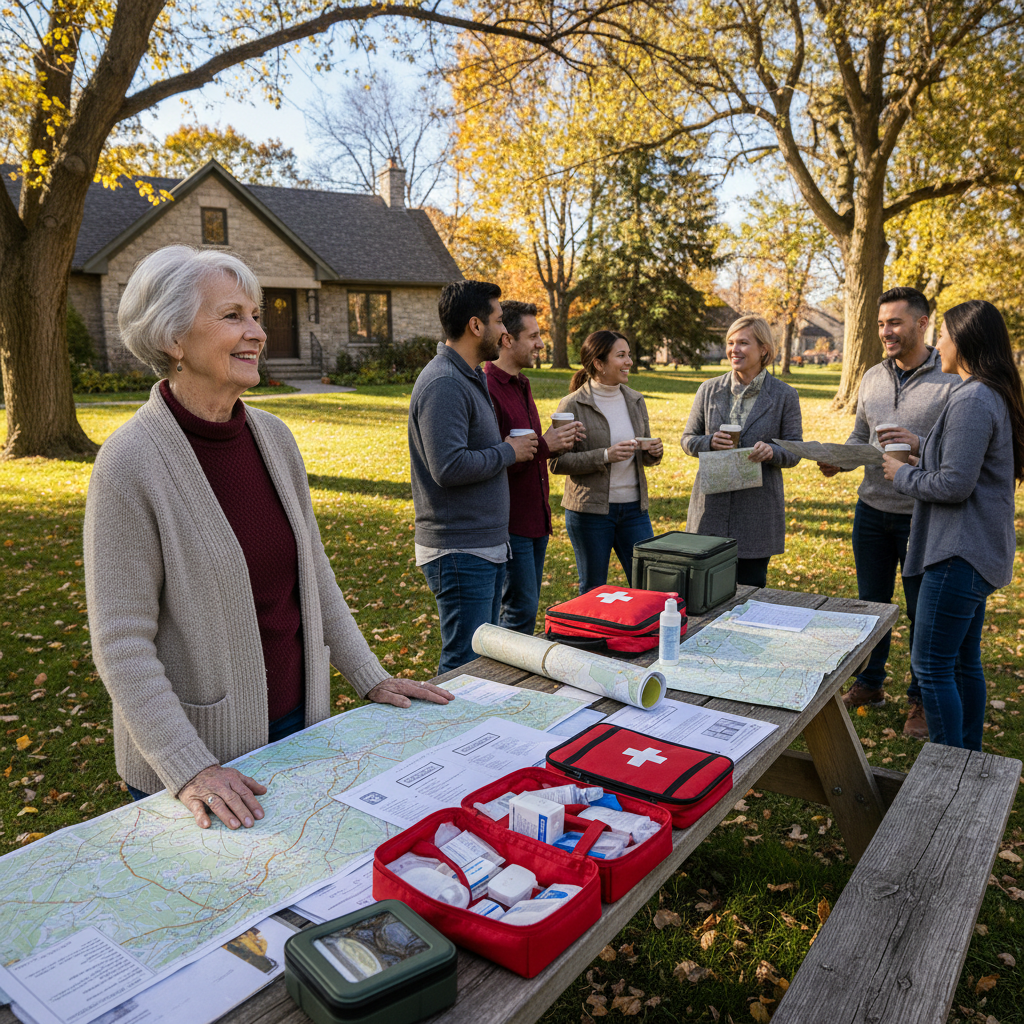
The Community Resilience Crisis: Why Neighborhoods Need Preparation
Ontario communities face increasing disaster risk:
- Extreme weather: Floods (2019 Greater Toronto flooding), ice storms, heat waves
- Infrastructure failure: Power outages lasting days; water system disruptions
- Aging population vulnerability: 40% of Ontario's population will be 65+ by 2050; elderly neighbors are most vulnerable
- Social isolation: Many seniors have no immediate family nearby; neighbors are their only support network
- First-responder gaps: Emergency services are stretched; during major disasters, response times spike
According to the Canadian Red Cross, neighborhood-based mutual aid programs reduce disaster mortality by 40% and accelerate recovery by months.
During the 2021 heat dome in British Columbia, neighborhoods with organized check-in systems had zero heat-death casualties, while isolated communities experienced fatalities. Preparedness saves lives.
How Reverse Mortgage Funding Creates Community Resilience
A reverse mortgage can fund neighborhood-level disaster preparedness that builds connection, trust, and mutual aid:
Types of Community Resilience Programs
| Program | Cost | Benefit |
|---|---|---|
| Neighborhood emergency network | $1,000-3,000 (startup) | Contact lists, communication tree for alerts |
| Community supply cache | $3,000-8,000 | Shared emergency supplies (food, water, first aid) stored centrally |
| Neighbor check-in system | $500-1,500 (coordination) | Regular wellness check-ins; alerts if someone misses check-in |
| Community backup generator | $5,000-12,000 | Shared generator for neighborhood; powers key locations during outages |
| Amateur radio network | $2,000-4,000 | Communication when cell networks fail |
| Accessible evacuation planning | $1,500-3,000 | Plan for neighbors with mobility, sensory, or cognitive limitations |
Total program: $13,000-32,000 (varies by neighborhood size and complexity)
Real-World Example: Margaret's Neighborhood Resilience Initiative
The scenario:
Margaret, age 72, lives on a quiet Etobicoke street with 18 homes. Residents are mostly 60+. She's noticed:
- Few neighbors know each other's names
- Mrs. Chen (age 81) lives alone; no nearby family
- Mr. Ali (age 68) is wheelchair-dependent; lives alone
- Two residents have only adult children out-of-province
After a 2-day power outage in summer 2025, Margaret realized how vulnerable the neighborhood is:
- No one checked on isolated seniors
- No shared emergency supplies
- No way to communicate if phones fail
- Emergency services were overwhelmed; couldn't prioritize a street of aging residents
Margaret's vision: Create a neighborhood resilience network—not a burden, but a gift of security to aging neighbors.
The reverse mortgage funding:
Margaret:
- Home value: $580,000 (paid off)
- Borrowing capacity: $324,000 (56% LTV, age 72)
- Reverse mortgage amount: $25,000
Allocation of $25,000:
- $8,000: Establish neighborhood network (coordinator position 1 year; communications training; contact list system)
- $7,000: Community supply cache (emergency food, water, first aid, blankets, medications; stored at Margaret's home as central hub)
- $5,000: Backup power solutions (portable generator; solar chargers for phones and medical devices)
- $3,000: Accessibility planning (survey neighbors for mobility/sensory needs; create evacuation buddies for those who can't self-evacuate)
- $2,000: Annual maintenance and supplies replenishment (first year buffer)
Implementation structure:
Margaret recruits neighbors:
- Tom (retired firefighter): Emergency safety coordinator
- Priya (retired nurse): Health and wellness coordinator
- David (IT professional): Communications tech setup
The neighborhood network:
- Monthly "coffee chats" to strengthen connections
- Quarterly emergency drills (testing communication, practicing evacuation)
- Check-in system: Mrs. Chen calls Margaret daily; if she doesn't, Margaret alerts Tom to check
- Shared supplies: Neighbors contribute to cache replenishment ($5/month)
- Emergency communication: Two-way radios for Tom, Priya, Margaret; phone tree backup
Outcomes:
For Margaret:
- Legacy: She's built something meaningful; her neighborhood is safer
- Connection: Strangers become friends; isolation decreases
- Reverse mortgage cost (~$1,750/year interest): Justified by reduced anxiety and enhanced safety
For neighbors:
- Safety: They're not alone; someone checks if they're missing
- Security: Emergency supplies, communication, evacuation plans ready
- Community: Loneliness decreases; trust increases
For the broader community:
- Model: Other streets adopt the program
- Municipal partnership: City recognizes the program; offers training and supplies
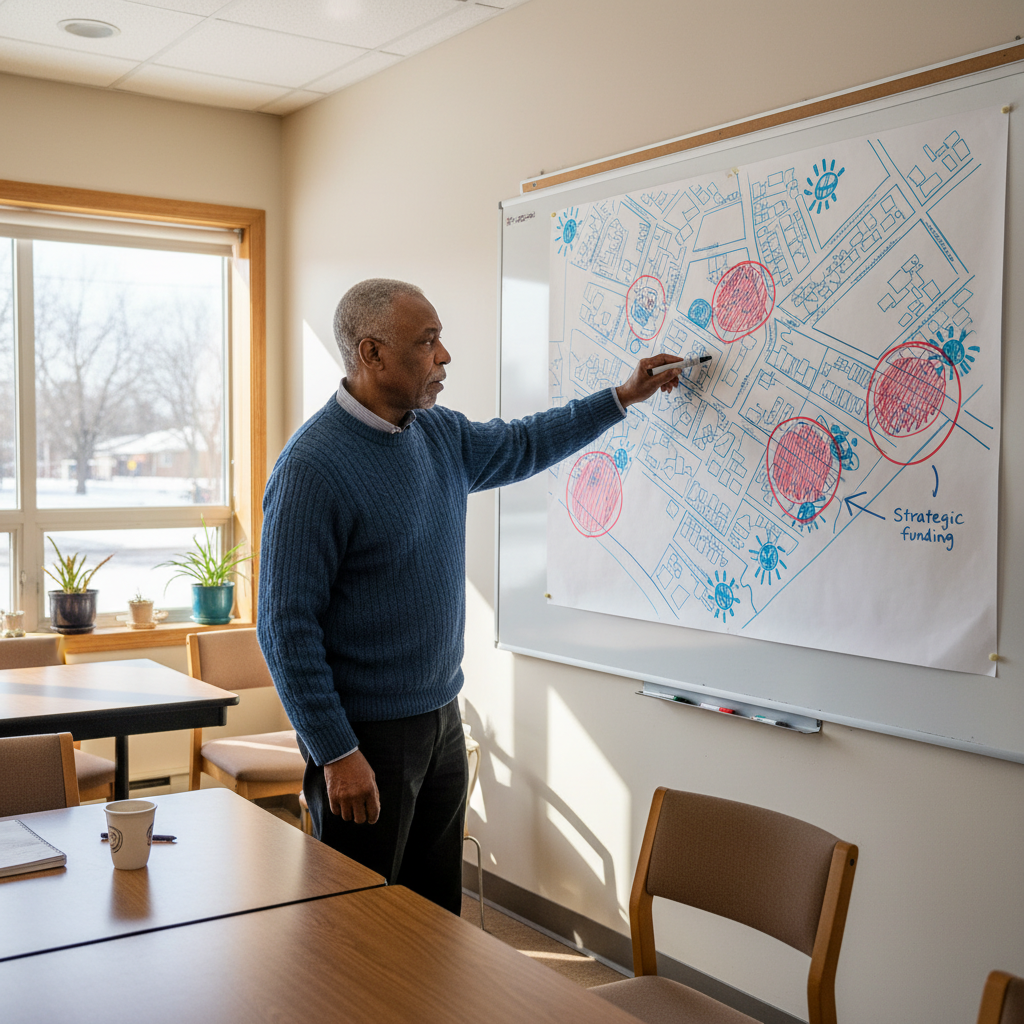
Types of Community Resilience Initiatives
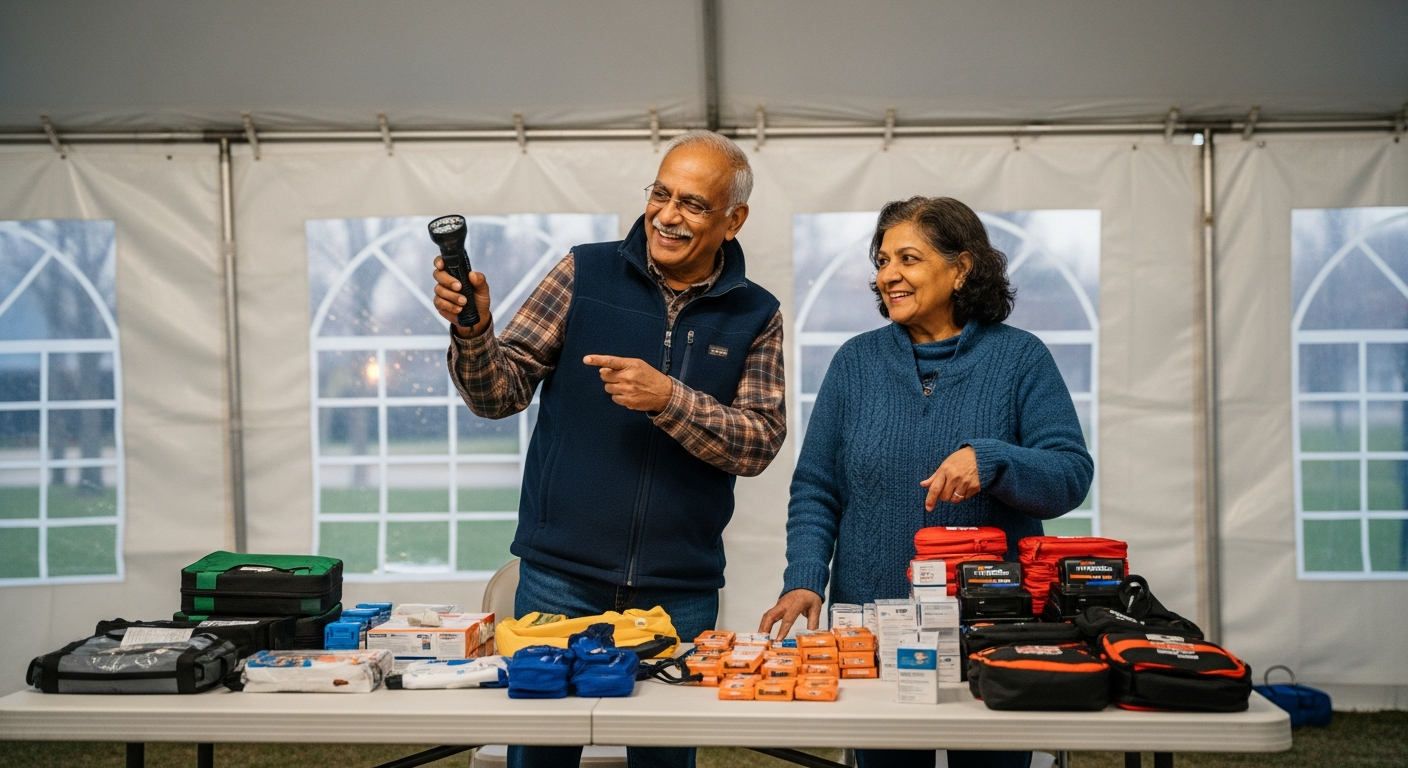
Mutual Aid Networks
- Check-in systems: Neighbors assign responsibility for checking on each other daily/weekly
- Skill-sharing: Volunteers teach first aid, emergency prep, technology skills
- Tool lending libraries: Shared equipment (generator, wheelchairs, mobility aids)
- Bulk purchasing cooperatives: Discount food, medication, supplies through group buying
Disaster-Specific Preparation
- Flood resilience: Sandbags, pumps, drainage planning for neighborhoods at risk
- Heat wave response: Cooling centers, emergency backup cooling for vulnerable residents
- Power outage readiness: Generator sharing, battery backup systems
- Ice storm preparedness: De-icing supplies, tree trimming coordination
Inclusive Planning
- Accessibility: Ensure plans serve all residents (mobility disabilities, vision/hearing loss, cognitive decline, caregiving needs)
- Language accessibility: Distribute plans in community languages
- Social connection: Build trust BEFORE emergency (so people help each other when crisis hits)
Tax and Charitable Implications
Charitable Donations From Reverse Mortgage
If you're funding community programs through a registered charity (Red Cross, United Way):
- Reverse mortgage proceeds are NOT taxable income
- Donations from reverse mortgage proceeds ARE tax-deductible (you receive tax receipt)
- Can reduce taxable income and improve GIS/OAS positioning
Example: Margaret donates $15,000 to Red Cross for neighborhood preparedness program; receives tax receipt; can deduct from her income.
Legacy and Estate Implications
Community resilience funding is a meaningful legacy:
- Document your contribution (plaque, neighborhood recognition)
- Outline the program in your will (endowment for annual program continuation)
- Heirs understand the value: "Mom built a program that saved lives"
Implementation: Starting a Community Resilience Program
Phase 1: Assessment (Weeks 1-2)
- Identify neighborhood vulnerabilities: What risks exist? Which neighbors are most vulnerable?
- Survey your street: What does the community need? What's the appetite for connection?
- Calculate costs: What will a basic program cost? How much do you want to fund?
Phase 2: Reverse Mortgage (Weeks 3-8)
- Apply for reverse mortgage; discuss community funding goal
- Close reverse mortgage; access funds
Phase 3: Program Launch (Weeks 9+)
- Establish governance: Who coordinates? How are decisions made?
- Create communication systems: Phone tree, contact list, radio network if needed
- Build supply cache: Establish central location (your home or community center)
- Launch check-in system: Train volunteers; establish routine
- Annual review: Assess what's working; adjust and replenish supplies
Frequently Asked Questions
What if neighbors don't participate?
Start small. You can't force participation, but you can:
- Begin with neighbors who express interest
- Make participation optional ("Join if you want")
- Lead by example: do daily check-ins yourself
- Invite non-participants to monthly coffee chats (low commitment)
As people see the value, participation grows organically.
Is funding a community program a good use of retirement equity?
That's your value judgment. Some questions to ask yourself:
- Are you comfortable reducing your estate by this amount?
- Does building community feel more meaningful than leaving extra money?
- Will your children understand and support this choice?
For many, the answer is yes—legacy is about impact, not just inheritance size.
Can I partner with my municipality or Red Cross to expand funding?
Yes, absolutely. Many Ontario cities have:
- Community resilience grants
- Neighborhood coordination funding
- Emergency preparedness programs seeking community participation
Your reverse mortgage funding can be the seed investment; government and nonprofits can match and expand.
What if I pass away before the program is established?
Include in your will:
- Funds for program continuation
- Transition leadership to trusted neighbor
- Document the program's vision so heirs understand the legacy
Community resilience isn't just about surviving disasters—it's about building the neighborhood you want to live in. A reverse mortgage makes it possible to invest in your community's future while enjoying the social connection and meaning that comes from leading something bigger than yourself.
Ready to Learn More?
Get the free Ontario Reverse Mortgage Guide and find out exactly how much you could unlock from your home.
Get My Free Guide →Related Articles
Reverse Mortgage for Home Emergency Preparedness and Safety Systems
Aging in place safely requires emergency backup systems—backup power, water supply, first aid systems, and structural reinforcement. Fund these critical upgrades with a reverse mortgage.
Read →Reverse Mortgage for Climate Resilience and Severe Weather Home Upgrades
Use a reverse mortgage to fund climate-resilient home upgrades in Ontario — sump pumps, backup power, storm hardening, and flood protection.
Read →Reverse Mortgage for Charitable Giving and Donations in Canada
Use a reverse mortgage for charitable giving and donations in Canada. Tax credits, strategies, and how to maximize your philanthropic impact with home equity.
Read →