
Reverse Mortgage for Climate Resilience and Severe Weather Home Upgrades
Use a reverse mortgage to fund climate-resilient home upgrades in Ontario — sump pumps, backup power, storm hardening, and flood protection.
"Severe weather in Ontario is becoming more frequent — how can I afford to make my home climate-resilient without selling?" Extreme weather events — intense storms, flooding, ice damage, power outages lasting days — are reshaping Ontario homeowners' priorities. What was once optional (backup power, improved drainage) is becoming essential for aging in place safely and protecting your home.
A reverse mortgage can fund climate resilience upgrades that not only protect your home and health but may also qualify for government grants and improve your property's long-term value.

The Climate Resilience Challenge in Ontario
Climate change is making Ontario's weather more unpredictable:
- Flooding: Record rainfall events and swollen rivers are creating frequent basement flooding and foundation damage
- Power outages: Ice storms and severe weather are causing extended power outages (24-48+ hours)
- Extreme heat: Summer temperatures exceeding 30°C are harder on aging bodies without reliable cooling
- Wind damage: Stronger storms are increasing roof damage, tree failure, and structural damage
- Winter severity: Ice and snow loads are stressing home structures designed for lighter loads
For seniors aging in place, these climate challenges create real risks:
- Health risk: Loss of power can disrupt medical equipment, medications, refrigeration
- Safety risk: Flooding can trap seniors in homes or basements
- Financial risk: Uninsured climate damage can deplete life savings
Typical Climate Resilience Costs
| Upgrade | Purpose | Typical Cost |
|---|---|---|
| Sump pump system (battery backup) | Basement flood prevention | $2,500–$5,000 |
| Backup generator | Power continuity during outages | $5,000–$15,000 |
| Improved drainage/grading | Divert water away from foundation | $3,000–$8,000 |
| Window/door sealing | Reduce water intrusion during storms | $2,000–$4,000 |
| Roof reinforcement/replacement | Wind and ice load protection | $8,000–$25,000 |
| Air sealing and insulation | Maintain interior temperature during outages | $3,000–$8,000 |
| Water shutoff valve | Prevent water damage from pipe breaks | $500–$1,500 |
| Emergency supplies system | Backup water, food storage | $2,000–$5,000 |
| Tree removal or trimming | Prevent branches damaging home | $1,500–$5,000 |
| Basement waterproofing | Long-term protection against moisture | $5,000–$15,000 |
Total cost for comprehensive climate resilience: $25,000–$80,000+
A reverse mortgage can fund these critical upgrades without forcing you to sell your home or deplete retirement savings.
Essential Climate Resilience Upgrades for Ontario Seniors
1. Backup Power Systems
Why: Ontario experiences 1-2 major power outages annually lasting 12-48+ hours. For seniors on medical equipment, this is dangerous.
Options:
- Battery backup system ($2,000–$5,000) — powers critical circuits for 4-8 hours
- Portable generator ($3,000–$7,000) — manual, requires fuel storage and outdoor placement
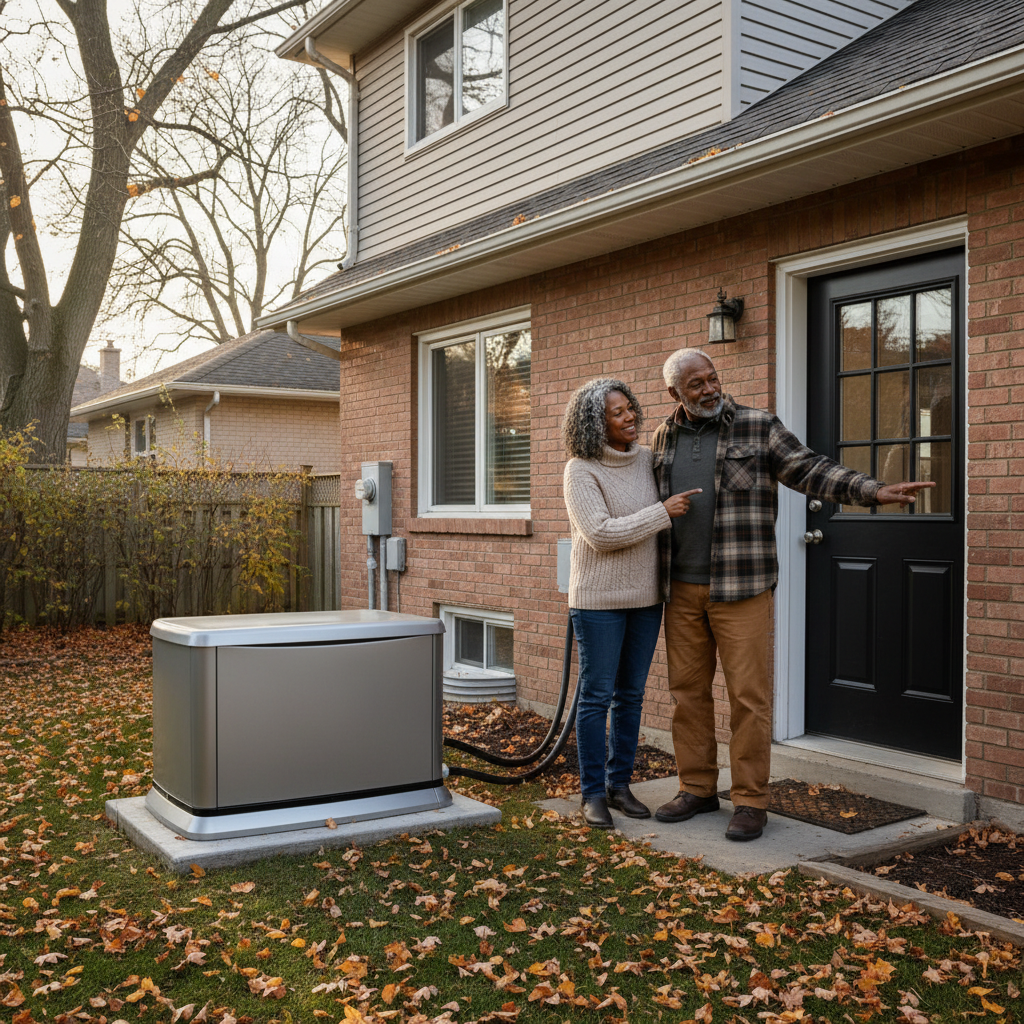
- Whole-home standby generator ($8,000–$15,000+) — automatic, runs on natural gas or propane, powers entire home
- Solar + battery system ($15,000–$30,000) — long-term resilience, reduces energy costs, but higher upfront investment
Eligibility: Backup power systems may qualify for government rebates (up to $2,000 through some Ontario utility programs).
2. Sump Pump and Backup Systems
Why: Basement flooding is one of the top causes of water damage and financial loss in Ontario homes.
Options:
- Sump pump upgrade ($2,000–$3,500) — replaces old pump with high-capacity, durable model
- Backup battery system ($1,500–$2,500) — ensures pumping continues during power outages
- Combination sump pit and battery backup ($3,000–$5,000) — comprehensive system
Eligibility: Some municipalities offer flood protection rebates; check with your local conservation authority.
3. Improved Drainage and Grading
Why: Water accumulation around the foundation is the primary cause of basement moisture and structural damage.
Options:
- Downspout extension and grading adjustment ($2,000–$4,000) — ensures water drains away from foundation
- French drain installation ($3,000–$6,000) — underground system directs groundwater away from home
- Sump pump and drainage system combined ($5,000–$8,000) — comprehensive moisture management
4. Roof Reinforcement and Replacement
Why: Aging roofs fail during ice storms and high-wind events. Replacement can wait 5-10 years, but reinforcement can extend life and improve safety.
Options:
- Roof inspection and minor repairs ($500–$2,000) — identify weaknesses before they fail
- Roof reinforcement/bracing ($3,000–$7,000) — strengthen existing roof structure
- Roof replacement ($15,000–$25,000+) — comprehensive solution, improves home value
- Impact-resistant shingles ($20,000–$30,000) — specialized roofing rated for severe weather
5. Air Sealing and Insulation
Why: During extended power outages, homes lose temperature control quickly. Better insulation maintains livability.
Options:
- Air sealing ($2,000–$4,000) — seals leaks around windows, doors, and foundation
- Attic insulation upgrade ($1,500–$3,000) — heat loss reduction
- Basement/crawl space insulation ($2,000–$5,000) — protects pipes and maintains floor comfort
- Combined air sealing and insulation ($5,000–$10,000) — comprehensive energy resilience
Government Grants and Rebates to Offset Costs
Ontario and federal programs provide rebates for climate resilience upgrades:
Federal Programs
- Canadian Greener Homes Grant — up to $5,200 rebate for energy-efficient home improvements (including backup systems, insulation)
- Canada Mortgage and Housing Corporation (CMHC) programs — grants for flood protection and accessibility combined with resilience upgrades
Ontario Provincial Programs
- Energy Audit and Retrofit Program — rebates for insulation, air sealing, and heating/cooling efficiency
- Flood Mitigation Grant — up to $50,000 for flood protection measures (varies by municipality)
Local/Municipal Programs
- Flood protection rebates — conservation authorities and municipalities offer 25-50% rebates for sump pumps, drainage, waterproofing
- Tree removal assistance — some municipalities subsidize hazardous tree removal
Strategy: Combine Reverse Mortgage + Grants
- Apply for available government grants (this takes 2-4 weeks and often requires post-project approval)
- Use reverse mortgage to fund the full cost upfront (no delay)
- Receive grant reimbursement and use it to reduce reverse mortgage debt or preserve funds
Example:
| Step | Amount |
|---|---|
| Backup generator installation | $12,000 |
| Sump pump system upgrade | $4,000 |
| Drainage improvements | $5,000 |
| Air sealing and insulation | $4,000 |
| Total project cost | $25,000 |
| Reverse mortgage draws funds | $25,000 |
| Government grants received (post-project) | −$8,000 |
| Net reverse mortgage cost | $17,000 |
Where to Check for Grants
- Efficiency Ontario — energyontario.ca (grants and rebate tracker)
- Your local conservation authority — search "[Your county] conservation authority"
- Municipal government website — search "flood mitigation grant" or "climate resilience rebate"
- Utility companies — Hydro One, enbridge, Toronto Hydro sometimes offer rebates for resilience projects
How Reverse Mortgages Enable Climate Resilience
Advantage 1: Immediate Access to Funds
Government grants take time (2-4 weeks processing, post-project verification). A reverse mortgage provides immediate funds so you don't delay critical safety upgrades waiting for bureaucratic approval.
Advantage 2: Flexible Use of Funds
A reverse mortgage line of credit lets you:
- Fund projects incrementally (sump pump this year, generator next year)
- Respond to urgent needs (emergency roof repair from storm damage)
- Adjust scope based on contractor bids
Advantage 3: Tax-Free Funds
Reverse mortgage proceeds are non-taxable, unlike selling an investment property or liquidating RRSP savings. This preserves your tax-efficient retirement strategy.
Advantage 4: Maintains Aging in Place
These upgrades protect your ability to stay in your home safely long-term. Rather than forcing downsizing due to climate-related damage or health risks, you invest in home resilience.
Advantage 5: Improves Home Value (Potentially)
While not guaranteed, climate-resilient upgrades like new roofs, improved drainage, and backup power systems can increase home appraised value or market appeal.
Risk Considerations
✓ Benefits: Protection, peace of mind, safety during emergencies, aging in place, government grants offset costs
✗ Risks: Additional reverse mortgage debt reduces estate, interest compounds over time, some upgrades may not increase home value proportionally
Balance these factors: Does the health and safety benefit outweigh the reduced inheritance? For most aging-in-place scenarios, the answer is yes.
Frequently Asked Questions
Can I use a reverse mortgage to fund climate resilience and later use government grants to pay down the debt?
Yes. This is a smart strategy. Use the reverse mortgage to fund the project upfront, then apply for available grants. When you receive the grant reimbursement, deposit it directly into your reverse mortgage line of credit to reduce the balance and interest. Not all grant programs work this way, so confirm the grant's terms before spending the reverse mortgage funds.
Should I upgrade my whole home at once or do it incrementally?
Incremental is often better:
- Year 1: Sump pump and backup system (lowest cost, highest impact for flood risk)
- Year 2: Backup generator (power resilience)
- Year 3: Roof reinforcement or replacement (if needed)
- Year 4+: Nice-to-have upgrades (enhanced insulation, solar)
This approach spreads costs, allows you to prioritize by risk, and lets you monitor reverse mortgage balance.
Will climate resilience upgrades qualify for the Home Accessibility Tax Credit?
Some may. The tax credit covers modifications that enable aging in place (handrails, accessible bathrooms). Backup power systems and flood protection may qualify if connected to health and safety for a person with a disability. Check with CRA before assuming qualification.
What if my municipality doesn't offer flood grants?
Contact your local conservation authority, which often has funds independent of municipality. If no local grants are available, federal programs (Canadian Greener Homes Grant) may still apply. A contractor experienced in resilience retrofits can help identify all available programs.
How do I choose between a solar system and a traditional backup generator?
Solar + battery is better if:
- You want long-term energy cost reduction
- You have south-facing roof space
- You can afford higher upfront cost ($15,000–$30,000)
- You plan to stay in the home 15+ years
Backup generator is better if:
- You want simpler installation ($8,000–$15,000)
- You need immediate resilience
- You don't want to maintain battery systems
- You have natural gas or propane supply
Most seniors choose generators for reliability and simplicity.
Next Steps for Climate Resilience Planning
- Assess your home's vulnerabilities — Have you had flooding, power outages, roof damage? What's the biggest risk?
- Get a professional climate resilience audit — Many contractors offer free assessments; they identify priority upgrades
- Research available grants and rebates — Contact your municipality and conservation authority; check Efficiency Ontario
- Develop a phased upgrade plan — Prioritize by risk (flood risk first, then power, then optimization)
- Connect with Rick Sekhon Reverse Mortgages — Determine how much funding you'll need and structure a reverse mortgage to cover your resilience goals
Climate resilience is not a luxury — it's essential protection for aging in place safely in Ontario's changing climate. A reverse mortgage can make it affordable.
Get your free Ontario Reverse Mortgage Guide →
This content is for illustrative purposes only. Rates may vary. Speak with Rick Sekhon for guidance on reverse mortgages for climate resilience upgrades in Ontario.
Ready to Learn More?
Get the free Ontario Reverse Mortgage Guide and find out exactly how much you could unlock from your home.
Get My Free Guide →Related Articles
Reverse Mortgage for Home Renovations: Aging in Place Guide for Ontario Seniors
Learn how to use a reverse mortgage to fund home renovations and modifications that let you age in place safely and comfortably in your Ontario home. Includes cost examples and step-by-step process.
Read →Reverse Mortgage + Green Retrofit Grants for Canadian Seniors
Combine a reverse mortgage with Canada green home retrofit grants to fund energy upgrades, cut utility bills, and improve home comfort for aging in place.
Read →Aging in Place with a Reverse Mortgage: Home Modification Guide
How Ontario seniors can fund aging-in-place home modifications with a reverse mortgage — costs, top modifications, grants, and a complete planning guide.
Read →