
Stay in Your Neighborhood as It Gentrifies: Reverse Mortgage Strategy
Your neighborhood is changing—property taxes rising, longtime friends moving. Use a reverse mortgage to afford aging in place where you belong.
Your Toronto or Vancouver neighborhood is gentrifying. Home values have doubled. Property taxes keep rising. Your longtime friends are selling and moving. And you're trapped: you can't afford to stay, but you don't want to leave. A reverse mortgage lets you tap your home's equity to cover rising costs and remain in the community you built.
This article explores how reverse mortgages solve the gentrification trap that's catching thousands of Ontario seniors.
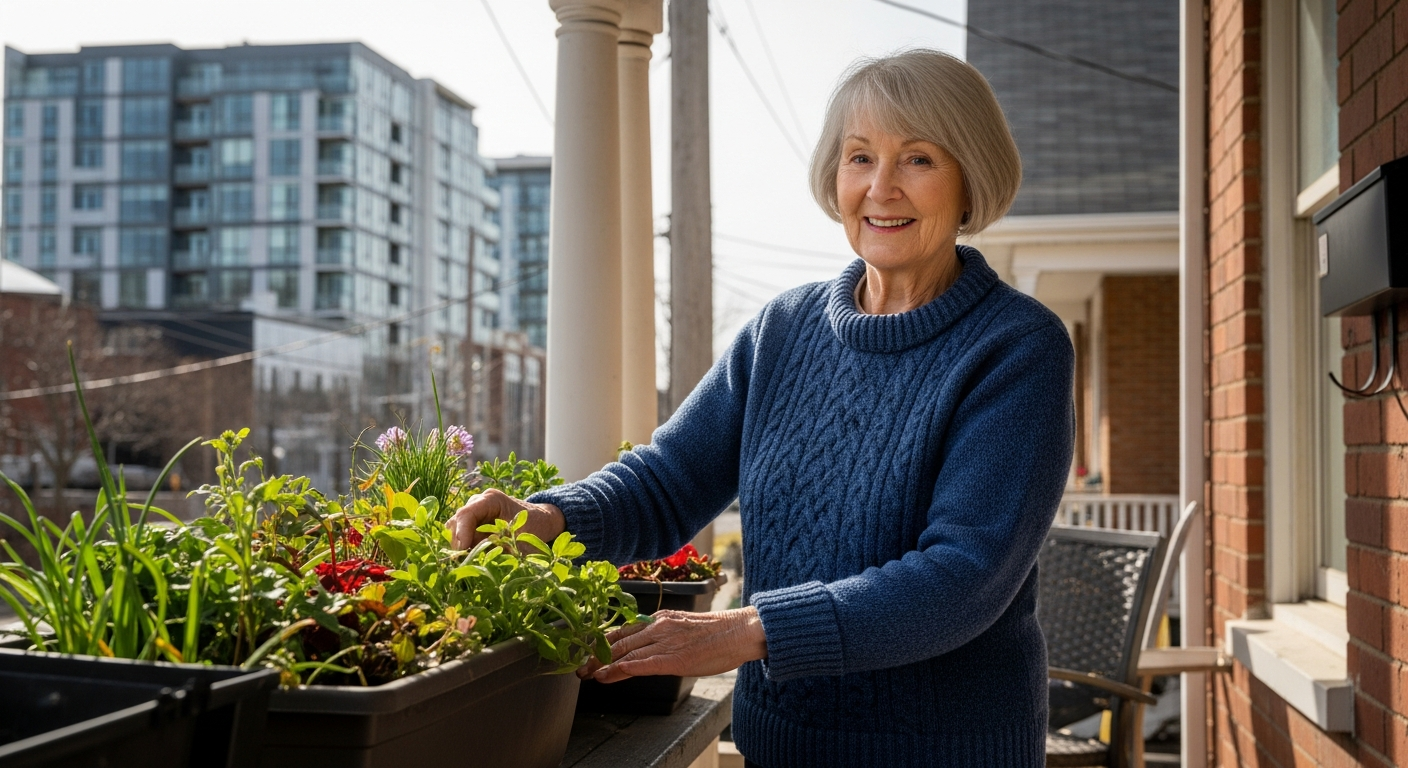
The Gentrification Trap: Rising Home Value, Rising Costs, No Solutions
Gentrification is wonderful until it forces you out.
In neighborhoods like Toronto's Leslieville, Parkdale, Ossington, and surrounding areas, property values have surged 80–120% in the past 10 years. That's great news if you're selling and downsizing. It's a financial crisis if you're aging in place.
Here's the trap:
The Numbers
Your situation:
- Home purchased (1995): $180,000
- Home value today (2026): $850,000
- Mortgage: Paid off (15 years ago)
- Property tax (1995): $2,100/year
- Property tax (2026): $8,200/year
- Your retirement income (CPP, OAS, small pension): $28,000/year
The problem:
- Property taxes increased 290% ($2,100 → $8,200)
- Your income didn't increase 290%
- Home maintenance costs are rising (older home, inflation)
- You can afford to keep the house, but barely
- One major repair would force a sale
Why You Can't Just Downsize
Yes, you have $850,000 in equity. But:
- Selling costs 5–6% ($42,500–$51,000)
- Moving costs: $10,000–$20,000
- New condo/townhouse in the same neighborhood: $500,000–$750,000
- Buying costs (legal, land transfer tax, inspection): $15,000–$25,000
- You'd have little equity left
- You're still paying high property taxes (condo fees are just another property tax)
The uncomfortable truth: Downsizing doesn't solve the problem in a gentrifying neighborhood. It just creates a smaller version of the same problem.
The Emotional Reality
Beyond the math, gentrification has emotional costs:
- Your longtime friends have moved away
- The neighborhood's character has changed
- Your family history is embedded in this home
- Your community is gone, but your house remains
- The cost of staying feels like a punishment for loyalty
A reverse mortgage doesn't solve gentrification itself, but it protects you from being forced out while you decide your own path.

How a Reverse Mortgage Solves the Gentrification Trap
A reverse mortgage converts your home's appreciation into accessible funds you can use to:
1. Cover Rising Property Taxes
Scenario: Margaret's Story
Margaret (72) bought her Leslieville home in 1992 for $185,000. Today it's worth $920,000.
Her property tax crisis:
- 1992: $1,800/year
- 2006: $3,200/year
- 2016: $5,100/year
- 2026: $9,400/year
- Projected 2030: $11,200/year
Her income:
- CPP: $18,000/year
- OAS: $8,800/year
- Pension: $2,100/year
- Total: $28,900/year
The math:
- By 2030, property taxes alone will consume 39% of her income
- Add utilities, insurance, maintenance, food, healthcare: she has $8,000/year left
- One major repair = financial crisis
The reverse mortgage solution:
- Margaret applies for a reverse mortgage
- She accesses $250,000 as a lump sum
- She invests $100,000 in a high-interest savings account earning 3.5–4%
- Annual interest earnings: $3,500–$4,000/year
- These earnings cover property tax increases for years
- The remaining $150,000 covers deferred home maintenance
- Margaret stays in her home, in her neighborhood, with financial breathing room
The alternative?
- Sell her $920,000 home
- Buy a smaller condo for $600,000
- Condo fees: $400–$600/month ($4,800–$7,200/year)
- Property taxes on condo: $4,000–$5,000/year
- She's still paying $8,800–$12,200 in annual housing costs
- She's in a smaller space in a building full of strangers
- She's lost her home and community for minimal financial gain
The reverse mortgage is the better answer.
2. Fund Home Modifications and Maintenance
Older homes in gentrifying neighborhoods are often older homes (1960s–1980s). They need:
- New plumbing
- Updated electrical
- Roof replacement
- Foundation repairs
- Accessibility modifications
In 2026, these repairs cost $20,000–$80,000 easily. A reverse mortgage lets you handle them without selling.
3. Create a Stability Fund
Instead of living paycheck-to-paycheck, a reverse mortgage lets you:
- Access 2–3 years of property tax increases upfront
- Create an emergency cushion for unexpected costs
- Sleep at night without financial anxiety
Property Tax Deferrals: A Complementary Strategy
Before pursuing a reverse mortgage, explore Ontario's Property Tax Deferral Program.
Ontario offers a Property Tax Deferral Program for homeowners 65+ with limited income:
- Defer up to 100% of property tax increases (not the full tax, just the increase)
- No interest charged (or minimal interest)
- Balance due when you move or pass away
- Income threshold: approximately $43,000–$45,000 (varies by municipality)
Check your eligibility: Contact your city's assessment office or visit the Ontario government website.
However: Deferrals help, but they don't solve the problem entirely. If your home has appreciated dramatically, deferrals alone won't cover your costs. A reverse mortgage is often the complementary strategy that gives you true financial freedom.
Scenario:
- Margaret uses a property tax deferral for $2,000/year of tax increases
- She uses reverse mortgage income for the remaining $4,000/year of increases
- Together, these strategies let her age in place affordably
Strategic Reverse Mortgage Structuring for Gentrification
If you're facing gentrification and considering a reverse mortgage, structure it strategically:
Option 1: Lump Sum for Tax Cushion
- Access funds once
- Invest conservatively (HISA, GIC)
- Draw from earnings for property taxes
- Keep principal intact for major repairs
Best for: Stable retirement income, predictable expenses
Option 2: Line of Credit
- Access funds as needed for property taxes and repairs
- More flexible
- Easier to manage without huge upfront lump sum
- Requires ongoing management
Best for: Variable expenses, uncertain future needs
Option 3: Monthly Draws
- Receive monthly income to offset tax increases
- Structured like a pension supplement
- Predictable for budgeting
- Works well with CPP + OAS
Best for: Income supplementation, replacing lost job income
| Structure | Tax Coverage | Flexibility | Best For |
|---|---|---|---|
| Lump sum to HISA | Good (interest covers increases) | Moderate | Stable expenses |
| Line of credit | Excellent (draw as needed) | High | Variable expenses |
| Monthly draws | Good (guaranteed amount) | Low | Predictable income |
Timing: When to Apply
The best time to apply for a reverse mortgage when facing gentrification is:
- Before you're in crisis (property taxes are rising but you're managing)
- While your home's value is high (lenders approve larger amounts)
- While you're confident about staying (your application is based on a genuine plan to age in place)
Don't wait until:
- You can't pay property taxes
- You've missed tax payments
- You're facing financial crisis
The earlier you apply, the larger the available funds and the faster the approval.
Combining Strategies: Reverse Mortgage + Deferral + Downsizing Decision
The most powerful approach combines multiple strategies:
- Apply for property tax deferral (immediate, low-cost)
- Apply for reverse mortgage (large access to funds)
- Make an intentional decision about your future:
- Stay and age in place: Use reverse mortgage + deferral for long-term stability
- Downsize eventually: Use reverse mortgage to maintain home for 5–10 years, then downsize on your timeline (not forced urgency)
- Transition gradually: Use reverse mortgage funds to fund moving costs and help you relocate when ready
The key: You control the timeline. The reverse mortgage gives you choices instead of forcing a crisis sale.
Frequently Asked Questions
Does a reverse mortgage make sense if gentrification might reverse?
Real estate markets do fluctuate, but neighborhood gentrification is rarely reversed. If you're aging in place anyway, a reverse mortgage protects you regardless of market direction. If values fall, your no-negative-equity guarantee protects you (lender absorbs losses).
Should I invest reverse mortgage funds in the stock market to beat property tax increases?
No. For this use case, conservative investments (HISA, GICs) are safer. You need stability, not growth. Your goal is to cover known costs (property taxes), not beat inflation.
Can I use a reverse mortgage for property tax deferrals?
You can use reverse mortgage funds for any legal purpose, including paying for the property tax deferral program itself. However, the deferral program is usually free to apply for; it's the deferred taxes that must be repaid later.
What if I want to eventually move or downsize?
A reverse mortgage doesn't lock you in. You can still sell anytime. Reverse mortgage balance is repaid from sale proceeds, and remaining equity goes to you or your heirs. Using the reverse mortgage to "buy time" is perfectly acceptable—it gives you years to decide your next move instead of forcing an immediate sale.
Is gentrification affecting my neighborhood enough to justify a reverse mortgage?
If you're noticing:
- Property values up 50%+ in 10 years
- Property taxes rising faster than inflation
- Friends and longtime neighbors moving
- Community character changing
...then yes, gentrification is likely affecting you. A reverse mortgage conversation makes sense.
Gentrification doesn't have to force you out. By using your home's equity strategically, you can stay in your neighborhood, maintain your independence, and age in place—on your own terms.
Ready to Learn More?
Get the free Ontario Reverse Mortgage Guide and find out exactly how much you could unlock from your home.
Get My Free Guide →Related Articles
Aging in Place with a Reverse Mortgage: Home Modification Guide
How Ontario seniors can fund aging-in-place home modifications with a reverse mortgage — costs, top modifications, grants, and a complete planning guide.
Read →Ontario Property Tax Deferrals and Reverse Mortgages: A Tax-Free Strategy
Combine Ontario's property tax deferral program with a reverse mortgage for tax-free income. Complete strategy guide for Ontario seniors 65+.
Read →Stay Near Grandchildren: Reverse Mortgage Options
Use a reverse mortgage to stay near grandchildren instead of downsizing and moving away. Emotional and financial case for aging in place near family.
Read →