
Reverse Mortgage for Couples With Different Health
How a reverse mortgage helps Ontario couples when one spouse needs long-term care and the other stays home. Spousal protections, funding strategies, and examples.
"My wife has been diagnosed with early-stage Alzheimer's. I need to fund her care, but I also need to keep living in our home. What are my options?" This is one of the most emotionally difficult conversations Rick Sekhon has with Ontario homeowners — and it happens far more often than most people realize. When one spouse's health declines while the other remains relatively healthy, the financial pressure can be overwhelming. A reverse mortgage offers a way to fund care for the spouse who needs it while protecting the home and income of the spouse who stays.
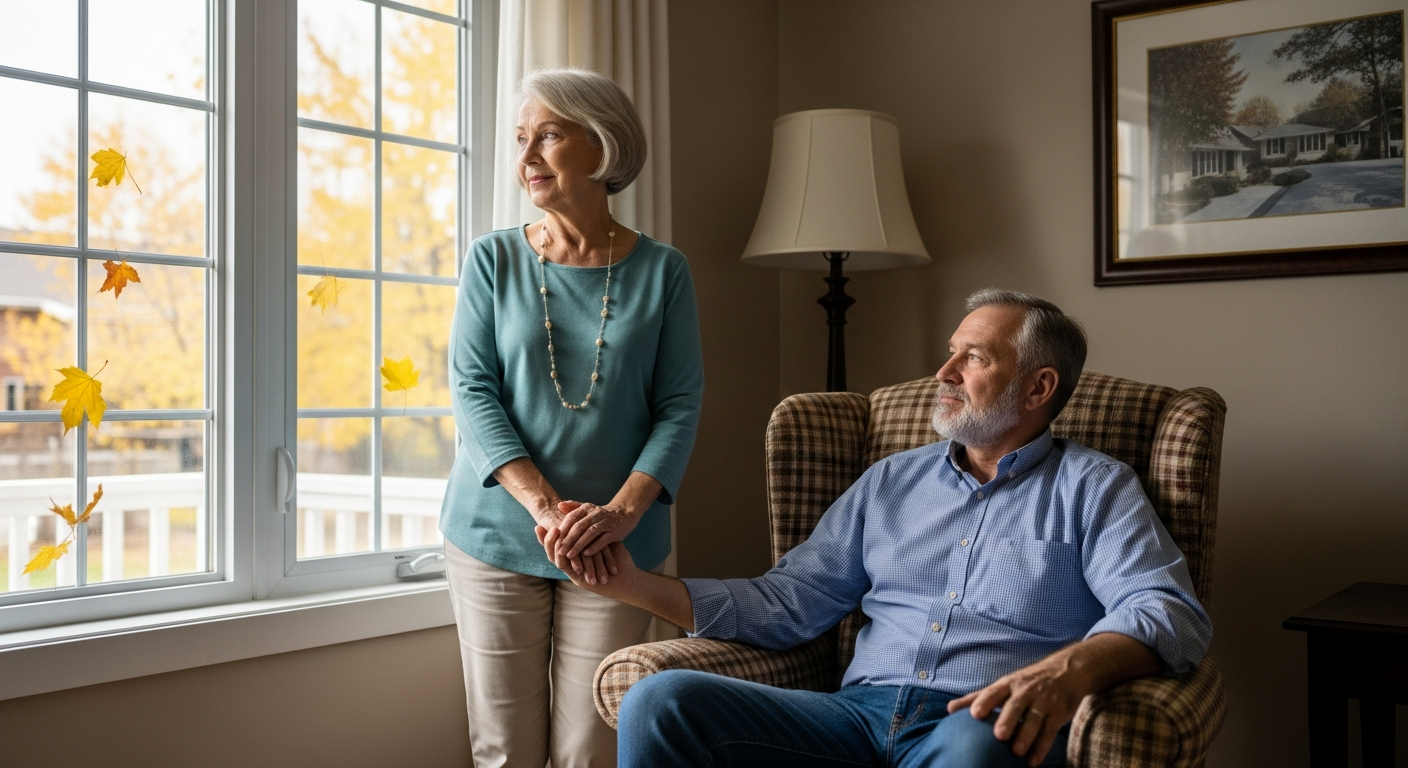
This guide addresses the specific financial challenges faced by couples with divergent health trajectories — when one partner needs increasing levels of care (home care, assisted living, or long-term care) and the other wants to remain in the family home. We cover surviving borrower protections, how reverse mortgage funds can finance caregiving, age-based LTV considerations for couples with an age gap, estate planning strategies, and a detailed worked example.
The Financial Reality of Divergent Health
When both partners are healthy, retirement finances are relatively straightforward. When one partner's health declines, costs can escalate rapidly while income stays flat or drops.
According to the Ontario Long Term Care Association, the average cost of long-term care in Ontario depends on the type of accommodation:
| Type of Care | Monthly Cost (2026 Estimate) |
|---|---|
| Basic long-term care (ward room) | $2,012 |
| Semi-private LTC room | $2,427 |
| Private LTC room | $2,860 |
| Private home care (20 hrs/week) | $4,800–$6,400 |
| Full-time private home care (24/7) | $15,000–$20,000 |
| Retirement home with care services | $4,500–$8,500 |
Government-funded long-term care beds have waiting lists averaging 150+ days in most Ontario regions, and often much longer in the GTA. During the wait — and sometimes permanently — families must fund private care out of pocket.
For a couple living on CPP, OAS, and a modest pension totalling $5,500/month, even the basic LTC co-payment of $2,012 consumes over 36% of gross income. Add property taxes, insurance, utilities, and groceries for the spouse at home, and the math simply does not work without an additional income source.
How a Reverse Mortgage Funds Caregiving
A reverse mortgage allows the couple to access their home equity — tax-free and without monthly payments — to cover care costs while the healthy spouse continues living in the home. Here is why it works:
- No monthly payments means the healthy spouse's existing income is not further strained
- Tax-free proceeds do not affect OAS, GIS, or any income-tested benefits
- Flexible disbursement allows the couple to take funds as needed (lump sum for immediate needs, monthly draws for ongoing care costs)
- The healthy spouse stays in the home — the reverse mortgage does not require the home to be sold
This is fundamentally different from selling the home and downsizing, which uproots the healthy spouse at a time when stability matters most. It is also different from a HELOC or conventional refinance, which would require income qualification and monthly payments — both impractical when household income is being diverted to care.
Rick Sekhon has structured dozens of reverse mortgages specifically for this scenario through HomeEquity Bank, Equitable Bank, and Bloom Financial. Each case is unique, but the underlying principle is the same: use the home to fund care without destroying the healthy spouse's financial stability.
Surviving Borrower Protections
When both spouses are listed as borrowers on the reverse mortgage, the surviving borrower is protected. This is a critical feature that many couples overlook.
Joint Borrower Protection
If both spouses are age 55+ and both are on title, both should be listed as joint borrowers. This ensures:
- ✓ If one spouse passes away, the surviving spouse continues living in the home with no repayment required
- ✓ If one spouse moves to long-term care, the remaining spouse stays in the home with no change to the loan terms
- ✓ The reverse mortgage is only repaid when both borrowers have left the home (or both have passed away)
- ✓ No income or health re-qualification is needed at any point
All four Canadian reverse mortgage lenders — CHIP (HomeEquity Bank), Equitable Bank, Bloom Financial, and Home Trust — offer joint borrower protection. It is standard, not optional.
What If Only One Spouse Is on the Mortgage?
If only one spouse is listed as the borrower (perhaps because the other is under 55), the non-borrowing spouse may not have the same protections. If the borrowing spouse passes away or moves to LTC, the lender could technically require repayment.
This is why Rick Sekhon strongly recommends listing both spouses as borrowers whenever possible. If one spouse is under 55, the couple may need to wait, or explore whether the older spouse can take the reverse mortgage individually with appropriate estate planning to protect the younger spouse.
For a detailed explanation of spousal protections, see our guide on reverse mortgage spousal protection and joint borrowers.
Age-Based LTV With Age-Gap Couples
Reverse mortgage lenders calculate the maximum loan-to-value (LTV) ratio based on the younger borrower's age when both spouses are on the application. This is an important consideration for couples with a significant age gap.
| Younger Borrower's Age | Approximate Maximum LTV |
|---|---|
| 55 | 15%–20% |
| 60 | 20%–28% |
| 65 | 25%–35% |
| 70 | 30%–42% |
| 75 | 38%–50% |
| 80+ | 45%–59% |
For a couple where the husband is 78 and the wife is 68, the LTV is based on the wife's age of 68 — not the husband's 78. On a $700,000 home, this might mean qualifying for $210,000–$245,000 instead of $266,000–$294,000.
The trade-off is intentional: by using the younger spouse's age, the lender accounts for the likely longer holding period. The younger spouse will probably remain in the home longer, which means more years of compounding interest and a longer period before repayment.
According to Equitable Bank, couples with an age gap of 10+ years should discuss their LTV expectations with a broker before applying, as the difference can be significant. Rick Sekhon always runs the numbers both ways — joint application versus single-borrower application — to show the couple exactly how the age gap affects their borrowing power.
Funding Strategies for Different Care Scenarios
The right reverse mortgage structure depends on what type of care is needed and when.
Scenario A: Spouse Needs Home Care
When one spouse needs part-time or full-time home care delivered to the family residence, the financial need is ongoing and predictable. A monthly draw structure works best:
- ✓ Monthly reverse mortgage draws of $2,000–$5,000 to cover private home care costs
- ✓ No lump sum needed upfront
- ✓ Interest accrues only on amounts drawn — minimizing total cost
- ✓ Healthy spouse manages care at home with professional support
This is ideal for couples who want to keep both partners at home as long as possible — the core of aging in place.
Scenario B: Spouse Moves to Long-Term Care Facility
When one spouse transitions to a long-term care facility, there is often a combination of upfront costs (facility entrance fees, equipment, initial deposits) and ongoing monthly co-payments:
- ✓ Combination structure: lump sum for upfront costs + monthly draws for ongoing co-payments
- ✓ Healthy spouse remains at home with no new financial obligations
- ✓ Reverse mortgage covers the LTC gap between government funding and actual costs
Scenario C: Escalating Care Needs
Many conditions (dementia, Parkinson's, stroke recovery) involve gradually increasing care needs. A line of credit provides maximum flexibility:
- ✓ Draw small amounts initially as care needs are minimal
- ✓ Increase draws as the condition progresses and care costs rise
- ✓ No penalty for unused credit — you only pay interest on what you draw
- ✓ Available from Equitable Bank and Bloom Financial
Rick Sekhon often recommends applying for the maximum available amount, even if the initial need is small. This locks in current terms and creates a financial safety net that the couple can draw from as care needs evolve. See our guide on reverse mortgage long-term care insurance strategies for how to coordinate a reverse mortgage with existing LTC insurance.
Estate Planning Considerations
When one spouse has a progressive health condition, estate planning becomes urgent. A reverse mortgage interacts with estate planning in several important ways.
Power of Attorney
Both spouses should have up-to-date powers of attorney for property and personal care. If the unhealthy spouse loses mental capacity, the healthy spouse (or another designated attorney) must be authorized to manage financial decisions — including decisions related to the reverse mortgage.
According to FSRAO (Financial Services Regulatory Authority of Ontario), reverse mortgage lenders must ensure that all borrowers have the mental capacity to understand the loan terms at the time of signing. If there is any concern about capacity, independent legal counsel will assess this during the mandatory legal advice session.
If a spouse already lacks capacity at the time of application, the power of attorney holder may be able to sign on their behalf — but this depends on the lender's policies and the specific terms of the POA. Rick Sekhon recommends applying before capacity becomes an issue.
Will and Estate Structure
The reverse mortgage balance is repaid from the estate after both borrowers have passed or left the home. Key considerations:
- The home must be sold (or the mortgage repaid by heirs) to settle the reverse mortgage
- The no-negative-equity guarantee means the estate never owes more than the home's sale price
- Any remaining equity after repayment passes to beneficiaries as directed by the will
- Life insurance can be used to cover the reverse mortgage balance, preserving the home for heirs
For a complete estate planning framework, see our estate planning checklist for Ontario homeowners.
Life Insurance Offset Strategy
Some couples purchase a life insurance policy equal to the projected reverse mortgage balance. When the surviving spouse eventually passes, the insurance payout covers the reverse mortgage, and the home passes to heirs free and clear.
For example, a $300,000 term life insurance policy for a 70-year-old in average health might cost $350–$500/month. This is substantially less than the mortgage payments on a conventional refinance, while providing the added benefit of guaranteeing the full home value for heirs.
Rick Sekhon works with insurance advisors to coordinate this strategy when clients prioritize leaving the home to their children. See our guide on life insurance and reverse mortgage inheritance protection.
Worked Example: Wife in LTC While Husband Uses RM
Frank and Linda have been married for 44 years. They own a home in Oakville, Ontario worth $750,000 with no mortgage. Frank is 74, Linda is 71. Linda has been diagnosed with moderate Alzheimer's disease and will need to move to a private long-term care facility within the next 6–12 months.
Their Financial Situation
| Income Source | Monthly Amount |
|---|---|
| Frank's CPP | $1,100 |
| Linda's CPP | $680 |
| Frank's OAS | $730 |
| Linda's OAS | $730 |
| Small company pension (Frank) | $1,200 |
| Total household income | $4,440/month |
Their Projected Expenses
| Expense | Monthly Amount |
|---|---|
| Linda's private LTC (semi-private) | $2,427 |
| Property taxes | $525 |
| Home insurance | $200 |
| Utilities | $350 |
| Food and household (Frank) | $600 |
| Car, gas, insurance | $450 |
| Medication (both) | $300 |
| Miscellaneous | $300 |
| Total expenses | $5,152/month |
Frank faces a $712/month shortfall — and that assumes no unexpected expenses, no home maintenance, and no inflation. Without additional income, he would need to sell the family home within a year.
The Reverse Mortgage Solution
Rick Sekhon structures a reverse mortgage through HomeEquity Bank as follows:
- Home value: $750,000
- LTV (based on Linda's age, 71): 38%
- Maximum borrowing amount: $285,000
- Structure: $40,000 lump sum + $1,500/month scheduled draws
- Interest rate: 6.39% (fixed 5-year term)
The $40,000 lump sum covers Linda's transition costs (facility deposit, medical equipment, first and last month), some deferred home maintenance, and a small emergency buffer. The $1,500/month covers Frank's income shortfall with room for inflation and unexpected costs.
10-Year Projection
| Year | Total Drawn | RM Balance | Home Value (3% appreciation) | Remaining Equity |
|---|---|---|---|---|
| 1 | $58,000 | $61,800 | $772,500 | $710,700 |
| 3 | $94,000 | $109,900 | $819,700 | $709,800 |
| 5 | $130,000 | $165,200 | $869,300 | $704,100 |
| 7 | $166,000 | $228,800 | $921,500 | $692,700 |
| 10 | $220,000 | $334,600 | $1,008,200 | $673,600 |
After 10 years, Frank has received $220,000 in tax-free funds. His home — appreciating at a conservative 3% — is worth over $1 million. His remaining equity is $673,600, more than enough to cover his own eventual care needs or to pass to his children.
Without the reverse mortgage, Frank would have been forced to sell the home within 12–18 months. He would have lost the stability of his home, the community connections that sustain him, and the sense of normalcy that is critical when a spouse is in care.
What Frank's Children Think
Initially, Frank's adult children worried about the reverse mortgage eroding their inheritance. Rick Sekhon walked them through the projections at a family meeting. When they saw that $673,600 in equity remained after 10 years — compared to the alternative of selling the home and spending down assets in a rental — they supported the decision unanimously.
For guidance on having this conversation, see our family conversation guide and our guide for adult children whose parents want a reverse mortgage.
When Both Spouses' Health Declines
If both spouses eventually need long-term care and leave the home, the reverse mortgage becomes due. The home is sold, the reverse mortgage is repaid from the sale proceeds, and any remaining equity goes to the estate.
This is the natural end point of every reverse mortgage. The key is to ensure that the reverse mortgage was structured conservatively enough that substantial equity remains — even after years of compounding interest. The no-negative-equity guarantee provides a floor: the estate will never owe more than the home's sale price, regardless of how long the reverse mortgage has been in place.
If there is a possibility that both spouses will need to leave the home within a few years, a reverse mortgage with a shorter projected holding period actually works quite well — less time for compounding means less total interest. Rick Sekhon helps couples model multiple scenarios to plan accordingly.
Coordinating With Government Programs
Ontario offers several programs that can work alongside a reverse mortgage:
- Ontario Drug Benefit (ODB) — covers most prescription drugs for those 65+
- Assistive Devices Program — helps fund mobility aids and medical equipment
- Veterans Affairs Canada — additional benefits for veteran spouses
- Home and Community Care — LHIN-funded home care hours (limited but free)
Reverse mortgage proceeds do not affect eligibility for any of these programs because they are not taxable income. This is a critical advantage over withdrawing from RRSPs or RRIFs, which increase taxable income and can trigger OAS clawbacks or reduce GIS eligibility.
For a full overview of how reverse mortgages interact with government programs, see our guide on Ontario seniors programs combined with reverse mortgages.
Frequently Asked Questions
What happens to the reverse mortgage if my spouse passes away?
If both spouses are listed as joint borrowers, the surviving spouse continues living in the home with no change to the reverse mortgage terms. No repayment is required until the surviving spouse also passes, sells, or permanently leaves the home. This is standard across all four Canadian lenders — CHIP, Equitable Bank, Bloom Financial, and Home Trust.
Can we apply for a reverse mortgage if my spouse has dementia?
It depends on the stage. If your spouse can still understand the nature and consequences of the loan — with the support of independent legal advice — they can sign the mortgage documents. If capacity is significantly impaired, a power of attorney holder may be able to act on their behalf, but lender policies vary. Apply as early as possible while both spouses can participate.
Does the reverse mortgage pay for the long-term care directly?
No. The reverse mortgage provides you with cash, which you then use to pay for care. The funds are deposited into your bank account (or your spouse's), and you pay the care facility or home care agency directly. There is no restriction on how you use reverse mortgage funds.
What if my spouse recovers and comes home?
If your spouse returns home from a care facility, the reverse mortgage continues unchanged. You can stop or reduce your monthly draws if the care expense is no longer needed. If you have a line of credit structure, you simply stop drawing.
Should we apply before or after the diagnosis?
Before, if possible. Applying while both spouses are healthy ensures there are no capacity concerns, gives you access to funds when you need them, and allows the couple to make decisions together. Even if you do not draw funds immediately, having a line of credit in place provides a financial safety net for when care needs arise.
How does our age gap affect how much we can borrow?
The LTV is based on the younger spouse's age. A 10-year age gap could reduce your maximum borrowing amount by 5%–12% of home value compared to using the older spouse's age alone. Rick Sekhon can model both scenarios to help you understand the trade-off between joint protection and borrowing power.
Planning Together, Even When Health Diverges
A reverse mortgage does not cure illness or eliminate the grief of watching a partner's health decline. What it does is remove the financial crisis from an already difficult situation. It keeps the healthy spouse in their home, funds the care the other spouse needs, and preserves the family's equity for whatever comes next.
If you and your spouse are facing different health trajectories, the time to plan is now — before a crisis forces a rushed decision. Contact Rick Sekhon for a confidential, no-obligation assessment. He will model the numbers for your specific situation, explain the protections available through joint borrower structures, and help you build a living legacy plan that works for both of you.
Ready to Learn More?
Get the free Ontario Reverse Mortgage Guide and find out exactly how much you could unlock from your home.
Get My Free Guide →Related Articles
Reverse Mortgage vs Long-Term Care Insurance in Ontario
Compare reverse mortgage long-term care insurance Ontario options for seniors. Costs, eligibility, benefits, and which protects your home and finances better.
Read →Reverse Mortgage for Healthcare Costs: Aging in Place in Ontario
How Ontario seniors use a reverse mortgage to fund home care, medical equipment, prescriptions, and healthcare expenses — and stay in their home longer.
Read →Spousal Protection and Reverse Mortgages: Joint Borrower Rules Canada
How reverse mortgages work for couples in Canada. Joint borrower rules, spousal protection, what happens when one partner dies or moves to care, and age requirements.
Read →