
Professional License Renewal: Reverse Mortgage for Continuing Education Costs in Retirement
Learn how to fund mandatory professional license renewal and continuing education costs in retirement using a reverse mortgage in Ontario.
Does your professional license require expensive renewal courses and continuing education, even in retirement? Many retirees find themselves facing ongoing professional obligations—and the costs that come with them—long after leaving traditional employment. A reverse mortgage can bridge this funding gap, allowing you to maintain your credentials without derailing your retirement budget.
This article is for educational purposes only and does not constitute financial advice.
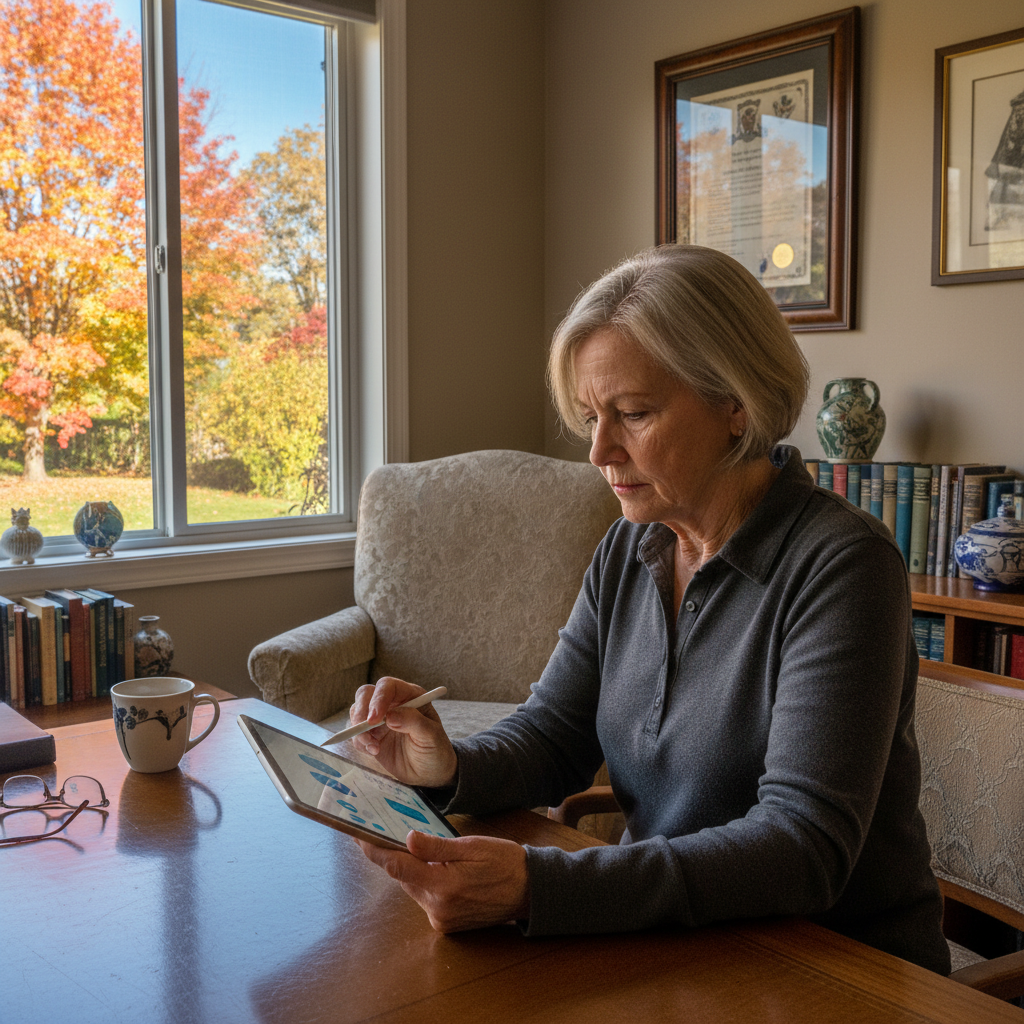
Understanding License Renewal Costs in Retirement
Professional license renewal requirements don't stop at 55 or 65. Accountants, lawyers, nurses, engineers, and many other professionals in Ontario must maintain active licenses through continuous professional development (CPD). These requirements often involve:
- Mandatory course fees — ranging from $300 to $3,000+ annually depending on your profession
- Examination costs — recertification exams, competency assessments
- Professional association dues — often increasing with inflation
- Specialized training — updates in your field, compliance training
For many retirees, these costs are unexpected budget items. If you've transitioned to part-time consulting, contract work, or advisory roles, your license remains valuable—and expensive to maintain.
Why License Renewal Matters in Retirement Planning
Keeping your professional credentials active opens doors that a retired person might need later:
- Consulting income — many retirees maintain part-time consulting work to stay engaged or supplement income
- Board positions — professional credentials are required for many not-for-profit and corporate board roles
- Advisory roles — mentoring, peer review, expert testimony, or expert witness work
- Credibility and identity — for many professionals, their license is core to their identity and sense of purpose
The cost of maintaining licensure while on a fixed retirement income can be substantial. A reverse mortgage provides a tax-free way to fund these obligations without selling investments, delaying CPP/OAS, or reducing your monthly spending.

The Real Cost: License Fees vs Reverse Mortgage Interest
Let's compare the true cost of maintaining your license:
| Profession | Annual Renewal | 5-Year Total | RM Interest Cost (5 years, 7%) |
|---|---|---|---|
| CPA/Accountant | $400-600 | $2,000-3,000 | ~$525 |
| Lawyer (Law Society Ontario) | $2,400-3,600 | $12,000-18,000 | ~$3,150 |
| Registered Nurse (CNO) | $150-350 | $750-1,750 | ~$460 |
| Professional Engineer (PEO) | $500-700 | $2,500-3,500 | ~$910 |
| Therapist/Counselor (CRPO/CPO) | $300-500 | $1,500-2,500 | ~$650 |
While a reverse mortgage costs interest on borrowed funds, it preserves your liquid assets and investment portfolio, which may be earning (or could earn) more than the interest you're paying.
According to the Financial Consumer Agency of Canada (FCAC), borrowing against home equity to fund ongoing professional obligations is a legitimate use of a reverse mortgage, particularly when the costs are recurring and predictable.
How to Fund License Renewal with a Reverse Mortgage
Here's a step-by-step approach:
Step 1: Calculate your true annual costs
- Add up license renewal fees, mandatory courses, association dues, and exam costs
- Include estimated increases for inflation (typically 2-3% annually)
- Project over 5, 10, or 15 years
Step 2: Determine how much you need to borrow
- Use an online reverse mortgage calculator to see how much equity you can access
- In Ontario, you can typically borrow 55% of your home value (age 55+) to 59% (age 65+)
- Request a lump sum large enough to cover 5-10 years of fees upfront
Step 3: Set up automatic payments
- Ask your lender (CHIP, Equitable Bank, Bloom Financial, or Home Trust) about automatic annual or quarterly draws
- This ensures fees are paid before they become overdue
Step 4: Keep the documentation
- Professional license renewal costs are NOT tax-deductible for personal use
- However, if you're running a consulting business, some costs may be business deductions
- Consult a tax advisor for your specific situation
Is This Right for You?
This strategy works best if:
✓ You maintain an active professional practice or consulting work in retirement
✓ Your home equity is substantial (typically $200,000+)
✓ You plan to stay in your home for 5+ years
✓ Your license renewal is non-negotiable (regulatory requirement)
✓ You don't have other liquid assets to draw from
This strategy may NOT be ideal if:
✗ You're unlikely to use your license or maintain active practice in retirement
✗ You plan to downsize or move in the next few years
✗ Your retirement income is already stretched
✗ You have significant liquid investments earning strong returns
Tax and Benefit Implications
Reverse mortgage proceeds are not considered income by the Canada Revenue Agency (CRA), so borrowing for license fees does not affect:
- Your Old Age Security (OAS) eligibility
- Your Guaranteed Income Supplement (GIS) if eligible
- Your Canada Pension Plan (CPP) payments
- Your taxable income for tax purposes
This article is for illustrative purposes only. Rates may vary. Call Rick Sekhon for the best rates and more information.
Quick Reference
| Question | Answer |
|---|---|
| Will I pay tax on RM funds? | No. Reverse mortgage proceeds are classified as a loan advance, not income. |
| Will this affect my OAS/GIS? | No. Borrowed funds are not counted as income by CRA or Service Canada. |
| Can I still work if I maintain my license? | Yes. A reverse mortgage doesn't restrict your ability to earn income or work part-time. |
| What if I stop needing the license? | You can stop borrowing and repay the loan. Prepayment penalties may apply (typically 3 months interest). |
Frequently Asked Questions
Can I borrow enough to cover 20 years of renewal costs upfront?
Most lenders allow you to borrow up to 55-59% of your home value as a lump sum or line of credit. You can request a larger draw if needed, but this is determined by your age, home value, and location. Talk to Rick Sekhon Reverse Mortgages to calculate your maximum borrowing capacity.
Are professional license fees tax-deductible if funded with a reverse mortgage?
If you're maintaining your license for personal reasons (identity, part-time hobby work), the fees are not tax-deductible. However, if you're running an active consulting business, some renewal costs may be business deductions. Consult a tax advisor.
What happens if interest rates rise and my RM interest costs increase?
If you've locked in a fixed rate, your interest rate won't change. If you have a variable rate, your costs may increase. Most Ontario reverse mortgage products offer fixed-rate options, making costs predictable.
Can I use a reverse mortgage to pay my law society dues or engineering fees?
Yes. Professional association fees, license renewal costs, and mandatory continuing education are all eligible uses of reverse mortgage proceeds. There's no restriction on what you spend borrowed funds on.
What if I move to long-term care before my license expires?
When you move to nursing care, most lenders give you 12 months to repay your reverse mortgage. Any remaining license renewal funds you haven't spent will be credited toward that repayment. Consult your lender's specific terms.
Speak to a licensed mortgage professional. Independent legal advice is required before closing a reverse mortgage in Ontario.
Get your free Ontario Reverse Mortgage Guide →
This content is for illustrative purposes only. Rates may vary. Call Rick Sekhon for the best rates and more information.
Ready to Learn More?
Get the free Ontario Reverse Mortgage Guide and find out exactly how much you could unlock from your home.
Get My Free Guide →Related Articles
Fund Your Growth: Using a Reverse Mortgage for Lifelong Learning in Retirement
Pursue new skills, hobbies, and education in retirement with a reverse mortgage. Learn how to fund personal development and stay mentally sharp while aging.
Read →Reverse Mortgage for Active Retirement (Age 55–65): Funding Travel and Lifestyle
Early retirees (55–65) face a unique challenge: long lifespan, high lifestyle costs, portfolio longevity. Learn how a reverse mortgage can fund active retirement adventures without portfolio depletion.
Read →Reverse Mortgage for Healthcare Costs: Aging in Place in Ontario
How Ontario seniors use a reverse mortgage to fund home care, medical equipment, prescriptions, and healthcare expenses — and stay in their home longer.
Read →