
Pay Off Debt in Retirement with a Reverse Mortgage
Learn how Ontario seniors can use home equity to eliminate credit card debt, mortgages, and loans while staying in their home.
"I'm facing retirement with significant debt still hanging over my head." If you're a senior in Ontario carrying credit card balances, lines of credit, or even an outstanding mortgage, a reverse mortgage could be a practical path to becoming debt-free while staying in your home.
This article is for educational purposes only and does not constitute financial advice.
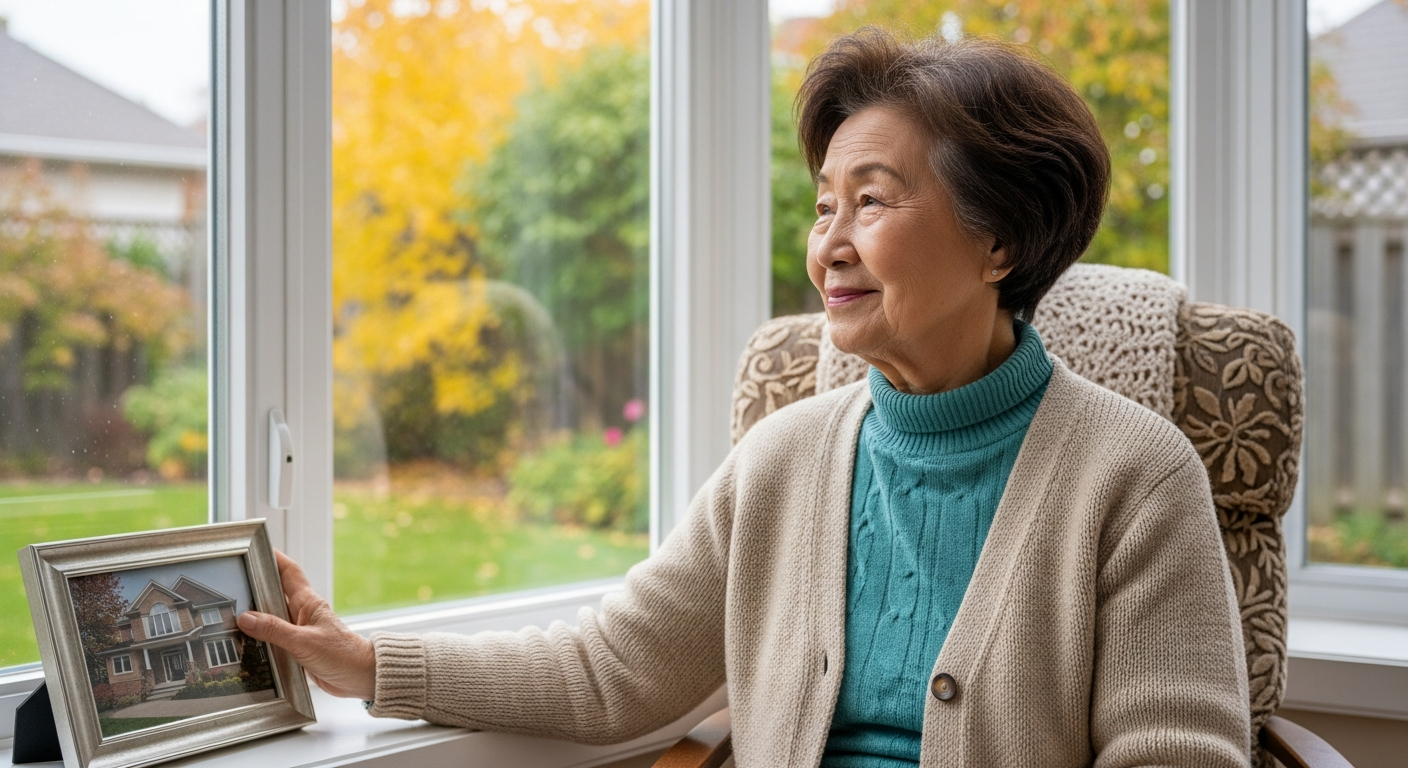
How Does a Reverse Mortgage Help Eliminate Debt?
A reverse mortgage is a loan secured against your home's equity. Unlike traditional mortgages where you make monthly payments, you receive funds from the lender. You can use these funds for any purpose—including paying off existing debts. The loan becomes due when you sell your home, move permanently, or the last borrower passes away.
According to the Financial Consumer Agency of Canada (FCAC), reverse mortgage borrowers retain full ownership and control of their property throughout the term. You're simply accessing equity you've already built.
Why Debt in Retirement Is Different
Carrying debt into retirement creates specific financial challenges:
- Fixed income constraints: On CPP, OAS, and pensions, making monthly debt payments reduces spending flexibility
- Interest costs accumulate: Credit card debt at 19–22% annually compounds quickly on a fixed income
- Stress and anxiety: Debt eliminates peace of mind in what should be your most relaxed years
- Opportunity cost: Monthly payments reduce money available for healthcare, home maintenance, and living expenses
A reverse mortgage transforms this equation. Instead of servicing debt monthly, you pay it off in a lump sum using home equity.
The Math: Before and After
Consider a typical scenario:
| Situation | Monthly Impact | Total 10-Year Cost |
|---|---|---|
| Credit card debt ($30,000 @ 20%) | $600+ minimum payment | $18,000+ in interest |
| Line of credit ($25,000 @ 7%) | $175 payment | $9,000+ in interest |
| Total monthly debt service | $775 | $27,000+ in interest |
| After reverse mortgage payoff | $0 payment | Interest builds on mortgage balance, not consumer debt |
The reverse mortgage interest rate is typically 6–7%, significantly lower than consumer debt rates.
Types of Debt You Can Eliminate
✓ High-interest credit card debt ✓ Personal lines of credit ✓ Remaining mortgage balance ✓ Car loans and vehicle financing ✓ Medical or dental debts ✗ Student loans (not recommended — may affect education assistance programs) ✗ Tax debts (CRA may have priority liens)
Work with Rick Sekhon, a licensed reverse mortgage specialist in Ontario, to confirm your specific debt situation qualifies.
The Eligibility Checklist
To use a reverse mortgage for debt elimination, you must meet these requirements:
- Age 55 or older — all registered homeowners must meet this age threshold
- Live in Ontario (or another province with available products)
- Own your home outright or have significant equity — typically 40%+ of the home's current value
- No income or credit verification required — past credit issues don't disqualify you
- Your property must be your primary residence — the home where you live most of the time
According to HomeEquity Bank (CHIP), borrowers can access up to 55% of their home's value. Equitable Bank and Bloom Financial offer similar limits with slightly different terms.
Step-by-Step: Using a Reverse Mortgage to Pay Off Debt
1. Get Your Home Appraised
The lender determines your home's current market value. This is the foundation for calculating how much you can borrow.
2. Calculate Your Borrowing Power
With 55% available (for CHIP), a $400,000 home yields $220,000 in available equity. After lender fees, you typically net 80–85% of this amount.
3. Create a Debt Payoff Plan
List all debts with balances and interest rates. Prioritize high-interest consumer debt, then tackle lower-interest obligations. Don't overextend—borrow only what you need.
4. Close the Reverse Mortgage
Independent Legal Advice (ILA) is required in Ontario. A lawyer explains your obligations and ensures you understand the product.
5. Receive Funds and Pay Off Debts
Funds are deposited to your account. You control the timing of debt repayment—pay all at once or in tranches.
6. Stay in Your Home
No monthly payments due. You continue to own and live in your home as before. You must maintain property taxes, insurance, and home maintenance.
The Real Cost: What Compounds
When you use a reverse mortgage for debt elimination, the reverse mortgage interest is the cost. Interest accrues on your loan balance monthly, but you don't pay it during your lifetime.
| Factor | Impact |
|---|---|
| Reverse mortgage interest rate (2026) | 6.5–7.2% depending on lender |
| How interest accrues | Monthly on outstanding balance (compounds) |
| When it's repaid | When you sell, move, or pass away |
| Impact on heirs | Reduces inheritance; property sold to repay loan |
This is fundamentally different from consumer debt interest, which you pay during your lifetime while depleting monthly cash flow.
According to the Office of the Superintendent of Financial Institutions (OSFI), reverse mortgage interest rates are federally regulated and transparent. Compare rates across CHIP, Equitable Bank, Bloom Financial, and Home Trust before committing.
Is a Reverse Mortgage Better Than Other Debt Solutions?
Reverse Mortgage vs Downsizing
- Downsizing: Sell home, buy smaller, pocket difference. Loses emotional attachment to family home.
- Reverse mortgage: Stay in your home, preserve memories, maintain independence. Costs slightly more in interest.
Reverse Mortgage vs HELOC (Home Equity Line of Credit)
- HELOC: Requires approved credit and income verification. Monthly payments required.
- Reverse mortgage: No credit check, no monthly payments. Available to more seniors.
Reverse Mortgage vs Bankruptcy/Consumer Proposal
- Bankruptcy: Damages credit for 7–14 years, eliminates some debts but traumatic.
- Reverse mortgage: Maintains home ownership, clear financial path, no credit damage.
Drawbacks to Consider
A reverse mortgage is not debt-free money. Important limitations:
- Interest compounds over time, reducing equity and inheritance available to heirs
- You must maintain property, pay taxes, insurance, and utilities
- Prepayment penalties (typically 3 months interest) apply if you repay early
- Becomes due when you move or pass away, triggering forced home sale if heirs can't refinance
- Reduces future borrowing capacity — if you need funds later, less equity remains available
Real-World Example: Margaret's Story
Margaret, 68, is a composite example based on common scenarios. She owns an Ontario home valued at $500,000 but carries $65,000 in debt:
- Credit card: $30,000 @ 20% = $600/month in interest
- Personal LOC: $25,000 @ 8% = $167/month in interest
- Car loan: $10,000 @ 6% = $200/month
- Total monthly debt service: $967
Using a reverse mortgage with CHIP:
- Borrows $70,000 (55% of $500,000, minus fees)
- Pays off all $65,000 debt
- Keeps $5,000 emergency buffer
- Monthly debt payment: $0
- Lives in her home without monthly financial stress
The reverse mortgage interest at 7% costs her ~$4,900 in year 1 (accrued, not paid monthly). But she eliminated $967 × 12 = $11,604 in annual debt payments while eliminating nearly $8,000 in credit card interest annually.
Qualifying for the Best Rates
Reverse mortgage rates vary by lender and loan structure:
| Lender | Rate Range (2026) | Features |
|---|---|---|
| CHIP (HomeEquity Bank) | 6.5–7.0% | Largest market share, established |
| Equitable Bank | 6.7–7.1% | Competitive rates, newer entrant |
| Bloom Financial | 6.8–7.2% | Flexible terms, smaller lender |
| Home Trust | 6.9–7.3% | Newer product, solid rates |
Contact Rick Sekhon Reverse Mortgages to get quotes from multiple lenders. You're not locked into the first rate offered.
Key Takeaways
| Question | Answer |
|---|---|
| Can I use a reverse mortgage to pay off debt? | Yes, for any legal debt except CRA tax debts. |
| Will this hurt my credit score? | No—you're not borrowing traditionally, so credit is irrelevant. |
| Do I have to make monthly payments? | No. Interest accrues; you repay when you move or pass away. |
| Can I stay in my home? | Yes, as long as you maintain it and pay property taxes/insurance. |
| What if I want to repay early? | You can, but prepayment penalties (3 months interest) typically apply. |
Frequently Asked Questions
Can I use a reverse mortgage to pay off a mortgage I still owe?
Yes, absolutely. The reverse mortgage funds can be used to pay off any remaining traditional mortgage balance. You'll need enough home equity to cover the mortgage and the reverse mortgage fees. For example, if your home is worth $400,000 and you owe $120,000 on a mortgage, you have $280,000 in equity. A reverse mortgage could pay off the $120,000 mortgage, eliminate other debts, and provide cash remaining.
Does paying off debt with a reverse mortgage affect my OAS or GIS?
No. According to the Canada Revenue Agency (CRA), reverse mortgage proceeds are classified as loan advances, not income. They do not affect Old Age Security, Guaranteed Income Supplement, or any means-tested government benefits. This is a major advantage over other borrowing strategies.
What happens to my debt payoff if I move to a nursing home?
If you move to long-term care permanently, the reverse mortgage becomes due, typically within 12 months. If heirs choose to keep the home, they can refinance the reverse mortgage or pay it off with other assets. If the home is sold, the reverse mortgage is repaid from sale proceeds.
Can I borrow more than I need to pay off debt?
Yes. Many borrowers take slightly more than required to build an emergency fund or cover upcoming home repairs. This is smart planning—you've paid the lender fees anyway, so using available equity makes sense.
Is a reverse mortgage reversible if I change my mind?
Reverse mortgages have a cancellation period (typically 10 days after closing in Ontario), but once funds are drawn and debts paid, unwinding is complex. Consider carefully before committing.
The Bottom Line
Debt-free retirement isn't out of reach for Ontario homeowners with substantial equity. A reverse mortgage transforms home equity into a tool for financial freedom, eliminating the monthly stress of debt payments while letting you stay in your home.
The cost—reverse mortgage interest at 6–7%—is typically far lower than the consumer debt rates you're currently paying. More importantly, you regain peace of mind and cash flow to enjoy your retirement years.
Speak to a licensed mortgage professional. Independent legal advice is required before closing a reverse mortgage in Ontario.
Quick Reference
| Metric | Details |
|---|---|
| Minimum age | 55 years old |
| Property requirement | Primary residence in Ontario |
| Credit check | Not required |
| Income verification | Not required |
| Typical borrowing limit | 45–55% of home value (lender-dependent) |
| Typical interest rate (2026) | 6.5–7.3% |
| Monthly payment | None required |
| Repayment triggered by | Selling home, moving permanently, or last borrower passing away |
This content is for illustrative purposes only. Rates may vary. Call Rick Sekhon for the best rates and more information.
Ready to Learn More?
Get the free Ontario Reverse Mortgage Guide and find out exactly how much you could unlock from your home.
Get My Free Guide →Related Articles
Reverse Mortgage Eligibility in Ontario: Complete 2026 Guide
Everything Ontario homeowners need to know about qualifying for a reverse mortgage in 2026. Covers age requirements, home equity, property types, and the application process.
Read →Reverse Mortgage Interest Rates Ontario 2026: Current Rates & What They Mean
Current reverse mortgage interest rates in Ontario for 2026. Compare rates from CHIP, Equitable Bank, Bloom, and Home Trust. Learn what rates mean for your home equity over time.
Read →Reverse Mortgage Tax Implications in Canada: What Ontario Homeowners Need to Know
Are reverse mortgage proceeds taxable in Canada? How do they affect OAS, GIS, and CPP? A complete guide to the tax implications of reverse mortgages for Ontario seniors.
Read →