
Climate Risk and Home Insurance: Reverse Mortgage for Flood Protection and Extreme Weather Upgrades
Ontario homeowners: use a reverse mortgage to fund flood protection, climate-resilient upgrades, and increasing insurance costs from extreme weather risks.
Are rising home insurance costs and increasing flood risks making you reconsider whether you can stay in your current home affordably? Ontario homeowners 55+ are facing a double threat: insurance premiums rising 10–20% annually due to climate risk, and potential uninsured flood or storm damage forcing expensive repairs. A reverse mortgage can fund protective upgrades and absorb increasing insurance costs without forcing downsizing.
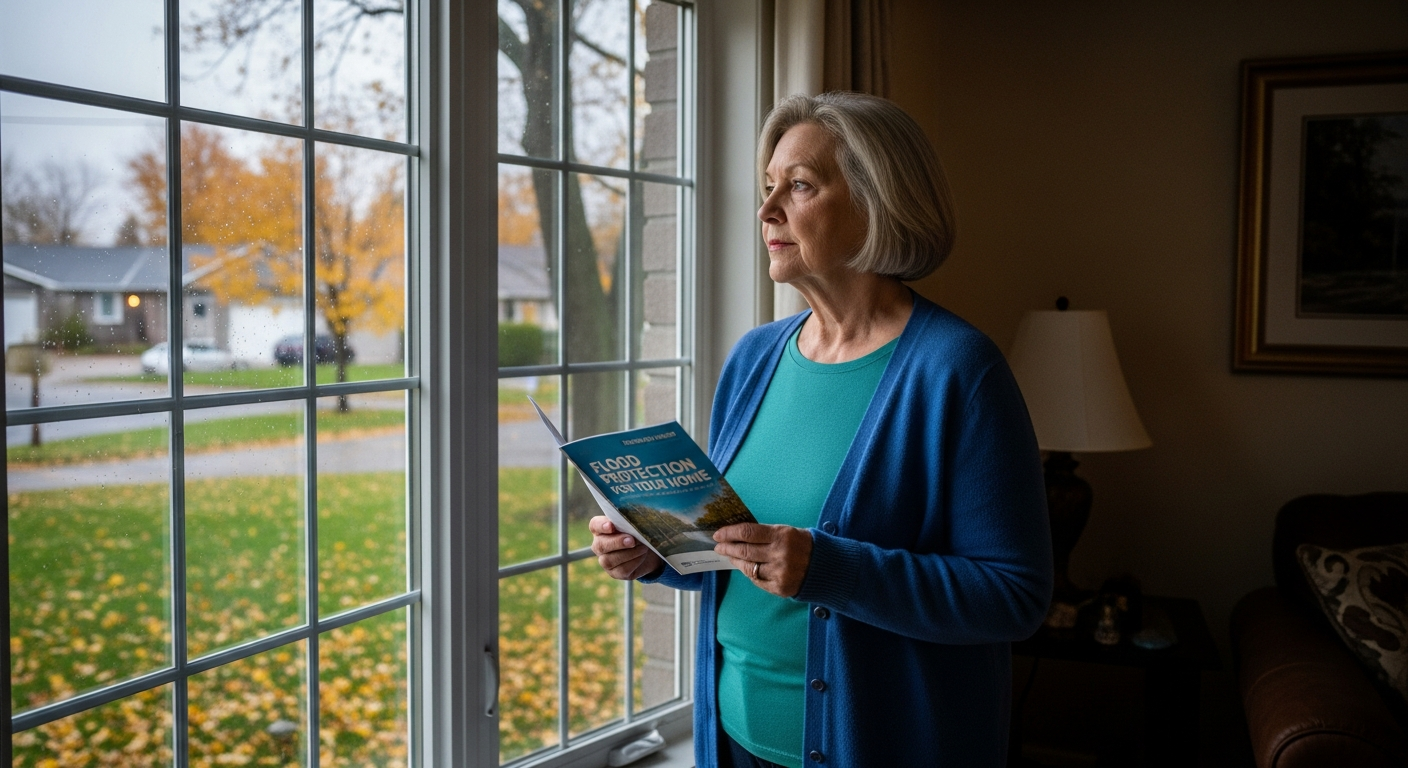
Climate Risk is Reshaping Ontario Homeownership
Ontario's climate is changing faster than historical patterns anticipated. Extreme weather events are increasing:
| Climate Event | Historical Pattern | Current Pattern | Impact on Homeowners |
|---|---|---|---|
| Summer floods | 50-year event (2% annual probability) | 10-year event (10% annual probability) | Insurance companies raising rates or denying coverage |
| Ice storms | Rare winter event | Occurring 2–3 times annually | Unexpected power losses, heating costs, emergency repairs |
| Heavy rainfall | 3–4 inches annually | 4–6 inches in single events | Basement flooding, foundation saturation, sump pump failure |
| Heat waves | 1–2 weeks annually | 3–4 weeks annually | AC failure, heat-related home damage, cooling costs |
| Severe wind | Occasional spring events | Multiple 80+ km/h wind days yearly | Roof damage, tree falls, siding/window damage |
Real Ontario Examples
Greater Toronto Area (2023–2024):
- July 2024 extreme rainfall: 127 mm fell in hours (previously, this was a 200-year event)
- Insurance companies stopped writing new flood insurance policies in several GTA neighborhoods
- Home insurance rates increased 25–40% for flood-prone zip codes
Ottawa-Gatineau (Spring 2024):
- Severe ice storm with 80+ km/h winds caused widespread property damage
- Insurance claims exceeded available reserves; some insurers pulled out of region
- Uninsured damage left residents paying tens of thousands for repairs
Southwestern Ontario (2023–2025):
- Multiple basement flooding events in communities with aging municipal drainage
- Sump pump failures during power outages led to $20,000–$50,000 water damage claims
- Rising groundwater levels (40% above historical norms) affecting foundation integrity
How Climate Risk Destabilizes Retirement Planning
For seniors already living on fixed incomes, rising climate costs are destabilizing:
Scenario 1: Insurance Unaffordability
- Current home insurance: $1,500/year
- Risk adjustment (next 3 years): +25–40%
- New premium: $1,875–$2,100/year
- Impact: Adds $400–$600 to annual housing costs
- For fixed-income seniors: Equivalent to 1.5–2% reduction in purchasing power
Scenario 2: Uninsured Damage
- Flood damage (basement water intrusion): $35,000
- Homeowner insurance: Typically excludes flooding in many policies
- Personal cost: $35,000 from retirement savings
- Impact: 1–2 years of planned spending eliminated
Scenario 3: Forced Protective Upgrades
- Lender requires foundation waterproofing to approve reverse mortgage: $12,000
- Lender requires new roof (10+ years old and storm-prone area): $18,000
- Insurance company requires sump pump upgrade: $3,000
- Total: $33,000 in compliance costs
Reverse Mortgage Solutions for Climate Risk
A reverse mortgage provides three critical climate-related benefits:
1. Funding Protective Upgrades
Sump pump systems (standard $3,000–$6,000; advanced backup $8,000–$12,000)
- Prevents basement flooding during heavy rains
- Backup power systems protect during storms
- Reduces insurance claims and premium increases
Foundation waterproofing ($8,000–$15,000)
- Interior/exterior drainage systems
- Foundation wall sealants
- Prevents water seepage, protects basement from groundwater
Roof reinforcement and replacement ($15,000–$30,000)
- Wind-resistant materials and installation
- Reduces ice dam formation
- Meets lender requirements for RM approval
Backup power systems ($5,000–$15,000)
- Generator installation
- Battery backup for critical systems
- Provides independence during grid failures
Storm-resistant windows and doors ($8,000–$20,000)
- Impact-resistant glass
- Reinforced frames
- Reduces wind, water infiltration damage
2. Absorbing Rising Insurance Costs
Instead of struggling with annual insurance rate increases (now often 15–25% yearly in flood-prone areas), a reverse mortgage line of credit allows you to:
- Establish $50,000–$75,000 available credit
- Draw on it only for insurance premium increases that exceed your budget
- Maintain housing affordability without cutting groceries or healthcare
Example: Your annual insurance cost rises from $1,500 to $1,950 (30% increase). Instead of cutting spending elsewhere, you draw $450 from your RM line of credit, smoothing the cost across your retirement budget.
3. Funding Emergency Repairs from Uninsured Climate Events
Despite best efforts, uninsured damage happens:
- Sump pump failure during power outage (water damage: $15,000–$25,000)
- Tree fall on house, not covered by basic policy ($10,000–$20,000)
- Ice dam damage, not covered by standard insurance ($5,000–$15,000)
A reverse mortgage line of credit provides emergency liquidity without forcing RRIF withdrawals or home sale.

Building Your Climate-Resilient Home Strategy
Step 1: Conduct a Climate Risk Assessment (Free–$500)
Before investing in upgrades, understand your specific risks:
DIY Assessment:
- Check your municipality's flood map (most Ontario cities have online flood risk zones)
- Research your property history (has it flooded before? Were neighbors affected?)
- Identify your home's age and vulnerability (older homes more susceptible to water intrusion)
Professional Assessment:
- Home inspector with climate/moisture expertise ($300–$500)
- Will identify foundation cracks, drainage issues, roof vulnerabilities
- Provides prioritized list of upgrades
Step 2: Prioritize Upgrades by Risk and Affordability
Highest priority (fund first):
- Sump pump system or replacement ($4,000–$7,000)
- Backup power for sump pump ($2,000–$4,000)
- Foundation crack repair ($2,000–$8,000)
- Gutter and downspout improvements ($1,500–$3,000)
Medium priority (fund within 1–2 years):
- Roof inspection/replacement ($12,000–$25,000)
- Basement waterproofing ($8,000–$12,000)
- Storm-resistant windows ($8,000–$15,000)
Lower priority (plan for longer term):
- Backup generator ($5,000–$15,000)
- Advanced home automation (smart water shutoff, humidity sensors) ($3,000–$8,000)
Step 3: Apply for Reverse Mortgage
Work with a reverse mortgage specialist to:
- Explain your climate risk mitigation goals
- Provide upgrade quotes from contractors
- Structure your RM to cover immediate and 3–5 year needs
Lenders often appreciate RM applications that include home improvement plans. It shows you're maintaining and improving the property, reducing lender risk.
Step 4: Execute Upgrades on Your Timeline
You don't need to complete all upgrades immediately. Structure your RM line of credit to fund:
- Year 1: Sump pump + backup power ($6,000–$10,000)
- Year 2: Foundation repair ($4,000–$8,000)
- Year 3: Roof inspection/replacement ($12,000–$25,000)
This phased approach reduces disruption and lets you learn from early upgrades before committing to larger expenses.
Insurance Considerations and Cost Reduction
How to Reduce Insurance Costs (Partially)
Making protective upgrades often qualifies for insurance discounts:
| Upgrade | Typical Insurance Discount |
|---|---|
| Backup sump pump + power | 5–10% |
| Foundation waterproofing | 5–8% |
| Roof under 10 years old | 10–15% |
| Backup generator | 5–10% |
| Storm-resistant windows | 5–10% |
| Updated electrical/plumbing | 5–10% |
| Multiple protective upgrades | Cumulative: 15–25% discount potential |
Example calculation:
- Current insurance: $1,800/year
- Potential discount from upgrades: 20% = $360/year savings
- Protective upgrades cost: $15,000
- Break-even: 41 years (not cost-effective on discount alone)
However, the true value isn't premium reduction—it's damage prevention and peace of mind.

Government Resources and Climate Programs
According to the National Disaster Mitigation Programme (NDMP), the federal government provides grants for climate-resilient home improvements in high-risk areas. Ontario residents may qualify for funding through provincial climate adaptation programs.
Available Programs (Check for Your Region)
- Flood Resilience Retrofit Grant Programs — Some Ontario municipalities offer rebates ($2,000–$5,000) for sump pump, waterproofing, or window upgrades
- Federal Climate Action Incentive — May be used for home improvements
- Provincial Home Retrofit Programs — Check Ontario.ca for current offerings
A reverse mortgage can fund your upgrade, and any grants received can be used to repay RM draws (reducing interest costs).
Frequently Asked Questions
Do I need a full home climate audit before applying for a RM?
No, but it's helpful. A basic assessment ($300–$500) can guide your RM application and ensure you're prioritizing the right upgrades. Many lenders will require proof of upgrade quotes before approving draws.
Will climate upgrades increase my home's value?
Typically, yes—but the value increase may not equal the upgrade cost. Sump pump and foundation waterproofing add $5,000–$10,000 in perceived value (hard to quantify). Roof replacement typically recovers 60–80% of cost in home value. The real value is protection and insurance stability, not home appreciation.
What if I can't afford climate upgrades even with a RM?
Prioritize the essential ones (sump pump, backup power, foundation repair). These prevent catastrophic damage. Skip cosmetic upgrades (advanced generators, smart home systems) until you've covered basics.
Is my property uninsurable if it's in a flood zone?
Not necessarily, but it's challenging. Flood-prone properties can get insurance through private insurers at higher cost or through specialty flood insurance programs. However, rates will be high. Climate upgrades often make you insurable through standard providers at normal rates—another major RM benefit.
What if the lender won't approve my RM because of climate risk?
Some lenders are cautious about properties in high-risk flood or windstorm areas. If one lender declines, consult Rick Sekhon Reverse Mortgages for options. Some lenders specialize in risk properties. Alternatively, make protective upgrades before applying (harder without funding, but possible).
Can I use RM funds to relocate to a lower-risk area?
Technically, yes—though a reverse mortgage is secured by your current home, not by a future purchase. You'd need to sell your current home, repay the RM from proceeds, then buy in a new location. For pure relocation funding, downsizing might be simpler. Consult your mortgage specialist for your specific situation.
Closing Thought
Climate change is rewriting the economics of homeownership in Ontario. Protective upgrades are no longer optional; they're essential for staying safely in your home long-term. A reverse mortgage makes these upgrades affordable without forcing lifestyle cuts or early retirement savings depletion.
Ready to Learn More?
Get the free Ontario Reverse Mortgage Guide and find out exactly how much you could unlock from your home.
Get My Free Guide →Related Articles
Reverse Mortgage and Home Maintenance Planning: Stay Ahead of Major Repairs
Ontario seniors can use reverse mortgage funds for proactive home maintenance planning. Learn how to budget for repairs, prevent costly emergencies, and keep your home safe while aging in place.
Read →Reverse Mortgage for Home Emergency Preparedness and Safety Systems
Aging in place safely requires emergency backup systems—backup power, water supply, first aid systems, and structural reinforcement. Fund these critical upgrades with a reverse mortgage.
Read →Reverse Mortgage for Climate Resilience and Severe Weather Home Upgrades
Use a reverse mortgage to fund climate-resilient home upgrades in Ontario — sump pumps, backup power, storm hardening, and flood protection.
Read →