
Snowbird Healthcare Coordination: Managing US-Canada Medical Costs With a Reverse Mortgage
Snowbird retirees: manage US healthcare costs and medical emergencies while splitting time between Canada and US using reverse mortgage funding strategy.
Are you a snowbird retiree spending winters in the US and summers in Canada, and worried about healthcare costs and medical emergencies when you're abroad? Snowbird lifestyles are increasingly popular—and increasingly complicated by healthcare system differences. A reverse mortgage can fund healthcare gaps, travel insurance, and emergency medical costs that arise when aging Canadians split time between two countries.
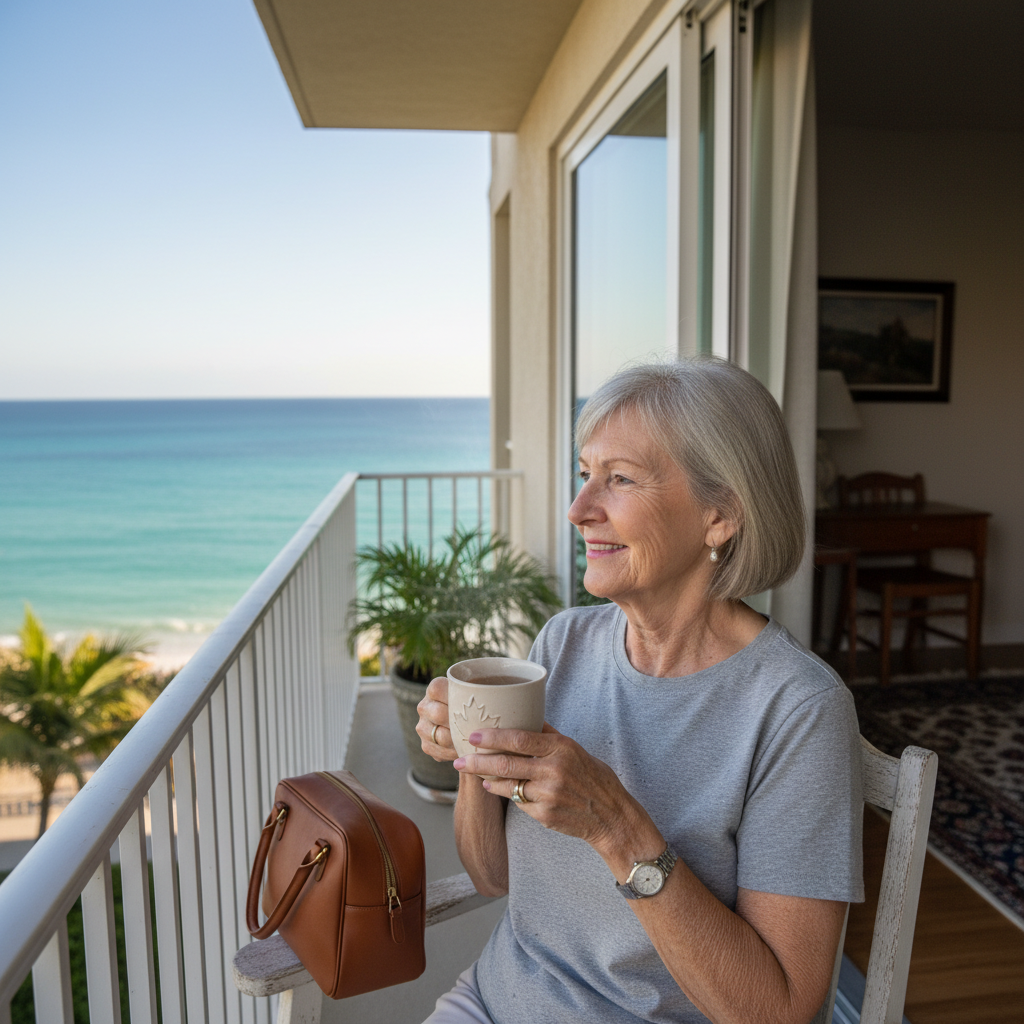
The Snowbird Healthcare Dilemma
Approximately 300,000 Canadian seniors spend significant time (usually 3–6 months) in the US during winter. This lifestyle offers benefits (warm weather, vitamin D, social communities) but creates healthcare complications:
Canada's Healthcare Coverage for Snowbirds
Good news: Canada's provincial healthcare (OHIP in Ontario) provides emergency healthcare coverage while you're traveling abroad, temporarily.
Bad news: OHIP coverage is limited and conditional:
| Coverage | OHIP Coverage | What You Pay |
|---|---|---|
| Emergency hospital care | Covered (at Ontario rate, not US hospital rate) | Hospital may bill $5,000–$50,000; OHIP reimburses Ontario cost; you pay difference |
| Emergency doctor visits | Covered (emergency only) | Typically covered if deemed true emergency |
| Routine doctor visits | NOT covered | Full cost: $150–$300 per visit |
| Prescriptions | NOT covered | Full cost: Canada's costs + US pharmacy markup |
| Dental/vision | NOT covered in either country | Full cost: $200–$500+ per procedure |
| Ambulance transport | Limited coverage | Likely your cost: $1,000–$5,000 |
| Medical evacuation (if needed) | NOT covered | Cost: $50,000–$250,000 |
The Financial Reality of Snowbird Healthcare
An unforeseen health event in the US can be financially catastrophic:
Scenario 1: Chest pain in Arizona (not admitted to hospital)
- Emergency room visit, tests: $5,000–$10,000
- OHIP reimburses: $0 (emergency room not "emergency" if discharged same day in some cases)
- Your cost: $5,000–$10,000
Scenario 2: Fall in Florida, broken hip
- Emergency room, imaging, orthopedic consult: $15,000
- Hospital stay (2 nights): $25,000–$40,000
- Orthopedic surgery: $40,000–$80,000
- Total: $80,000–$135,000
- OHIP reimburses: ~$20,000–$30,000 (Ontario cost equivalent)
- Your cost: $50,000–$105,000
Scenario 3: Stroke in the US, medical evacuation needed
- Stabilization in US hospital: $50,000
- Medical evacuation to Canadian hospital: $100,000–$150,000
- Total: $150,000–$200,000
- OHIP/travel insurance might cover: $30,000–$100,000
- Your cost: $50,000–$170,000
For retirees on fixed CPP/OAS income, these costs are unaffordable without a financial safety net.
How Reverse Mortgage Funds Snowbird Healthcare
A reverse mortgage provides two critical safeguards:
1. Emergency Healthcare Fund
Establish a dedicated emergency healthcare reserve funded by reverse mortgage:
- Amount: $50,000–$100,000 (sized to cover major medical event)
- Access: Available immediately if medical emergency occurs
- Use: Pay out-of-pocket medical costs; reimburse yourself from travel insurance later
Example: You have hip surgery in Florida ($90,000). You draw $90,000 from your RM line of credit to pay the US hospital immediately. Your travel insurance reimburses you $50,000. You net $40,000 cost (covered by RM). You repay the RM over time from Canadian income.
2. Travel Insurance Funding
Before each snowbird season, purchase comprehensive travel medical insurance (typically $300–$1,500 for 6 months, age 65+). A reverse mortgage makes this automatic:
- Draw $1,000–$2,000 annually from RM
- Fund travel insurance premium
- Reduce out-of-pocket costs
- Get peace of mind that major medical is covered
Understanding Snowbird Insurance Requirements
Travel Medical Insurance (Essential)
What it covers:
- Emergency hospital care (up to policy limit, often $250,000–$2,000,000)
- Doctor visits (up to policy limit, often $25,000–$100,000)
- Emergency dental (limited, up to $1,000–$3,000)
- Ambulance and air evacuation (up to full cost)
- Prescriptions (up to policy limit)
What it doesn't cover:
- Pre-existing conditions (usually excluded unless declared and accepted)
- Routine/non-emergency care
- Travel delays or cancellations (different policy)
- High-risk activities (skydiving, professional sports)
Cost (age 65+, 6 months in US):
- Basic plan: $300–$600
- Comprehensive plan: $800–$1,500
- Annual travel insurance (multiple 6-month trips): $1,200–$3,000
Major insurers in Canada (2026):
- Desjardins (Quebec-focused)
- Blue Cross/Manulife (nationwide)
- Sunlife (nationwide)
- CAA/AMA (often bundled with membership)
According to the Financial Consumer Agency of Canada (FCAC), travel medical insurance is critical for Canadian seniors planning extended US travel. Many retirees assume OHIP covers them; it doesn't. Insurance can be the difference between manageable costs and financial catastrophe.
Critical Insurance Considerations
| Consideration | Why It Matters | Action |
|---|---|---|
| Pre-existing condition coverage | Most policies exclude pre-existing conditions (or charge more); you need explicit coverage | Declare all conditions when applying; get written confirmation of coverage |
| Age-specific pricing | Premiums jump significantly at age 65, 70, 75+ | Renew early; lock in rates before age milestones |
| Condition monitoring | If your health changes mid-winter (new diagnosis), coverage may lapse or exclude the new condition | Disclose changes to insurer immediately; get written confirmation |
| Deductible amounts | $0 deductible vs. $500 vs. $2,500 significantly changes your out-of-pocket | Choose deductible you can afford if major event occurs |
| Benefit limits | Some policies cap hospital coverage at $250,000; major surgery could exceed this | Verify coverage limits match potential US healthcare costs (often $500,000+ minimum recommended) |
Reverse Mortgage Healthcare Strategy for Snowbirds
Step 1: Establish RM Line of Credit Before First Snowbird Season
- Home value: $500,000
- RM available equity: $275,000
- Establish line of credit: $100,000 (reserved for healthcare emergencies)
- Rest of credit: Available for other retirement needs
Step 2: Purchase Comprehensive Travel Insurance
Before each season:
- Budget $1,000–$1,500 for 6-month travel medical insurance
- Include prescription coverage, emergency dental
- Ensure medical evacuation coverage is included
- Draw $1,500 from RM at start of season; repay from CPP/OAS + RRIF if possible
Step 3: Document Pre-Existing Conditions
Required for insurance validity:
- List all current medications
- Document all diagnoses (blood pressure, diabetes, arthritis, etc.)
- Provide recent medical exam results if applying after age 70
- Disclose any past surgeries or hospitalizations
- Get written confirmation from insurer that pre-existing conditions are covered
Step 4: Establish US Medical Relationships
Consider these steps:
- Connect with local doctor/clinic in your US winter location (Florida, Arizona, Mexico, etc.)
- Carry copies of Canadian prescriptions and medical history
- Identify nearby hospitals in your US location
- Register with your Canadian provincial health ministry for telehealth access (some provinces offer virtual care while traveling)
Step 5: Healthcare Coordination Protocol
When a medical situation arises:
- Non-emergency: Contact your Canadian doctor via telehealth (if available) for guidance
- Urgent: Visit local US clinic; inform them you're Canadian and have specific insurance coverage
- Emergency: Go to nearest US hospital; immediately call your travel insurance provider for pre-approval if possible
- After care: Collect all medical records and bills; submit to travel insurance for reimbursement
- RM repayment: Repay RM draws from insurance reimbursement or Canadian income
Comparing Snowbird Healthcare Funding Options
| Option | Cost | Peace of Mind | Flexibility | Best For |
|---|---|---|---|---|
| Travel insurance only | $1,000–$2,000/year | Moderate (doesn't cover everything) | Limited (policy-dependent) | Healthy snowbirds with strong savings |
| Travel insurance + RM emergency fund | $1,000–$2,000/year + RM interest | Excellent (major gaps covered) | High (RM available for deductibles/gaps) | Anyone with chronic conditions or limited savings |
| US healthcare plan (if available) | $2,000–$8,000/year | Moderate (complex rules) | Limited (plan-specific) | Long-term US residents, not seasonal visitors |
| Self-insure (savings only) | $0 (but risky) | Low (vulnerable to catastrophic cost) | High (choose own care) | Affluent retirees with $200,000+ emergency savings |
For most Canadian snowbirds, travel insurance + RM emergency fund is optimal.
Specific Snowbird Destinations and Healthcare Considerations
Arizona (Popular Snowbird Destination)
Healthcare context:
- Phoenix, Scottsdale have excellent private hospitals (HCA, Banner Health)
- Cost of care is high ($100–$200/hour physician visit)
- Winter population is heavily senior (good geriatric services)
Reverse mortgage strategy:
- Travel insurance essential ($800–$1,200/6 months)
- Emergency fund: $75,000–$100,000 reserve
- Plan: Connect with geriatric clinic in your chosen city
Florida (Largest Snowbird Destination)
Healthcare context:
- Miami, Tampa, Orlando have world-class medical centers
- Cost of care is high ($150–$250/hour physician visit)
- Hurricane season (June–November) adds weather-related health risks
Reverse mortgage strategy:
- Travel insurance with hurricane/weather clause ($1,000–$1,500/6 months)
- Emergency fund: $100,000–$150,000 (higher due to extreme cost)
- Plan: Register with local hospital network in your chosen area
Mexico (Growing Snowbird Destination)
Healthcare context:
- Private healthcare is affordable ($50–$150/hour physician visit)
- Quality varies by location (Cancun, Playa del Carmen have good private hospitals)
- Canadian prescription requirements may not be recognized
Reverse mortgage strategy:
- Travel insurance is essential ($600–$1,200/6 months; Mexico-specific plans)
- Emergency fund: $50,000–$75,000
- Plan: Coordinate with Canadian doctor for pre-approval of medications
Tax and Benefit Implications for Snowbirds
OHIP Coverage During US Travel
Coverage maintained if:
- You maintain Ontario residence (own/rent home in Ontario)
- You don't exceed 7 consecutive months outside Ontario
- You return to Ontario for at least 24 hours within the 7-month absence
Coverage suspended if:
- You're out of province more than 8 months consecutively
- You establish US residence as primary home
- You become a US resident for tax purposes
Tax Residency and Snowbird Status
Canada CRA tax rules:
- If you maintain Ontario residence and return regularly, you're a Canadian resident
- Snowbird income (CPP/OAS) remains Canadian-taxable
- US income (if working) is US-taxable + Canadian-taxable (with foreign tax credit)
According to the Canada Revenue Agency (CRA), snowbirds who maintain Canadian residency pay taxes on worldwide income in Canada. Consult a tax accountant familiar with cross-border taxation to optimize your strategy.
Spousal Coverage
If you're traveling and your spouse stays in Canada:
- Spouse's OHIP coverage continues (unaffected by your travel)
- Spouse's CPP/OAS continues
- Your OHIP continues (if maintaining Ontario residency per rules above)
Frequently Asked Questions
Do I need travel insurance if I only go to the US for 1–2 weeks?
Even short trips carry risk. A single accident or sudden illness can trigger $20,000–$100,000 in uninsured costs. Most insurance experts recommend coverage for any US travel, even 1–2 weeks.
Can I buy US health insurance as a Canadian snowbird?
Generally, no. US insurers require US residency or work visa. You're ineligible as a Canadian resident. Travel medical insurance from Canada is your only option.
What happens to my OHIP if I'm a snowbird for more than 7 months?
OHIP coverage suspends if you're out of Ontario >7 consecutive months. You lose coverage until you return and re-establish residency (usually 5 weeks wait). This is why travel insurance is essential for extended snowbird stays.
If I'm hospitalized in the US, how do I pay?
US hospitals require upfront payment or proof of insurance. Have your travel insurance policy details with you at all times. Some hospitals will bill you and let you submit to insurance later, but policies vary. Always carry insurance documentation.
Should I stay in Canada to avoid healthcare costs?
Healthcare access shouldn't force retirement decisions. With travel insurance + reverse mortgage emergency fund, snowbird living is financially manageable. The psychological/health benefits of warm winters often outweigh costs.
Can my travel insurance cover Canada trips too?
Some travel insurance (annual policies) covers trips to both US and Canada. Verify with your insurer. Single-trip policies typically specify destination.
Closing Thought
Snowbird retirement is increasingly common—and increasingly complex from a healthcare perspective. A reverse mortgage, combined with comprehensive travel insurance, transforms snowbird healthcare from a financial threat into a manageable expense. You can enjoy warm winters without fear that a health event will destroy your retirement.
Ready to Learn More?
Get the free Ontario Reverse Mortgage Guide and find out exactly how much you could unlock from your home.
Get My Free Guide →Related Articles
Reverse Mortgage for Cross-Border Healthcare: Managing US Medical Costs
Healthcare tourism and US medical costs drain Ontario retirement savings. Use a reverse mortgage to fund specialized treatment and cross-border care without raiding investments.
Read →Reverse Mortgage for Healthcare Costs: Aging in Place in Ontario
How Ontario seniors use a reverse mortgage to fund home care, medical equipment, prescriptions, and healthcare expenses — and stay in their home longer.
Read →Reverse Mortgage for Snowbirds: Keep Your Home
Can Canadian snowbirds get a reverse mortgage? Learn the principal residence rules, lender requirements, and how reverse mortgage snowbirds Canada policies work in 2026.
Read →