
Fund a Secondary Suite in Ontario with a Reverse Mortgage
Ontario seniors can use a reverse mortgage to fund a basement apartment or in-law suite—generating rental income, supporting aging in place, and boosting home value.
Ontario's housing crisis has created a remarkable convergence of incentives for older homeowners: the provincial government is actively encouraging secondary suites, municipalities are relaxing zoning rules, and seniors themselves are discovering that a self-contained suite can generate meaningful rental income while also creating a perfect space for a family member to live nearby. For seniors who do not qualify for a traditional renovation loan and do not want to take on monthly payments, a reverse mortgage offers a compelling way to fund the project entirely from the equity already built up in their home.
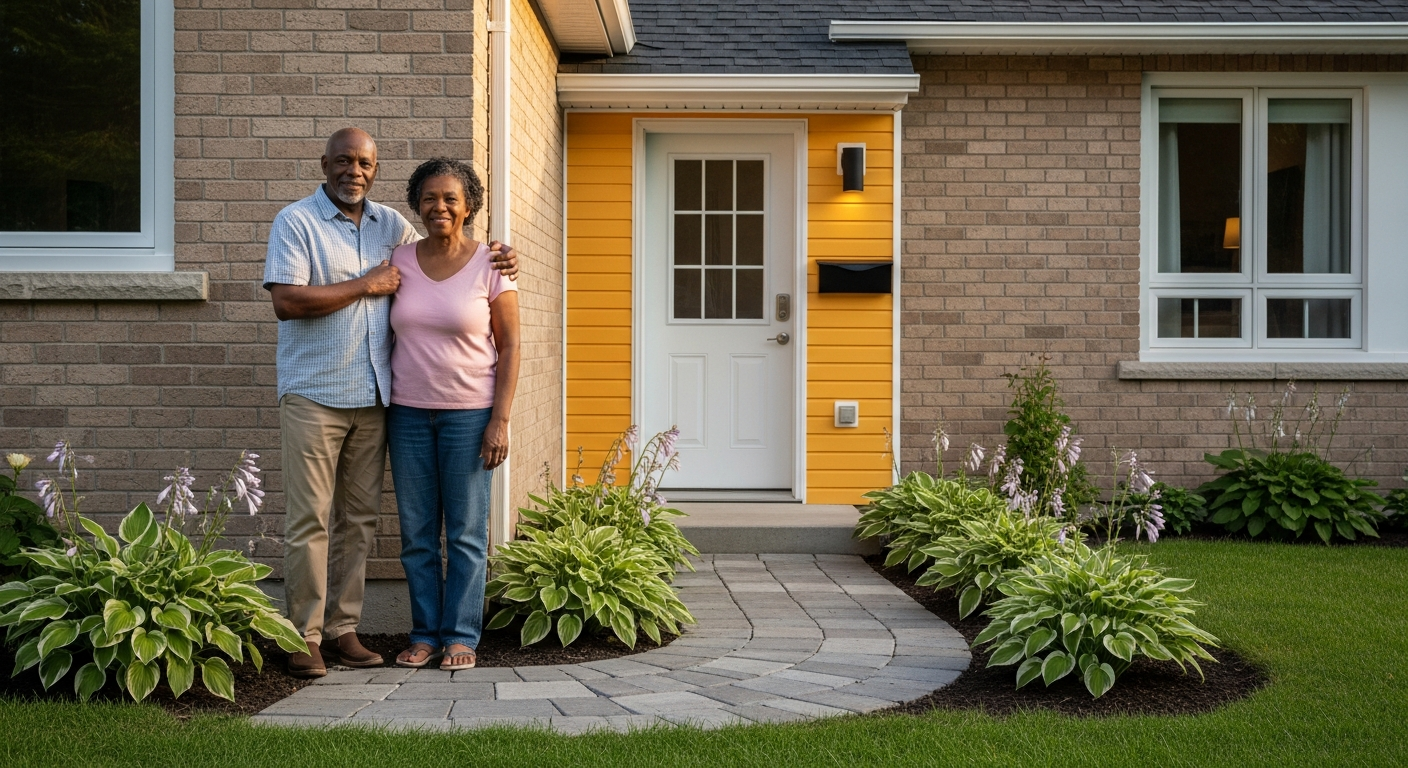
This guide walks Ontario seniors through everything they need to know about using a reverse mortgage to build or renovate a secondary suite — from what counts as a secondary suite and how to navigate municipal permits, to the rental income implications and the key considerations you need to weigh before proceeding.
This article is for educational purposes only and does not constitute financial advice.
What Is a Secondary Suite?
A secondary suite is a self-contained residential unit located within or on the same property as an existing primary dwelling. In Ontario, secondary suites typically take one of the following forms:
- Basement apartment: The most common type — a finished, self-contained unit in the home's basement with its own kitchen, bathroom, and separate entrance.
- In-law suite (accessory suite): A self-contained unit within the main structure of the home, sometimes on the ground floor for accessibility — often designed to accommodate an elderly parent or adult child.
- Garden suite (coach house / laneway suite): A detached or semi-detached secondary dwelling in the rear yard, separate from the main house. Ontario's More Homes Built Faster Act has made garden suites easier to build across the province.
- Garage conversion: An attached or detached garage converted into a residential unit. Requires significant electrical, insulation, and plumbing work to meet Ontario Building Code standards.
A legal secondary suite is one that has been built in compliance with the Ontario Building Code, received all required municipal permits, and meets local zoning regulations. The distinction between a legal and an illegal (unpermitted) suite matters enormously — both for insurance, liability, and for the reverse mortgage itself.
Ontario's Housing Context: Why Secondary Suites Are Encouraged
Ontario is experiencing a prolonged housing shortage, and provincial and municipal governments have responded with a series of policy changes designed to encourage what planners call "gentle density" — additional housing units created within existing residential neighbourhoods without large-scale redevelopment.
Key policy changes include:
- Ontario's More Homes Built Faster Act requires municipalities to permit up to three residential units on most residential lots (main dwelling, secondary suite within, and garden suite/additional structure).
- Many municipalities, including Toronto, Ottawa, and Hamilton, have updated their zoning bylaws to remove previous barriers to secondary suites.
- The federal government's CMHC MLI Select program and various municipal affordable housing programs offer financing incentives for landlords who create new secondary suites, including some programs specifically targeting senior homeowners.
This policy environment means that if you have been discouraged from adding a suite in the past by zoning hurdles, the landscape has changed significantly.
The Dual Benefit for Seniors: Income and Aging in Place
Secondary suites offer two distinct but equally valuable benefits for older homeowners:
Rental Income
A legal, permitted secondary suite in Ontario can generate meaningful monthly rental income. The amount varies by location, suite size, and market conditions. In urban and suburban Ontario markets, even a modest basement apartment can provide income that meaningfully offsets property costs or supplements retirement income.
Importantly, this rental income — received while you continue to live in the primary portion of the home — supplements your retirement cash flow without affecting OAS or GIS eligibility (though the income itself must be reported to CRA and may affect benefit clawback thresholds in some cases — see below).
Multigenerational Living and Aging in Place
An in-law suite or garden suite also creates an ideal arrangement for multigenerational living. Having an adult child or grandchild in the suite provides:
- Informal support and company for the senior homeowner
- A reduced housing cost for the family member
- A built-in safety net if the senior's health or mobility changes
This is not merely a financial arrangement — for many Ontario seniors, having family close by is the arrangement that makes remaining in their own home sustainable long-term.
How a Reverse Mortgage Funds Secondary Suite Construction
A reverse mortgage releases the equity in your home as a tax-free lump sum or staged drawdowns. Because the funds are a loan advance, not income, they are not taxable and do not affect most federal benefit calculations. You receive the proceeds in cash — which can be paid directly to a contractor, used to purchase materials, or managed however you see fit.
This makes a reverse mortgage particularly well-suited to funding a secondary suite construction because:
- No monthly payments required. Construction loans and renovation HELOCs require monthly payments. A reverse mortgage does not. This is critical for seniors on fixed incomes who cannot service a new monthly debt obligation.
- No income verification. Many seniors do not qualify for conventional renovation financing because their retirement income does not satisfy lender debt-service ratios. A reverse mortgage requires no income documents.
- No credit check. If your credit history has gaps or past challenges, a reverse mortgage is not affected.
- Tax-free receipt. The funds arrive tax-free, giving you the full construction budget without withholding.
The drawback, which should be clearly understood, is that accessing equity now means less equity remaining in the home later — for you in retirement or for your estate. The reverse mortgage balance grows over time as interest accrues.
Construction Costs and What to Expect
Secondary suite construction in Ontario is a significant investment. While costs vary considerably depending on suite type, size, existing conditions, and the municipality, homeowners should expect to budget substantially. Converting an unfinished basement to a legal secondary suite typically involves structural assessment, insulation, vapour barriers, electrical panel upgrades, plumbing rough-in, kitchen installation, bathroom installation, flooring, a separate entrance, and fire separation requirements.
A rough guide to relative investment levels:
| Suite Type | Typical Investment Level | Permit Requirements | Rental Income Potential | Best For |
|---|---|---|---|---|
| Basement apartment | Moderate to significant (existing structure used) | Building permit, electrical, plumbing; fire separation required | Steady urban/suburban rental market | Homeowners with unfinished or dated basement |
| In-law suite (within main home) | Moderate (depends on scope of reconfiguration) | Building permit, may require zoning variance in some municipalities | Lower (may be used for family, not market rent) | Multigenerational family arrangements |
| Garden suite / laneway suite | High (new structure from foundation up) | Building permit, site plan, electrical service extension; BC hydro/Hydro One connection | Good rental income; high demand in urban areas | Larger lots with rear yard space |
| Garage conversion | Moderate to significant (heavily depends on existing garage structure) | Building permit, insulation/envelope upgrades, plumbing; zoning check needed | Moderate; compact unit | Properties with attached/detached garage not used for vehicle storage |
Obtaining multiple contractor quotes, verifying licences, and checking references are essential steps before committing to a contractor.
Municipal Permits and Ontario Building Code Compliance
A legal secondary suite must comply with the Ontario Building Code and receive all required municipal permits. This is non-negotiable — and for good reason. Unpermitted suites create serious legal exposure, insurance problems, and potential issues for both landlord and tenant.
Key permits and approvals typically required include:
- Building permit from your municipality for the construction work.
- Electrical permit from the Electrical Safety Authority (ESA) — this is separate from your building permit and required for any electrical work.
- Plumbing permit for any new or relocated plumbing.
- Zoning compliance check to confirm your lot and property type are permitted to have the proposed suite type.
Some municipalities also require a rental licensing inspection before a unit can be legally rented. In Toronto, for example, new secondary suites must be registered with the City.
The permitting process takes time and should be budgeted into your project timeline. A knowledgeable contractor familiar with your municipality can guide you through the process.
Property Value Impact
A legal, permitted secondary suite typically increases the appraised value of your property. Appraisers in Ontario's urban markets recognise the income-generating potential of a legal suite as a value-add component. This can be meaningful for several reasons:
- Future reverse mortgage drawdowns. If you have a reverse mortgage with a variable or draw structure, an increased appraised value may allow you to access additional equity in the future.
- Sale proceeds. When you eventually sell the home, a legal suite commands a premium over an identical property without one.
- Rental income capitalisation. Buyers often pay more for a home that generates rental income.
An unpermitted suite, conversely, may be flagged as a liability rather than an asset — the buyer assumes the risk of remediation costs — so legal compliance genuinely pays off.
The Rental Income and CRA Considerations
If you rent out the secondary suite, you must report the rental income to the Canada Revenue Agency (CRA). Key tax considerations:
Partial Principal Residence Exemption
If you rent out a portion of your home (including a secondary suite) while continuing to live in the rest, the principal residence exemption (PRE) from capital gains on eventual sale may be partially affected. CRA's position is that if you make structural changes to the property to facilitate the rental, a portion of the home is considered a rental property, and that portion may not qualify for the full PRE.
However, if you rent out a suite that was created without structural changes to the main living area, CRA may allow the entire property to continue to qualify for the PRE. This is a nuanced area and professional tax advice is recommended.
Rental Expenses
As a landlord, you may deduct eligible rental expenses against your rental income — a proportionate share of property taxes, insurance, maintenance, utilities (if included in rent), and a portion of mortgage interest. Because a reverse mortgage does not require interest payments, the interest deduction profile is different from a conventional rental property. A tax professional can advise on the specific treatment.
Multigenerational Living Arrangement vs. Formal Rental
If your adult child or grandchild occupies the suite under a family arrangement — paying below-market rent or no rent — the CRA characterisation and tax treatment differs from a market-rate rental. Again, professional tax advice is valuable here.
CMHC MLI Select and Municipal Programs
Several government programs may help offset construction costs:
- CMHC MLI Select: A federal program offering improved insurance terms for residential rental projects that meet affordability criteria. For secondary suites that will be rented at below-market rates to moderate-income tenants, this program may apply.
- Ontario's Housing Supply Action Plan has created additional municipal grant and loan programs for secondary suite creation. Specific programs vary by municipality — check with your local municipality for currently available incentives.
- Canada's Multigenerational Home Renovation Tax Credit: A federal tax credit for eligible renovation expenses to create a secondary suite for a qualifying relative aged 65 or over. This is available for construction costs on the qualifying suite portion of the project.

Reverse Mortgage vs. Renovation HELOC: Which Is Right for You?
Many Ontario homeowners first consider a Home Equity Line of Credit (HELOC) for renovation financing. A HELOC offers flexibility and typically carries a lower interest rate than a reverse mortgage. However, for many seniors, a HELOC is not accessible:
- HELOCs require income verification and satisfactory debt-service ratios.
- Many seniors on fixed retirement income — OAS, CPP, pension, RRIF drawdowns — do not qualify for the HELOC amount they need.
- HELOCs require monthly interest payments, which can strain a fixed-income budget.
- A HELOC may be called by the lender if your financial circumstances change.
A reverse mortgage, by contrast, has no income requirement, no monthly payment obligation, and cannot be called by the lender as long as you comply with the basic loan conditions (maintaining the property, paying property taxes, maintaining insurance, and occupying the home as your primary residence).
For seniors who do not qualify for a HELOC, or for whom monthly HELOC payments would be a significant burden, the reverse mortgage is often the more practical path to funding a secondary suite.
Key Considerations Before Proceeding
- Remaining in the home is essential. A reverse mortgage requires the property to be your primary residence. You must continue to live in the home. Renting out the entire property (including your portion) would trigger a default.
- The reverse mortgage balance grows. Without monthly payments, interest compounds. The secondary suite construction cost, funded through the reverse mortgage, will grow over time. Ensure you are comfortable with this dynamic.
- Discuss with family. If your estate includes children or other heirs, they should understand that the reverse mortgage reduces the equity available at the time of eventual sale. The rental income from the suite may help offset this over time.
- Property taxes may increase. A legal secondary suite typically increases your home's assessed value, which may modestly increase your property tax bill.
Frequently Asked Questions
Q: Can I use a reverse mortgage to build a garden suite in my backyard? A: Yes, provided you continue to occupy the main dwelling as your primary residence. A garden suite on the same registered property is generally considered part of the overall property for reverse mortgage purposes. Confirm with your lender during the application process.
Q: Will renting out my secondary suite affect my reverse mortgage? A: Renting out a portion of your home — while you continue to live in the rest — is generally permitted. You must remain the primary occupant of the property. Renting out the entire home and moving elsewhere would breach the primary residence requirement. Confirm the specific terms with your lender.
Q: What happens to the rental income from the suite if I eventually move to a care facility? A: When you permanently vacate the home, the reverse mortgage becomes due. At that point the home is typically sold or the estate repays the loan. The rental tenancy would need to be addressed under Ontario's Residential Tenancies Act, which provides tenants with defined rights and timelines.
Q: Does adding a secondary suite affect the no-negative-equity guarantee? A: No. The no-negative-equity guarantee is a feature of the reverse mortgage loan itself and is not affected by what you do with the funds. You will never owe more than the fair market value of the home when the loan becomes due.
Q: How long does it typically take to build a secondary suite in Ontario? A: Permit processing times vary widely by municipality. In some areas, permits can be issued in weeks; in others, the process takes several months. Construction typically takes several months after permits are issued, depending on scope. Plan for a total timeline of six months to over a year for a full basement conversion or garden suite in many Ontario communities.
A secondary suite funded through a reverse mortgage can genuinely transform the financial picture for an Ontario senior — creating rental income, enabling multigenerational living, and increasing the long-term value of the home. Like any significant project, it rewards careful planning, proper permitting, and professional advice at every stage.
Speak to a licensed mortgage professional. Independent legal advice is required before closing a reverse mortgage in Ontario.
To explore whether a reverse mortgage could fund your secondary suite project, speak with Rick Sekhon.
Get your free Ontario Reverse Mortgage Guide →
This content is for illustrative purposes only. Rates may vary. Call Rick Sekhon for the best rates and more information.
Ready to Learn More?
Get the free Ontario Reverse Mortgage Guide and find out exactly how much you could unlock from your home.
Get My Free Guide →Related Articles
Does a Reverse Mortgage Affect GIS? Guaranteed Income Supplement Guide
How a reverse mortgage affects GIS eligibility in Canada. Income thresholds, RRIF comparison, and strategies to protect your Guaranteed Income Supplement.
Read →Aging in Place with a Reverse Mortgage: Home Modification Guide
How Ontario seniors can fund aging-in-place home modifications with a reverse mortgage — costs, top modifications, grants, and a complete planning guide.
Read →Reverse Mortgage Tax Implications in Canada: What Ontario Homeowners Need to Know
Are reverse mortgage proceeds taxable in Canada? How do they affect OAS, GIS, and CPP? A complete guide to the tax implications of reverse mortgages for Ontario seniors.
Read →