
Reverse Mortgage for Rental Income: Funding Airbnb, Room Rentals, and Property Management
Use a reverse mortgage to fund home renovations, property management, and rental setup for Airbnb or room rental income. Ontario strategy for monetizing home equity in retirement.
Do you want to generate retirement income from your home without leaving it? A reverse mortgage can fund the upfront costs of turning your Ontario home into an income-generating asset through Airbnb, room rentals, or property management.
This article is for educational purposes only and does not constitute financial advice.
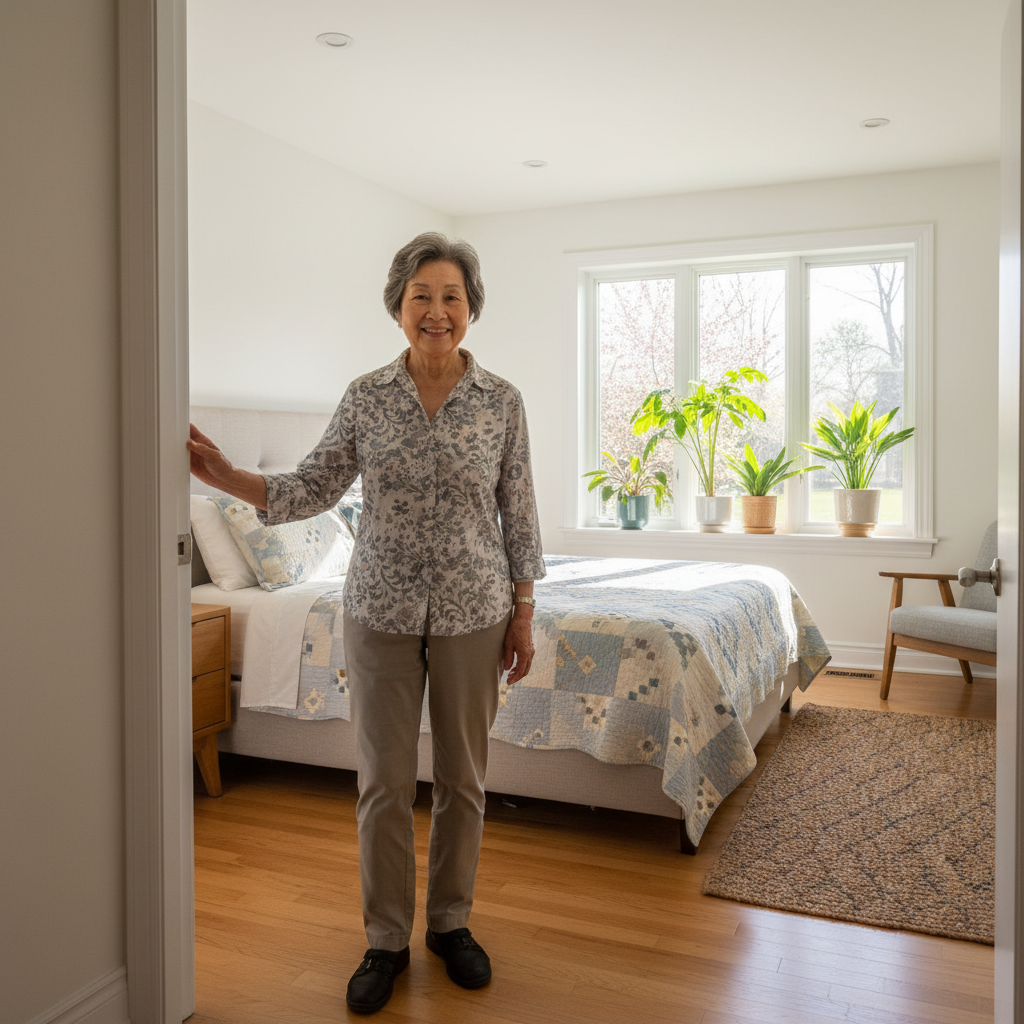
The Home-as-Income Strategy in Retirement
Many Ontario seniors have home equity but limited retirement income. Renting out a room, basement suite, or even listing the home on Airbnb when traveling can generate meaningful income. However, startup costs create a barrier:
- Renovations (basement suite, guest kitchen): $10,000–$50,000
- Furnishings (guest beds, appliances): $5,000–$15,000
- Property management software, insurance, and licensing: $2,000–$5,000 annually
- Marketing and professional photos: $1,000–$3,000
- Professional cleaning and maintenance: $1,500–$3,000 per month
A reverse mortgage provides the capital to launch this income strategy without liquidating retirement investments or applying for loans that require income verification.

Reverse Mortgage Funding Models for Rental Income
Option 1: Lump Sum for Renovations
Access $30,000–$50,000 upfront to renovate a basement suite or guest wing. Interest accrues on the full amount, but the income from rentals covers both living costs and mortgage payments.
Option 2: Monthly Line of Credit for Ongoing Costs
Access $2,000–$3,000/month to cover property management, cleaning, and maintenance. Only pay interest on amounts drawn. As rental income arrives, you can offset mortgage costs or reduce draws.
Option 3: Staged Draws
Combine both: initial lump sum for renovations ($40,000), plus $1,500/month for ongoing management. Flexibility is key.
| Rental Model | Startup Cost | Monthly Revenue | Payback Timeline |
|---|---|---|---|
| Room rental (single room to unrelated tenant) | $5,000 | $1,000–$1,500 | 3–5 months |
| Basement suite (separate kitchen/entry) | $35,000 | $1,500–$2,000 | 18–24 months |
| Airbnb short-term rental | $8,000 | $2,000–$3,500 | 2–4 months |
| Combination (1 room + Airbnb + short-term) | $15,000 | $2,500–$4,000 | 4–6 months |
According to Equitable Bank, reverse mortgage borrowers increasingly use funds for income-generating home improvements. This transforms a fixed asset into a self-funding investment.
Ontario Legal and Tax Considerations
Before renting, understand Ontario's framework:
Room Rentals
✓ Allowed — You can rent a room to a tenant in your principal residence ✓ Tax implications — Rental income is taxable; expenses are deductible ✓ Ontario Tenancy Act — You must follow tenant protection rules, even for room rentals ✓ Insurance — Notify your insurer; some policies require premium adjustments
Basement Suites
✓ Zoning check required — Some neighborhoods prohibit rental suites; verify with your city ✓ Building code compliance — Separate kitchens, exits, and plumbing may require upgrades ✓ Separate lease — Tenant rights vary based on whether it's a true "separate dwelling" ✓ Mortgage clause — Check if your mortgage prohibits rental use
Airbnb and Short-Term Rentals
✗ Increasingly restricted — Many Ontario municipalities limit short-term rentals or require licenses ✓ Check local bylaws — Toronto, Ottawa, and other cities have specific rules ✓ Insurance complications — Standard homeowner insurance may not cover short-term guests ✓ Tax reporting — Airbnb income must be reported to CRA
Consult a lawyer before launching any rental model to ensure compliance.

Why Reverse Mortgage Rental Income Is Different from Employment
Income from renting out your home is not employment income. This matters for government benefits:
- OAS/GIS impact — Rental income is not considered income for OAS clawback purposes (it's investment income but under certain rules, may not trigger clawback in the same way as employment income—consult an accountant)
- CPP impact — Doesn't affect CPP benefits or contributions
- Reverse mortgage proceeds — The funds used to start the rental income business are not taxable (they're loan advances)
According to the CRA, rental income is taxable, but the reverse mortgage funds used to create that income are loan proceeds, not income. You only pay tax on the rental income, not on the borrowed capital.
Common Income-Generating Models
Long-Term Room Rental (Lowest Stress)
Rent a room to a working professional or student. Income is predictable ($1,000–$1,500/month). Tenant vetting is critical. Ensure lease agreements are clear.
Basement Suite
Requires renovation but generates steadier income ($1,500–$2,000/month). Tenants have more privacy; you have clearer legal separation. Higher initial cost.
Seasonal Airbnb + Winter Occupancy
If you snowbird or travel seasonally, rent your home on Airbnb for 5–6 months, then occupy yourself. Income fluctuates but can be substantial.
Room Rental + Your Occupancy
Rent a room or two while you live in the home. This is the lowest-barrier model and allows you to downsize socially without moving.
The Honest Drawbacks
Renting out part of your home is not passive income:
- Tenant management — Problem tenants, late rent, property damage are real risks
- Time and stress — Maintenance calls, disputes, cleaning happen on your schedule
- Ontario Tenancy Act compliance — Failure to follow rules can lead to legal consequences
- Insurance costs — Premiums increase; claims may be denied if not properly disclosed
- Renovation costs overrun — Basement conversions frequently exceed estimates
- Market sensitivity — Rental rates fluctuate; economic downturns reduce tenant quality and income
Frequently Asked Questions
Can a tenant claim tenancy rights if they rent a room in my principal residence?
It depends on Ontario Tenancy Act interpretation. In general, renting a single room in a home where you also live is sometimes exempt, but this is evolving. Consult a lawyer before signing a lease.
Do I report Airbnb income to CRA?
Yes. Airbnb provides T4A forms to CRA. You must report all rental income, deduct eligible expenses, and pay income tax.
Can I lose my reverse mortgage if I rent out my home?
No. As long as you maintain property taxes, insurance, and home maintenance, you retain the home. However, notify your lender—some have minor restrictions on rental use (rare, but check).
What expenses can I deduct from rental income?
Mortgage interest (not principal), property management fees, insurance, utilities, repairs, maintenance, property tax (if tenant-occupied suite), and advertising. Keep detailed receipts.
Can both rental income and reverse mortgage coexist in my retirement budget?
Yes. In fact, they complement each other. Reverse mortgage funds start the rental operation; rental income covers living expenses and mortgage interest, reducing the pressure on CPP/OAS.
Speak to a licensed mortgage professional. Independent legal advice is required before closing a reverse mortgage in Ontario.
This content is for illustrative purposes only. Rates may vary. Call Rick Sekhon for the best rates and more information.
Ready to Learn More?
Get the free Ontario Reverse Mortgage Guide and find out exactly how much you could unlock from your home.
Get My Free Guide →Related Articles
Reverse Mortgage for Home Renovations: Aging in Place Guide for Ontario Seniors
Learn how to use a reverse mortgage to fund home renovations and modifications that let you age in place safely and comfortably in your Ontario home. Includes cost examples and step-by-step process.
Read →Reverse Mortgage for Home-Based Tutoring and Educational Business Setup
Start a tutoring or educational coaching business from your Ontario home. Use a reverse mortgage to fund materials, marketing, and client support without business debt.
Read →Building Your Retirement Income Plan: Reverse Mortgage + CPP + OAS Strategy
Strategic guide to combining reverse mortgage income with CPP and OAS for optimal retirement cash flow. Plan your income in Ontario.
Read →