
Reverse Mortgage vs Relocating Within Ontario: Complete Analysis
Should you relocate within Ontario to a smaller home or use a reverse mortgage to stay? Cost and lifestyle comparison for Ontario seniors.
You've spent decades in your home, but it's getting expensive to maintain. Should you downsize to a smaller, more affordable house in Ontario — or stay put with a reverse mortgage? This isn't a simple question. Both options have real tradeoffs around cost, lifestyle, family connection, and dignity. This guide provides a financial and emotional analysis to help you decide.
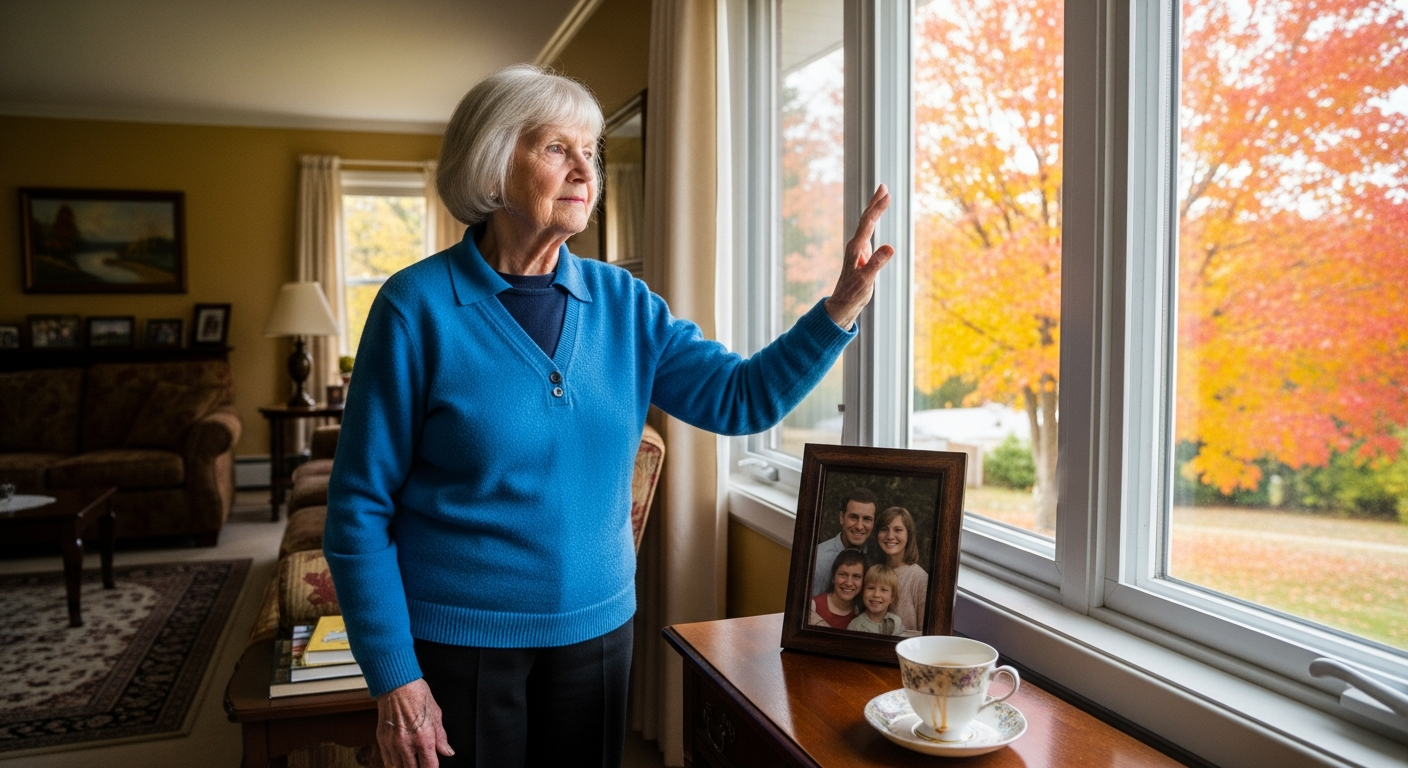
The Downsizing Question: Why It's So Hard
Many retirees assume downsizing is a natural progression: sell the $800,000 family home, buy a $400,000 condo or smaller home, pocket the $400,000 difference, and enjoy lower housing costs.
The reality is more complicated.
Downsizing costs people rarely consider:
- Real estate commission (4–6%): $32,000–$48,000
- Legal fees and closing costs: $2,000–$4,000
- Inspection and appraisal: $800–$1,500
- Moving costs: $5,000–$15,000
- Home inspection, staging, repairs: $3,000–$8,000
- Capital gains tax (if applicable): potentially significant
- Total transaction costs: $45,000–$80,000
After transaction costs, your $400,000 profit shrinks to $320,000–$355,000. Moreover, you still have to move — which for retirees means leaving:
- A familiar neighborhood and social connections
- The home where you raised children
- Accessibility to local doctors, hospitals, and services
- A sense of place and belonging
For many retirees, these intangible losses outweigh the financial gains of downsizing.
Option 1: Downsize and Relocate (Within Ontario)
Financial scenario:
- Current home value: $750,000
- Downsize target: $450,000 home
- Gross proceeds: $750,000 – $450,000 = $300,000
- Transaction costs: $60,000
- Net proceeds: $240,000
Annual cost structure (downsized home):
| Expense | Amount |
|---|---|
| Mortgage (if purchased with some debt) | $500–$800/month |
| Property tax | $1,200–$1,800/month |
| Utilities and heating | $150–$250/month |
| Home insurance | $80–$120/month |
| Maintenance and repairs | $200–$400/month |
| Condo fees (if applicable) | $300–$500/month |
| Total annual cost | $12,000–$20,000/year |
Advantages:
- ✓ Smaller property is less to maintain
- ✓ Lower property taxes (smaller home)
- ✓ Liquid proceeds ($240,000) for investment
- ✓ Fewer stairs, smaller footprint (aging in place aspects)
- ✓ No monthly mortgage payments (if paid in cash)
Disadvantages:
- ✗ Loss of family memories and history
- ✗ Relocation stress and transition period (6–12 months disruptive)
- ✗ New neighborhood, new doctors, new services
- ✗ Estate and inheritance complexity (children may expect the original home)
- ✗ Moving costs and effort
- ✗ Smaller home may feel cramped for family visits
- ✗ Long-term care needs may still require move later (downsizing isn't permanent solution)
Option 2: Stay With a Reverse Mortgage
Financial scenario:
- Current home value: $750,000
- Reverse mortgage accessed: $200,000 (27% LTV)
- Remain in current home indefinitely
- Pay no monthly mortgage payments
Annual cost structure (reverse mortgage):
| Expense | Amount |
|---|---|
| Reverse mortgage interest (compounding) | $13,080/year* |
| Property tax | $3,000–$5,000/year |
| Utilities and heating | $2,000–$3,000/year |
| Home insurance | $800–$1,200/year |
| Maintenance and repairs | $3,000–$5,000/year |
| Total annual cost | $21,880–$27,280/year |
*Based on $200,000 borrowed at 6.54% fixed rate
Advantages:
- ✓ Stay in familiar, emotionally important home
- ✓ Maintain neighborhood connections
- ✓ No relocation stress or moving costs
- ✓ Access to established doctors and services
- ✓ Home can accommodate family visits (grandchildren, etc.)
- ✓ Flexibility to access funds as needed (line of credit option)
- ✓ Interest-only (no monthly payments required)
Disadvantages:
- ✗ Interest accrues over time (balance grows)
- ✗ Large home may be harder to maintain as mobility declines
- ✗ Annual costs remain relatively high
- ✗ Ties up home equity (less inheritance for children)
- ✗ May still require relocation later (long-term care)
Side-by-Side Financial Comparison: 15 Years
Let's project both scenarios over a 15-year period for a 72-year-old retiree:
Downsizing Scenario:
| Year | Home Value | Liquid Proceeds | Annual Costs | Cumulative Costs | Net Position |
|---|---|---|---|---|---|
| 1 | $450,000 | $240,000 | $16,000 | $16,000 | Home + $224,000 |
| 5 | $468,000* | $240,000 | $16,000 | $80,000 | Home + $160,000 |
| 10 | $489,000* | $240,000 | $16,000 | $160,000 | Home + $80,000 |
| 15 | $510,000* | $240,000 | $16,000 | $240,000 | Home + $0 |
*Assumes 0.8% annual appreciation
After 15 years, you have a $510,000 home (inherited by children) and have spent $240,000 on housing costs. Net estate: $510,000.
Reverse Mortgage Scenario:
| Year | Home Value | RM Balance | Annual Costs | Cumulative Costs | Net Equity |
|---|---|---|---|---|---|
| 1 | $750,000 | $200,000 | $24,000 | $24,000 | $526,000 |
| 5 | $780,000* | $271,000 | $24,000 | $120,000 | $389,000 |
| 10 | $820,000* | $371,000 | $24,000 | $240,000 | $209,000 |
| 15 | $860,000* | $520,000 | $24,000 | $360,000 | $-20,000 (slight deficit)** |
*Assumes 0.9% annual appreciation **This illustrates the long-term cost of living in a large home; at year 13–14, you'd break even
After 15 years, you own a $860,000 home with a $520,000 reverse mortgage lien. Your net equity is positive (still $340,000), but the balance is growing. You've also spent $360,000 on housing costs.
Key insight: The downsizing scenario leaves more liquid wealth after 15 years ($80,000–$160,000 remaining), but the reverse mortgage scenario leaves more total wealth (a home worth $860,000 minus the RM lien).

The Intangible Factors: Quality of Life and Dignity
Beyond finances, the decision involves deeply personal factors:
| Factor | Downsizing | Reverse Mortgage |
|---|---|---|
| Sense of home and belonging | Lost; new location | Preserved; lifelong home |
| Social connections | Disrupted; new community | Maintained; established friends |
| Family gathering space | Smaller; may feel cramped | Spacious; accommodates extended family |
| Maintenance burden | Reduced (smaller home) | Remains (larger home) |
| Autonomy and control | You control all decisions | You control all decisions |
| Relocation stress | Significant (6–12 months) | None |
| Inheritance clarity | Clear (smaller asset) | Clear (larger asset, RM debt) |
| Flexibility to stay | Not applicable (you must move) | Flexibility to stay or relocate later |
For many retirees, staying in a known home with a reverse mortgage preserves emotional and social wellbeing that has immense financial value.
A person who downsizes and becomes depressed, isolated, or disengaged has suffered a loss that no financial gain can offset.
Real-World Scenario: Harold's Decision
Harold, 75, owned a $750,000 home in Ontario. He'd lived there for 35 years and raised four children there. The home had lots of stairs, a large yard, and was expensive to maintain.
His realtor suggested downsizing to a $400,000 bungalow with easier maintenance.
Harold's children were split:
- Two adult children (in Ontario) hoped he'd stay; they had kids who loved visiting Grandpa's house
- Two adult children (out of province) thought downsizing was logical and would reduce his stress
Harold's deliberation:
Harold was 75. Even if he downsize, in 5 years (at 80) he might need to move to assisted living or long-term care anyway. The downsizing wouldn't be a permanent solution — it would be a temporary one that disrupted his life.
Moreover, Harold's grandchildren had grown up in his home. Family Thanksgivings, summers, and holidays all centered around his large kitchen and backyard. A downsized bungalow wouldn't accommodate the family gathering tradition that gave Harold deep joy.
Harold's decision: Harold obtained a $200,000 reverse mortgage instead of downsizing. He used part of the funds to:
- Pay for yard maintenance service ($200/month): reduced burden
- Upgrade the home with a stair lift: maintained accessibility without downsizing
- Fund home care if needed: eliminated dependency on family
- Create an emergency fund: reduced financial anxiety
Harold stayed in his home. His grandchildren continue family traditions. He has the emotional and social support of familiar surroundings.
The reverse mortgage balance will grow, but Harold's estate will still have significant equity when he passes. More importantly, he has 10+ years of joy, dignity, and family connection that a downsized bungalow couldn't provide.

According to AARP research, seniors who remain in long-familiar homes report 35% higher life satisfaction and 40% lower depression rates than those who relocate, even when relocated homes have superior amenities.
When Downsizing Makes Sense
✓ You have genuine desire to move (not just financial pressure) ✓ You're willing to embrace a new neighborhood and build new connections ✓ Your current home has significant maintenance challenges (major repairs pending) ✓ You have minimal family gathering expectations (fewer grandchildren visits) ✓ You're planning to move to a warmer climate or different region ✓ Your health is declining and you need a more accessible environment ✓ You need immediate liquid proceeds for healthcare or other major costs
When a Reverse Mortgage Is Better
✓ You love your home and neighborhood ✓ Family gatherings and grandchildren visits are important ✓ You have strong social connections in your community ✓ Your home is already reasonably accessible or can be modified ✓ You'd prefer not to manage a relocation ✓ You want maximum flexibility (stay or move later if circumstances change) ✓ You value emotional wellbeing over marginal financial gains
Frequently Asked Questions
Won't I eventually have to move anyway for long-term care?
Possibly, but not for 10–15 years likely. A reverse mortgage lets you stay comfortable during your healthiest retirement years and deal with care needs later.
Can I do both — get a reverse mortgage now and downsize later?
Yes. Many retirees use a reverse mortgage as a flexible option, then downsize later (age 80+) if circumstances warrant. You're not locked in.
What if my home needs major repairs? Won't that make the decision obvious?
Not necessarily. A $30,000 roof repair is painful, but a reverse mortgage can fund it without forcing relocation. Major repairs are sometimes the reason retirees should stay (fix the home and enjoy it) rather than leave (someone else's problem).
Next Steps: Making Your Decision
- Get a professional home valuation — understand your downsizing proceeds realistically
- Research comparable homes — what would you buy in a downsized scenario?
- Calculate transaction costs — be honest about realtor fees, moving, legal, etc.
- Assess your emotional attachment — would you be happier moving or staying?
- Consult Rick Sekhon — explore reverse mortgage options if staying appeals to you
- Discuss with family — be clear about your preferences and reasons
There is no one-size-fits-all answer. For you, the right choice is the one that preserves both financial security and emotional wellbeing.
Ready to Learn More?
Get the free Ontario Reverse Mortgage Guide and find out exactly how much you could unlock from your home.
Get My Free Guide →Related Articles
Reverse Mortgage vs Downsizing: Which Is Right for You?
Compare reverse mortgages and downsizing as strategies to access home equity. Explore pros, cons, and scenarios for each option.
Read →Fund Home Modifications to Age in Place: Ontario Guide
Discover how a reverse mortgage can finance accessibility upgrades, care services, and renovations to stay safely in your Ontario home as you age.
Read →Reverse Mortgage for Workplace Injury Recovery: Supporting Adult Child's Career Transition
Help your adult child rebuild their career after workplace injury. Learn how reverse mortgages fund recovery, retraining, and financial stability during career transition.
Read →