
Reverse Mortgage as Life Insurance Alternative: Creating Spousal Income
Use a reverse mortgage instead of life insurance to create guaranteed income for your surviving spouse in retirement.
What if you could provide guaranteed income for your spouse after you pass away without paying life insurance premiums for the next 20 years? Many Ontario couples overlook a powerful strategy: using a reverse mortgage as a life insurance replacement to lock in funds now that will remain for your spouse's security later.

The Life Insurance vs. Reverse Mortgage Trade-Off
Traditional life insurance requires ongoing premium payments throughout retirement—sometimes $200–$500 per month for couples in their 60s and 70s. A reverse mortgage takes a fundamentally different approach: you access your home equity now, lock the funds in a dedicated account, and guarantee your spouse receives that income regardless of what happens.
According to CHIP Mortgage, one of Canada's leading reverse mortgage lenders, many couples choose this strategy because it:
✓ Eliminates ongoing premium payments ✓ Guarantees funds are already available (no insurance company payout delays) ✓ Allows flexibility in how much income to create ✓ Works even if one spouse develops health issues (insurance might decline) ✓ Provides funds you can enjoy in retirement, not just after death
Traditional life insurance pays only upon your death. A reverse mortgage funds your retirement lifestyle now and protects your spouse simultaneously.
How the Strategy Works: Three Models
Model 1: The Security Fund Approach
You take a lump sum reverse mortgage ($150,000–$300,000, depending on home value and age), deposit it in a dedicated high-interest savings account, and set it aside specifically for your spouse's security. This fund grows slightly with interest while providing complete protection.
Example: Age 68 couple, home worth $750,000. Reverse mortgage: $250,000 lump sum at 5.5%. This fund is earmarked for your spouse's future security. If invested conservatively, it generates $1,000–$1,500/month in additional income your spouse will receive through the estate or direct benefit structure.

Model 2: The Monthly Income Bridge
Instead of a lump sum, take monthly draws ($2,000–$3,500/month) from your reverse mortgage and deposit them into a dedicated spousal income account. Over 5–10 years, this builds a substantial safety net ($120,000–$420,000) your spouse inherits.
| Year | Monthly Draw | Cumulative Savings | Account Growth (3% interest) |
|---|---|---|---|
| Year 1 | $2,500 | $30,000 | $450 |
| Year 3 | $2,500 | $90,000 | $2,700 |
| Year 5 | $2,500 | $150,000 | $7,500 |
| Year 10 | $2,500 | $300,000 | $30,000 |
Model 3: The Flexible Access Line of Credit
Take a reverse mortgage line of credit that remains untouched unless you need it. Upon your death, any unused credit passes to your spouse as a flexible borrowing resource—protecting them if they face health crises, major home repairs, or income gaps.
Tax Implications and Estate Benefits
According to the CRA (Canada Revenue Agency), reverse mortgage proceeds are 100% tax-free and do not count as income. When funds pass to your spouse through the estate or directly, they maintain their status as loan advances—not income, not taxable.
According to FSRAO (Financial Services Regulatory Authority of Ontario), reverse mortgage borrowers retain full ownership of their homes throughout the loan term, and remaining home equity flows to the estate upon death.
This means your spouse inherits: ✓ The remaining home equity after the reverse mortgage is repaid ✓ Any funds you've set aside in the spousal income account ✓ Full inheritance rights—no insurance company limitations
Real-World Scenario: Dorothy and Frank
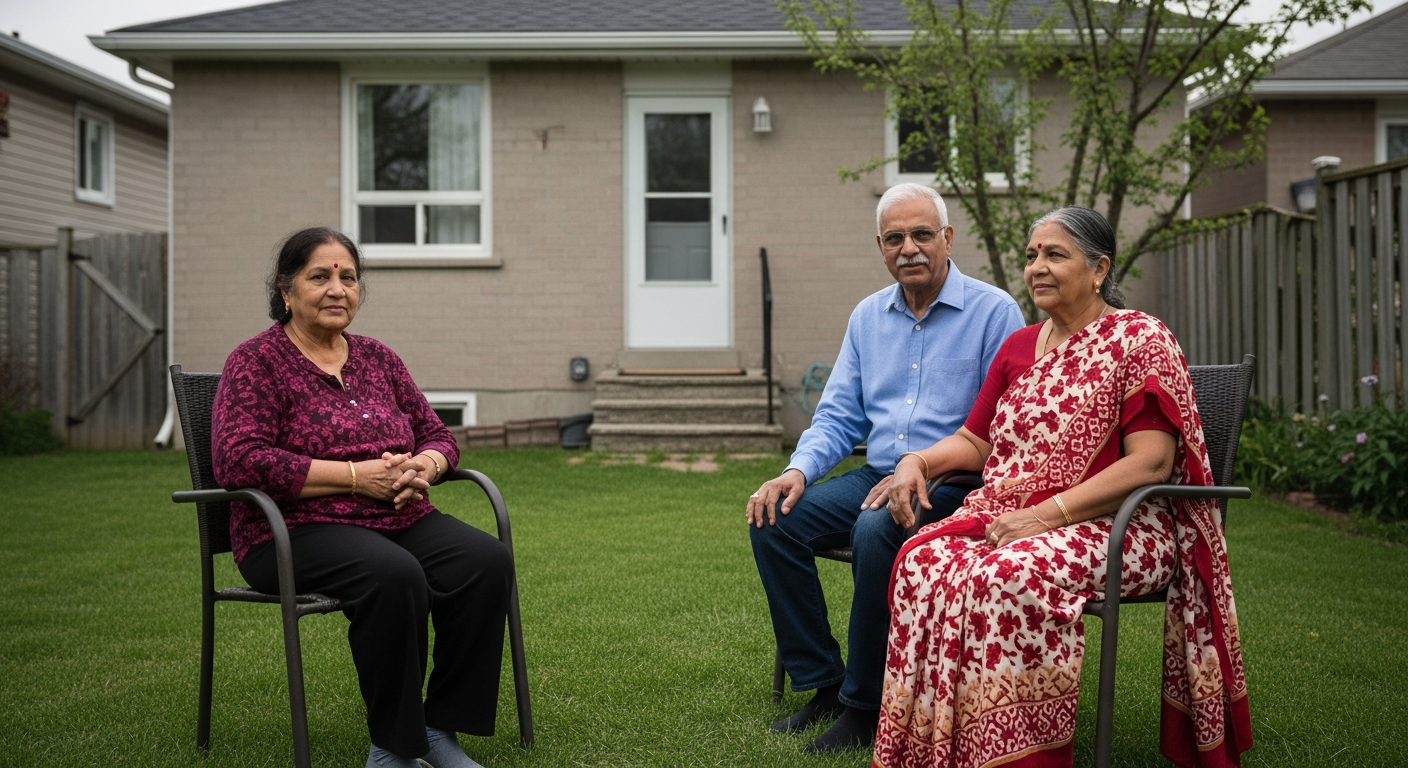
Dorothy (70) and Frank (72) have a home worth $825,000 and minimal mortgages. Frank has a heart condition; life insurance is now extremely expensive ($550/month) or unavailable at preferred rates. They decide instead:
- Reverse mortgage: $300,000 lump sum at 5.5% interest
- Allocation: $200,000 to spousal security account, $100,000 for immediate retirement enjoyment
- Cost: $0/month (no insurance premiums)
- Outcome: 10 years later, Frank passes away. The spousal security account has grown to $230,000 through interest and careful management. Dorothy has financial breathing room, and neither Frank nor Dorothy spent the last decade paying insurance premiums they might never have claimed.
Protection for Couples with Health Challenges
One of the biggest advantages: a reverse mortgage doesn't require medical underwriting. If either spouse has health issues—cancer diagnosis, heart disease, diabetes complications—traditional life insurance becomes unaffordable or unavailable.
A reverse mortgage says: We'll give you the funds today, and you decide how to structure them for your family's protection.
When This Strategy Makes Sense
✓ You're age 60+ and concerned about affording life insurance premiums long-term ✓ One or both spouses have pre-existing health conditions ✓ Your home is your primary asset, and you want to unlock its value while you can enjoy it ✓ You want guaranteed spousal income protection without annual premium payments ✓ You prefer simplicity over complex insurance policies
✗ You're age 40–50 without health issues (traditional insurance is still cheaper) ✗ You have minimal home equity relative to your protection needs ✗ You need protection for young dependents or mortgages (life insurance is more appropriate)
Frequently Asked Questions
Does a reverse mortgage affect my spousal rights or estate distribution?
No. Reverse mortgage funds are borrowed against your home equity. Your spouse's inheritance rights remain unchanged—they inherit remaining home equity and any dedicated funds you've set aside. Consult an Ontario estate planning lawyer to structure the funds clearly in your will.
Can I change my mind if I take a reverse mortgage lump sum?
Yes. If you withdraw a large lump sum but circumstances change, you can use those funds however you need during your lifetime. The reverse mortgage provides flexibility that life insurance does not.
What happens if I live longer than expected and exhaust the spousal income fund?
The no-negative-equity guarantee in Canada ensures neither you nor your spouse ever owes more than your home's value. Your home remains your primary asset for security. Link to /blog/reverse-mortgage-inheritance-ontario for details.
How do taxes work when my spouse inherits the account?
The spousal income account you fund with tax-free reverse mortgage proceeds remains tax-free when inherited. Your spouse receives it as a transfer of assets, not as income. Tax implications depend on how the account is structured—consult a tax accountant.
Next Steps
A reverse mortgage can be a smart alternative to expensive life insurance premiums. Speak with Rick Sekhon Reverse Mortgages to explore how much you could access and structure a spousal income plan tailored to your retirement and family security goals.
Ready to Learn More?
Get the free Ontario Reverse Mortgage Guide and find out exactly how much you could unlock from your home.
Get My Free Guide →Related Articles
Aging Together: Reverse Mortgage to Help Couples Stay in Their Home
For couples aging together, a reverse mortgage enables one spouse to manage care for the other while staying in your shared home. Here's how it works and what to plan for.
Read →RRIF Drawdowns vs Reverse Mortgage: Retirement Cash Flow Planning
RRIF drawdown vs reverse mortgage for retirement cash flow — which strategy preserves more wealth? Ontario-focused guide with OAS clawback scenarios and tax analysis.
Read →How to Supplement CPP and OAS with a Reverse Mortgage in Canada
Ontario retirees: learn how a reverse mortgage creates tax-free income to supplement CPP and OAS without triggering clawbacks or affecting GIS eligibility.
Read →